


Carved Walnut Buffet
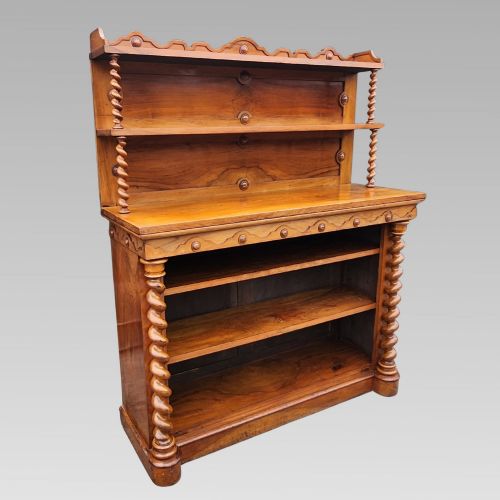
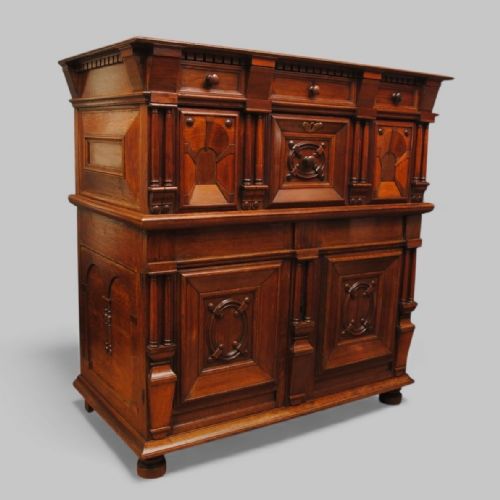
A carved walnut buffet is a substantial serving piece bringing deep grain and relief work to a dining room.
Identifying a carved walnut buffet
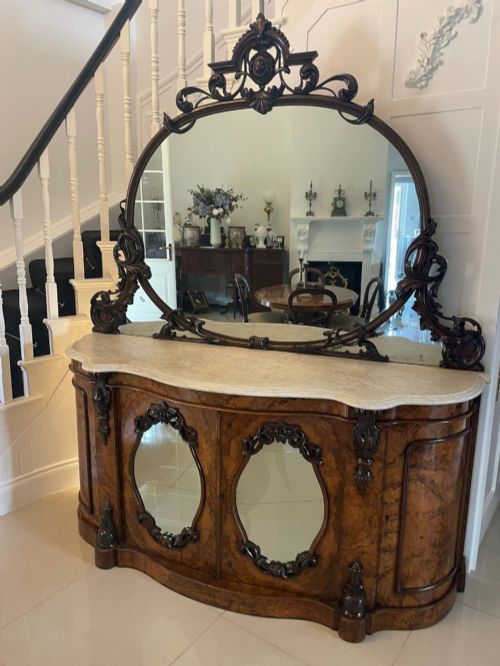
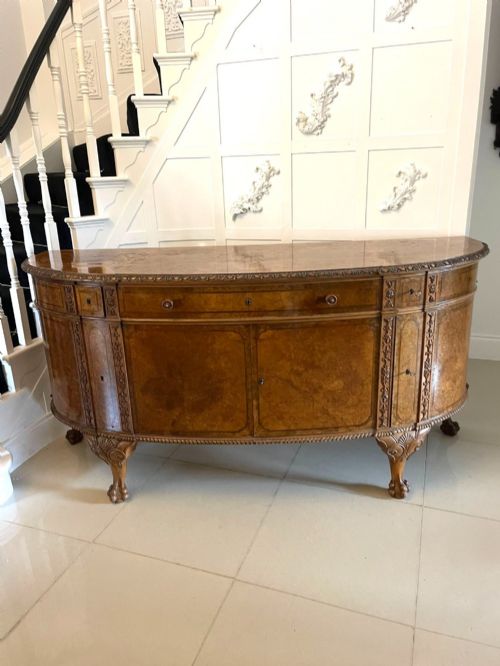
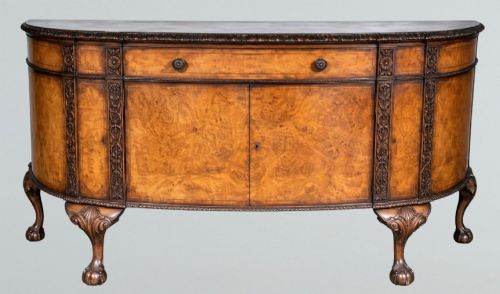
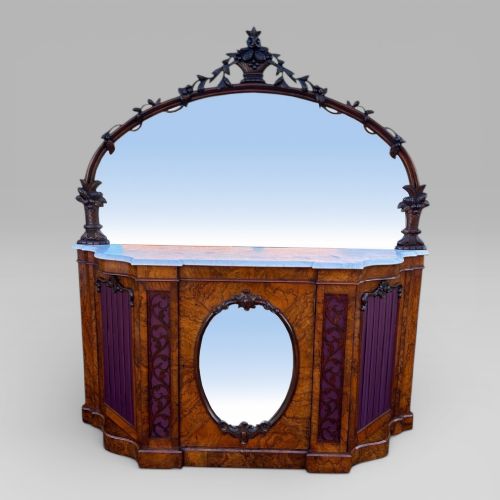
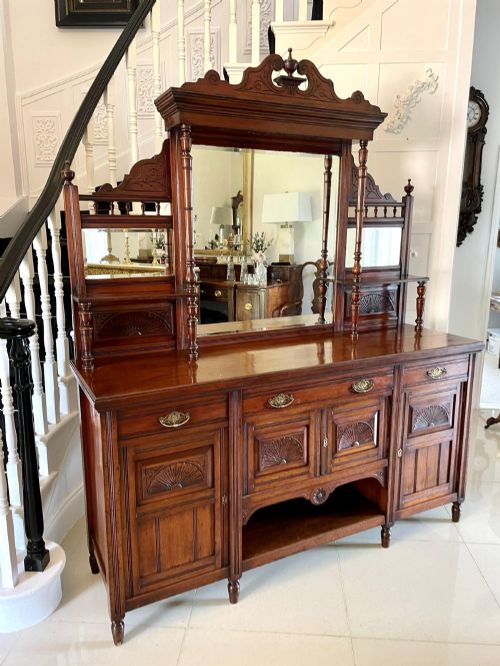
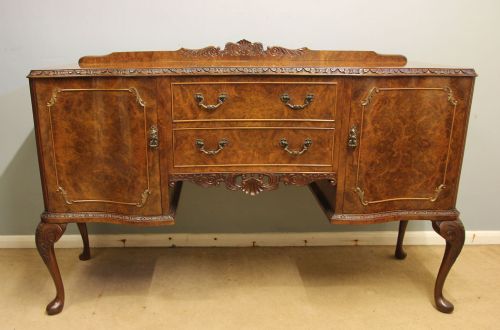
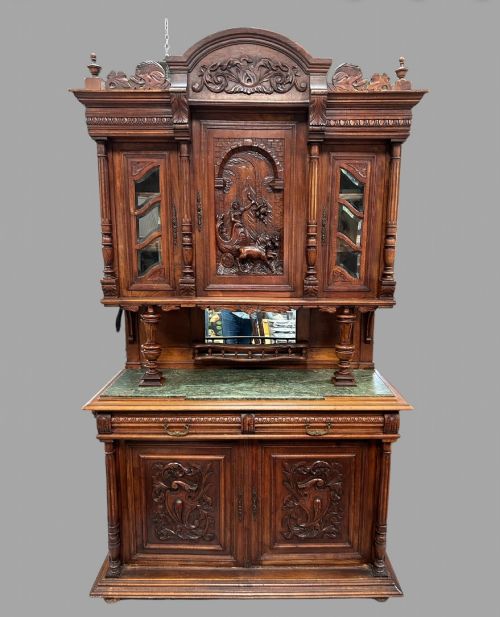
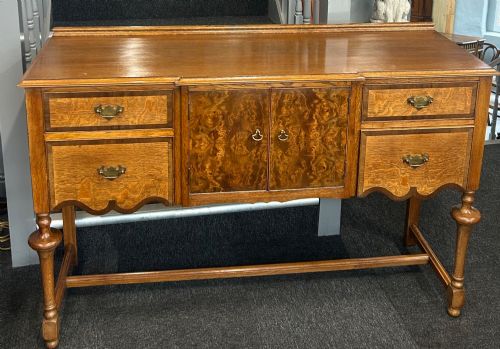
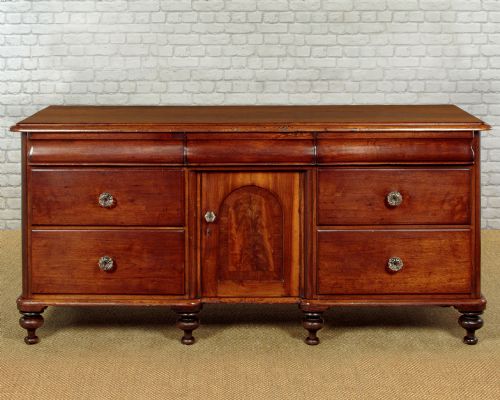
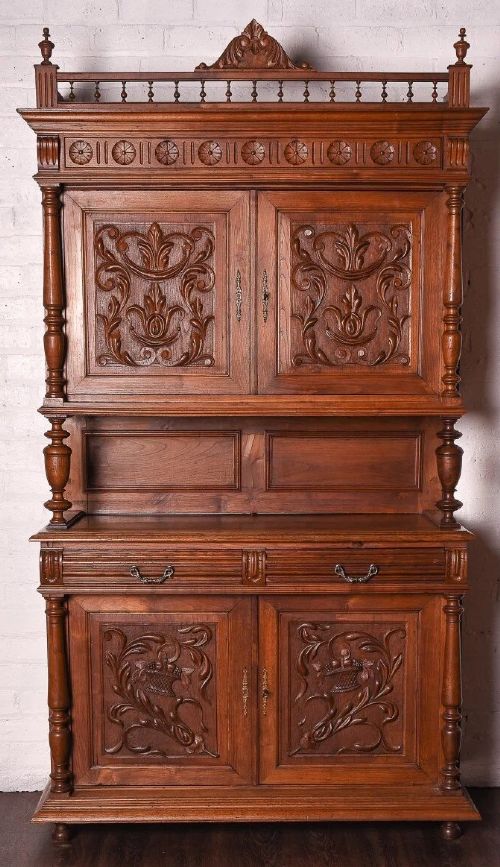
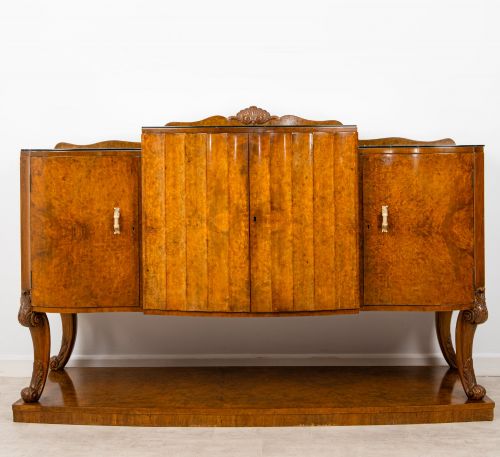
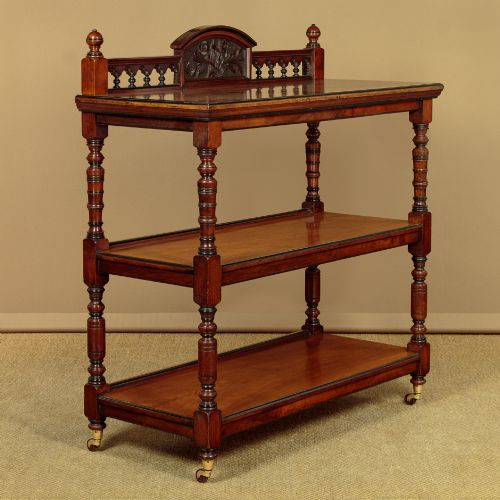
A carved walnut buffet is a substantial piece of dining room furniture designed for serving and storage, appearing in variations such as sideboards, credenzas, and servers. When you search for this phrase, you encounter designs shaped by Victorian, Queen Anne Revival, French Neoclassical, and French Chateau influences. These heavy serving pieces range from mirror-back credenzas to serpentine servers and marble-top buffets.
The pieces listed on this page originate from the Victorian era, the nineteenth century, eighteen-eighty, eighteen-fifty, and nineteen-thirty. Forms include sideboards with glass, brass, and marble elements alongside traditional hardwood carcasses. Continental and French origins appear frequently among these sturdy serving cabinets.
Materials and construction
Each carved walnut buffet relies on solid walnut and burr walnut veneer, showcasing rich figuring across large surface areas. Workshops integrated secondary hardwoods and incorporated decorative panels with deep relief carving. Heavy structural timber supported substantial storage compartments, doors, and drawers.
Hardware such as brass handles and fixtures complemented the dark wood, while glass panels and inset marble tops added functional contrast. Ebonised details sometimes highlighted the carved mouldings and architectural framing of French Chateau and neoclassical designs.
Retail Price Guide 2026
Typical UK retail prices for carved walnut buffet, calculated from the Sellingantiques database of over a million retail prices indexed since 2003. This retail price guide relies exclusively on Sellingantiques data; no external sources or auction records are used, so the figures do not describe the wider market.
Listings feature walnut, burr walnut, glass, brass, and marble across Victorian, Queen Anne Revival, and French Chateau styles.
Judging the range
Quality in a carved walnut buffet rests on the depth of the hand carving and the choice of timber figure. Burr walnut veneers with lively, matching grain patterns distinguish superior examples from plain timber carcasses. The crispness of the relief work on mirror backs and doors marks the hand of a skilled carver.
Integration of secondary materials like marble tops and brass mounts elevates the presence of a piece. Robust construction with well-fitted joinery ensures the heavy doors and drawers operate smoothly within the architectural frame.
The Carved Walnut Buffet Glossary
- Burr walnut
- A highly figured wood veneer taken from the burl growths of walnut trees, prized for its swirling, knotty patterns. It covers large flat surfaces on doors and drawer fronts.
- Serpentine front
- A furniture front that curves outward in the centre and concavely at the sides. This fluid shape softens the heavy rectangular silhouette of a large serving piece.
- Credenza
- A sideboard or buffet cabinet, often featuring a raised mirror back in nineteenth-century British and French pieces. It serves both display and storage functions in formal rooms.
- Buffet de Corps
- A large traditional French dining room cupboard or dresser, typically split into upper and lower sections. These substantial pieces provide extensive enclosed storage for tableware.
Frequently Asked Questions
Where should I place a buffet?
A carved walnut buffet anchors a dining room or formal drawing room, providing a surface for serving food and displaying silver or glassware.
Because these cabinets are heavy and deep, ensure you have sufficient wall space and clearance behind dining chairs for comfortable movement.
How do I care for burr walnut?
Protect burr walnut surfaces from direct sunlight and excessive heat to prevent the delicate veneer from drying out or fading over time.
Dust regularly with a soft, dry cloth and apply a quality beeswax sparingly to maintain the natural lustre of the timber.
What is a mirror back?
A mirror back is an upright wooden frame holding a glass mirror attached to the rear of a sideboard or credenza top.
This Victorian feature reflects room light and displays decorative objects placed on the serving surface below.
Are marble tops original?
Many nineteenth-century French buffets feature fitted marble slabs inset into the wooden top to provide a durable, heat-resistant surface for serving food.
These stone tops were integrated during manufacture to handle heavy use and add an elegant contrast to the carved walnut frame.