

Victorian Marble Top Cabinet
These victorian marble top cabinet designs are solid period pieces that offer sturdy surfaces and rich timbers for practical storage.

Victorian Marble Top Cabinets
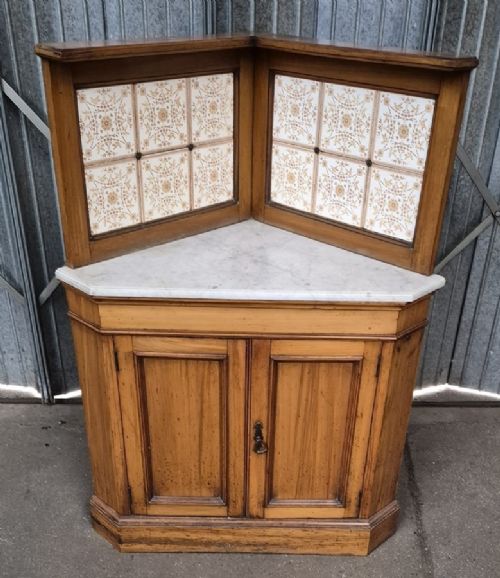
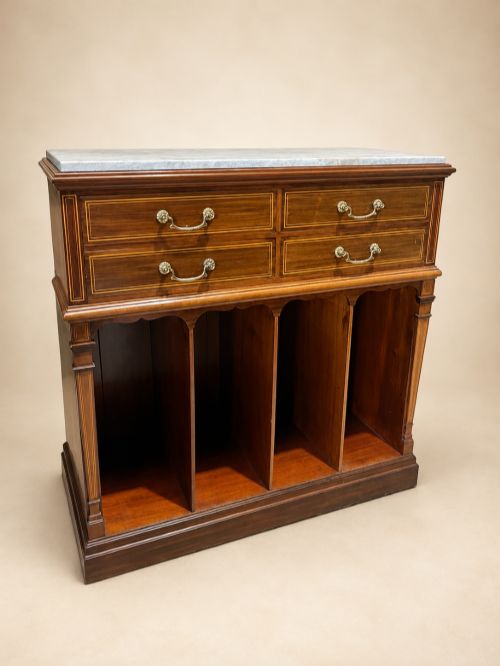
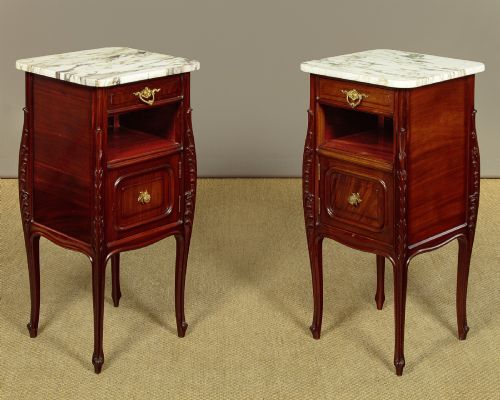
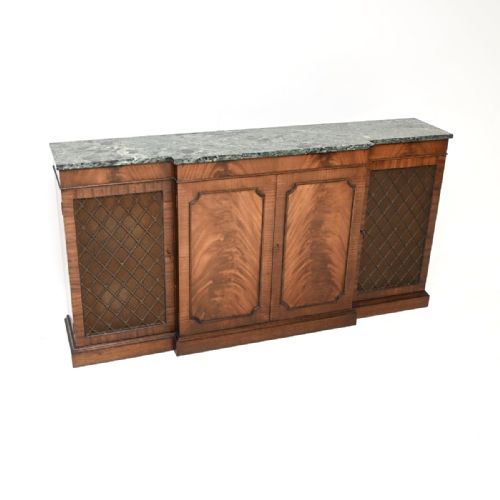
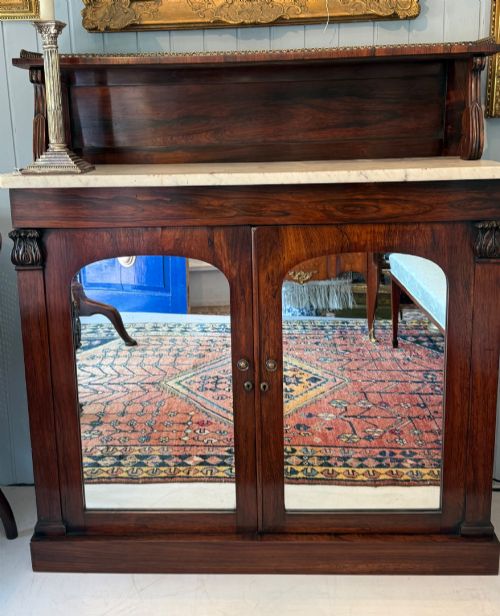
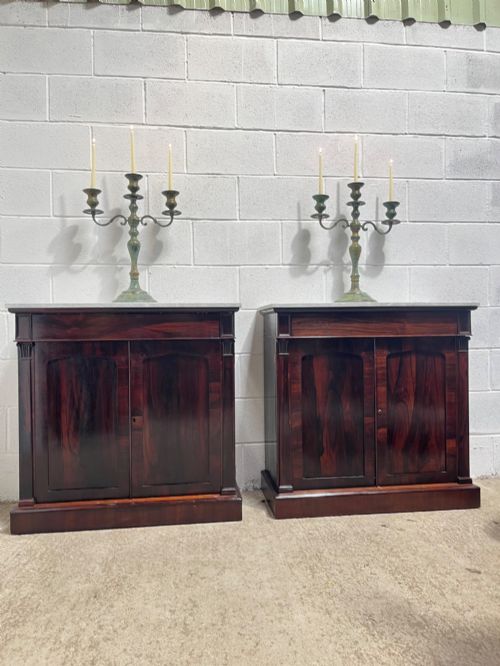
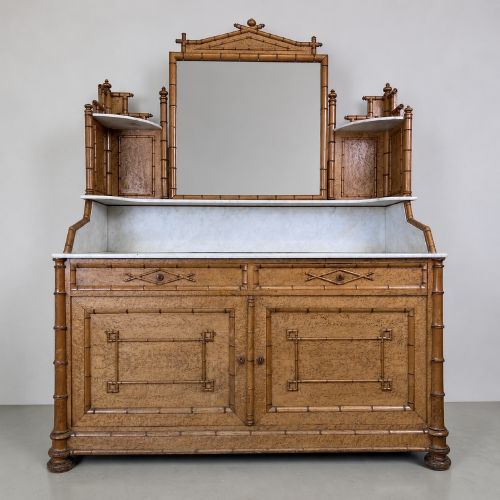
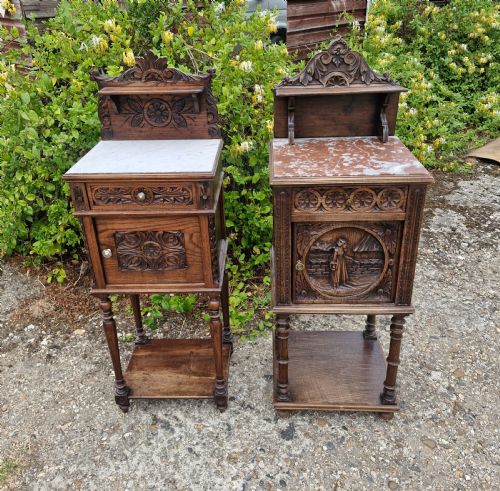
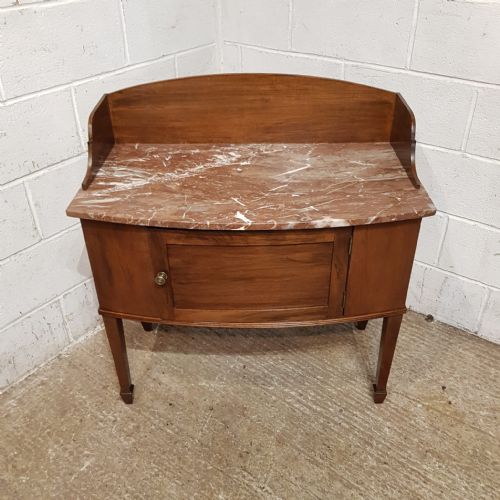
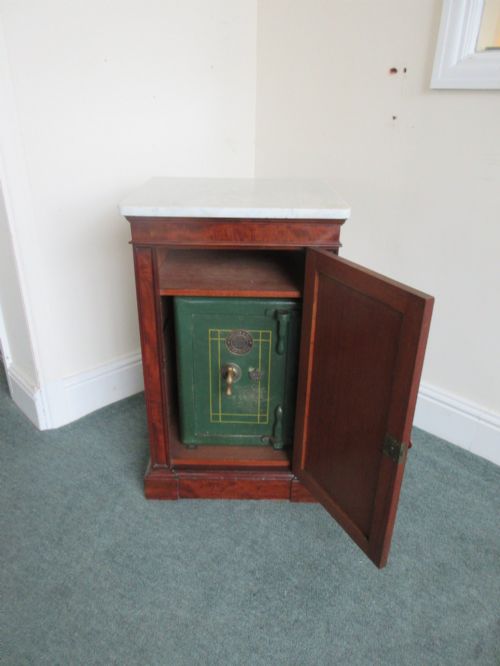
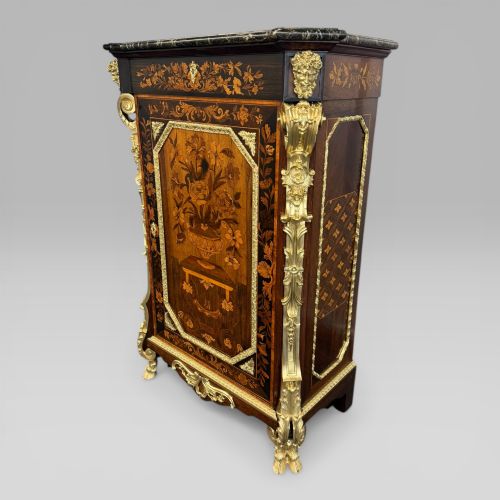
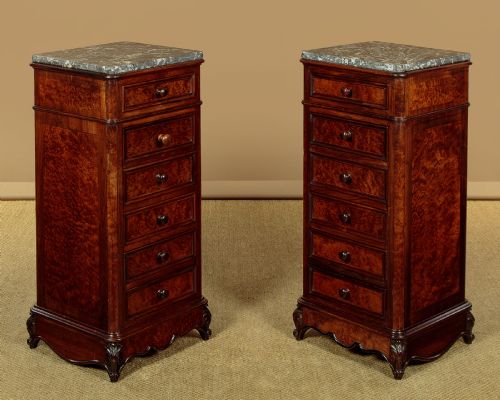
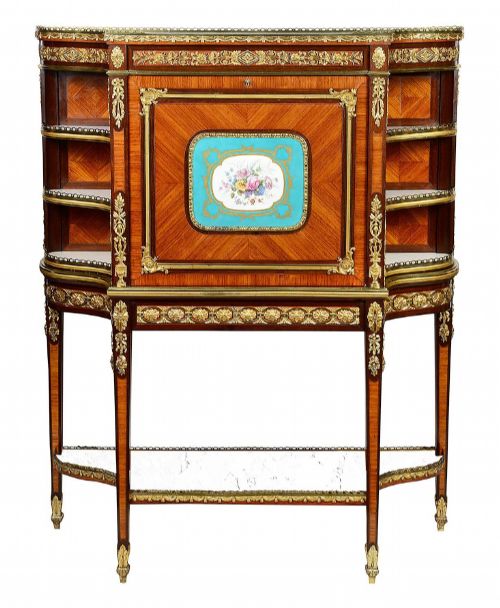
When you search for a victorian marble top cabinet, you encounter a surprisingly broad range of forms dating from the nineteenth century. The selection spans compact bedside tables and cylindrical pot cupboards to larger sideboards, chiffoniers, and mirror-backed credenzas.
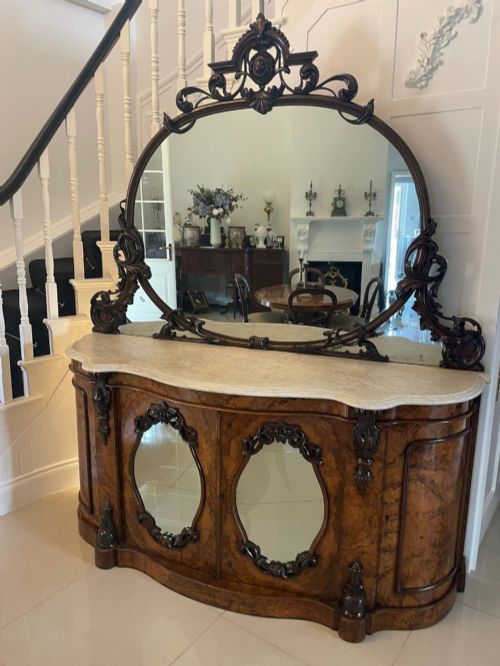
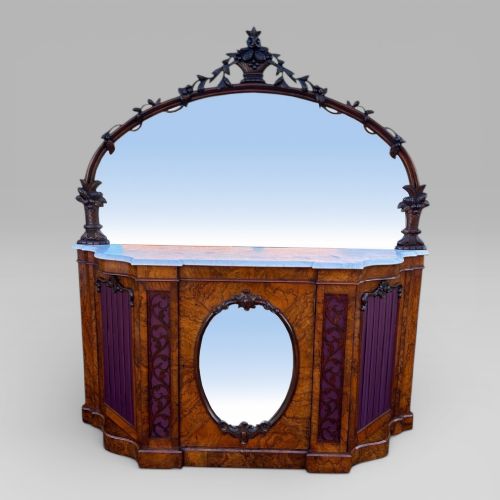
The version you are most likely to meet on this page is the walnut or mahogany bedside cabinet topped with marble, alongside larger burr walnut side cabinets. These pieces served functional roles in bedrooms and reception rooms alike, combining heavy stone tops with enclosed wooden storage.
Origins and periods cluster primarily around the Victorian era, including pieces dated to specific decades such as eighteen-seventy and nineteen-hundred. Stylistic variations range from standard Victorian designs to French Country interpretations and late Victorian or Aesthetic Movement pieces.
Materials and Construction
Cabinet makers utilised a variety of dense hardwoods including mahogany, walnut, burr walnut, rosewood, birdseye maple, and pine. Decorative embellishments feature floral marquetry inlay, gilt wood, faux bamboo turning, and carved details.
Retail Price Guide 2026
Typical UK retail prices for victorian marble top cabinet, calculated from the Sellingantiques database of over a million retail prices indexed since 2003. This retail price guide relies exclusively on Sellingantiques data; no external sources or auction records are used, so the figures do not describe the wider market.
Listings feature woods like burr walnut, mahogany, rosewood, and birdseye maple, paired with marble, glass, and mirror elements across the Victorian period.
Quality and Craftsmanship
The hierarchy of quality rests primarily on the choice of timber and the complexity of the cabinetwork. Figured timbers such as burr walnut and highly grained mahogany sit at the upper end, often accompanied by intricate floral marquetry inlay.
Structural configuration also dictates distinction, separating simple bedside pedestals from elaborate mirror-backed credenzas, glazed display units, or specialised collectors and dentist cabinets. The integration of specialised materials like Carrara marble further distinguishes the finer examples.
The Victorian Marble Top Cabinet Glossary
- Burr walnut
- A prized timber harvested from walnut tree growths, displaying swirling, highly figured grain patterns that catch the light. It appears frequently on high-end Victorian sideboards and bedside cabinets.
- Credenza
- A sideboard or display cabinet originating in furniture design for dining and drawing rooms. In Victorian pieces, these often incorporate mirrors and extensive wood marquetry.
- Pot cupboard
- A small bedside cabinet designed originally to house a chamber pot behind a single door. Many examples survive today simply as marble-topped bed cabinets.
- Marquetry
- The art of applying decorative veneer pieces in wood to form intricate floral or geometric patterns. It marks out the more decorative Victorian washstands and cabinets on the market.
- Pier cabinet
- A narrow cabinet designed specifically to fit the wall space between windows. These pieces often feature glass doors and marble surfaces.
Frequently Asked Questions
What were marble top cabinets used for?
These cabinets served multiple domestic functions across different rooms of the Victorian home. Smaller cylindrical and square versions acted as bedside tables or pot cupboards, providing a hygienic stone surface for washing equipment and water jugs.
Larger variations functioned as sideboards, chiffoniers, or credenzas in dining rooms and drawing rooms. The marble top provided a durable, wipe-clean surface for serving food, displaying ornaments, or holding lamps.
How do I identify a Victorian piece?
Victorian furniture is characterised by the heavy hardwoods used in its construction, such as solid mahogany, walnut, and rosewood. Look for period construction methods, hand-cut dovetails in the drawer construction, and traditional timber shrinkage.
Stylistic cues also help date the piece, including the presence of Aesthetic Movement influences, floral marquetry, mirror backs, and specific Victorian turned supports. The dating generally spans from the mid-nineteenth century through the turn of the twentieth century.
How do I care for the marble top?
Marble is a softer, porous stone that requires gentle cleaning with warm water and a soft cloth. Avoid using harsh chemical cleaners, vinegar, or acidic substances that can etch the polished stone surface.
To protect the top from stains and moisture rings, use coasters under glasses and clean up spills promptly. Applying a specialised stone sealer can also help preserve the original finish of the marble.
Are these cabinets suitable for modern bedrooms?
The compact bedside cabinets and pot cupboards fit easily beside modern bed heights and provide useful enclosed storage. The stone top offers a practical, durable surface for contemporary lighting and alarm clocks.
Larger side cabinets and credenzas work effectively in living spaces or hallways as statement storage pieces. Their neutral timber tones and stone tops blend readily with contemporary interior design schemes.