


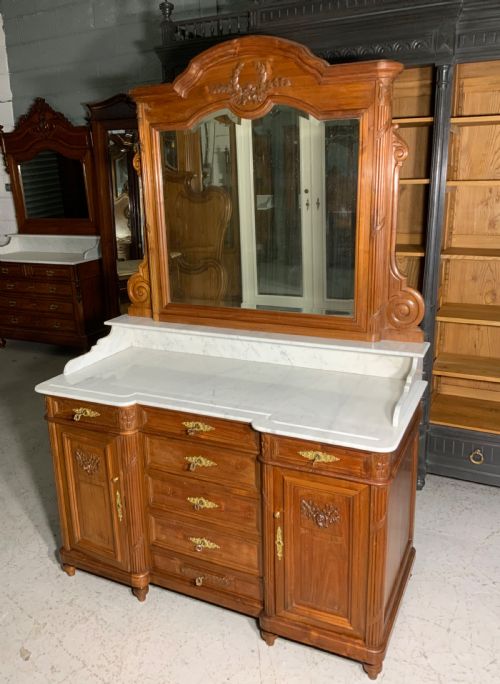
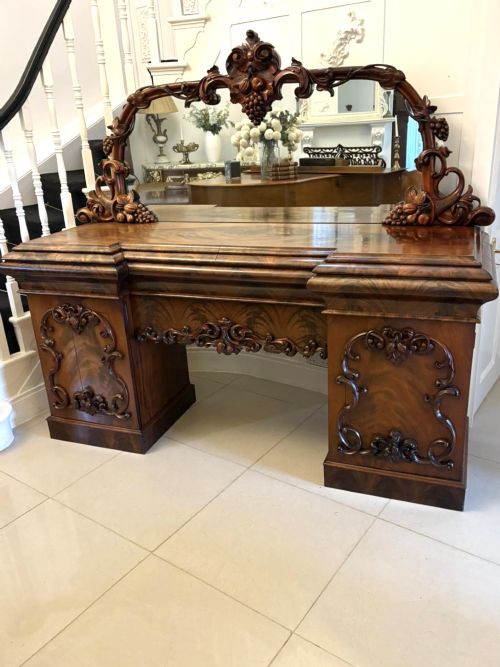
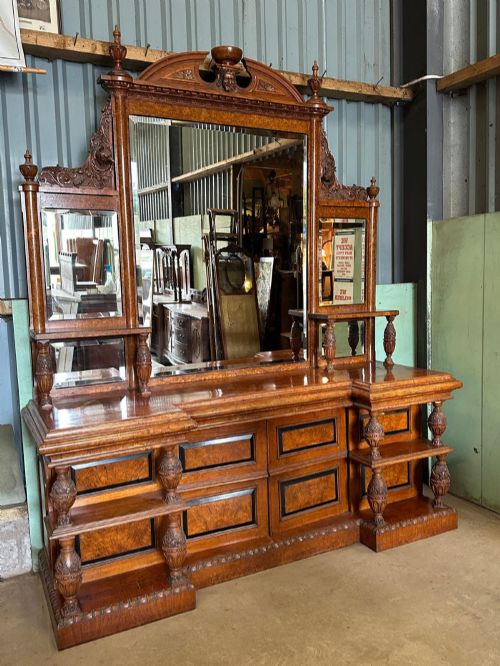
Antique Credenza with Mirror
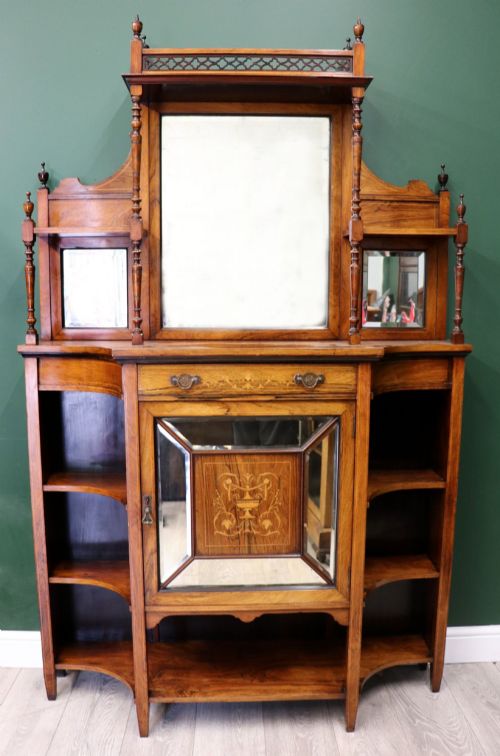
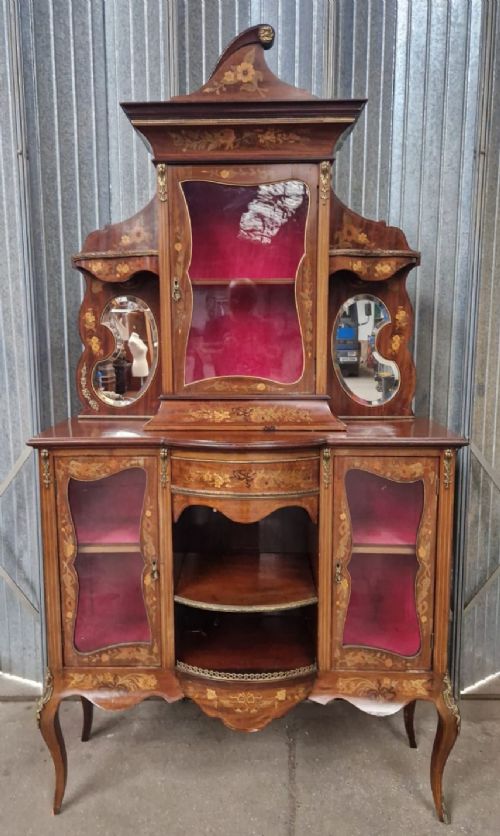
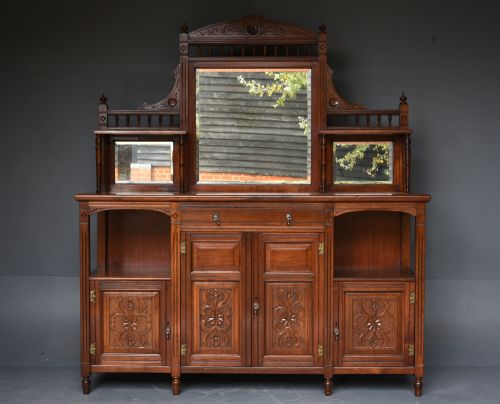
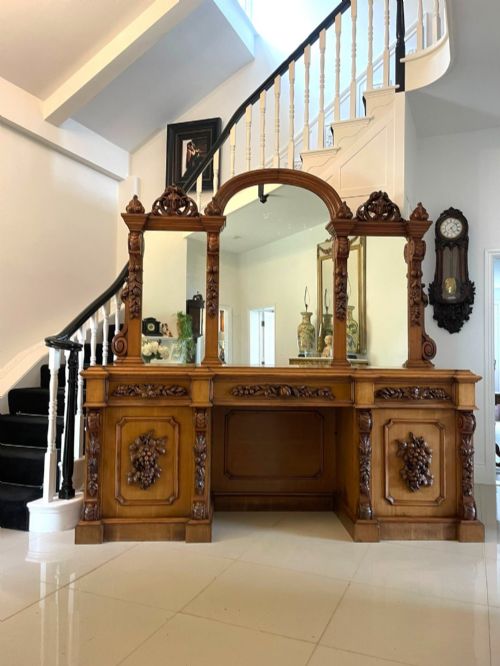
An antique credenza with mirror brings monumental Victorian presence and mirrored depth to a grand dining room or drawing room wall.
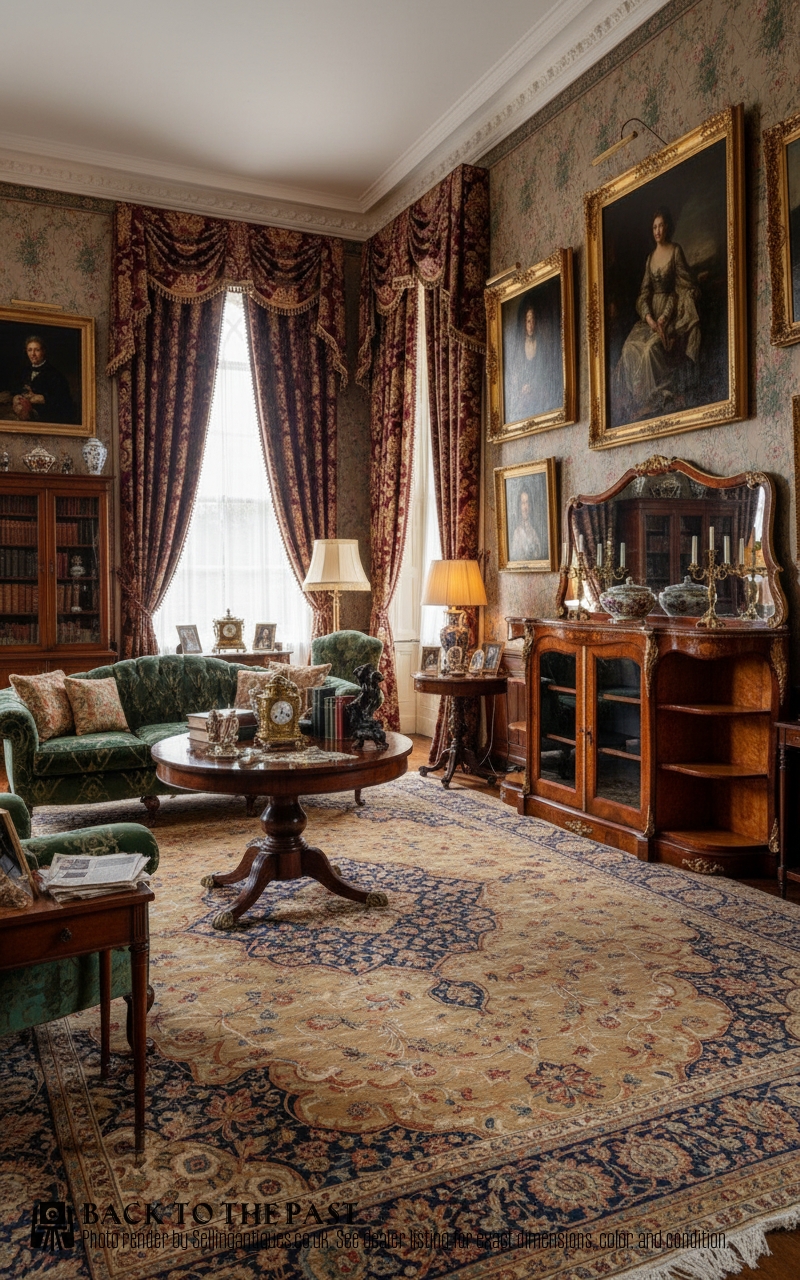
Antique Credenza with Mirror
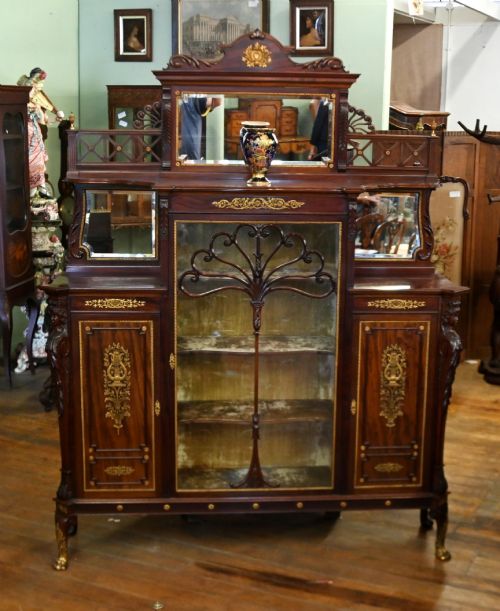
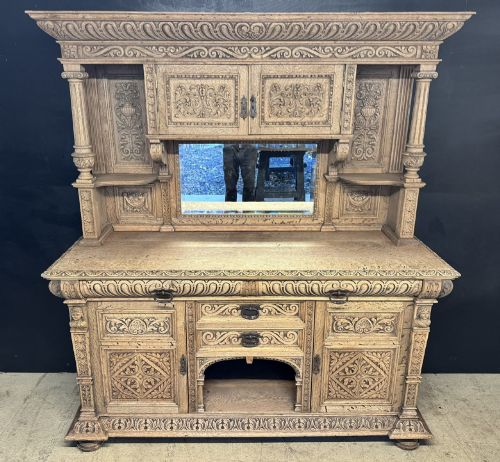
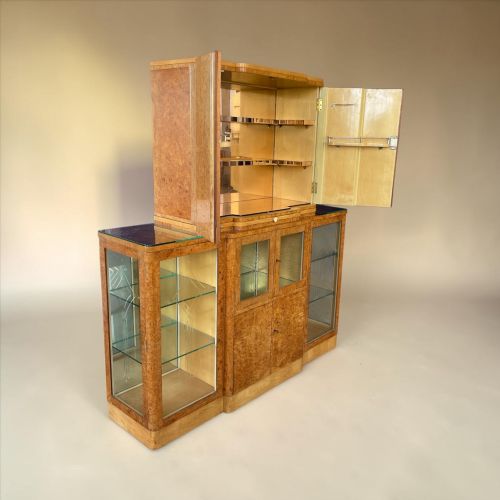
When you search for an antique credenza with mirror, you encounter substantial low-profile cabinets designed to anchor principal reception rooms. The pieces appearing here span the Victorian, Edwardian, and Regency periods, stretching from the mid-nineteenth century into the early twentieth century.
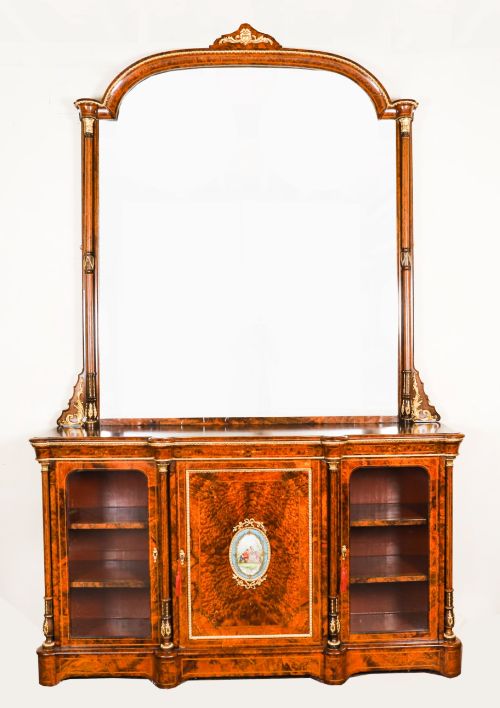
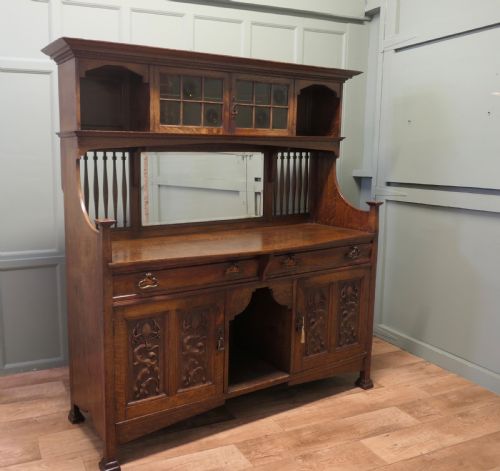
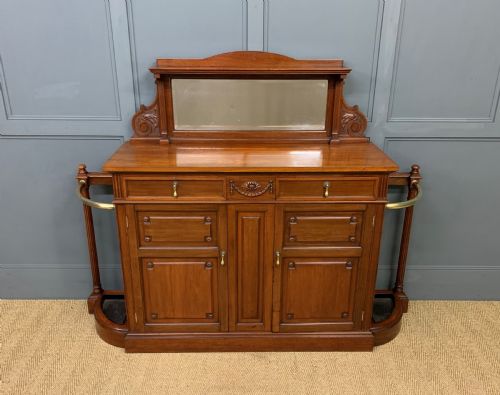
The form frequently overlaps with mirror-backed sideboards, chiffoniers, and side cabinets equipped with glass panels. Burr walnut, rosewood, and oak dominate the construction, often paired with elaborate carved frames and integrated mirror glass.
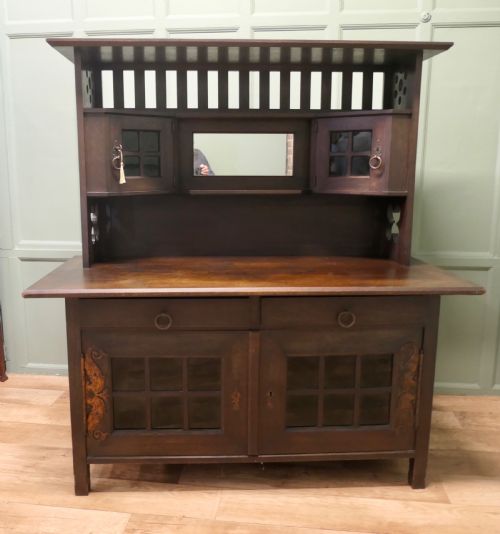
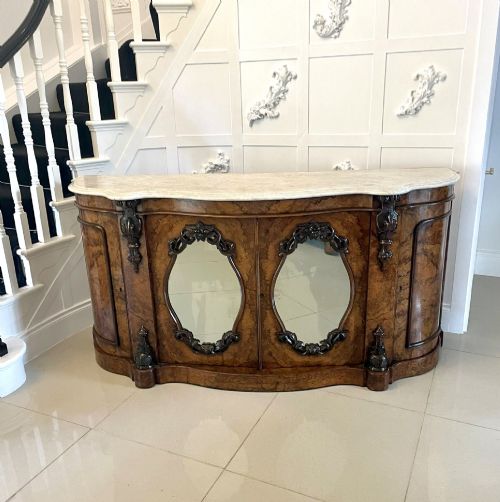
Victorian examples in burr walnut showcase rich grain patterns and applied ormolu mounts, while later Edwardian and Arts and Crafts iterations favour solid oak and rectilinear forms. These items served both to display fine porcelain and silver and to reflect candle or gas light across the room.
Materials and construction methods
Cabinet makers utilised choice timbers such as burr walnut, rosewood, and pollard oak, applying fine veneers over stable pine or mahogany carcases to create dramatic figured surfaces. Marquetry inlay in contrasting woods and delicate brass stringing frequently ornament the primary doors and friezes.
Heavy cast ormolu mounts, brass galleries, and glazed or mirrored doors require precise joinery and structural support to bear the weight of marble tops and thick glass plates. Carved crests and scrolled brackets are worked directly from solid timber sections before being pegged and glued into the main framework.
Antique Credenza with Mirror Retail Price Guide 2026
Typical asking prices for credenza with mirror among the pieces listed under this phrase on Sellingantiques today, from the lower quarter to the upper quarter. They describe what is for sale here now, not the wider market.
The listings here feature pieces executed in burr walnut, rosewood, oak, and pollard oak, spanning the Regency, Victorian, and Edwardian periods.
Assessing craftsmanship and finish
The distinction between standard production and superior craftsmanship rests in the selection of timber veneers and the depth of the carving. Finely figured burr walnut and intricate marquetry demand exceptional skill in both cutting and laying, whereas plain timber surfaces rely entirely on proportion and edge moulding.
Hardware execution and structural integration mark the upper tier of maker output. Stamped cabinet maker signatures, substantial cast ormolu details, and mercury-silvered mirror glass with bevelled edges distinguish exceptional pieces from simpler utility furniture.
Gillows
The Antique Credenza with Mirror Glossary
- Credenza
- A low dining room or parlour cabinet used for storage and display, which in Victorian examples frequently incorporates an upright mirrored superstructure.
- Chiffonier
- A compact low sideboard originating in the Regency period, typically featuring enclosed cupboards below and a small shelf or mirror above.
- Burr walnut
- A highly decorative wood veneer harvested from the knot growths of walnut trees, prized for its swirling, organic patterns.
- Ormolu
- Gilded bronze mounts and decorative details applied to the corners, doors, and pediments of high-status nineteenth-century furniture.
- Marquetry
- The art of applying thin slices of varied coloured wood to form intricate pictorial or geometric veneer patterns on a cabinet surface.
Antique Credenza with Mirror: Frequently Asked Questions
How do I date an antique credenza?
Dating relies on combining the primary timber, decorative style, and glass manufacture. Burr walnut veneers and heavy ormolu mounts point strongly to the Victorian era, while clean lines and quarter-sawn oak indicate later Edwardian production.
Examining secondary woods inside the drawers and the construction of the mirror backing provides further chronological confirmation.
What is the difference between a credenza and a sideboard?
A credenza is traditionally a low, enclosed cabinet designed for formal reception rooms, frequently featuring mirrored doors and decorative ormolu mounts. Sideboards often incorporate greater storage capacity with central cellarets and utensil drawers.
Over the nineteenth century, the terms frequently blurred, particularly when makers added mirrored superstructures to standard sideboard forms.
Where should I place a mirrored credenza?
These low cabinets suit principal living rooms, dining rooms, or wide hallways where they can anchor a large wall space. Position them opposite a window or light source to maximise the reflective capacity of the integrated mirror.
Ensure the floor is level, as heavy marble tops and solid timber carcases require stable placement to maintain door alignment.
How should I clean burr walnut veneer?
Dust the timber regularly with a soft, dry cloth to prevent particulate accumulation. Apply a quality beeswax sparingly twice a year to nourish the grain and protect the finish.
Avoid modern liquid silicones and keep the cabinet away from direct heat sources and strong sunlight to prevent veneer drying.