




French Revival Credenza
A french revival credenza brings heavy nineteenth-century display presence into a room through rich wood veneers and gilt mounts.

French Revival Credenza
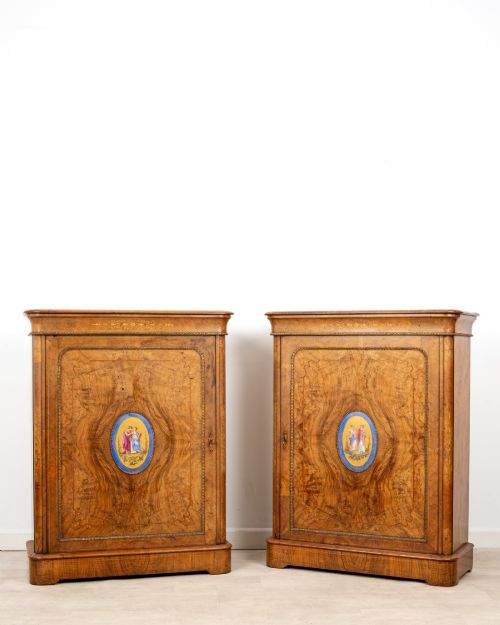
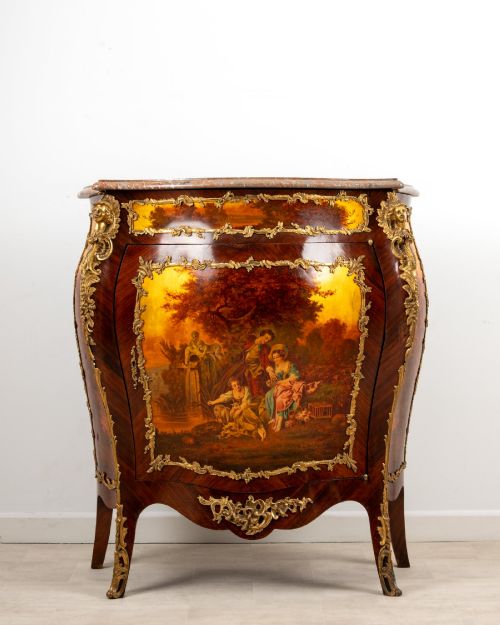
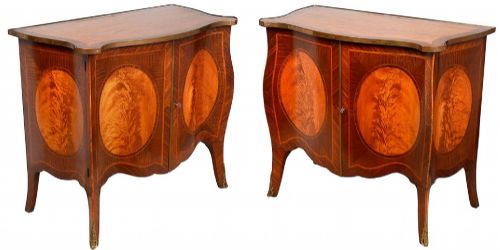
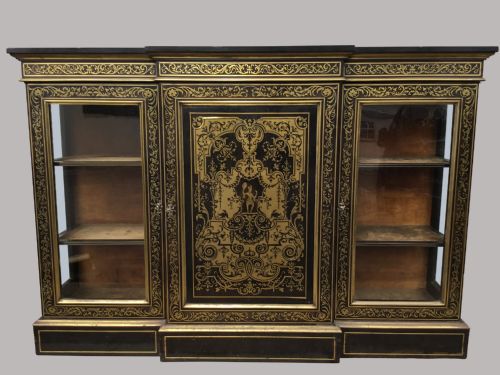
A french revival credenza is a substantial low storage piece designed for formal display, drawing directly on Louis XV and Louis XVI decorative vocabulary. When searching this phrase, buyers encounter nineteenth-century walnut, ebonised wood, and kingwood variations built with serpentine fronts or breakfront profiles. These low cabinets frequently incorporate glazed side doors flanking a central cupboard, providing surface space for ornamental objects above.
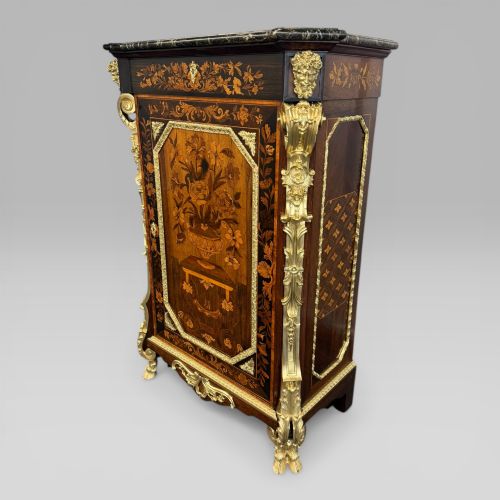
The aesthetic leans heavily on continental ornamentation, uniting classical symmetry with elaborate marquetry and floral inlays. Many examples found in these listings date from the Victorian era onward, reflecting a strong nineteenth-century British and French appetite for revivalist furniture. Alongside standard credenzas, related sideboard and pier cabinet forms appear frequently under this design banner.
Materials and Construction
Makers built these pieces using solid wood carcasing overlaid with decorative veneers such as burr walnut, satinwood, and kingwood. Ebonised finishes and rich marquetry patterns provide strong visual contrast across the door panels and friezes.
Gilt bronze or brass mounts, known as ormolu, frame the doors, corners, and plinths, while inset panels of marble or hand-painted porcelain plaques complete the surface decoration.
French Revival Credenza Retail Price Guide 2026
Typical asking prices for french revival credenza among the pieces listed under this phrase on Sellingantiques today, from the lower quarter to the upper quarter. They describe what is for sale here now, not the wider market.
Several credenzas hide delicate porcelain plaques behind heavy brass mounts, as though fine dinnerware required its own miniature art gallery.
Judging the Execution
Quality rests in the precision of the cabinetwork and the crispness of the cast ormolu mounts applied to the frame. Superior examples display tightly fitted marquetry, genuine marble tops without repairs, and high-grade porcelain plaques painted with fine detail.
The weight and depth of the timber veneer, alongside the complexity of the serpentine shaping, separate standard production pieces from exhibition-grade work.

Edward Holmes Baldock·Paul Sormani
The French Revival Credenza Glossary
- Ormolu
- Gilded bronze mounts used extensively to decorate the corners, borders, and feet of nineteenth-century furniture. This metalwork adds bright metallic highlights to dark wood surfaces.
- Marquetry
- Elaborate patterns created by fitting different wood veneers together onto a structural background. Floral and geometric motifs dominate these designs.
- Credenza
- A low cabinet, typically featuring three doors, used historically for serving food or displaying precious objects. Nineteenth-century versions often include glass panels for viewing collections.
- Satinwood
- A durable, yellowish timber prized for its smooth grain and reflective quality. It serves as a light-coloured veneer in inlaid cabinetwork.
French Revival Credenza: Frequently Asked Questions
What is a french revival credenza?
A french revival credenza is a low nineteenth-century display cabinet ornamented with marquetry, ormolu mounts, and porcelain plaques.
These pieces draw on classical French design motifs to create formal storage for a dining room or parlour.
How were these credenzas used?
They served as decorative furniture for holding porcelain, silver, and glassware behind glass doors.
The flat top surface provided additional space to display lamps, clocks, and decorative ornaments.
How do I style a credenza at home?
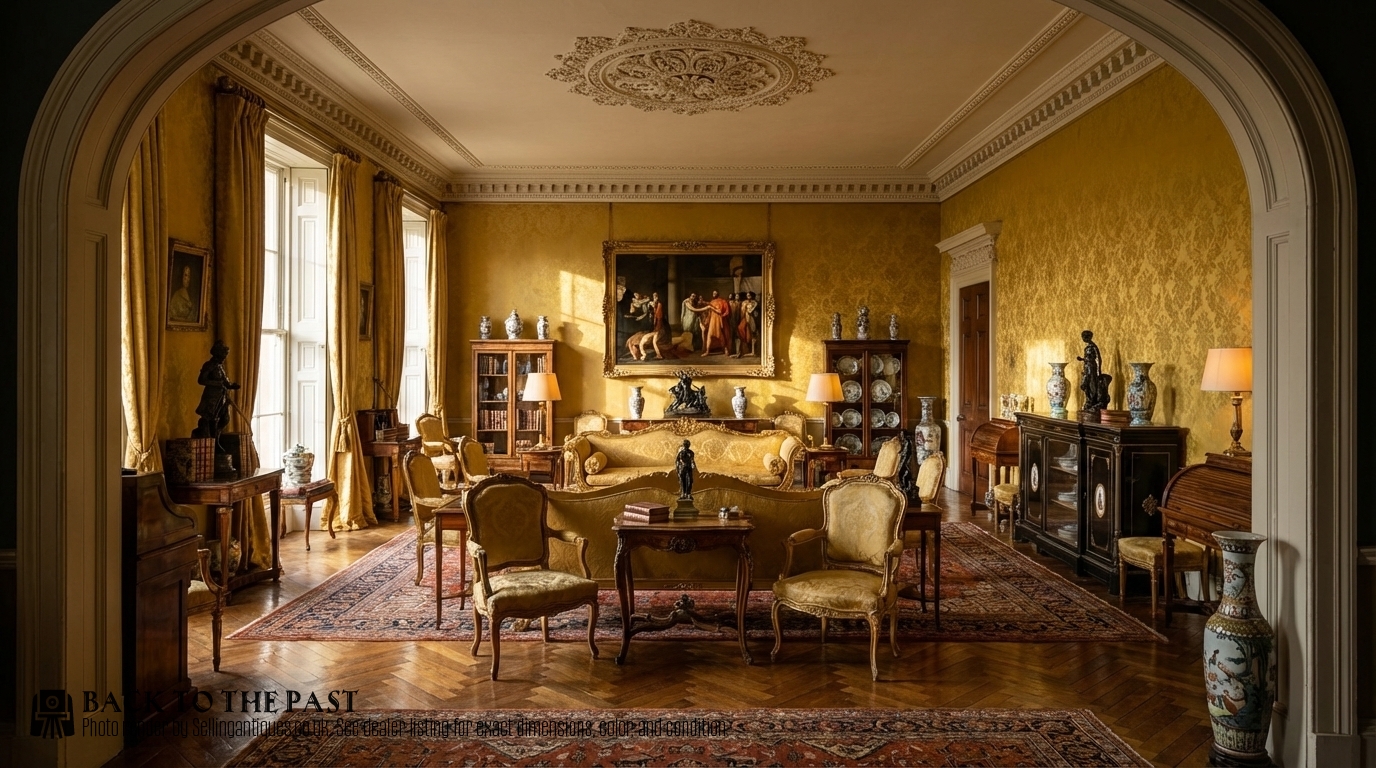
Place the credenza against a main wall in a living room or dining area where its proportions can anchor the space.
Keep the top surface balanced with a few well-chosen objects to let the wood grain and ormolu mounts remain visible.