


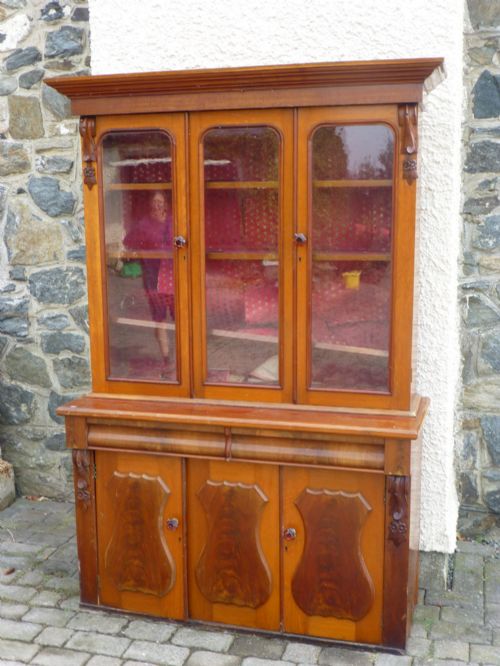
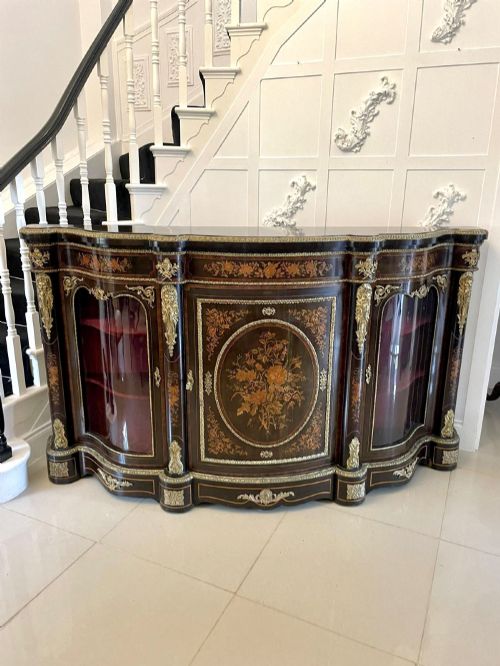
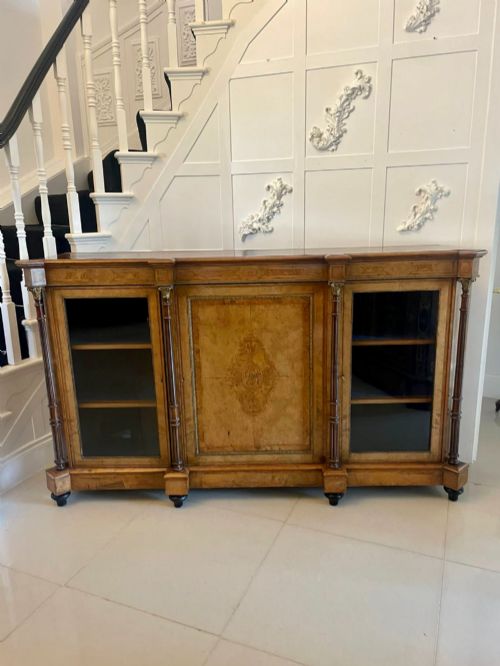
Victorian Glazed Sideboard
A victorian glazed sideboard brings display and storage together in burr walnut, mahogany and rosewood with glass doors for treasured collections.

Victorian Glazed Sideboard
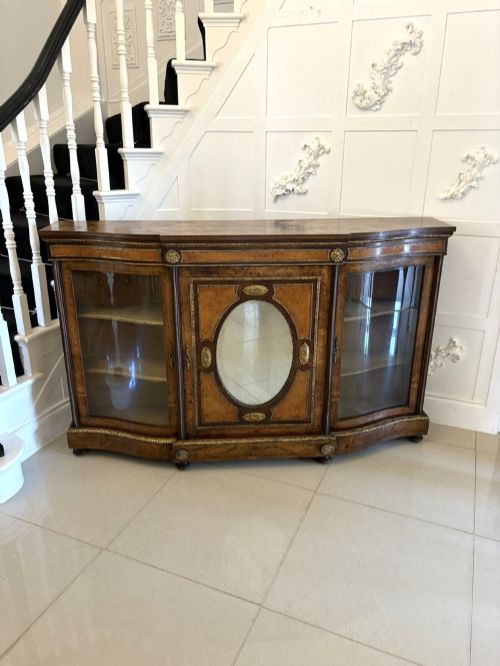
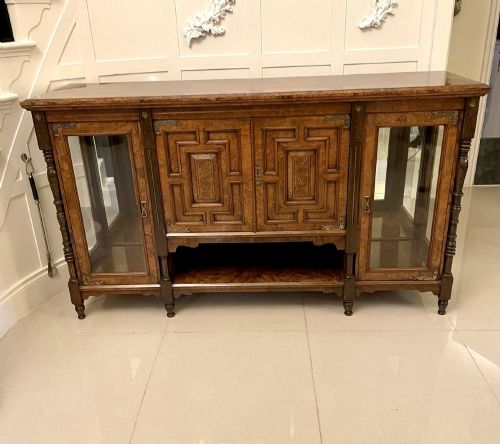
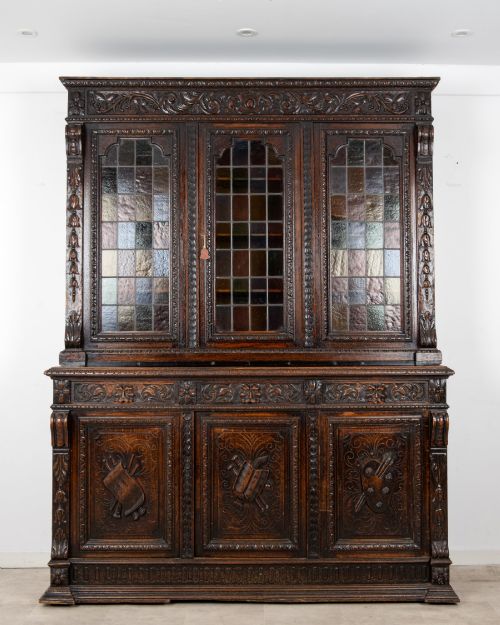
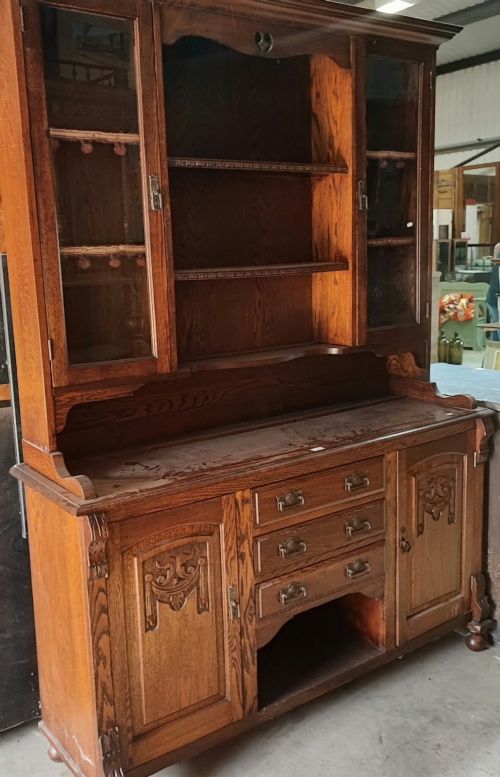
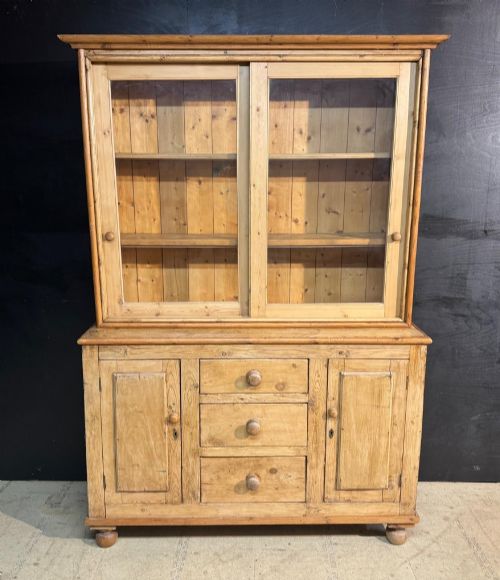
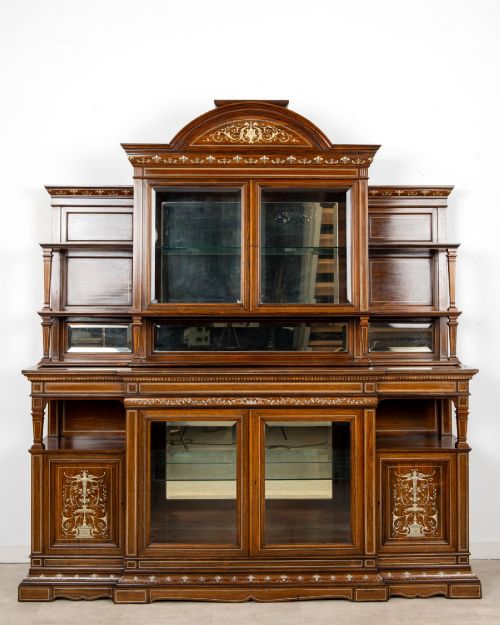
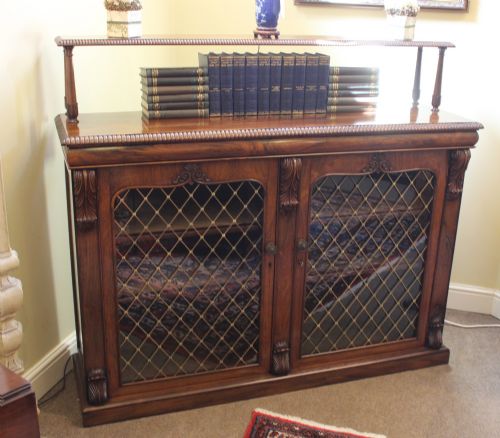
A victorian glazed sideboard encompasses elaborate credenzas, large breakfront bookcases, refined pier cabinets and vernacular kitchen dressers produced across the nineteenth century. The typical piece encountered in this selection combines timber structure with transparent glass panels for showing ceramics and books.
Makers drew on diverse idioms including French Revival, Gothic Revival and English Country styles to suit formal drawing rooms and rustic kitchens alike. Credenzas dominate the selection in burr walnut, while pine and oak dressers represent the vernacular tradition.
Dating spans from the early nineteenth century through the 1910s, capturing shifts in domestic storage from enclosed cupboards to glazed display furniture. Pieces range from intimate pier cabinets to monumental breakfront cases.
Materials and Technique
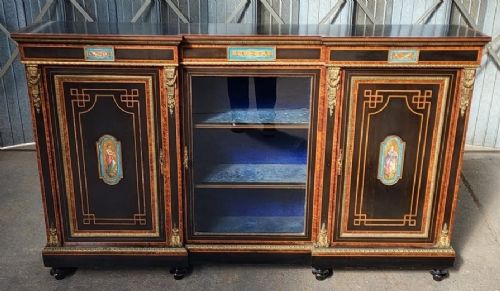
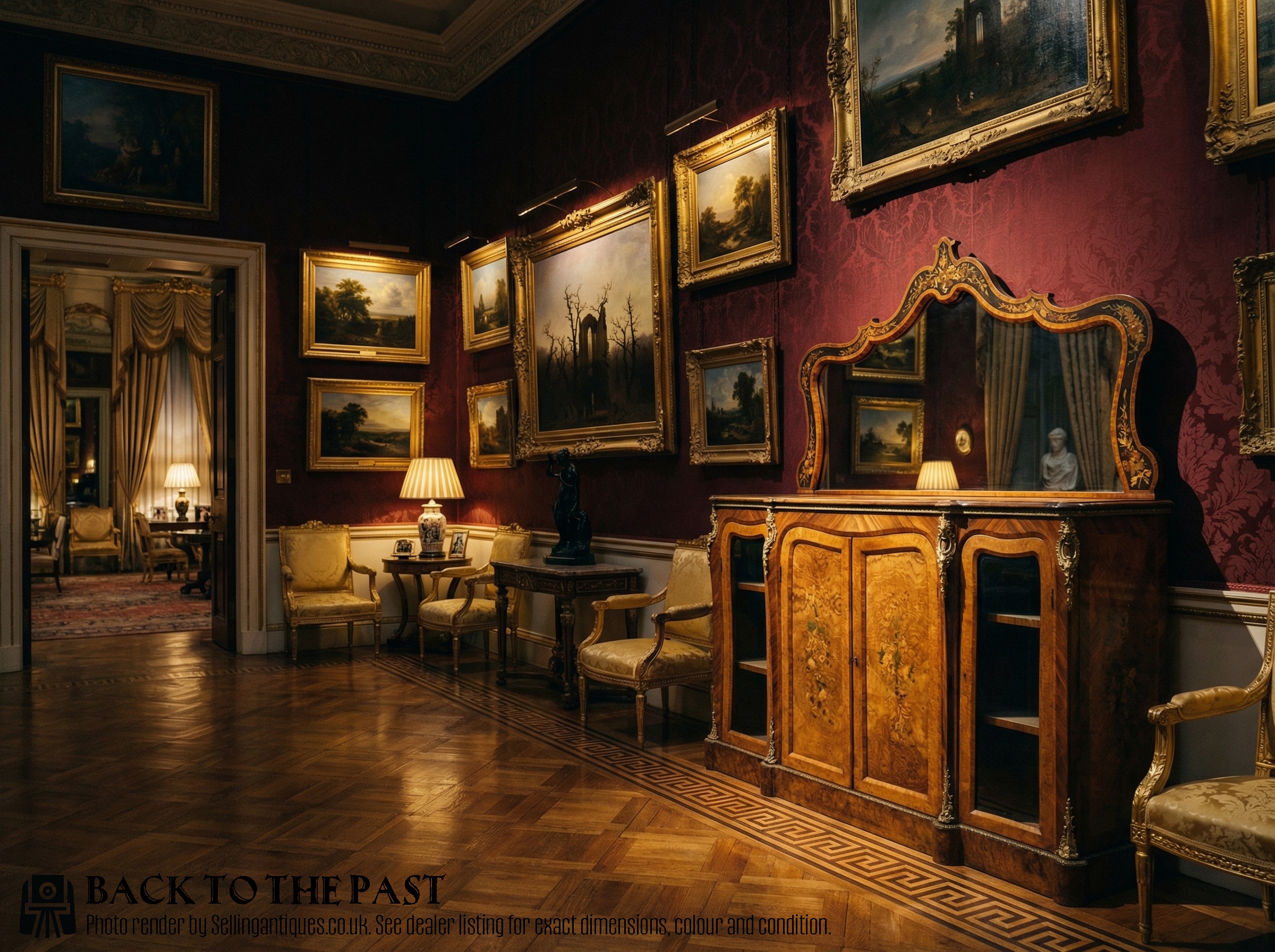
Cabinetmakers utilised rich timbers such as burr walnut, rosewood, mahogany and satinwood, often enhanced by intricate marquetry and contrasting ebonised wood. Glass fronts allowed light into the interior while protecting contents from dust.
Mounts in cast ormolu, brass and porcelain added ornamental structure to serpentine and breakfront carcasses. Marble tops appeared on select credenzas alongside carved details in oak and tiger oak.
Victorian Glazed Sideboard Retail Price Guide 2026
Typical asking prices for victorian glazed sideboard among the pieces listed under this phrase on Sellingantiques today, from the lower quarter to the upper quarter. They describe what is for sale here now, not the wider market.
The selection includes styles ranging from French Revival and Gothic Revival to English Country and Arts and Crafts.
Standards of Execution
Quality reveals itself in the selection of wood veneers, particularly the grain matching in burr walnut and rosewood surfaces. Superior examples integrate cast ormolu mounts and delicate marquetry with precise cabinet joinery.
The refinement of the glass and the proportion of the carved architectural details distinguish exhibition-grade pieces from standard domestic furniture.

Collinson & Lock·Edwards & Roberts
The Victorian Glazed Sideboard Glossary
- Credenza
- A low cabinet or sideboard, frequently fitted with glazed side doors and central cupboards, popular in Victorian drawing rooms. These items served both to display ornaments and store household silver.
- Pier Cabinet
- A narrow display cabinet designed to fit the wall space between windows. They typically feature a single glazed door and inlaid timber decoration.
- Ormolu
- Gilded bronze used for decorative mounts and framing on high-status Victorian cabinets. It provides a metallic contrast to dark woods like walnut and ebonised timber.
- Marquetry
- Inlaid wood designs forming decorative patterns across cabinet doors and friezes. Craftsmen used various tinted and exotic woods to create floral or geometric pictures.
- Breakfront
- A cabinet design where the central section projects forward from the flanking wings. This architectural arrangement creates depth and shadow on large bookcases and sideboards.
Victorian Glazed Sideboard: Frequently Asked Questions
Where should I place a credenza?
These low cabinets suit principal living rooms or dining spaces where glazed doors can protect collections while displaying them.
Ensure adequate floor space allows the side doors to open fully without obstruction from other furniture.
How do I care for burr walnut?
Keep wooden surfaces away from direct sunlight and excessive heat sources to prevent the veneer from drying and cracking.
Apply a traditional wax polish occasionally to maintain the lustre of the grain.
What is the difference between a credenza and a dresser?
Credenzas are formal, highly ornamented drawing room cabinets featuring exotic veneers, ormolu mounts and glass panels for display.
Dressers originate from kitchen and vernacular traditions, constructed from pine or oak with open shelves or glazed upper cupboards.
How are periods dated?
Stylistic markers such as ormolu mounts, marquetry patterns and timber choices help assign pieces to specific decades within the nineteenth century.
Construction methods inside the cupboards and drawers provide further clues regarding manufacturing date.