
Edwardian Style Credenza
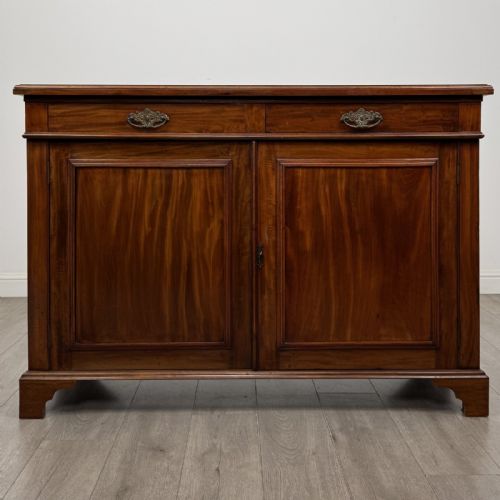
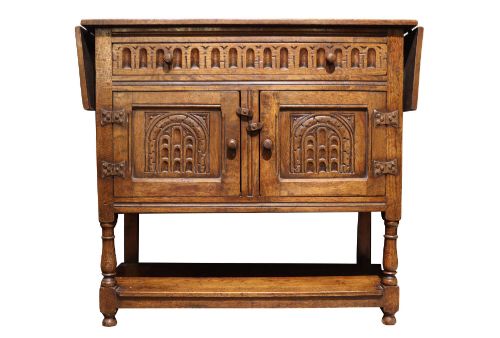
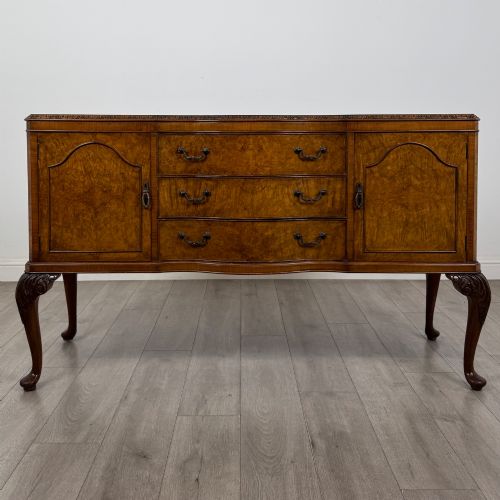
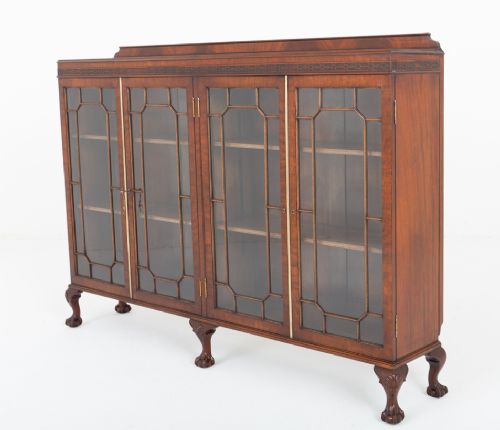
An Edwardian style credenza brings refined timber work and formal display space into a dining room or hall.
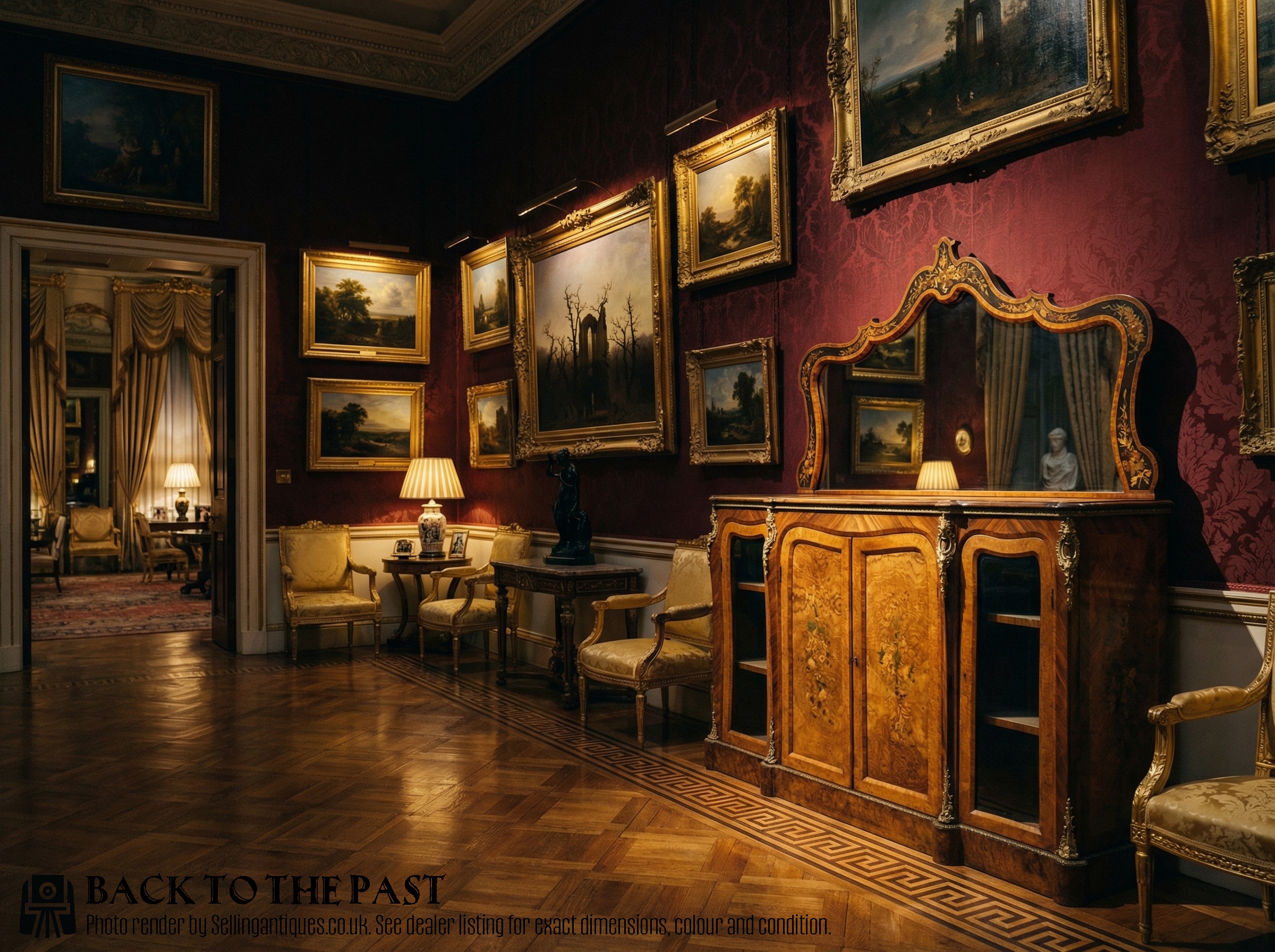
Edwardian Style Credenza
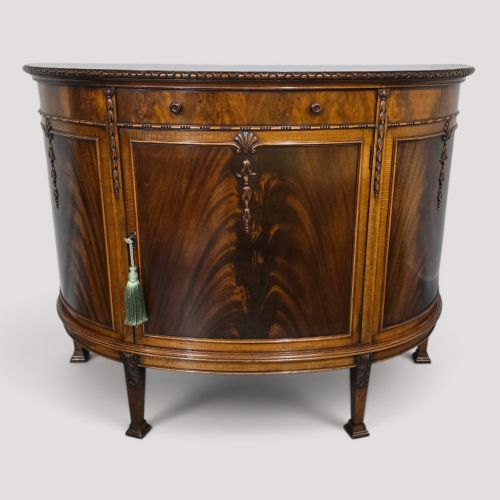
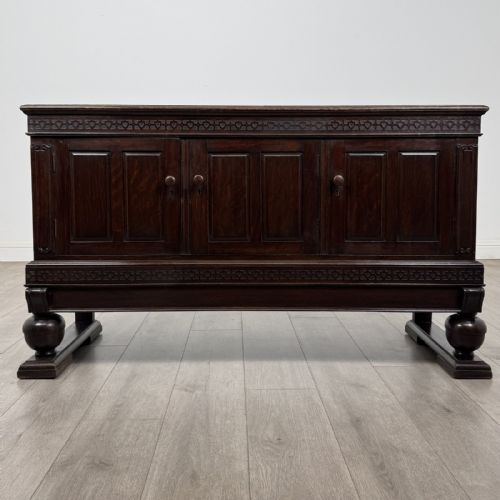
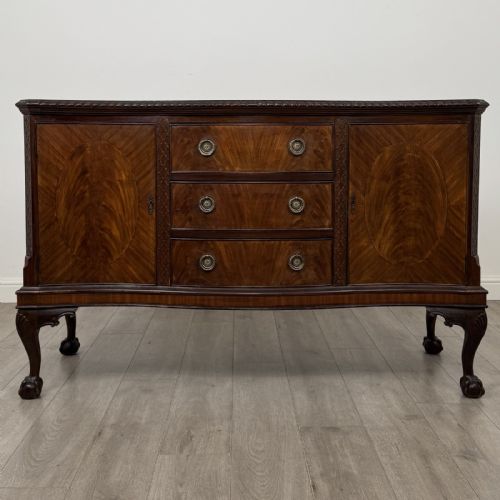
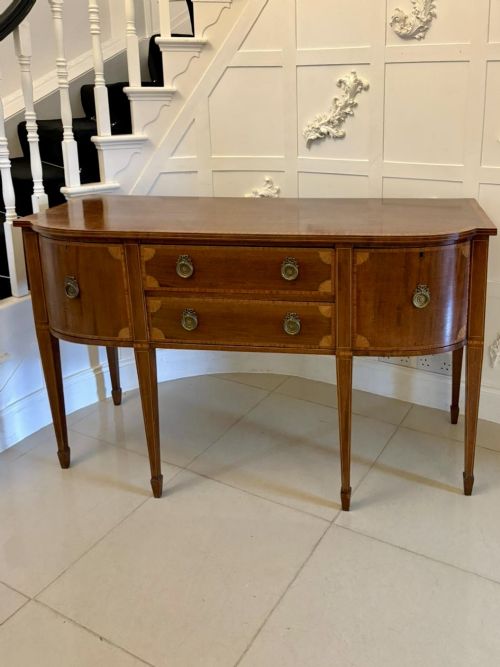
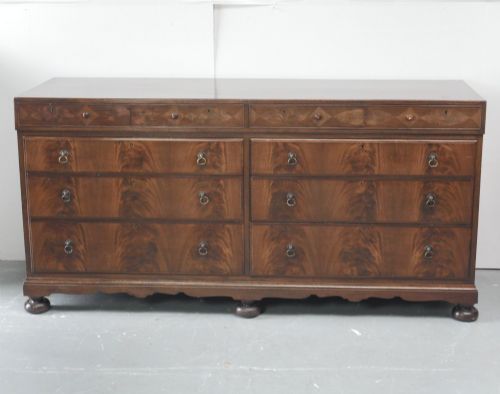
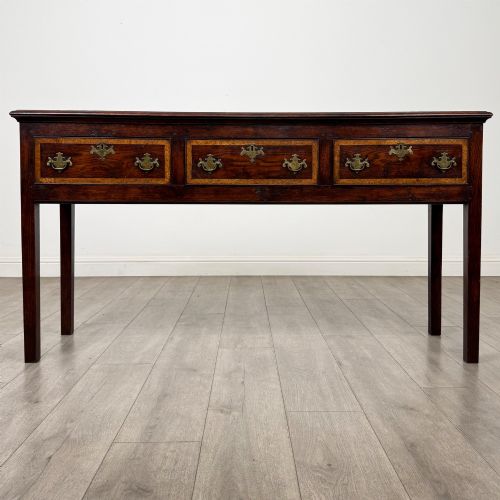
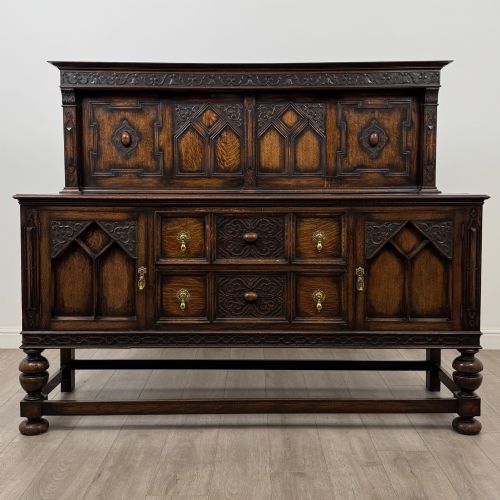
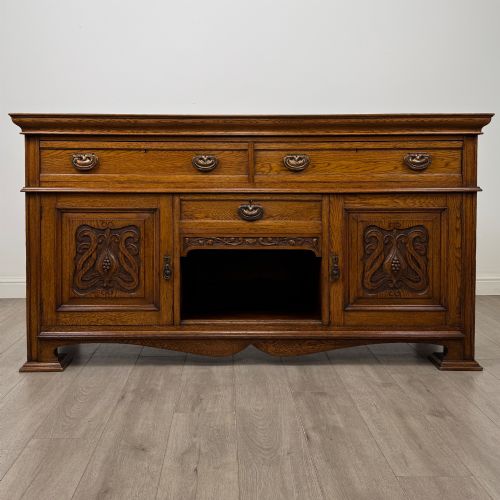
When you search for an Edwardian style credenza, you encounter a selection of large storage furniture spanning sideboards, side cabinets, display cabinets, and dresser bases. The objects listed originate from varied periods including the Edwardian era itself, alongside Victorian, Regency revival, and early twentieth century interpretations.
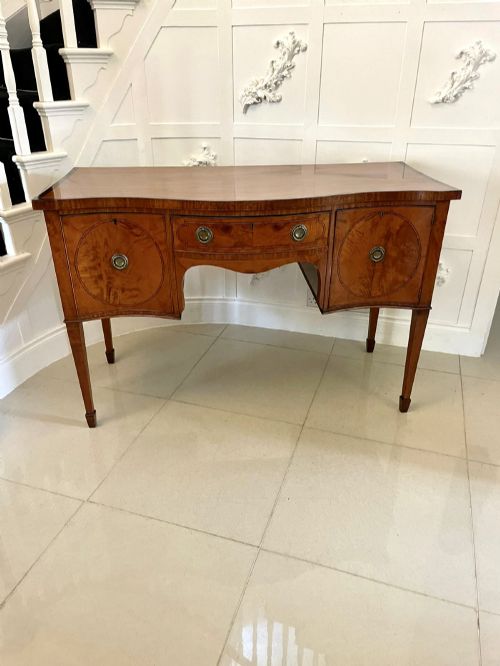
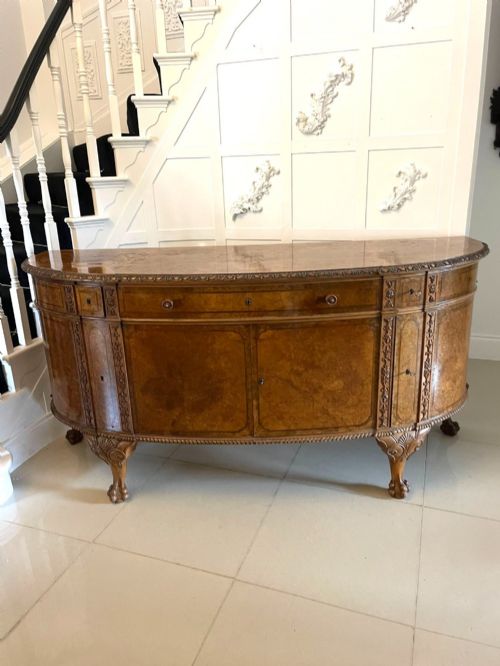
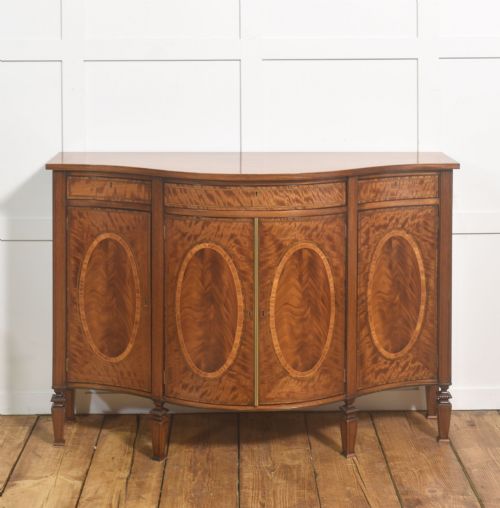
You meet pieces fashioned in distinct revival styles, notably Sheraton Revival, Arts and Crafts, Queen Anne Revival, Chippendale Revival, and Adam Revival. Forms range from bow fronted sideboards and serpentine commodes to glazed four door cabinets and burr walnut credenzas.
The selection reflects both formal drawing room pieces with elaborate marquetry and sturdy utility furniture rooted in the Arts and Crafts movement. Mahogany, oak, and walnut dominate the forms, often paired with satinwood crossbanding or brass and ormolu mounts.

How they were made
Cabinet makers utilised solid timbers alongside finely cut veneers, applying mahogany, walnut, satinwood, and oak over robust structural carcasses. Flame and burr figures in the wood grain provided visual depth on drawer fronts and cupboard doors.
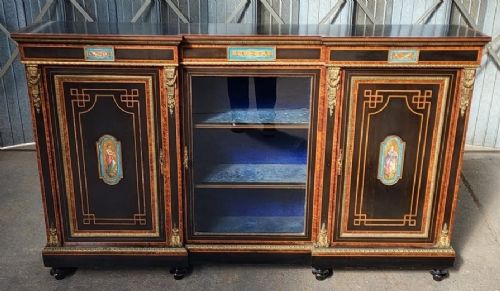
Decorative surfaces relied on intricate inlay, marquetry, and crossbanding, often combining contrasting light and dark woods to create geometric or neoclassical motifs. Brass, copper, and ormolu mounts furnished handles, key escutcheons, and feet, while glass panels allowed display storage in cabinets.
Design styles span Sheraton Revival, Arts and Crafts, Queen Anne Revival, Chippendale Revival, Adam Revival, and Gothic revival forms.
What varies in quality
The distinction between standard production and exceptional craftsmanship rests in the selection of timber figures and the precision of the joinery. Finely figured burr walnut, flame mahogany, and matched satinwood veneers require expert hand application that marks out superior workshops.
Subtlety of carving, the crispness of inlaid stringing, and the weight of cast brass or ormolu mounts separate ambitious revival pieces from simpler utility furniture. Internal construction, including solid wood drawer linings and original locks, demonstrates the underlying standard of the piece.
Whytock & Reid·Ambrose Heal·Heal & Son·Leonard Wyburd·Liberty & Co·M. D. Miller & Sons
The Edwardian Style Credenza Glossary
- Credenza
- A low cabinet or sideboard, historically used for displaying plate or serving food. It frequently incorporates glazed doors or central cupboards flanked by side compartments.
- Crossbanding
- A narrow strip of veneer applied perpendicularly to the grain along the edge of a tabletop, drawer front, or cabinet door. This technique creates a neat framing effect using contrasting timber.
- Marquetry
- The art of forming decorative patterns using fitted pieces of wood veneer, shell, or ivory. It covers flat surfaces on cabinet doors and tops with pictorial or geometric designs.
- Ormolu
- Gilded bronze mounts applied to furniture for decorative effect on corners, feet, and keyholes. The technique adds a metallic sheen that contrasts with dark woods like mahogany and ebony.
- Serpentine
- A furniture front or edge shaped in a double curve, sweeping inward then outward. It demands high joinery skill to execute smoothly across solid timber or veneered surfaces.
Edwardian Style Credenza: Frequently Asked Questions
What is an Edwardian style credenza used for?
These pieces serve primarily for dining room storage, holding tableware, linens, and serving dishes while providing a surface for display. In domestic settings, they function effectively as sideboards or focal display cabinets in a living space.
The enclosed cupboards and drawers conceal household items, while flat tops or glass doors accommodate lamps, ceramics, and decorative objects.
How do I identify a Sheraton Revival piece?
Sheraton Revival furniture draws on late eighteenth century neoclassical designs, typically featuring satinwood veneers, symmetrical proportions, and delicate inlay work. Look for tapering legs, bow fronts, and decorative painted or inlaid motifs such as urns, husks, and bellflowers.
These pieces often date from the late Victorian or Edwardian periods, reinterpreting earlier lightness and elegance for newer homes.
Are Arts and Crafts sideboards different?
Arts and Crafts sideboards emphasise honest construction, solid oak timber, and simple hand finished details rather than applied neoclassical ornament. They frequently showcase exposed tenon joints, hammered copper hardware, and a focus on the natural grain of golden or brown oak.
Designers associated with this movement favoured functional utility and craft integrity over historical revivalism.
How do I care for antique mahogany?
Keep antique mahogany out of direct sunlight and away from direct heat sources to prevent the wood from drying out and the veneer from lifting. Clean surfaces using a soft, dry cloth and apply a quality beeswax periodically to maintain the lustre of the polish.
Avoid silicone based sprays, which can penetrate old finishes and damage the timber over time.