
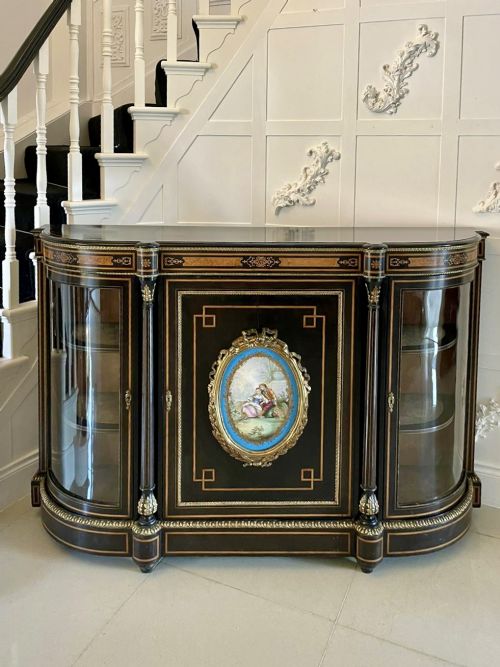


Sevres Plaque Sideboard
These sevres plaque sideboard pieces combine rich woods and porcelain mounted panels, offering a striking centrepiece for the traditional interior.

Sevres Plaque Sideboard
A sevres plaque sideboard typically takes the form of a credenza or side cabinet, uniting timber construction with porcelain insets. The versions most frequently encountered on this page belong to the nineteenth century, spanning Victorian and Napoleon III periods.
Makers shaped these items as credenzas, sideboards, and side cabinets, frequently employing a three-door layout or incorporating mirror backs. Stylistic influences lean heavily towards Louis XVI Revival and French Chateau aesthetics.
The combination of burr walnut, ebonised wood, and satinwood provides a dark or figured backdrop that sets off the painted porcelain panels. Buyers select these pieces for their formal presence and historical decorative scheme.
Construction and Materials
Craftsmen built the carcases using foundational timbers like walnut, burr walnut, and ebonised wood, sometimes overlaid with amboyna or satinwood veneers. These woods supplied durable frames designed to showcase decorative inlays and marquetry.
Ormolu and gilt bronze mounts frame the porcelain plaques and highlight structural edges, while marble tops frequently finish the upper surface of French side cabinets. The integration of brass elements further secures the decorative panels within the timber framework.
Materials recorded include porcelain, ormolu, glass, burr walnut, ebonised wood, walnut, brass, and gilt bronze.
Judging Quality and Execution
The refinement of the porcelain painting on the inset plaques marks a primary division in quality, alongside the precision of the marquetry and timber figure. Pieces designated as exhibition quality display a higher standard of joinery and more ambitious brass and ormolu mounts.
The choice of cabinet woods also dictates the grade of the piece, with richly figured burr walnut and carefully selected satinwood standing apart from plainer ebonised surfaces. Cohesion between the gilt bronze mounts and the porcelain inserts distinguishes superior cabinet work from standard production.
The Sevres Plaque Sideboard Glossary
- Credenza
- A low cabinet or sideboard, frequently featuring cupboards and glass doors. These items often incorporate porcelain plaques and ormolu mounts.
- Ormolu
- Gilt bronze applied as a decorative mount to furniture. This technique adds metallic contrast to the timber carcase.
- Marquetry
- Decorative veneer patterns inlaid into the furniture surface. Craftsmen used various coloured woods to create pictorial or geometric designs.
- Ebonised
- Wood treated to resemble ebony, producing a dense black finish. This treatment provides a dark contrast against gilt bronze and porcelain.
- Satinwood
- A pale, lustrous timber utilised for fine veneers. Its reflective grain suits detailed marquetry work.
Sevres Plaque Sideboard: Frequently Asked Questions
What defines a sevres plaque sideboard?
These pieces are nineteenth-century credenzas and side cabinets featuring porcelain plaques set into timber carcases.
They combine French and Victorian revival styles with materials like burr walnut, ormolu, and marble.
How were these sideboards used historically?
They served as formal display furniture in nineteenth-century reception rooms and dining spaces.
Owners used the flat tops for serving or display, while enclosed cupboards stored fine china and silver.
How do I distinguish between periods?
Nineteenth-century examples often carry Louis XVI Revival or Napoleon III design elements.
Victorian pieces frequently utilise burr walnut and ebonised finishes alongside ormolu mounts.
How do I care for timber and porcelain?
Keep the wood nourished with appropriate traditional waxes and avoid excessive moisture.
Gentle dusting preserves the gilt bronze mounts and the painted porcelain panels without abrasive cleaners.