

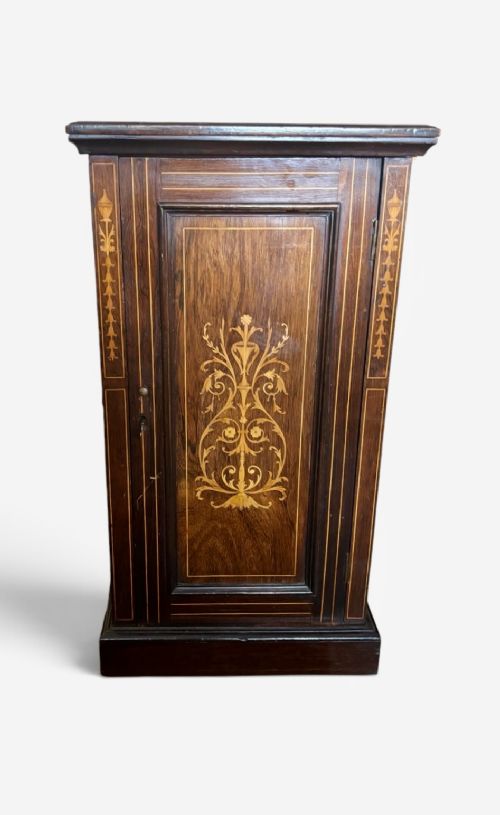
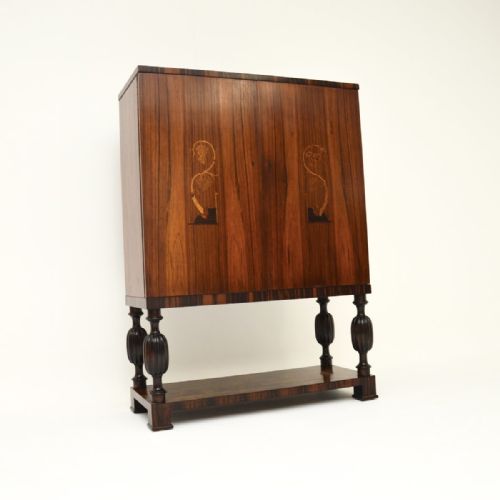
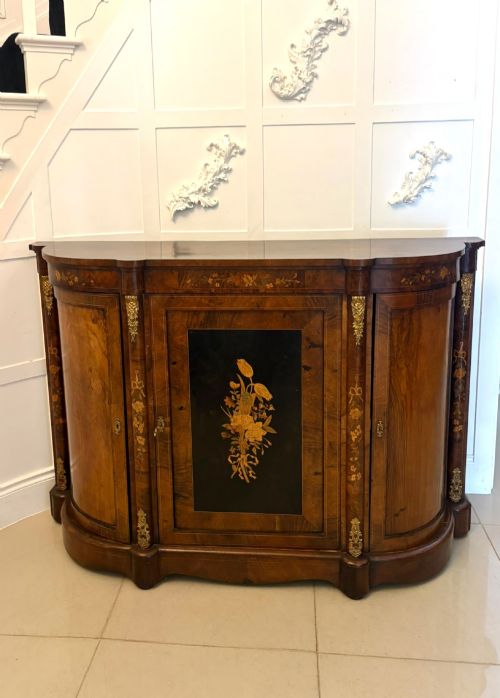
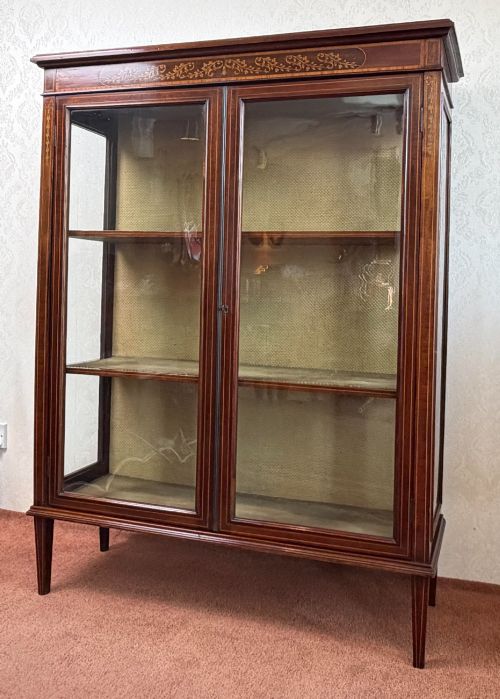
Marquetry Storage Cabinet
These marquetry storage cabinets bring together intricate wood veneers and practical interior space, offering a functional centrepiece with considerable decorative presence.
Marquetry Storage Cabinet
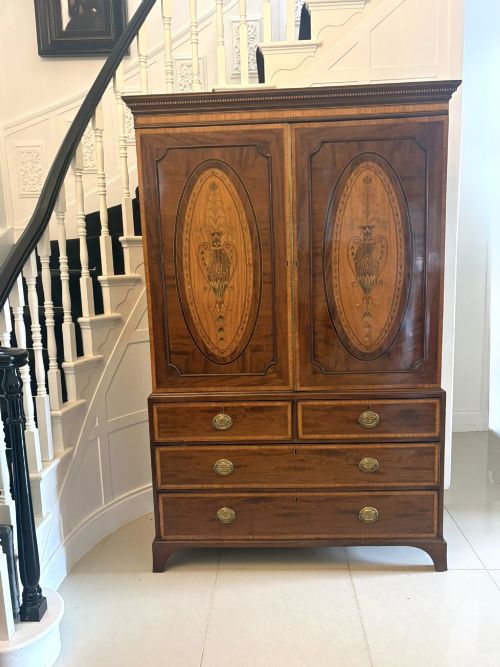
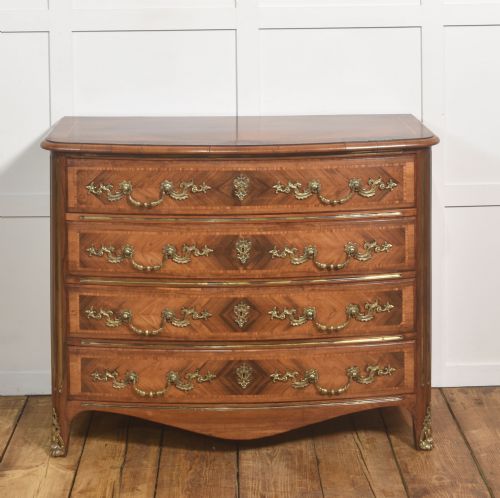
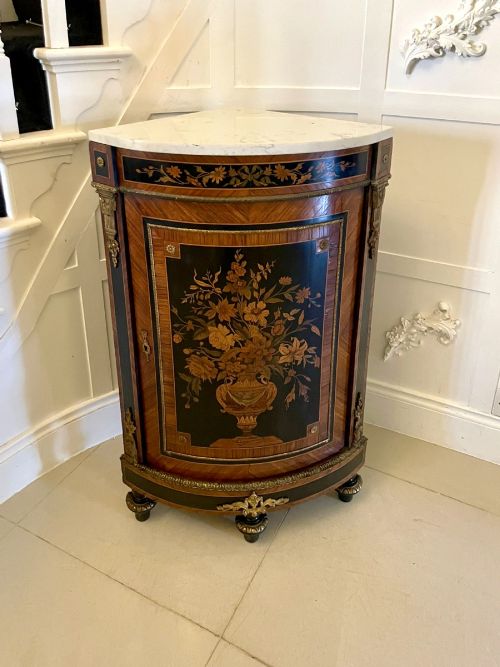
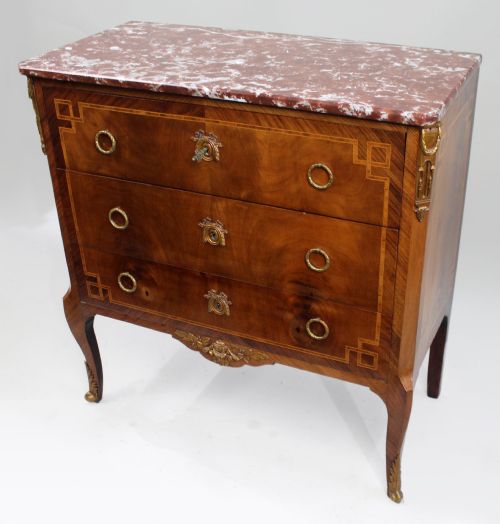
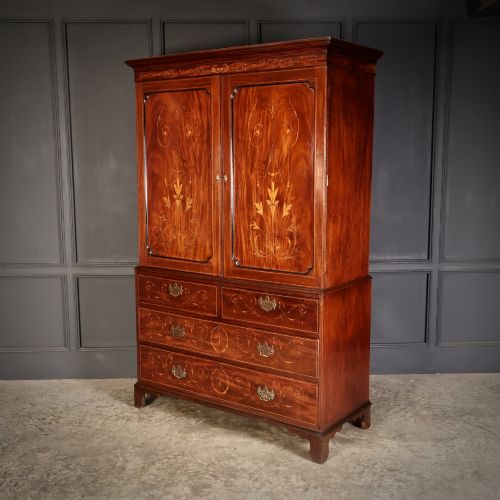
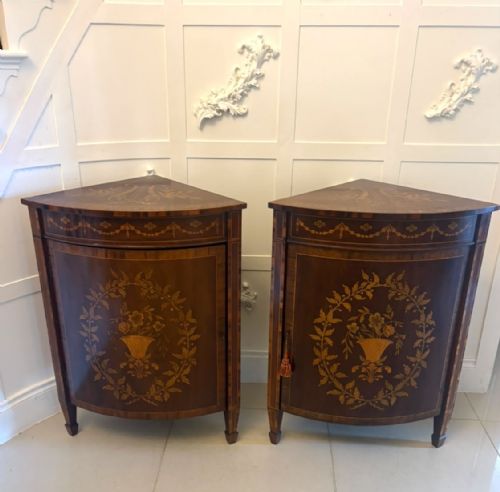
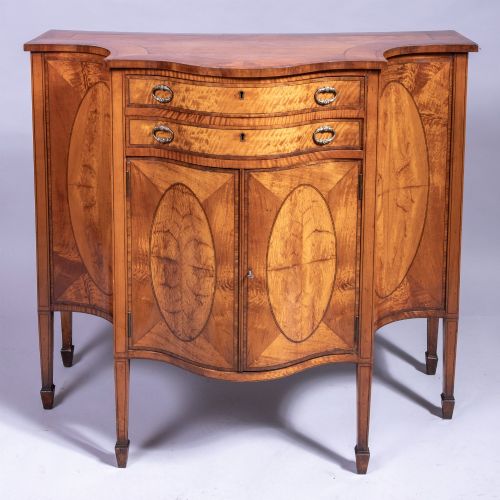
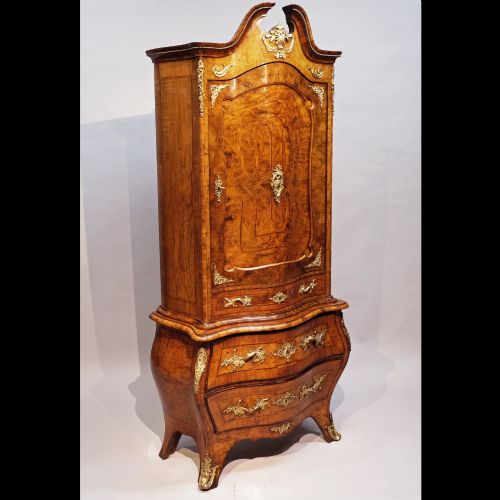
A marquetry storage cabinet combines fitted internal compartments with complex wood veneer patterns applied to the exterior surfaces. Buyers seeking this type of furniture encounter various forms, including linen presses, side cabinets, corner units, and serpentine chests of drawers.
The pieces appearing on this page span several distinct periods, notably the Victorian era, the Edwardian period, and the nineteenth century alongside eighteenth-century examples. French styling, particularly Louis XV and Louis XVI designs, occurs frequently alongside Georgian and Sheraton Revival pieces.
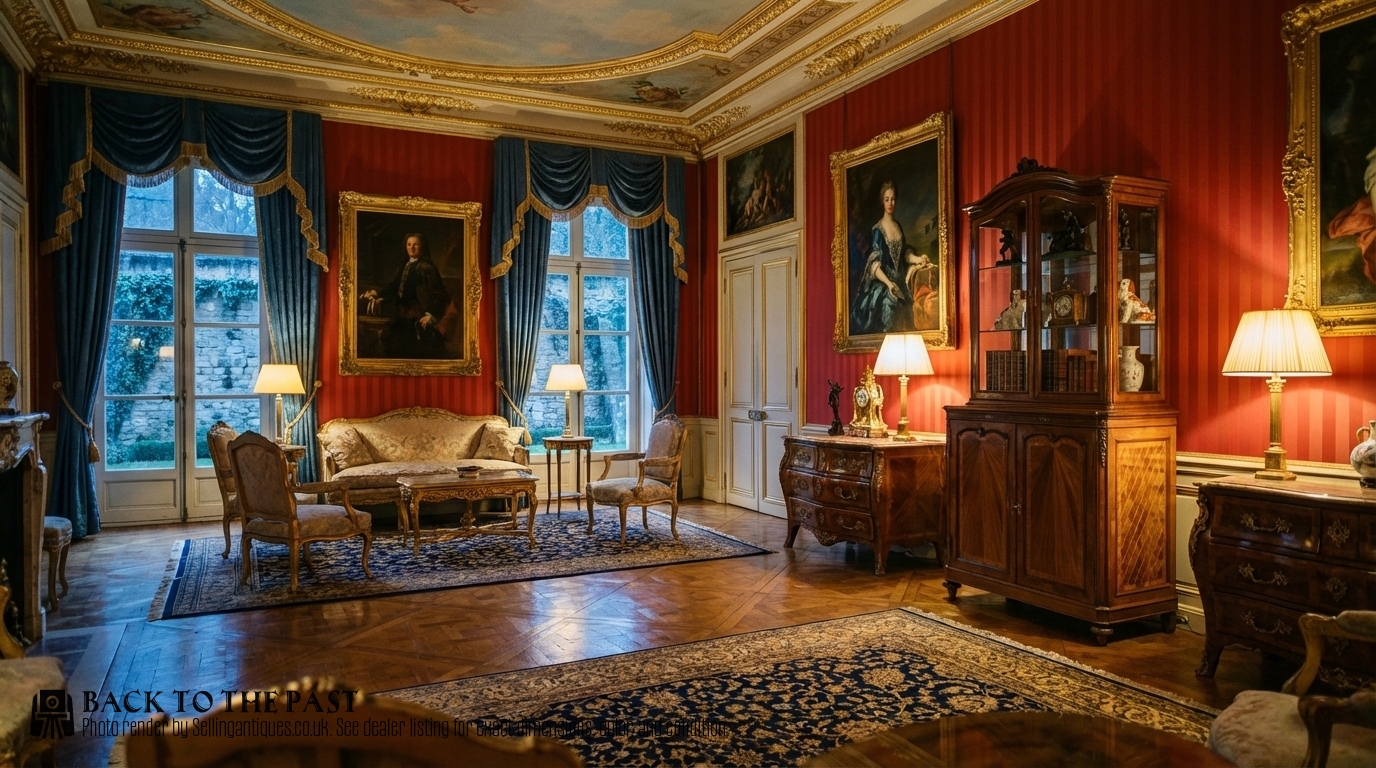
Materials and construction methods
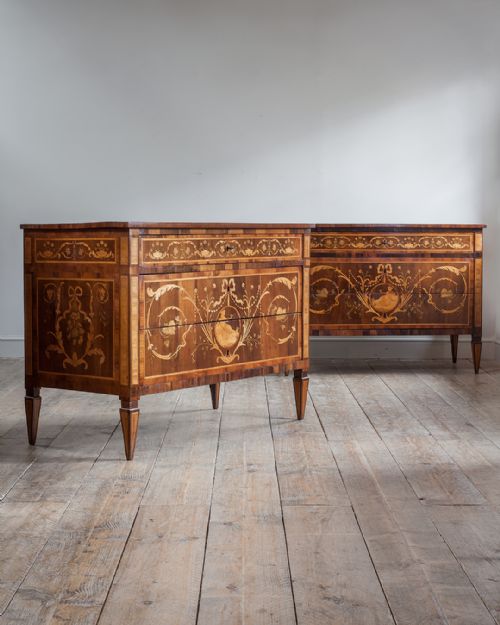
Craftsmen built these cabinets using foundational carcases of mahogany, walnut, or rosewood, upon which they layered decorative veneers of satinwood, kingwood, and burr walnut. Detailed floral and geometric patterns were cut from contrasting timber sheets and fitted together by hand.
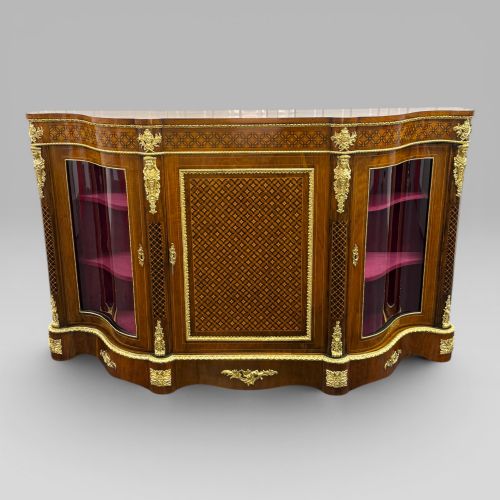
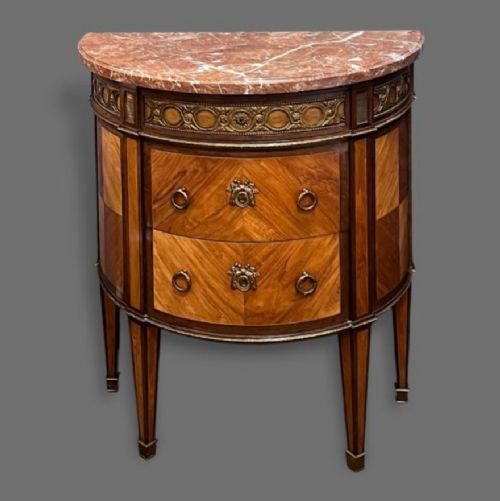
Many high-status pieces incorporate heavy mounts of cast or gilt ormolu, alongside polished marble tops in white, rouge, or other shades. Interiors frequently feature adjustable wooden shelving, linen slides, or small drawers fitted behind solid or glazed doors.
Marquetry Storage Cabinet Retail Price Guide 2026
Typical asking prices for marquetry storage cabinet among the pieces listed under this phrase on Sellingantiques today, from the lower quarter to the upper quarter. They describe what is for sale here now, not the wider market.
Cabinets designed specifically to house sheet music sit quietly alongside grand housekeepers' wardrobes and marble-topped commodes.
Judging the quality of the work
Quality separates simple production items from exceptional cabinet work through the precision of the veneer joints and the complexity of the pictorial inlay. Superior examples display tight, seamless joins between contrasting timbers without excessive filler or lifting sections.
The refinement of the secondary materials also dictates standard, with high-grade pieces featuring heavily chased ormolu mounts, finely figured carcase timbers like burr walnut or kingwood, and substantial marble tops with clean edge profiles.
Maison Gagneau·Druce and Co
The Marquetry Storage Cabinet Glossary
- Marquetry
- The art of applying decorative veneer pieces to a wooden structure to create pictorial or geometric designs. Craftsmen select contrasting woods to achieve tonal depth and varied grain directions.
- Ormolu
- Gilded bronze mounts and decorative trimmings applied to furniture carcases. This metalwork provides heavy corner embellishments, handles, and feet on French and Victorian pieces.
- Linen press
- A large storage cabinet featuring upper sliding trays or shelves enclosed by doors, positioned above a base section of deeper drawers. These were traditionally utilised for storing folded household linens.
- Serpentine
- A furniture front or top shaped with a curving contour that bulges outward in the centre and recedes at the sides. This technique requires expert woodworking skill to ensure tight joints.
Marquetry Storage Cabinet: Frequently Asked Questions
What is the difference between marquetry and inlay?
Inlay involves setting pieces of wood into a solid carved recess within the timber surface. Marquetry assembles an entire decorative picture from various veneers on a paper backing before gluing the complete sheet to the carcase.
This distinction alters how makers achieved their designs, with marquetry allowing for expansive, multi-toned floral arrangements across entire cabinet doors and drawer fronts.
How should I clean marble top cabinets?
Marble surfaces require gentle wiping with a damp cloth and mild, neutral soap to avoid damaging the polished stone. Acidic substances like lemon juice or vinegar must remain entirely away from the top to prevent permanent etching.
Wooden frames beneath the stone benefit from occasional application of quality furniture wax to nourish the grain and protect the surrounding veneer work.
Where were serpentine chests placed?
Serpentine chests of drawers and commodes typically stood in formal reception rooms, drawing rooms, or master bedrooms as prominent display furniture. Their curved profiles and decorative veneers ensured they functioned as decorative focal points as well as storage.
Examples topped with marble frequently served as serving surfaces or console units within grand entrance halls and dining spaces.
How do I identify French Louis XV style pieces?
French Louis XV style cabinets feature characteristic cabriole legs, flowing asymmetrical curves, and elaborate floral marquetry panels. Ormolu corner mounts and handles frequently accentuate the swelling contours of commodes and side cabinets.
Nineteenth-century revival pieces often replicate these eighteenth-century motifs closely, utilising fine kingwood and mahogany veneers beneath polished marble slabs.