


French Rococo Display Cabinet
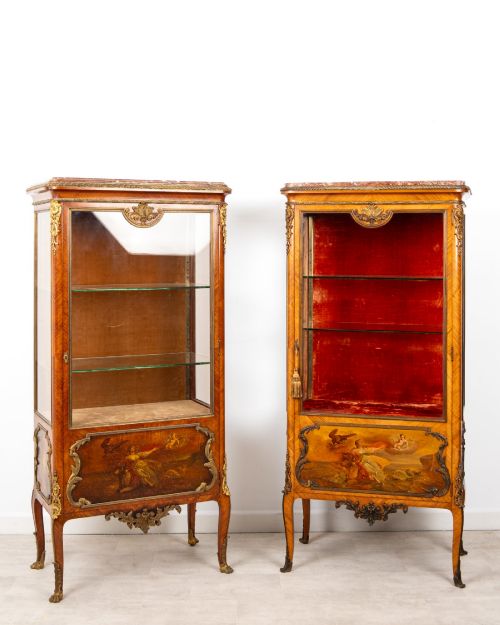
These french rococo display cabinets bring grand nineteenth-century revival craftsmanship and sweeping curvilinear lines into any room.
What They Are
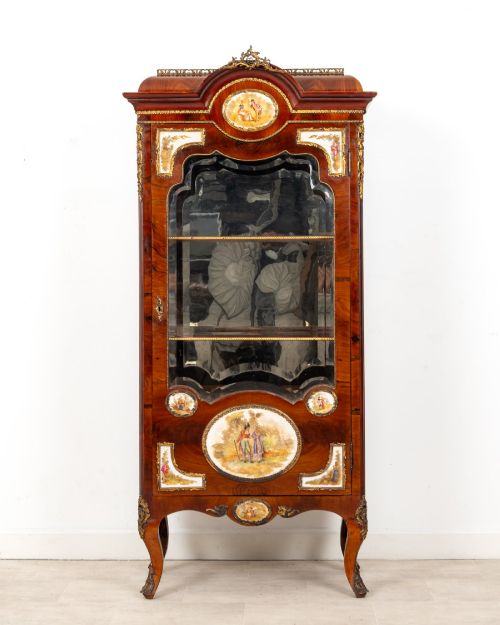
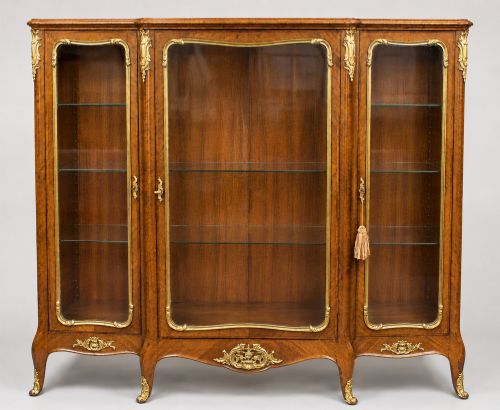
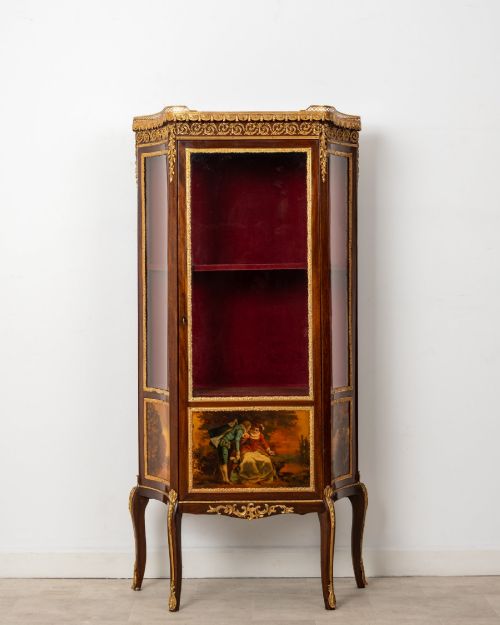
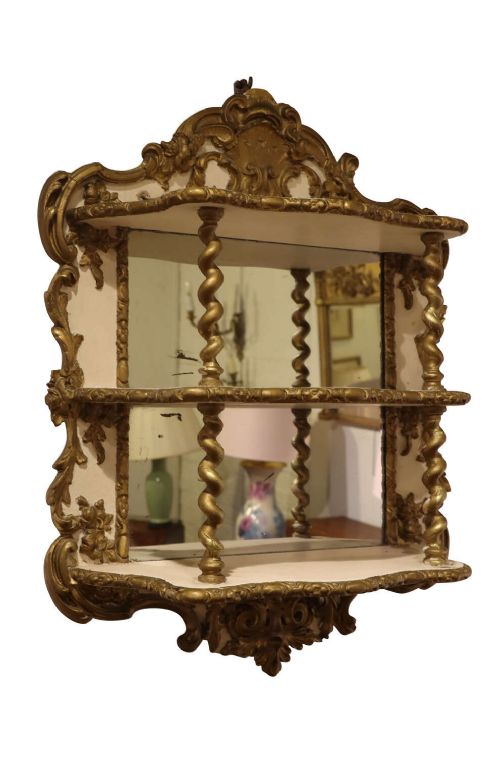
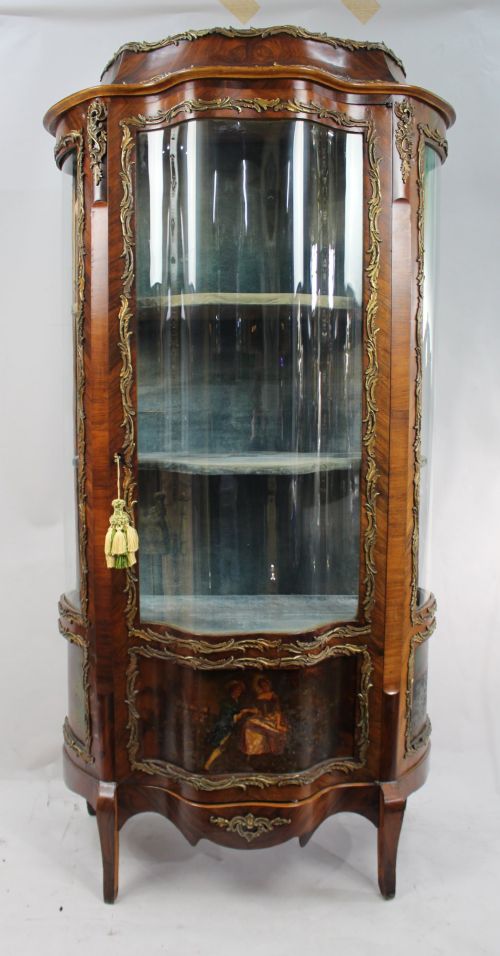
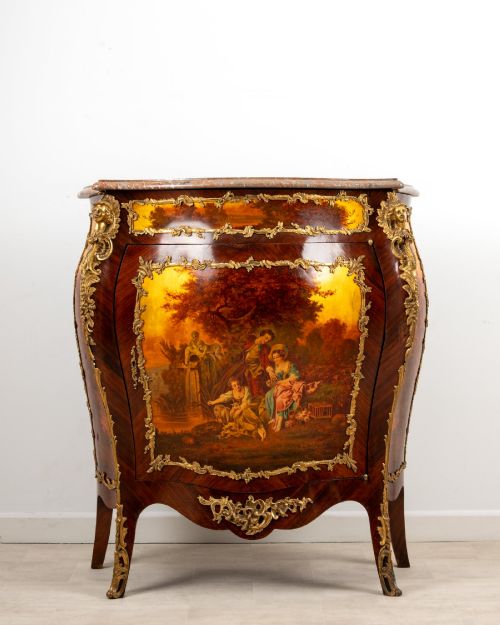
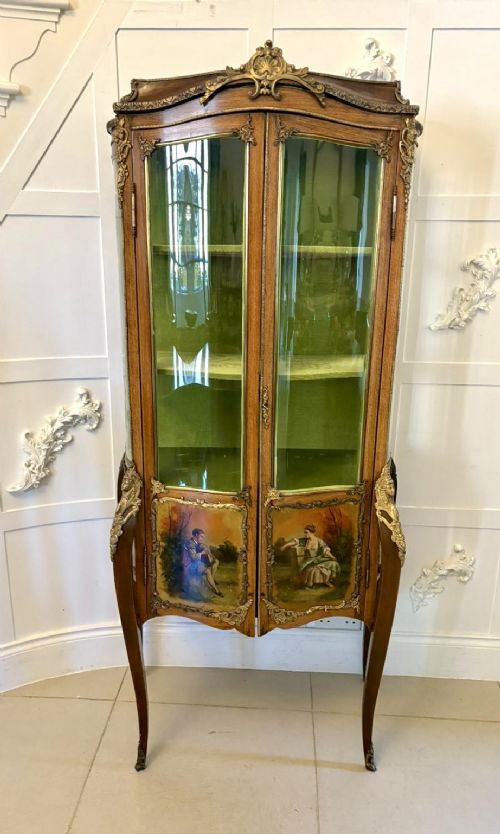
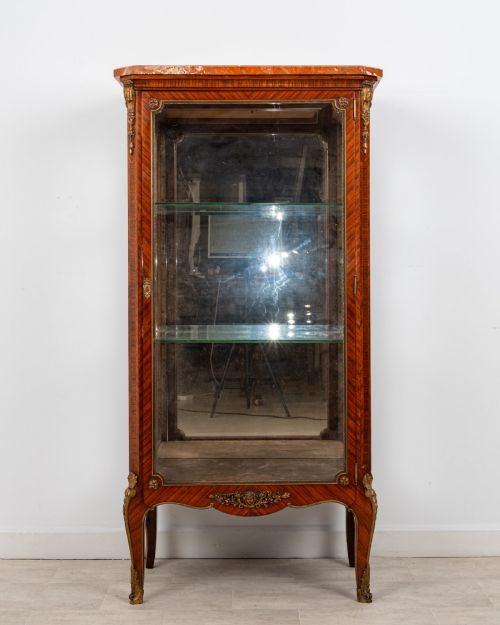
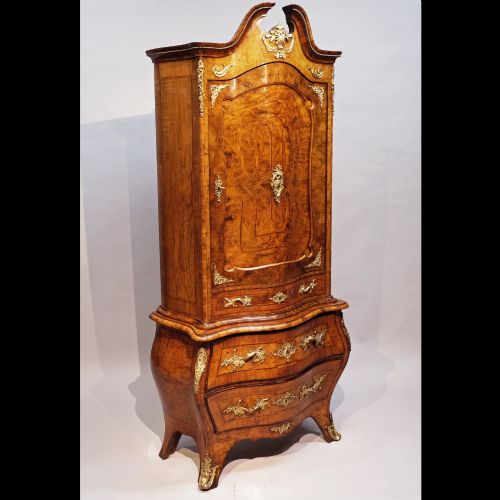
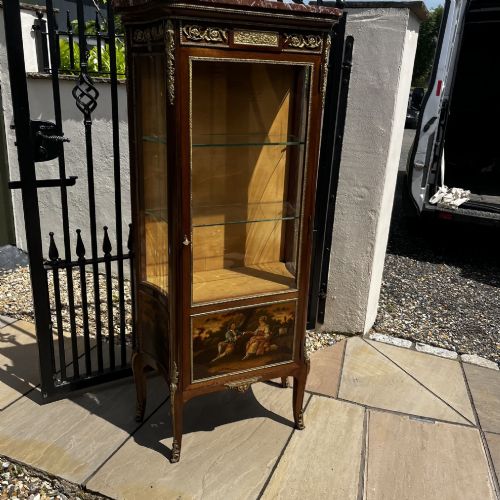
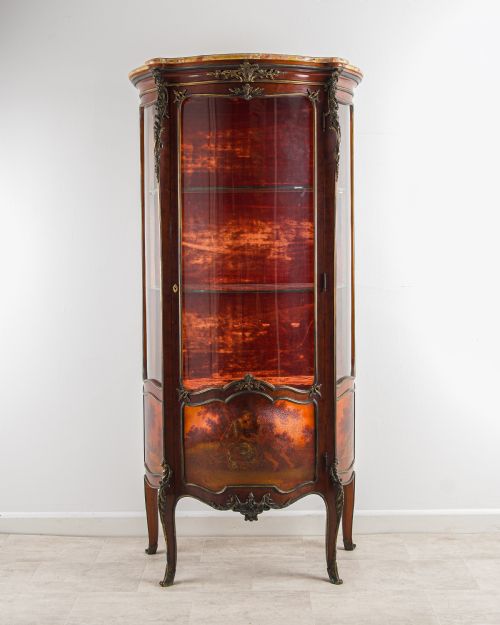
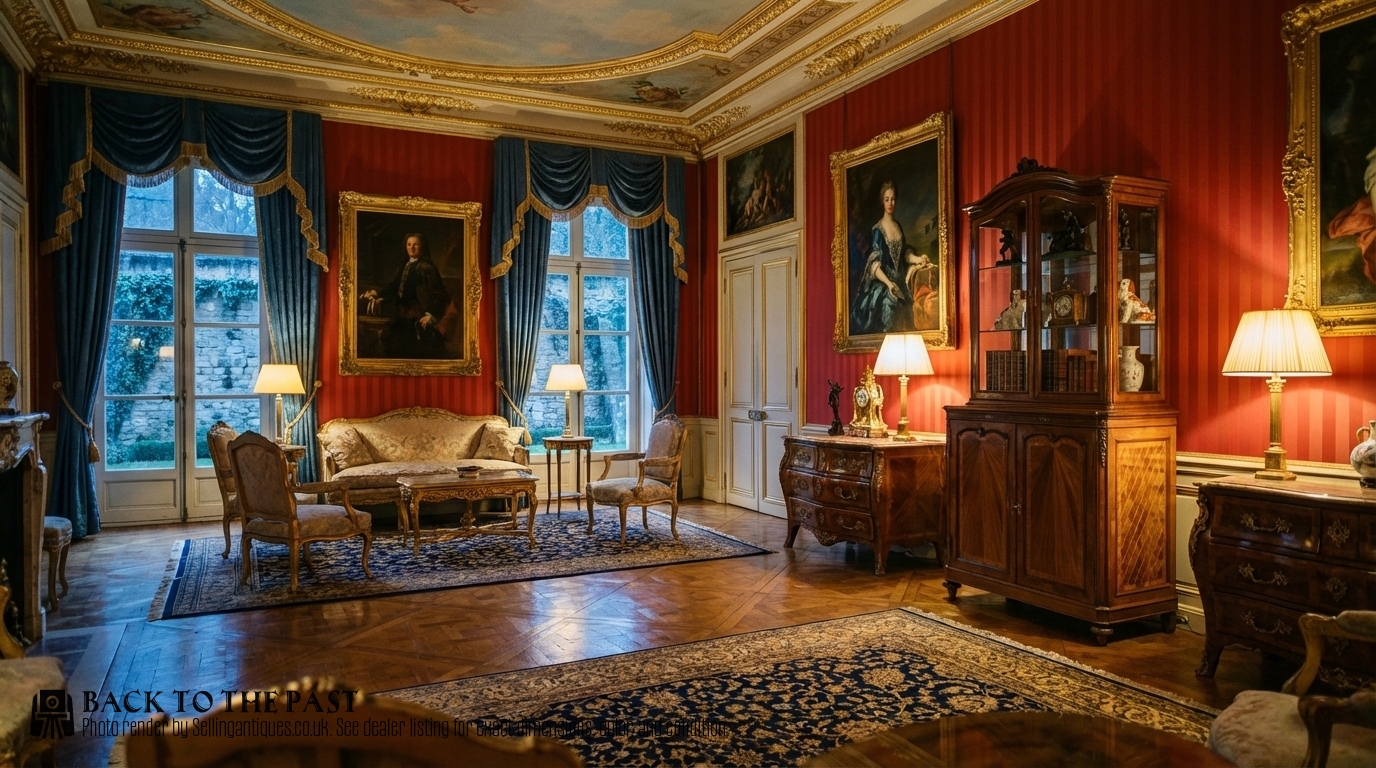
A french rococo display cabinet embodies the ornate revival tastes of the nineteenth century, drawing heavily on Louis XV and Louis XVI styles. These pieces range from serpentine-fronted vitrines and bombé display cabinets to wall-mounted étagères designed to showcase precious objects.
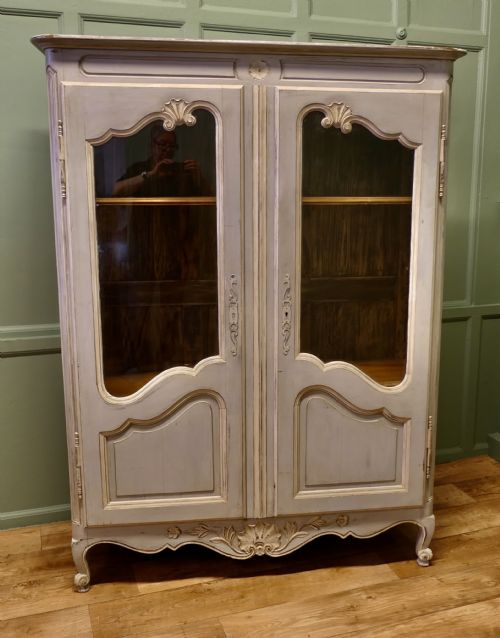
The inventory on this page spans several decades from the mid-nineteenth century up to nineteen-twenty, featuring freestanding and wall-hanging formats. Walnut, kingwood, and painted finishes dominate the selection, often accompanied by glazed panels and mirrored backs.
How They Were Made
Cabinet makers utilised choice timbers such as kingwood and walnut as the foundational structures for these vitrines. Marquetry inlay, vernis martin painted panels, and polished marble tops were integrated into the carcass to elevate the visual richness.
Casters and artisans applied cast ormolu mounts and brass details to accentuate the sweeping serpentine curves and architectural corners. Glass panes and mirrors were fitted to complete the cabinets, allowing light to circulate around the displayed items.
Retail Price Guide 2026
Typical UK retail prices for french rococo display cabinet, calculated from the Sellingantiques database of over a million retail prices indexed since 2003. This retail price guide relies exclusively on Sellingantiques data; no external sources or auction records are used, so the figures do not describe the wider market.
Listings feature periods from eighteen-sixty to nineteen-twenty, demonstrating steady nineteenth-century revival output.
What Varies in Quality
The refinement of the ormolu mounts and the precision of the marquetry inlay determine the visual stature of a piece. Finer cabinets exhibit crisp chasing on the gilt bronze and deeply figured timber veneers that follow the complex contours of the frame.
Structural complexity, such as a fully bombé form or a matched pair configuration, separates standard production from exceptional examples. The integration of painted vernis martin panels and heavy marble tops further distinguishes the upper tier of the range.
Linke
The French Rococo Display Cabinet Glossary
- Ormolu
- Gilt bronze mounts applied to furniture. This technique involves gilding a mercury and bronze amalgamation to create decorative highlights.
- Kingwood
- A dense, richly figured tropical timber favoured in high-end cabinet making. It provides striking grain patterns suitable for detailed marquetry.
- Vitrine
- A glass-fronted display cabinet used for holding porcelain, silver, or curiosities. The glass panels permit visibility from multiple angles.
- Bombé
- A swelling, convex furniture shape with outward-curving fronts and sides. This technique requires advanced woodworking skill to execute properly.
Frequently Asked Questions
What is a french rococo display cabinet used for?
These cabinets serve primarily to exhibit collections of small valuables, porcelain, and glassware behind protective glass doors. The internal shelving and mirrored backs are designed to reflect light and highlight the objects within.
Historically, they occupied drawing rooms and parlours where hosts displayed their most prized possessions to visiting guests. Today, they continue to function as focal points for curated displays in living spaces.
How do I style a vitrine cabinet at home?
Begin by balancing the weight of your objects across the glass shelves, mixing materials such as ceramics, metals, and books. Leaving some empty space ensures the interior does not look cluttered and allows the timber and ormolu details to remain visible.
Consider the surrounding lighting in the room so that ambient light catches the glass panels and internal mirrors. Positioning the cabinet away from direct sunlight protects both the wooden finish and the items inside.
What is the difference between Louis XV and Louis XVI styles?
Louis XV style pieces, often linked to rococo revivals, feature asymmetrical curves, flowing natural motifs, and undulating serpentine lines. The ornamentation feels organic and embraces exuberant movement across the wood and mounts.
Louis XVI style moves towards neoclassical restraint, introducing straighter lines, symmetry, and geometric or classical architectural motifs. Cabinets from this latter tradition appear more orderly and structured in their proportions.
How do I care for antique kingwood and ormolu?
Dust the exterior regularly with a soft, dry cloth to prevent particulate buildup on the wood and metal mounts. Avoid using modern chemical polishes or excessive moisture, which can degrade the French polish and the gilt surface.
Keep the cabinet in a stable environment away from direct heat sources and dramatic humidity fluctuations. This prevents the timber from warping and protects delicate marquetry and veneer.