

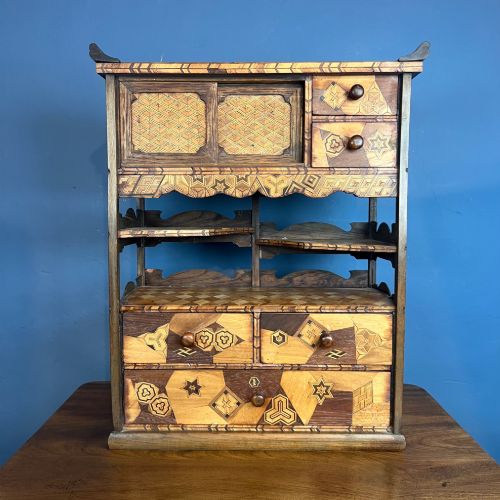
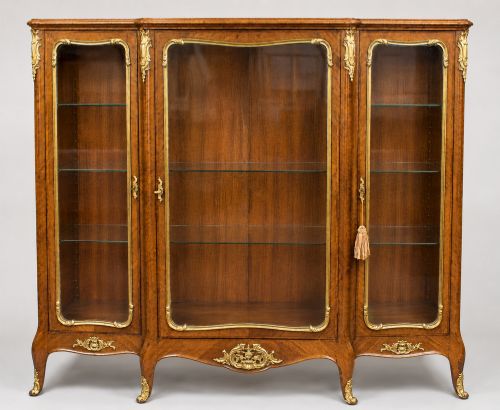

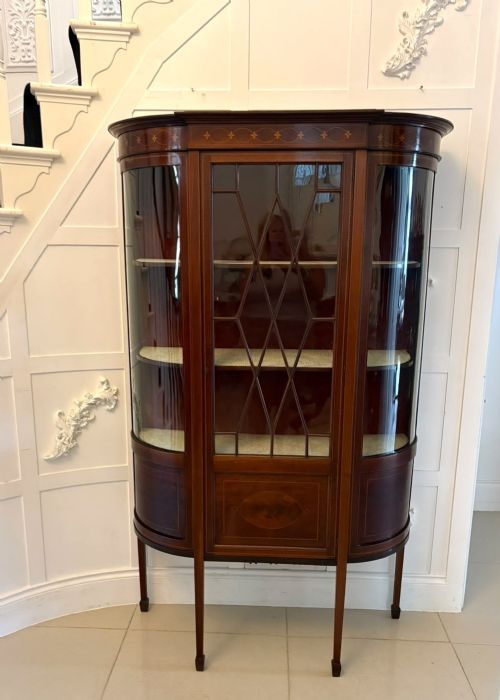
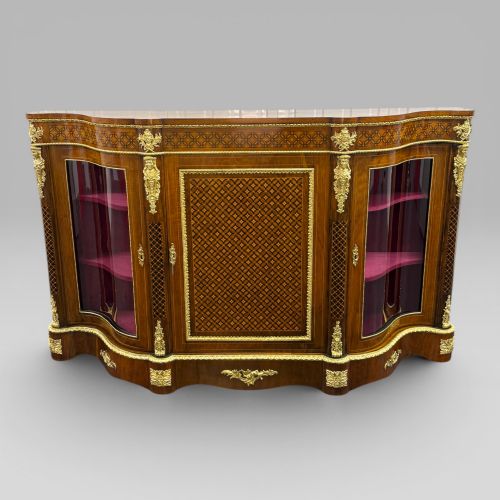



Parquetry Display Cabinet
A parquetry display cabinet combines precise wood geometric patterning with glass storage to showcase collections.
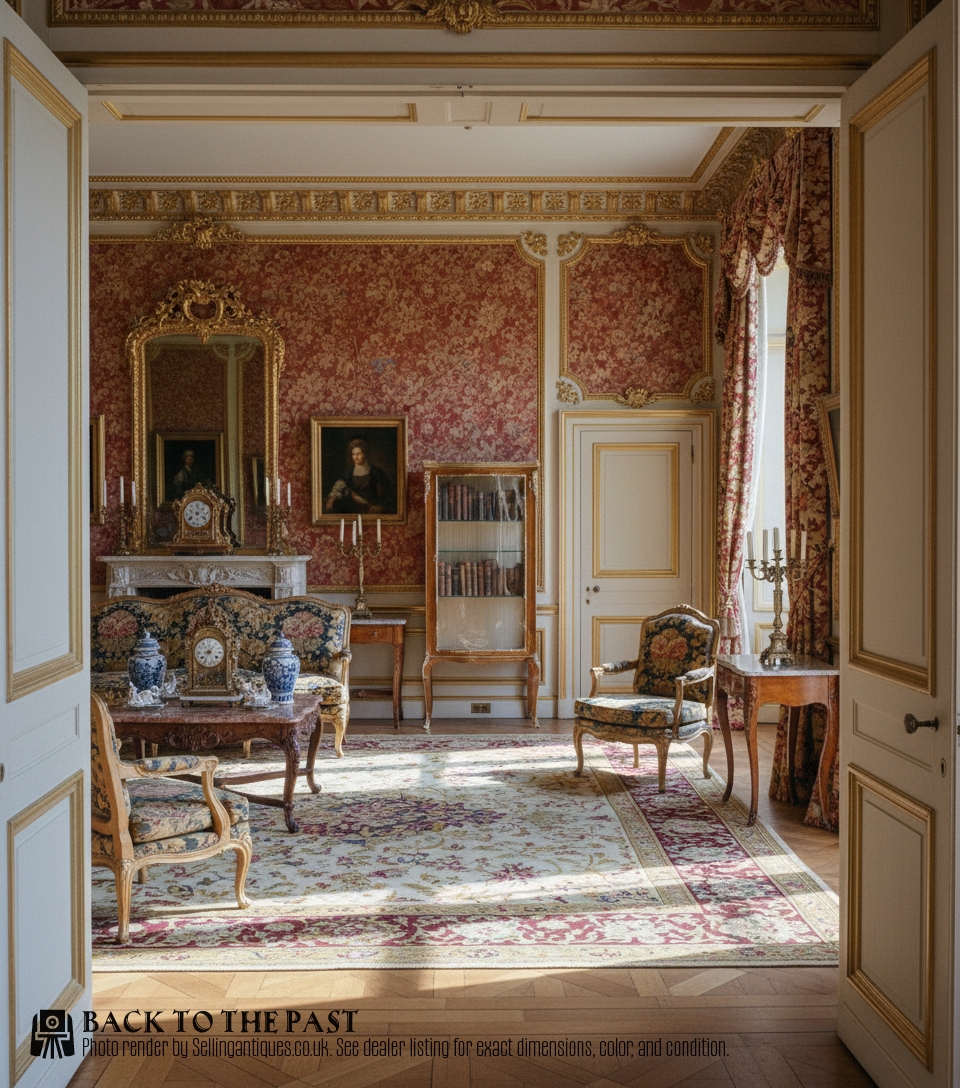
Parquetry Display Cabinet
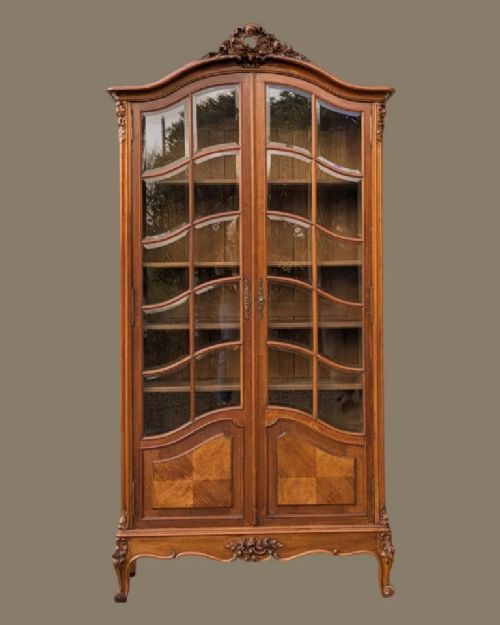
A parquetry display cabinet is a storage piece designed with glazed panels for visibility, frequently appearing in nineteenth-century French revival forms. These items house ceramics, books, or small valuables while providing a decorative focal point in a room. The items on this page span the Victorian and Edwardian eras, incorporating revivalist French aesthetics alongside timber carcasses.
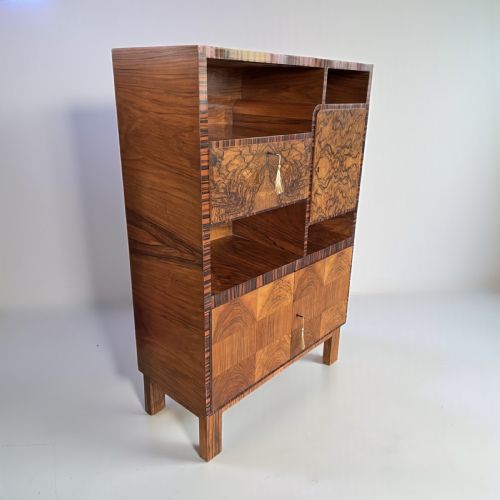
Most examples found here adopt Louis styles, featuring glass doors or open shelving combined with enclosed lower compartments. The execution ranges from tall freestanding vitrines to lower credenzas and corner units. These furnishings served formal reception rooms where hosts displayed curated objects to visitors.
How they were made
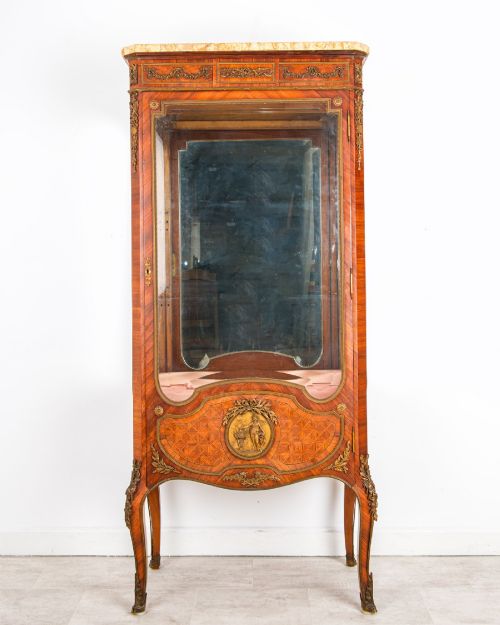
Craftsmen built these cabinets using supportive foundational timbers like walnut, mahogany, or oak, which were then veneered with decorative woods such as kingwood and satinwood. Geometric parquetry patterns were meticulously cut and laid into the surface veneers to create contrasting visual textures. Ormolu mounts and gilt bronze accents were cast and applied to frame corners, legs, and glass panels.
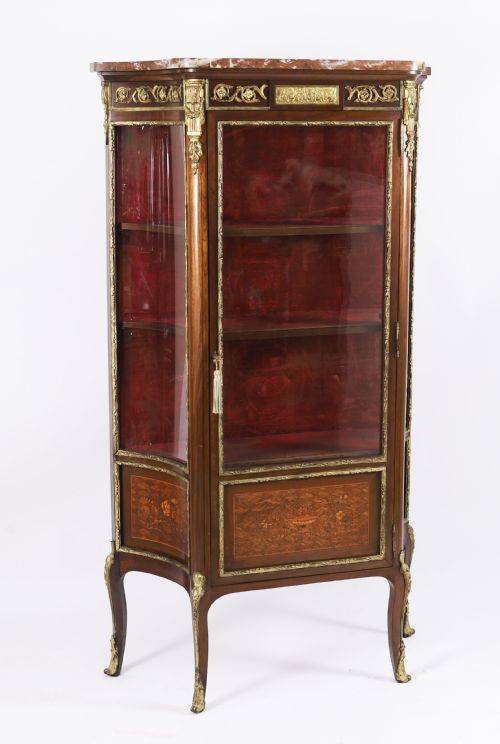
Marble tops frequently completed the upper surfaces of nineteenth-century credenzas and pier cabinets, providing durable and decorative landings. Glazing took the form of fitted glass panes secured within wooden framing or mesh doors, allowing light to enter the interior display space.
Parquetry Display Cabinet Retail Price Guide 2026
Typical asking prices for parquetry display cabinet among the pieces listed under this phrase on Sellingantiques today, from the lower quarter to the upper quarter. They describe what is for sale here now, not the wider market.
The archive shows that serpentine fronts and marble tops recur frequently across Victorian and Edwardian vitrines.
What varies in quality
The sophistication of the parquetry layout and the precision of the veneer matching dictate the standard of execution. Finer pieces demonstrate seamless geometric alignment across curved serpentine fronts and intricate grain selection in the kingwood or satinwood.
The weight, crispness of chase work, and articulation of the ormolu mounts separate standard commercial production from workshop masterworks. Superior examples also integrate heavy marble slabs and finely cast gilt bronze fittings that fit flush against the timber carcass.
Maison Gagneau·Francois Linke
The Parquetry Display Cabinet Glossary
- Parquetry
- Geometric wood inlay forming mosaic patterns on furniture surfaces. This technique uses contrasting timber veneers to create decorative floors and cabinet panels.
- Ormolu
- Gilt bronze mounts applied to furniture for decorative enrichment. The process involves treating cast bronze with a mercury and gold amalgam.
- Vitrine
- A glass-fronted cabinet designed for displaying fine objects and porcelain. These display cases often feature glazed sides to maximise interior light.
- Kingwood
- A dense, richly figured timber native to Brazil utilised extensively in fine cabinet making. Its dark purple-brown grain with lighter streaks suited high-status nineteenth-century French furniture.
- Marquetry
- The art of applying pieces of veneer to a structure to form decorative pictures or scrollwork designs. Unlike parquetry, it relies on pictorial or curvilinear motifs rather than strict geometry.
Parquetry Display Cabinet: Frequently Asked Questions
What is a parquetry display cabinet used for?
These cabinets were historically manufactured to display porcelain, glassware, and curated ornaments within formal reception rooms. The glass panels and shelves allowed guests to view collections while protecting fragile items from dust.
Today, they serve a similar function in domestic interiors, acting as focal storage for books, ceramics, or personal collections while adding period character to a room.
How do I date a French display cabinet?
Dating relies on examining the underlying construction materials, hardware, and stylistic revival cues present in the piece. Nineteenth-century examples frequently utilise kingwood veneers, ormolu mounts, and specific Louis XV or XVI revival motifs.
Later Edwardian pieces often incorporate lighter satinwood timbers and simpler framing techniques. Comparing the carcass timber to known regional workshop practices helps narrow the decade of manufacture.
Are marble tops original to these cabinets?
Marble tops are common on nineteenth-century credenzas, pier cabinets, and select vitrines. These slabs were typically fitted during the initial construction to provide a durable, decorative upper surface.
Inspecting the rebate and the fit between the stone and the wooden frame indicates whether the marble belongs to the piece. Original slabs sit flush and match the exact contours of the serpentine or straight timber top.
How do I care for kingwood and ormolu?
Kingwood veneer requires stable indoor humidity levels to prevent timber movement and cracking. Dusting with a dry, soft cloth maintains the polished surface without introducing harmful moisture.
Ormolu mounts should be cleaned gently without abrasive metal polishes that can strip the original gilding. Keeping the cabinet away from direct sunlight preserves the rich tones of the underlying wood veneers.