
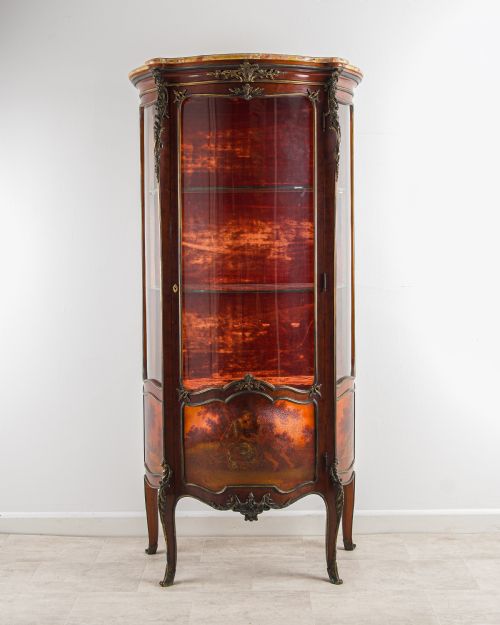


Vernis Martin Vitrine
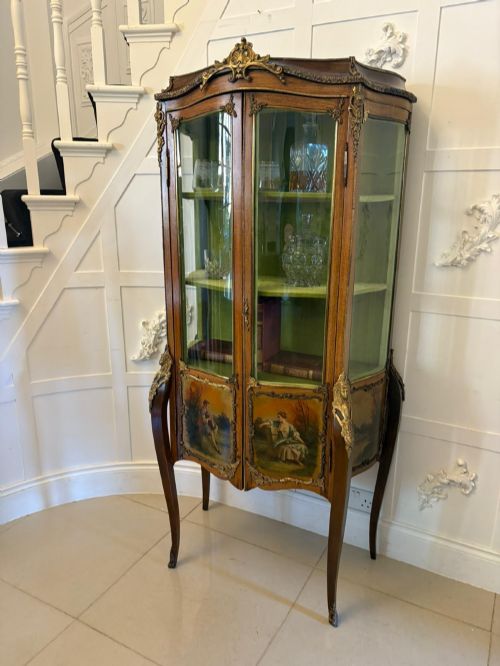
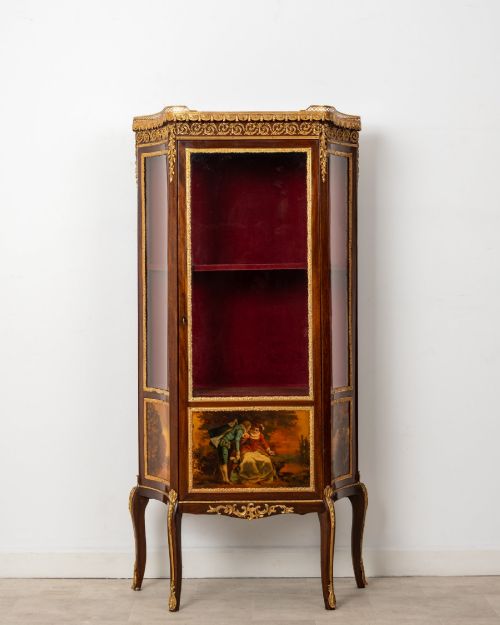
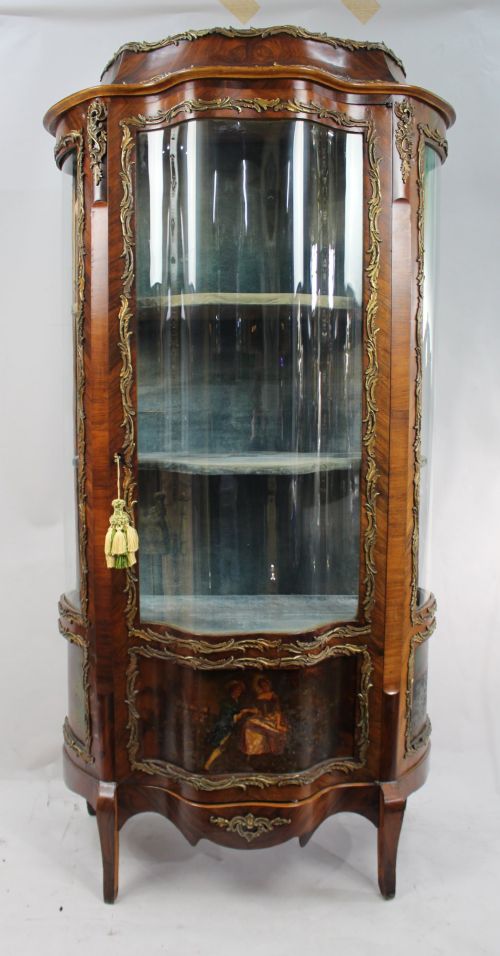
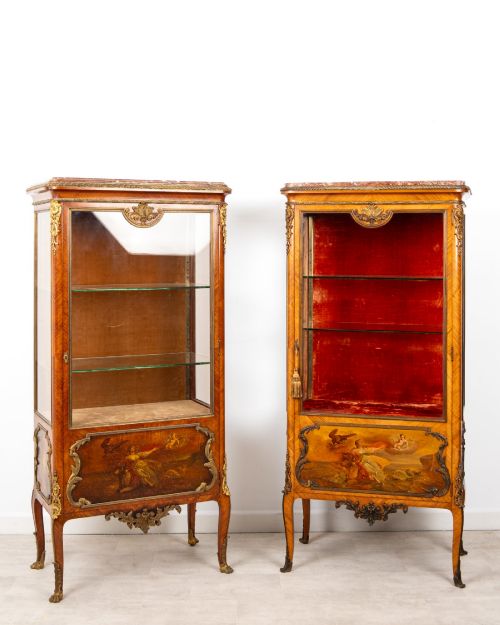
When searching for a vernis martin vitrine, collectors look for glazed display cabinets featuring characteristic painted decorative panels.

Vernis Martin Vitrine
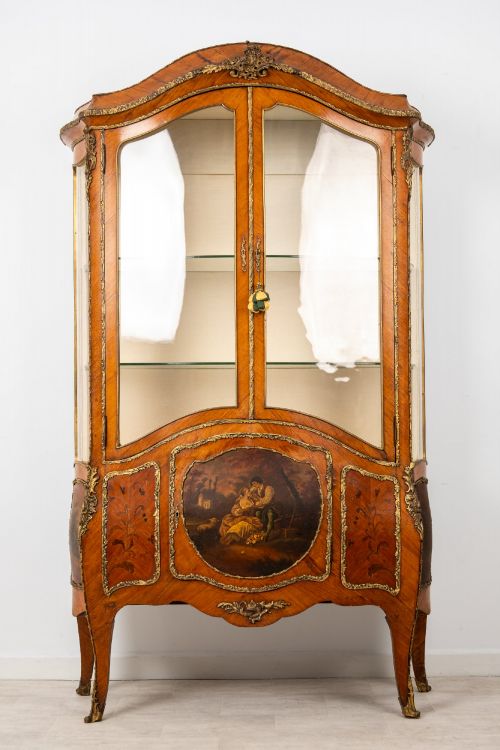
A vernis martin vitrine is a display cabinet designed for showing precious objects while incorporating traditional European lacquer painting techniques. These pieces primarily date from the nineteenth century and the Edwardian era, reflecting popular revival aesthetics such as Louis XV and Louis XVI styles.
The dominant forms found in these pieces include serpentine fronts, bombe profiles, and oval freestanding cabinets. Most examples originate from French workshops and combine glazed viewing areas with decorative painted lower panels or door centres.
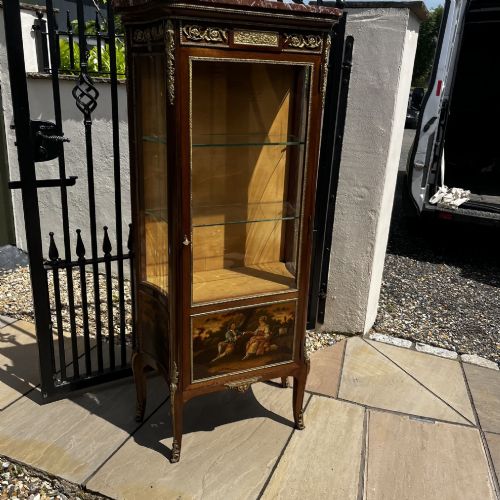
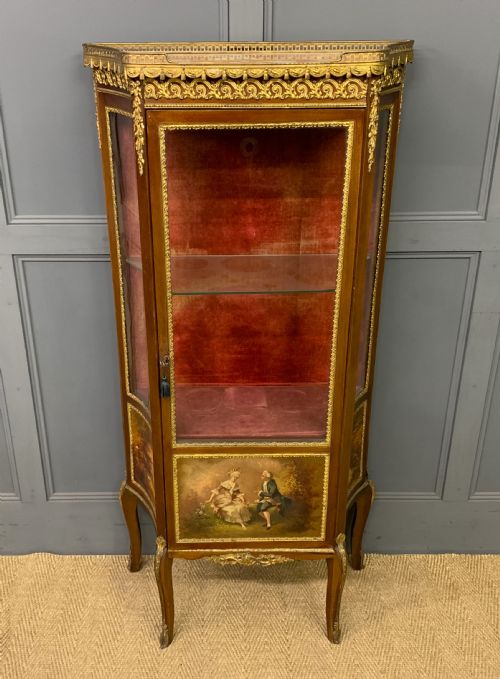
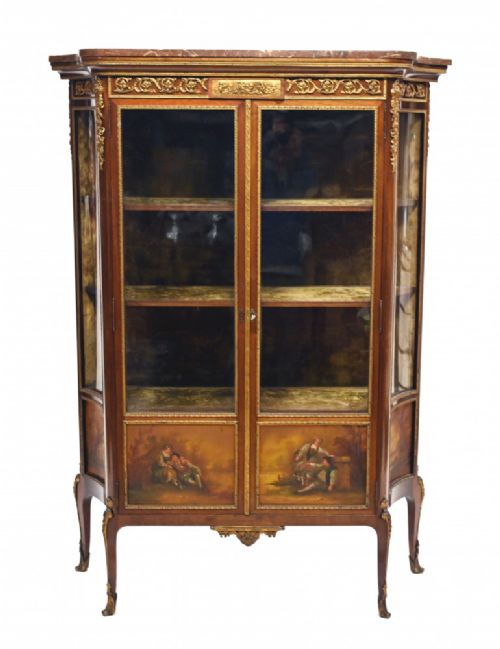
Buyers encounter variations ranging from single-door cabinets to large double-door display units and corner configurations. The integration of painted panels with glass shelving and mirrored backs defines the core typology of this search category.
Materials and Construction
Cabinet makers constructed the foundational carcases using timbers such as mahogany and kingwood, often applying veneer over oak or pine. Gilt bronze and ormolu mounts provide structural framing and decorative enrichment around the glass panels and painted scenes.
The distinctive painted decoration utilises specialised translucent varnish layers developed in imitation of East Asian lacquer. Marble tops frequently complete the upper surface of nineteenth-century examples, paired with velvet-lined interiors for displaying collectables.
Vernis Martin Vitrine Retail Price Guide 2026
Typical asking prices for vernis martin vitrine among the pieces listed under this phrase on Sellingantiques today, from the lower quarter to the upper quarter. They describe what is for sale here now, not the wider market.
One archival cabinet carried later sign-writing for a Viennese distillery, proving that grand display pieces occasionally found unexpected second careers.
Indicators of Quality
The distinction between standard commercial production and master craftsmanship lies in the depth and execution of the hand-painted panels. Finer examples display meticulous brushwork within the lacquer scenes, often associated with notable makers or high-end Parisian workshops.
Metalwork quality separates tiers of manufacture, visible in the crispness of the cast ormolu mounts and the weight of the bronze fittings. The selection of figured timber veneers and the precision of serpentine or bombe carcase shaping further determine the grade of the piece.
François Linke·Angela Kaufman
The Vernis Martin Vitrine Glossary
- Vernis Martin
- A simulated lacquer finish developed in eighteenth-century France using multiple layers of varnish to protect and enhance painted scenes. The technique was widely revived during the nineteenth century for display furniture.
- Vitrine
- A glass-fronted cabinet designed specifically for the display of porcelain, curiosities, and precious objects. These enclosures often feature glass side panels to maximise internal illumination.
- Ormolu
- Gilt bronze mounts applied to furniture for decorative and protective purposes. High-quality examples are finely chased and fire-gilded.
- Kingwood
- A dense, richly figured tropical timber prized by cabinet makers for decorative veneers. It forms the primary exterior surface on many nineteenth-century French display pieces.
- Bombe
- A convex, swelling furniture contour that curves outward on the front and sides. This form requires advanced woodworking skill to veneer and finish accurately.
- Serpentine
- A furniture outline characterised by a wavy line featuring a central convex curve flanked by concave sweeps. This profile appears frequently on the cornices and bases of display cabinets.
Vernis Martin Vitrine: Frequently Asked Questions
What are vernis martin vitrines?
These pieces are glazed display cabinets distinguished by decorative painted lacquer panels executed in a specific European tradition. They were built primarily in France during the nineteenth century to showcase decorative arts.
Cabinet makers combined glass viewing areas with timber carcases veneered in kingwood or mahogany. The resulting furniture pieces serve both practical display functions and decorative roles within an interior.
How were these cabinets used?
Original owners utilised these vitrines to exhibit porcelain, small sculptures, and valuable curiosities protected from dust. The glazed doors and sides allowed objects to be viewed from multiple angles.
Internal velvet linings provided a contrasting background for displayed items while protecting delicate bases. Many examples incorporated mirrored backs to reflect light through the cabinet interior.
Where should I place a vitrine?
Positioning a display cabinet requires consideration of natural light to prevent fading on internal items and painted panels. Placing the piece away from direct sunlight preserves both the wood finishes and the lacquer work.
Freestanding oval and serpentine forms require adequate floor space to be viewed in the round. Corner configurations fit efficiently into smaller rooms while utilising unused wall junctions.
How do I identify the period?
Dating relies on examining construction methods, wood types, and stylistic revival markers visible across the piece. Nineteenth-century examples frequently employ kingwood veneers, ormolu mounts, and heavy marble tops.
Later Edwardian and twentieth-century interpretations often show lighter internal construction and modified hardware styles. Comparing the painted panel motifs against documented revival periods helps narrow the production era.