
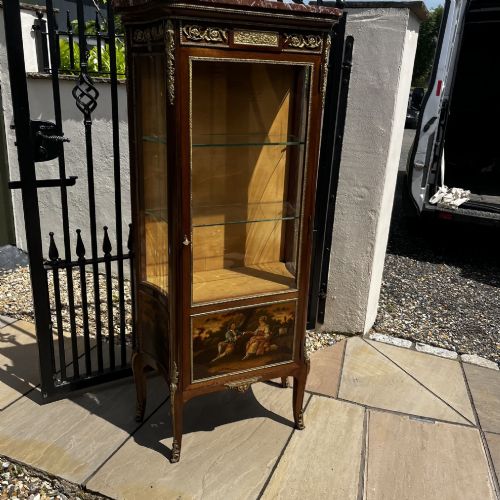
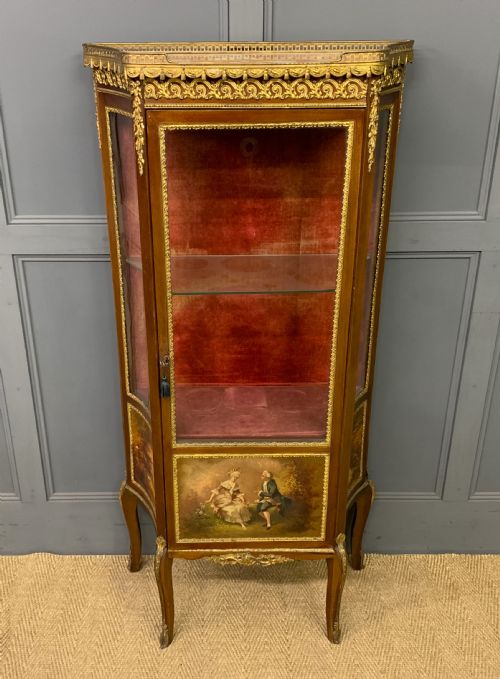
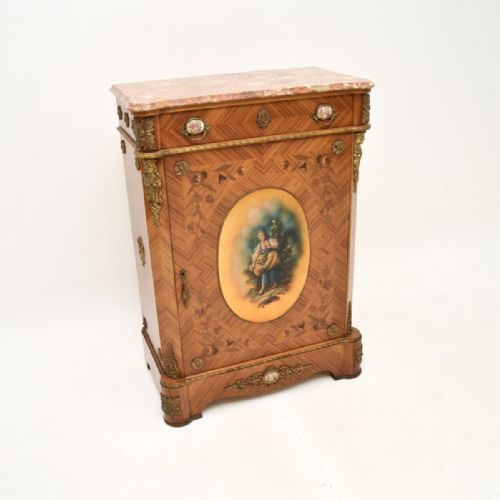
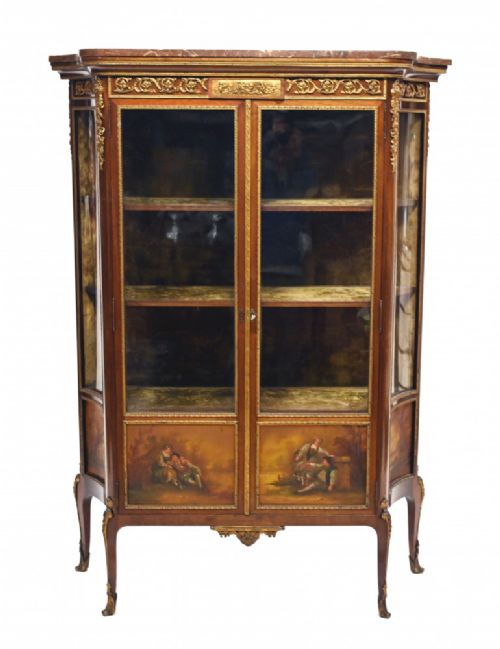


Painted Vernis Martin Cabinet
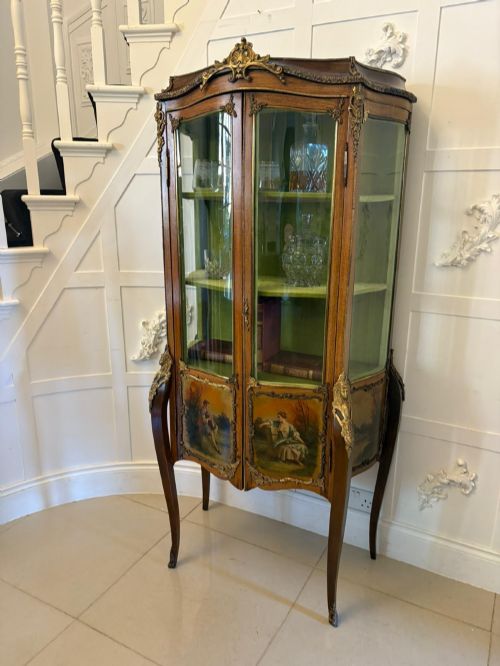
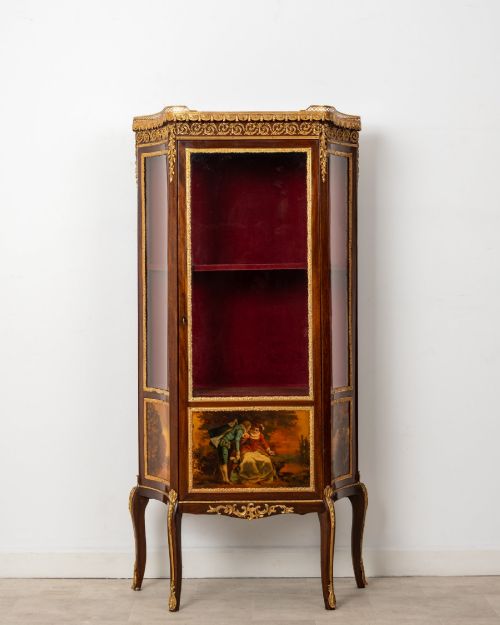
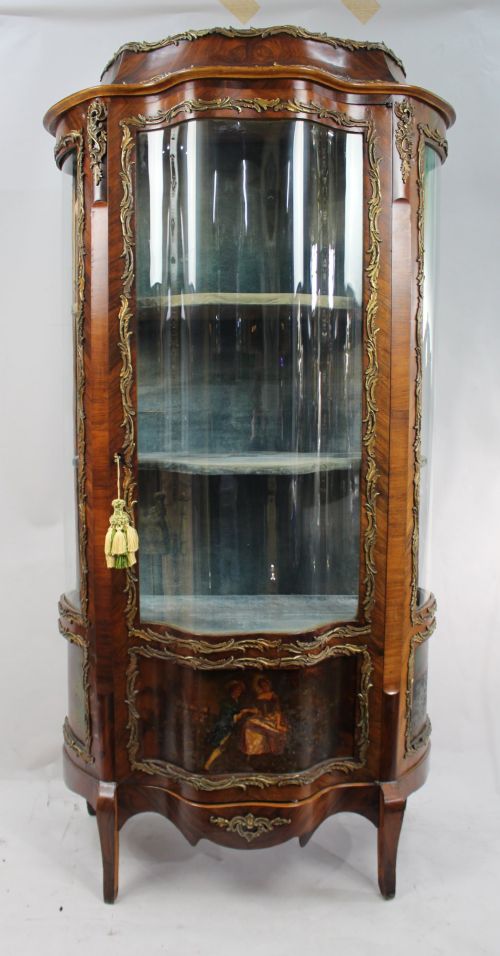
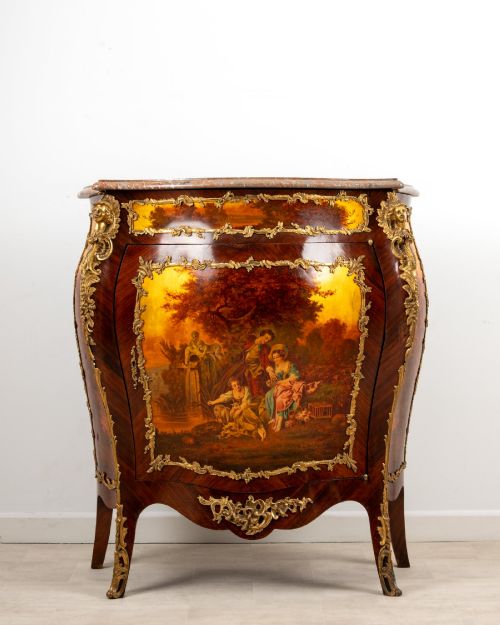
When you want a painted vernis martin cabinet, you are looking for French display furniture decorated with classical or pastoral painted scenes.
Painted Vernis Martin Cabinet
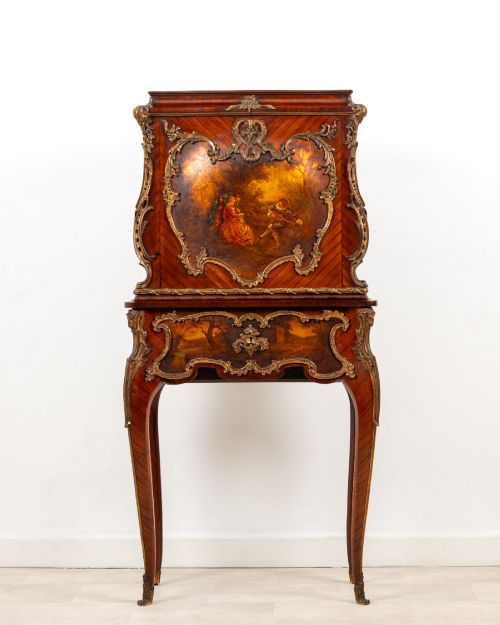
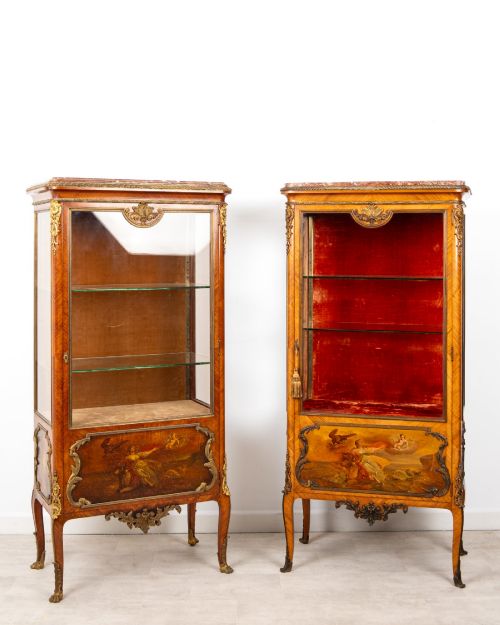
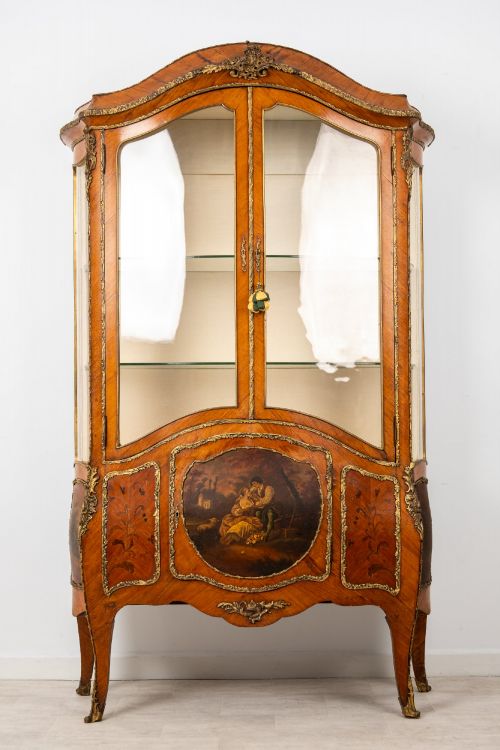
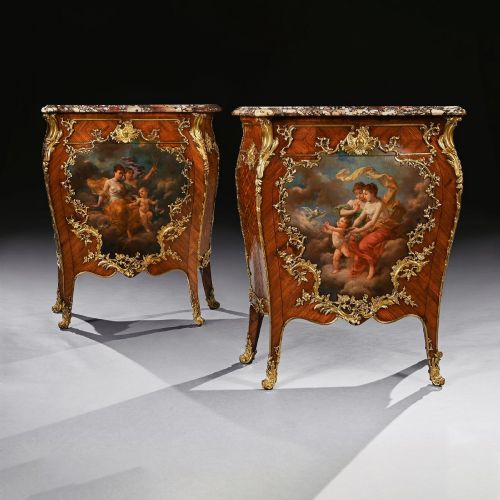
A painted vernis martin cabinet brings together display glass, decorative woodwork and hand-painted panels in forms ranging from tall vitrines to serpentine commodes and writing desks.
Most examples found here date from the nineteenth century, reflecting nineteenth-century revivals of French Louis XV and Louis XVI styles.
Makers often shaped these pieces in bombé or serpentine profiles, mounting them with cast or gilt bronze and ormolu to frame the lacquerwork.
Materials and Construction
Craftsmen built the carcases from timbers such as kingwood and mahogany, frequently laying down veneers before shaping the curved panels.
The characteristic finish relies on layered varnishes applied over painted paper or direct panels, emulating the eighteenth-century lacquer developed by the Martin brothers.
Gilt bronze and ormolu mounts were cast and chased to edge the glass doors, marble tops and corners of the cabinet structure.
Painted Vernis Martin Cabinet Retail Price Guide 2026
Typical asking prices for painted vernis martin cabinet among the pieces listed under this phrase on Sellingantiques today, from the lower quarter to the upper quarter. They describe what is for sale here now, not the wider market.
Secret drawers lurk within several secrétaires, offering hidden compartments for private correspondence behind the painted panels.
Assessing Quality
Quality rests heavily on the fidelity and detail of the painted figural panels, where fine brushwork distinguishes custom artistry from routine production.
The weight, crispness and hand-chasing of the ormolu mounts separate superior cabinets from standard trade pieces.
Timber selection, particularly figured kingwood veneers and solid marble top thickness, dictates the structural substance of the furniture.
François Linke·H. Martin
The Painted Vernis Martin Cabinet Glossary
- Vernis Martin
- A simulated lacquer finish developed in eighteenth-century France, using multi-layered resin varnishes over painted scenes. Later nineteenth-century makers revived the technique for display cabinets and commodes.
- Ormolu
- Gilded bronze mounts applied to furniture edges and feet for ornamentation. High-quality mounts show sharp chasing detail after casting.
- Vitrine
- A glass-fronted display cabinet designed for porcelain and small objects. These pieces often feature glazed side panels to maximise light.
- Bombé
- A swelling, convex curved shape typical of rococo revival furniture forms. This profile requires complex woodwork and matched veneers.
- Secrétaire à abattant
- A tall writing cabinet with a drop-down fall front enclosing small drawers and compartments. They frequently incorporate painted panels on the lower cupboard doors.
Painted Vernis Martin Cabinet: Frequently Asked Questions
What is a vernis martin cabinet?
A vernis martin cabinet is a piece of French display furniture featuring painted panels finished with layered translucent varnishes. They were designed to showcase valuable porcelain and curiosities while providing decorative artistic panels.
Most surviving examples date from the nineteenth century and adopt earlier Louis XV or Louis XVI aesthetic forms. They utilise timbers like kingwood and mahogany alongside elaborate gilt bronze mounts.
How were these cabinets used?
These cabinets served primarily as formal reception room furniture for displaying collections of porcelain, miniatures and silver. The glass-fronted vitrines protected fragile objects from dust while putting them on view.
Some variants, such as the secrétaire à abattant or commode, combined enclosed storage and writing surfaces with open display areas. Their painted panels turned functional storage into decorative art.
Where should I place a cabinet?
These cabinets suit drawing rooms, studies or formal hallways where natural light can catch the glazed panels and gilt mounts. Position them away from direct sunlight to protect the painted lacquer surfaces and varnishes from fading.
Because many examples feature marble tops and shaped bombé sides, they require stable floor space clear of heavy traffic routes. Free-standing oval and corner vitrines offer flexible placement options.
How do I identify nineteenth-century pieces?
Nineteenth-century cabinets display revival styles like French Rococo or Louis XV, often combining kingwood veneers with machine-sawn internal timbers. The construction methods, such as screw types and secondary woods, point to this later period rather than the eighteenth century.
Signatures or stamps on the bronze mounts and carcases occasionally identify specific workshops or makers active during the nineteenth-century revival period.