







Curved Glass Display Case
A curved glass display case draws the eye with its sweeping transparent front, housing treasured collections while keeping dust at bay.
Curved Glass Display Case
When you search for a curved glass display case, you encounter an array of vitrines, cabinets, bookcases, and domes designed to showcase objects from multiple angles. These pieces emerge across the Victorian, Edwardian, and Art Deco periods, encompassing commercial shop fittings alongside domestic furniture.
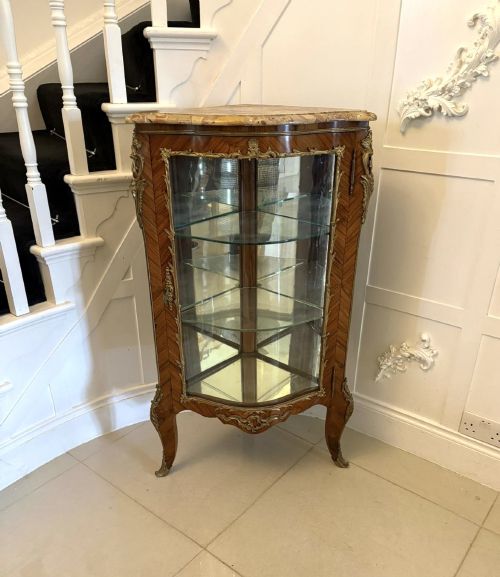
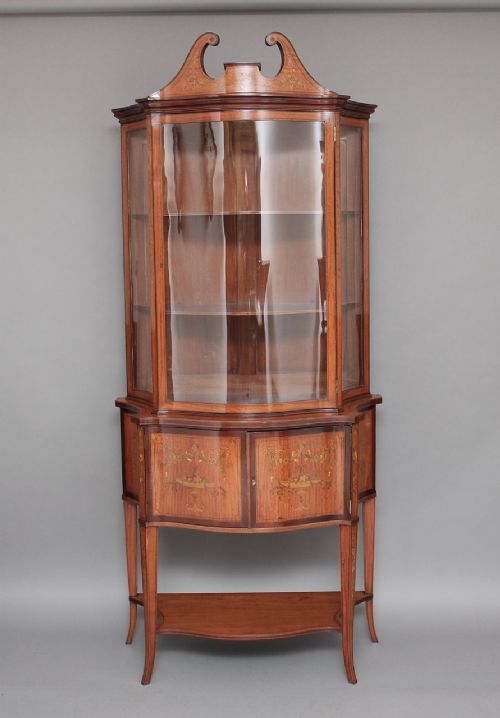
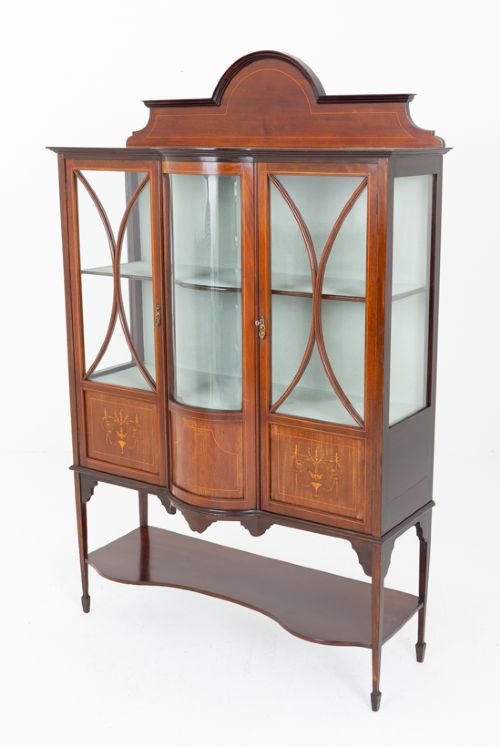
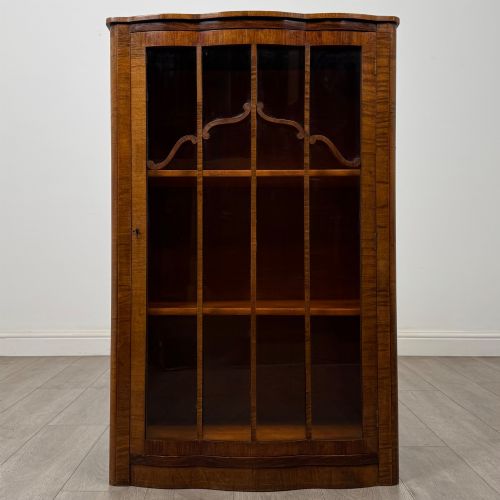
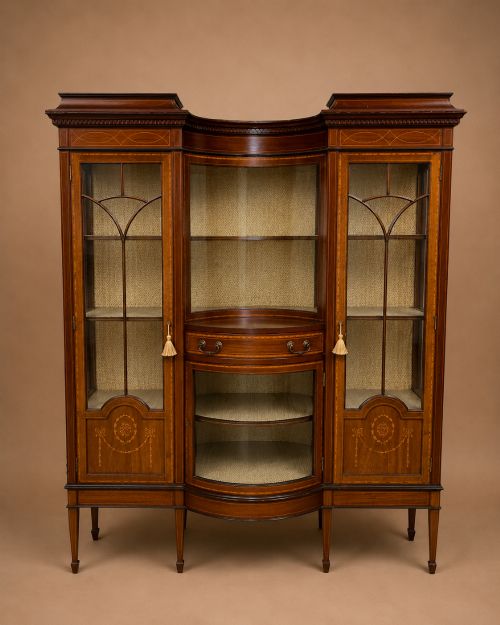
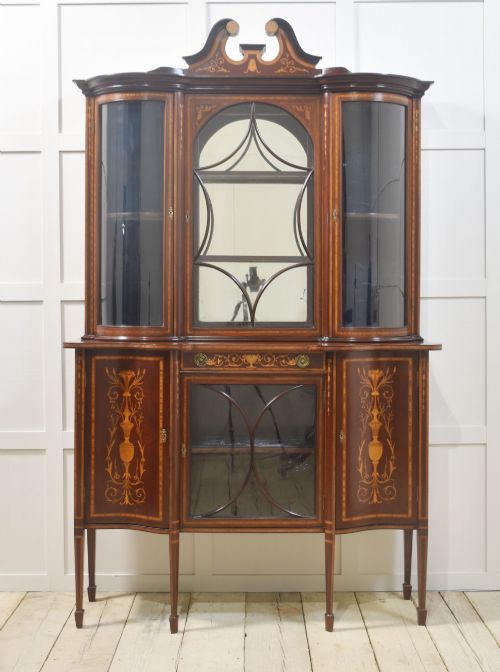
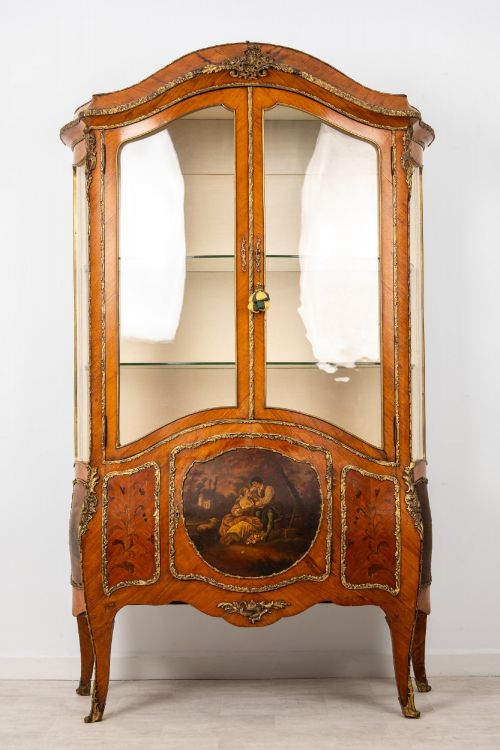
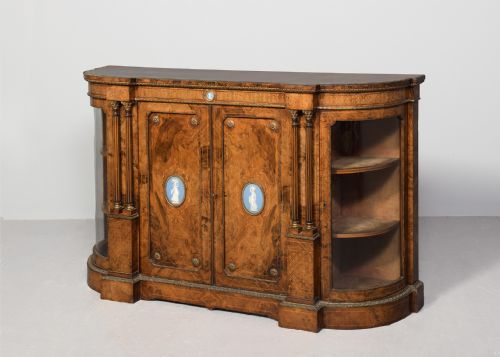
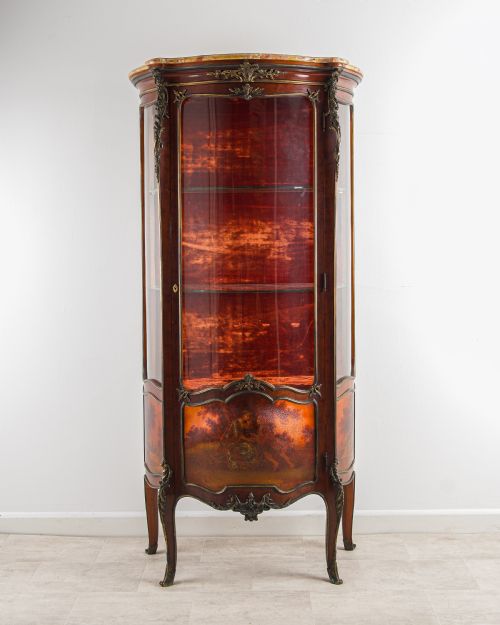
The domestic versions on this page predominantly take the form of mahogany, satinwood, and burr walnut cabinets featuring bow fronts, demi-lune shapes, and serpentine contours. You also meet French painted concave bookcases, Louis XVI style vitrines, and countertop display cases intended for smaller artefacts.
Commercial heritage appears through pieces associated with makers such as F. Sage and Co, reflecting the rigorous standards of nineteenth and early twentieth century shopfitting. Whether standing tall as a credenza or resting upon a counter, each piece employs rounded glass panels to soften interior lines and eliminate glare.

How they were made
Makers construct these cases using robust timber frameworks of mahogany, walnut, birch, and pine, frequently enhanced with boxwood stringing and ormolu mounts. Glass forms the dominant visual element, requiring specialist bending techniques to achieve the smooth, unbroken curves seen on bow fronts and domes.
Surface decoration relies on natural wood grains, burr walnut figuring, and satinwood inlay, alongside painted finishes on French provincial examples. Cabinetmakers join internal wooden shelving with precise joinery, while brass hardware secures doors and mounts fabric linings within the display space.
Curved Glass Display Case Retail Price Guide 2026
Typical asking prices for curved glass display case among the pieces listed under this phrase on Sellingantiques today, from the lower quarter to the upper quarter. They describe what is for sale here now, not the wider market.
Some Victorian clock domes are so heavy and wide they require two people just to lift the glass safely.
What varies in quality
The pinnacle of the range is represented by exhibition quality pieces featuring intricate ormolu mounts, vernis martin panels, and meticulously matched burr timber veneers. These superior examples display seamless glass curves and refined proportions that mark out master craftsmanship from standard commercial production.
Simpler countertop models and utilitarian shop fittings prioritize sturdy timber construction and functional glass housing over decorative embellishment. Quality resides in the integrity of the bent glass and the preservation of original patination on the underlying wood.

F. Sage and Co
The Curved Glass Display Case Glossary
- Vitrine
- A glass display cabinet used primarily for porcelain, glassware, and small ornaments. This term often applies to grander drawing room pieces with decorative mounts.
- Demi-lune
- A half-moon shape characteristic of cabinets designed to sit flat against a wall while presenting a curved front edge. This form maximises floor space in compact rooms.
- Ormolu
- Gilded bronze ornamentation applied to furniture mounts, corners, and feet. It adds metallic contrast to rich timber surfaces on revival pieces.
- Serpentine
- A line that curves outward and then inward, creating a gentle wave effect across the front of a cabinet. This shaping demands advanced carpentry skills.
Curved Glass Display Case: Frequently Asked Questions
What is a curved glass display case used for?
These cabinets serve to exhibit collections of ceramics, glassware, books, and curiosities while protecting them from dust and handling. The curved glass panels offer panoramic views of the contents from multiple angles.
Historically, they occupied prominent positions in drawing rooms, parlours, and commercial shops. Today, they continue to function as focal points in domestic interiors for displaying valued possessions.
How do I date a curved glass display case?
Dating relies upon identifying the prevailing style, timber choices, and construction methods characteristic of specific eras like the Victorian, Edwardian, or Art Deco periods. For instance, heavy burr walnut points to mid-nineteenth century tastes, whereas lighter satinwood inlay often indicates Edwardian production.
Examining the glass itself also helps, as early bending techniques leave subtle irregularities within the pane. Maker marks or trade labels, when present, provide the most precise chronological indicator.
Are these cases suitable for small rooms?
Many variations, particularly demi-lune and countertop models, are specifically proportioned to occupy minimal floor space. Their curved profiles eliminate sharp corners, making them easier to navigate in tighter hallways and alcoves.
Tall, slender vitrines and bookcases provide substantial display capacity vertically rather than horizontally. This makes them practical alternatives to wider, bulkier pieces of furniture.
How do I maintain the glass and wood?
Regular dusting with a soft, dry cloth preserves the polished surface of timbers such as mahogany, walnut, and satinwood. Glass panels require gentle cleaning with a mild solution to avoid damaging aged wooden frames or brass mounts.
Keeping cabinets away from direct sunlight and stable humidity protects both the timber veneers and the historic glass from undue stress. Interior fabric linings benefit from occasional careful vacuuming with a brush attachment.