
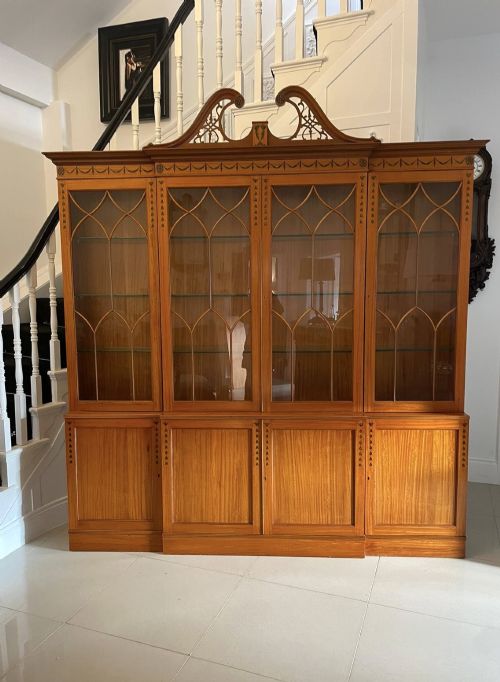

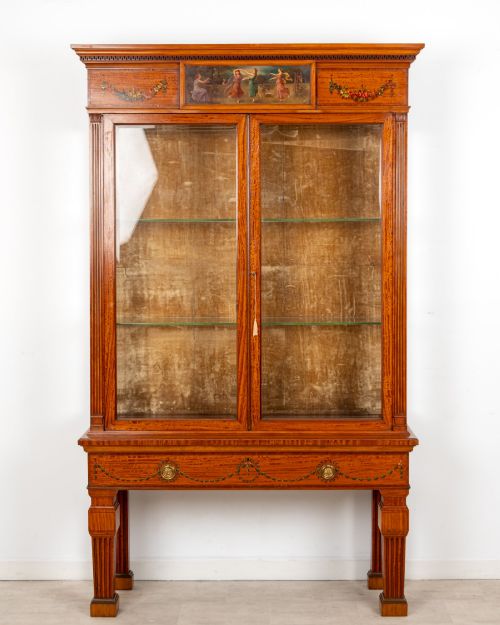
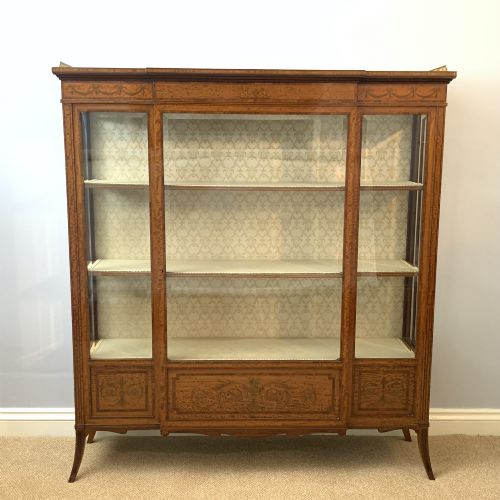
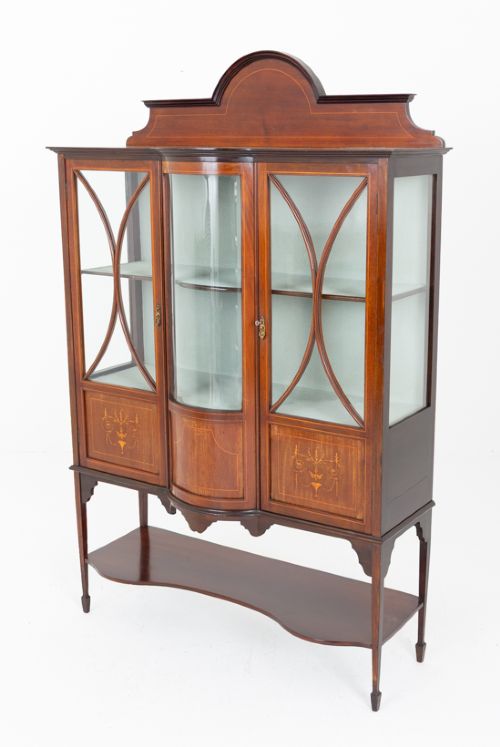
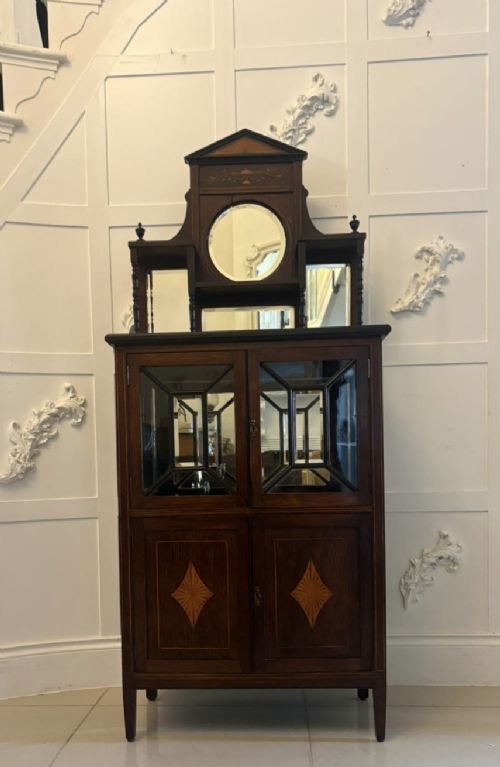
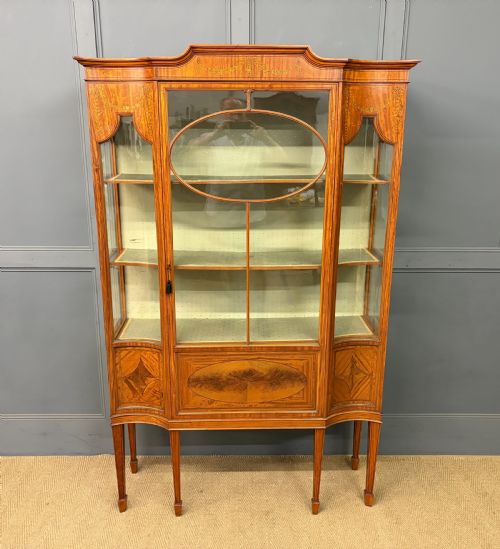
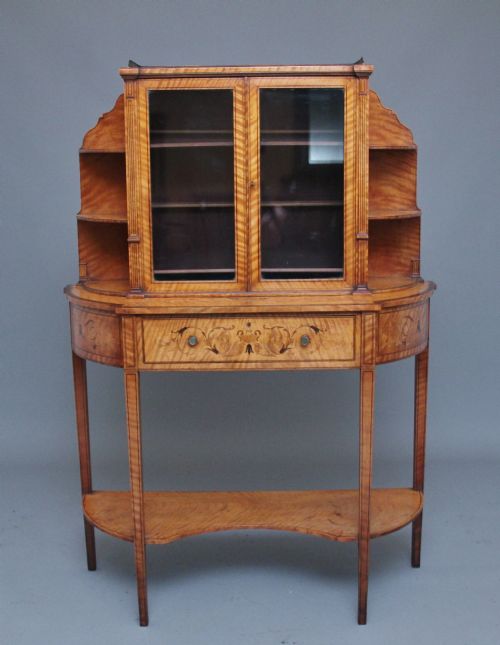
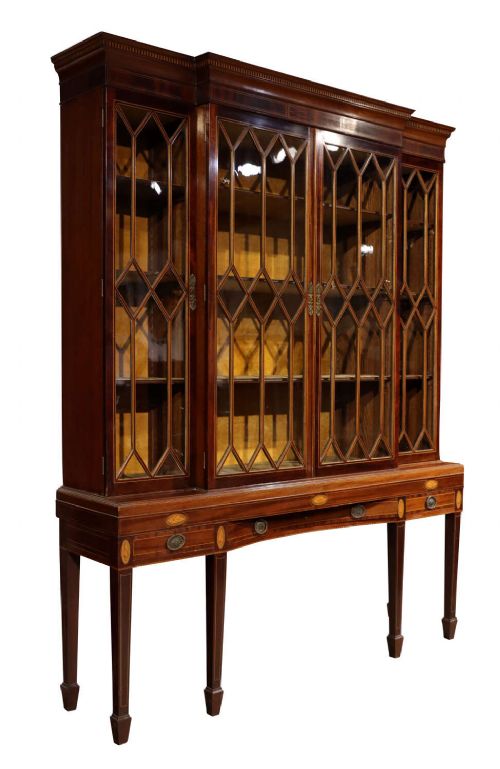
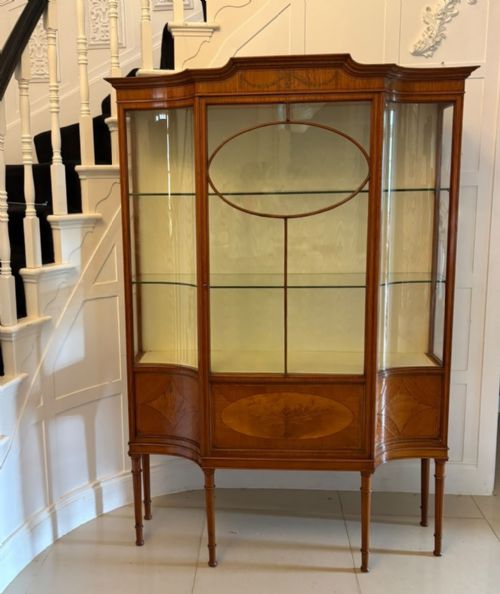
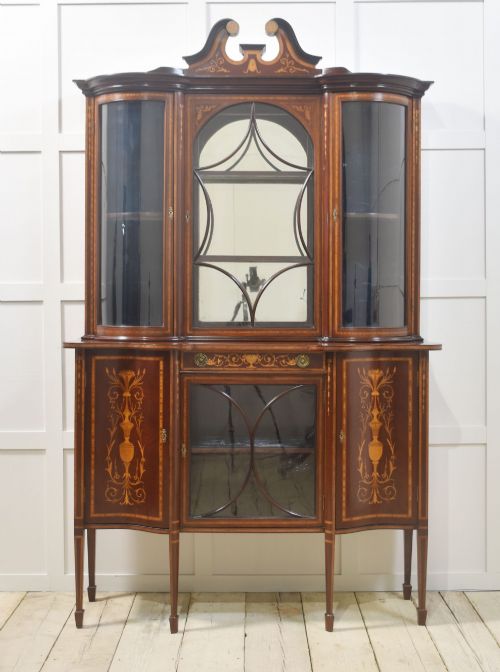
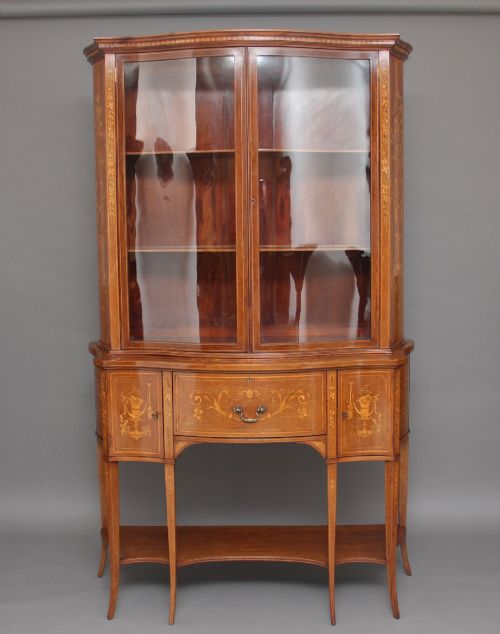
Satinwood China Cabinet
These satinwood china cabinet pieces bring polished timber and clear display space together, offering a refined way to exhibit precious porcelain.

What They Are
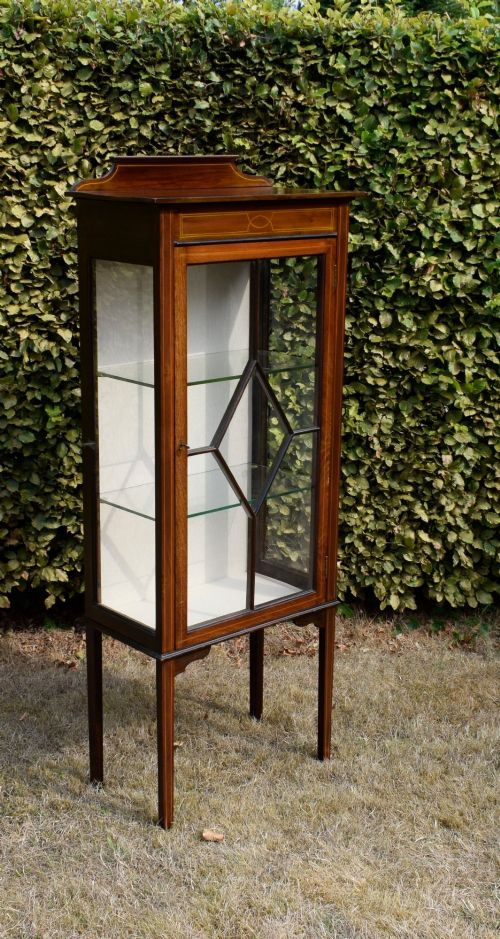
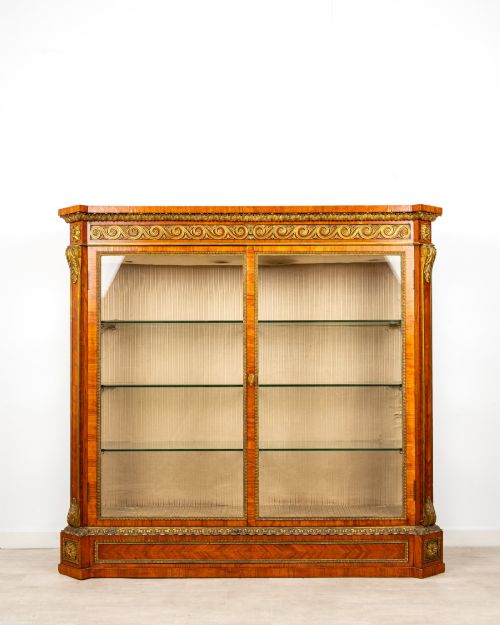
A satinwood china cabinet combines timber framing with glass panes to protect and display ceramics. The pieces on this page span the late nineteenth century and the early twentieth century.
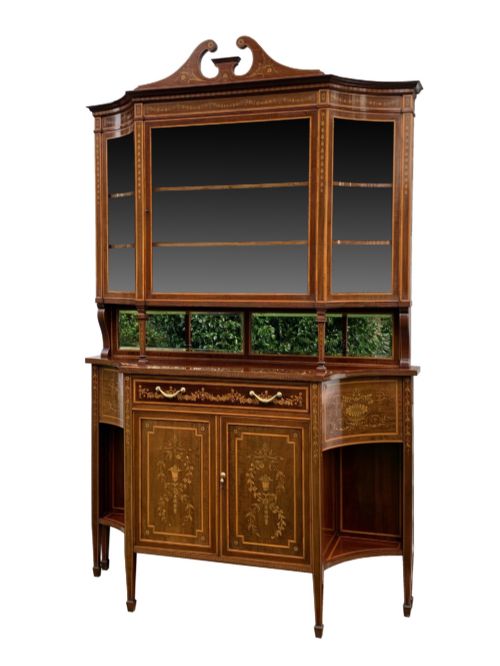
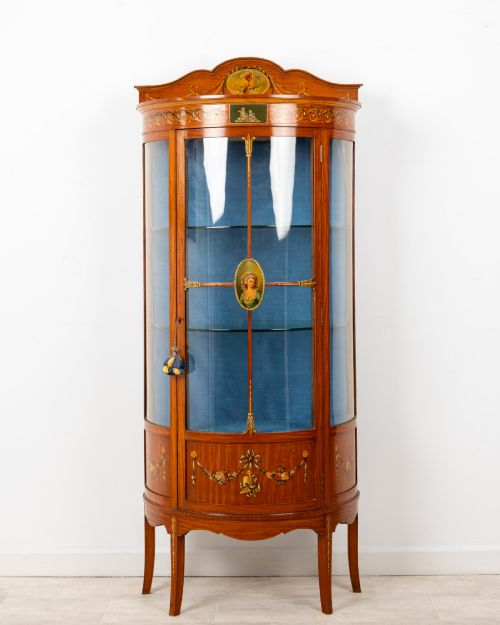
Most examples follow the Sheraton Revival and Edwardian styles, including serpentine shapes and breakfront forms. Alongside dedicated display cabinets, the selection includes a bookcase adaptation.
Origins stretch from the late Victorian era through the Edwardian period, capturing both straightforward display pieces and elaborately painted or inlaid items.
How They Were Made
Construction relies primarily on satinwood, sometimes paired with mahogany framing or detailed with decorative inlay work. Glazed doors provide the viewing area for contents.
Metal elements such as brass fixtures and gilt bronze mounts appear across the pieces, complementing the light timber grain and painted surface details.
Interior linings often incorporate fabric to soften the display space behind the glass panels.
Retail Price Guide 2026
Typical UK retail prices for satinwood china cabinet, calculated from the Sellingantiques database of over a million retail prices indexed since 2003. This retail price guide relies exclusively on Sellingantiques data; no external sources or auction records are used, so the figures do not describe the wider market.
The listings here cover periods from 1880 through to 1910, uniting Victorian and Edwardian examples under the broader Edwardian and Sheraton Revival styles.
What Varies in Quality
The refinement of the surface decoration separates standard utility pieces from higher-tier examples. Hand-painted details and precise timber inlay require advanced workshop skill.
Mounts and hardware shift the overall impression, with cast gilt bronze mounts indicating a more ambitious commission than plain brass fittings.
Hampton & Sons London·H J Hatfield & Sons
The Satinwood China Cabinet Glossary
- Satinwood
- A pale, lustrous timber native to the tropics, prized for its smooth sheen and used extensively for fine cabinetmaking and decorative veneer.
- Breakfront
- A cabinet design where the central section projects forward from the flanking wings, creating visual depth and architectural presence.
- Serpentine
- A curved shape featuring a convex centre flanked by concave curves, demanding precise woodworking to execute smoothly.
- Gilt Bronze
- Bronze metal treated with a gold finish, often cast into ornate mounts that accent the corners and friezes of luxury furniture.
- Sheraton Revival
- A design movement drawing inspiration from late eighteenth-century neoclassical furniture, characterised by slender proportions and classical motifs.
Frequently Asked Questions
What is a satinwood china cabinet used for?
These cabinets serve to house and exhibit fine porcelain, glass, and decorative objects while protecting them from dust.
The glass panels keep contents visible from the outside while enclosed shelving maintains a tidy interior.
How do I identify a Sheraton Revival piece?
Sheraton Revival furniture draws on late eighteenth-century designs, featuring light timbers, painted highlights, and classical proportions.
Such items often show refined inlay work rather than heavy carving.
Where should I place a display cabinet?
Position the cabinet away from direct sunlight to protect timber finishes and interior fabrics from fading over time.
Ensure the floor is level so the glazed doors hang true and close evenly.
How do Edwardian cabinets differ from Victorian ones?
Edwardian pieces tend to display lighter proportions and brighter timber tones, often incorporating Louis XVI revival motifs.
Victorian examples frequently lean towards darker contrast or heavier architectural framing.