

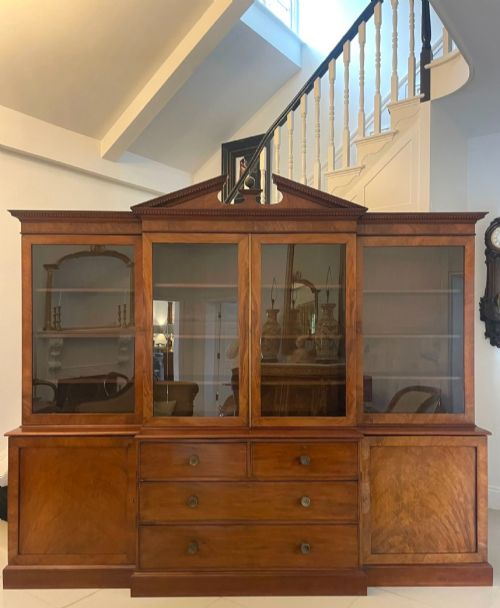
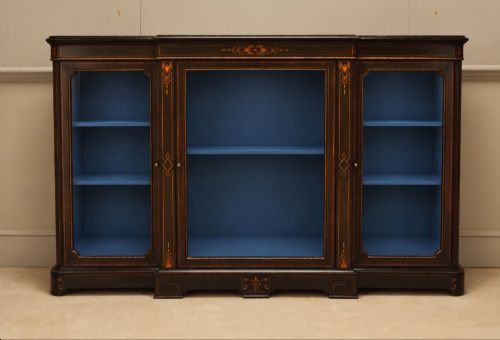
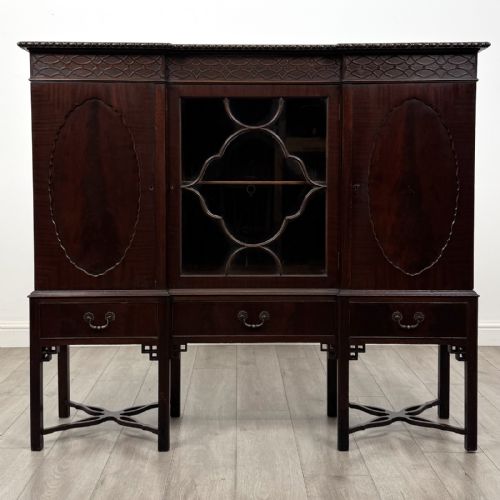
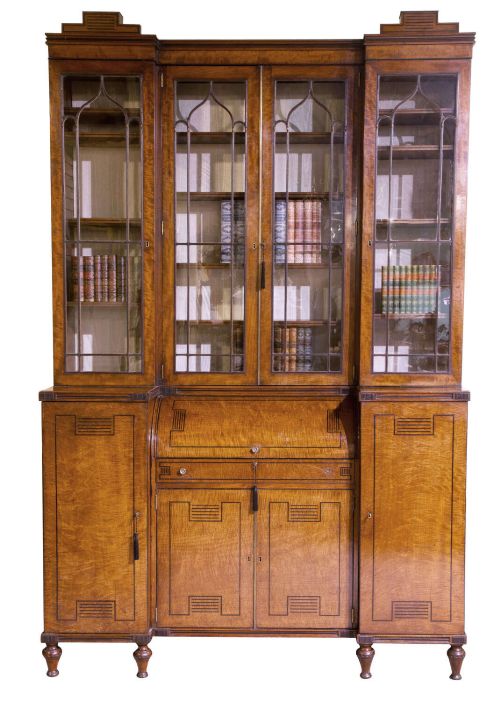
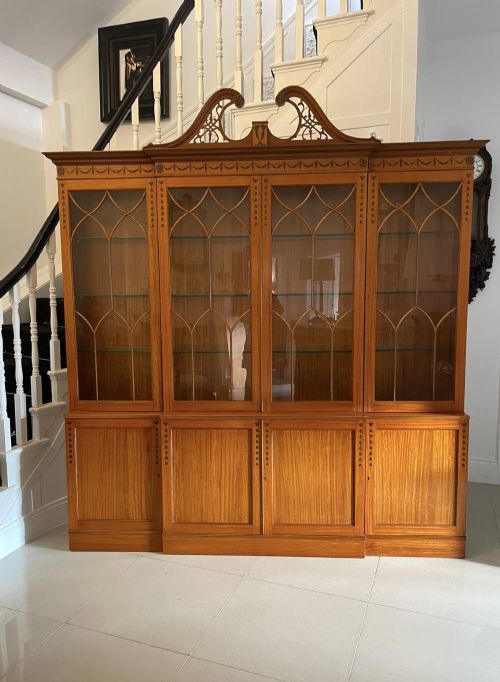
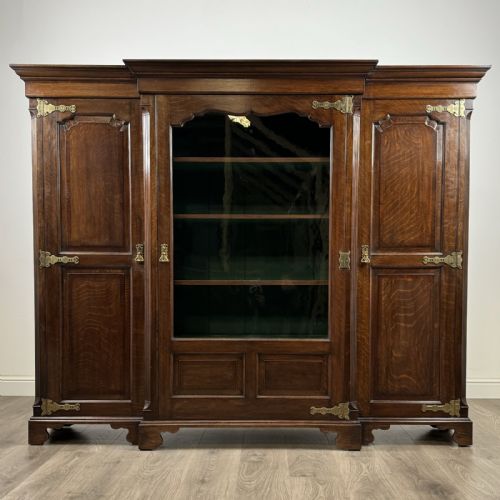
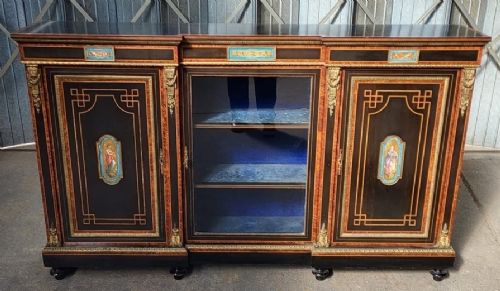
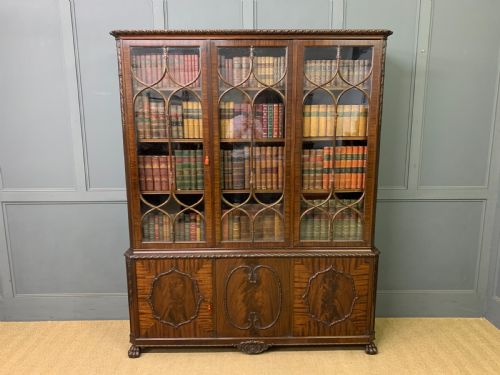

Glazed Breakfront Bookcase
These glazed breakfront bookcase pieces are commanding library furnishings that organise volumes behind glass while projecting status.

Glazed Breakfront Bookcase
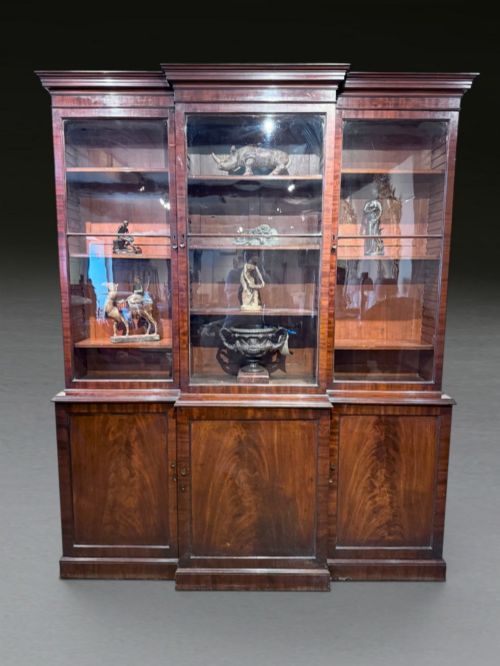
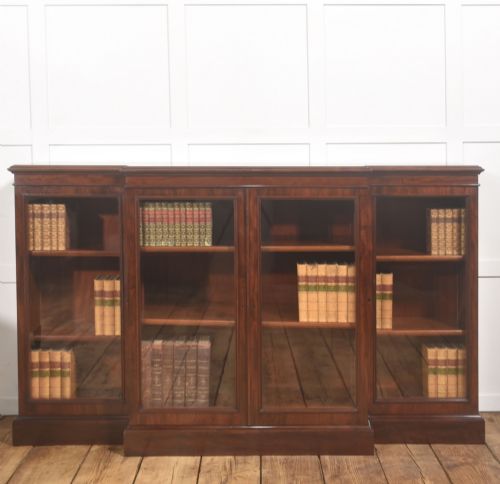
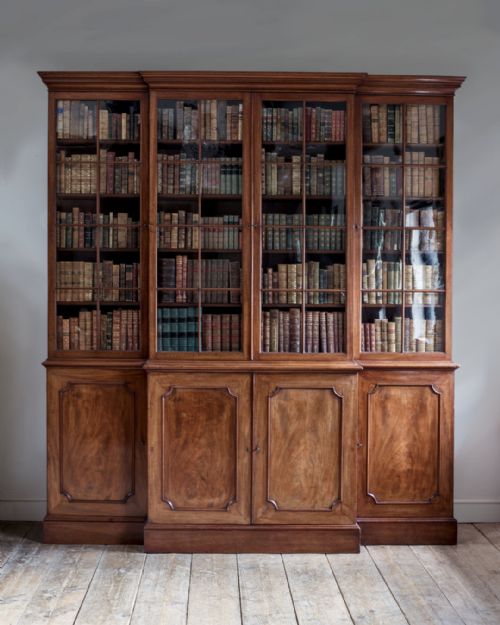
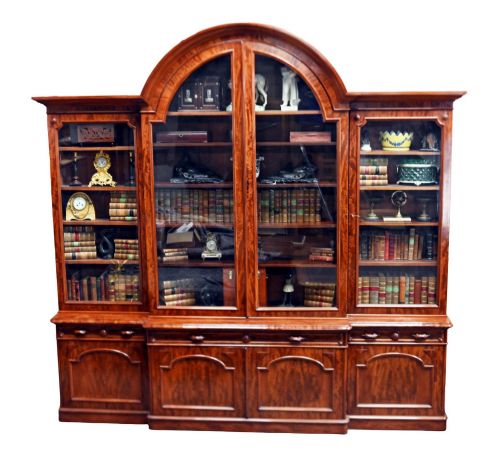
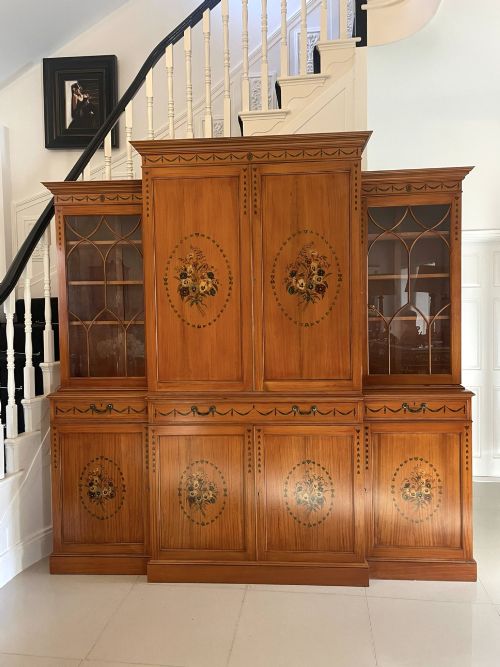
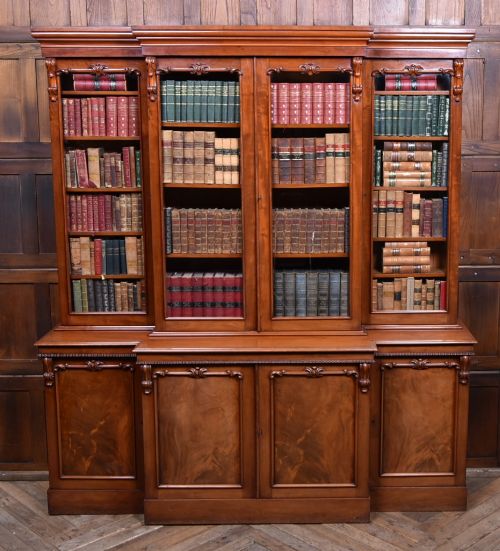
A glazed breakfront bookcase presents a tripartite architectural façade where the central section projects forward from the recessed wings. This page centres on nineteenth-century examples alongside early twentieth-century interpretations, drawing from Victorian, Regency, George III, and Sheraton Revival eras.
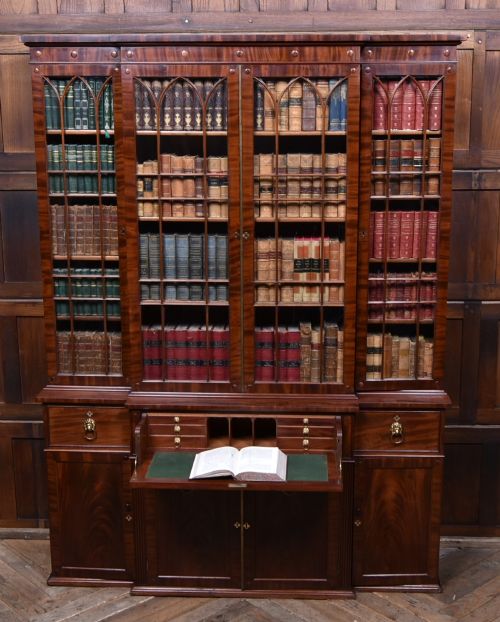
The dominant material across these pieces is mahogany, often enhanced by flame mahogany veneer, burr walnut, oak, satinwood, and red walnut. Forms range from library bookcases and four-door or five-door variations to secretaire combinations and display cabinets.

How they were made
Cabinet makers constructed these substantial carcasses using solid timbers and figured veneers such as flame mahogany and burr walnut, frequently enriched with satinwood inlay. Brass hardware secures the doors and internal fittings.
Glazing is set into timber frames, with astragal bars dividing the glass panes into geometric patterns. Carved ornamentation appears on specific Victorian and revival pieces.
Glazed Breakfront Bookcase Retail Price Guide 2026
Typical asking prices for glazed breakfront bookcase among the pieces listed under this phrase on Sellingantiques today, from the lower quarter to the upper quarter. They describe what is for sale here now, not the wider market.
Some secretaire variants hide ink stains inside the desk drawer where a tired nineteenth-century clerk left a permanent mark.
What varies in quality
Quality rests in the selection of timber veneers, where symmetrical flame mahogany or burr walnut figure elevates the visual weight of the façade. The refinement of the astragal glazing bars and the integration of adjustable shelving further distinguish superior workshops.
Proportion and architectural presence dictate the standing of a piece, from simple four-door layouts to expansive five-door library bookcases with elaborate cornices and harmonious breaks.
The Glazed Breakfront Bookcase Glossary
- Breakfront
- An architectural cabinet design where the central section projects forward from the flanking wings.
- Astragal
- A moulding profile used to divide glass panes within a glazed door into smaller geometric lights.
- Flame mahogany
- A veneer cut from timber fork joints that produces a distinctive flickering, flame-like grain pattern.
- Secretaire
- A cabinet incorporating a pull-down writing drawer fitted with internal pigeonholes and small drawers.
- Burr walnut
- A highly figured timber harvested from walnut tree growths, prized for intricate swirling grain patterns.
Glazed Breakfront Bookcase: Frequently Asked Questions
What is a breakfront bookcase?
A breakfront bookcase is a large cabinet featuring a central section that steps forward from the flanking side sections. This design creates a pronounced architectural presence suited to formal libraries and principal rooms.
Historically constructed to house extensive book collections, these pieces combine display glass doors with substantial base cupboards or drawers.
How do I date a breakfront bookcase?
Dating relies on identifying timber choices, construction methods, and stylistic cues associated with periods like George III, Regency, and Victorian. Mahogany and satinwood predominate in earlier pieces, while burr walnut and specific revival styles emerge later in the nineteenth century.
Examine the interior adjustments, backboards, and glazing bar thickness to confirm the manufacturing era.
Are the shelves adjustable?
Many nineteenth-century library bookcases include adjustable shelving mechanisms to accommodate volumes of varying heights. This practical feature allows owners to configure the internal space according to their collection.
Fixed shelving is more commonly found in specific regional or earlier vernacular interpretations.
How do I care for mahogany veneer?
Maintain mahogany veneer by placing the bookcase away from direct sunlight and steady heat sources to prevent timber splitting and fading. Dust regularly with a dry, soft cloth and apply traditional beeswax sparingly.
Avoid liquid polishes containing silicones that can penetrate aged finishes and degrade the wood over time.