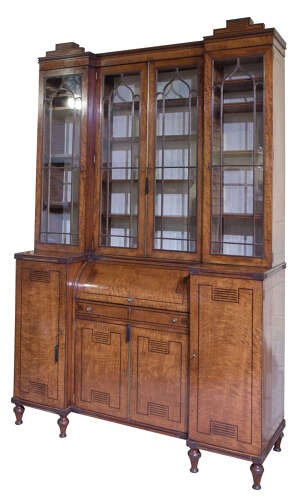
Salisbury Antiques Centre has dated this Regency Breakfront Secretaire Bookcase to the 19th Century.
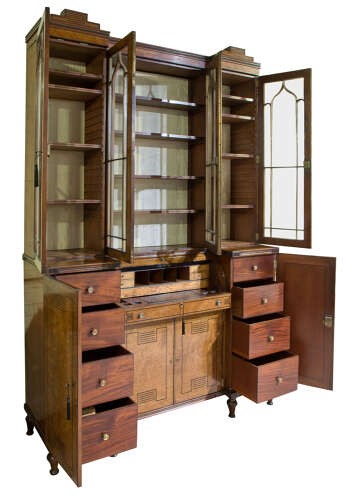
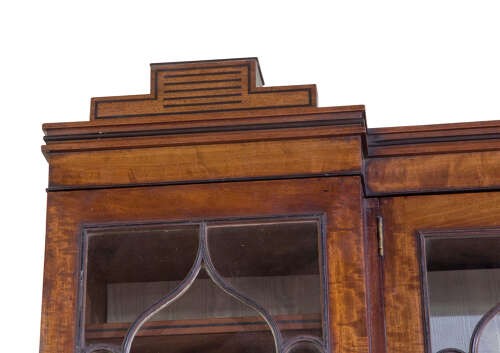
The glazing incorporates particularly elegant Gothic arched astragals, opening to reveal adjustable shelved interiors.
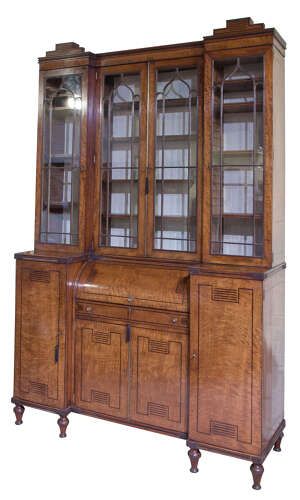
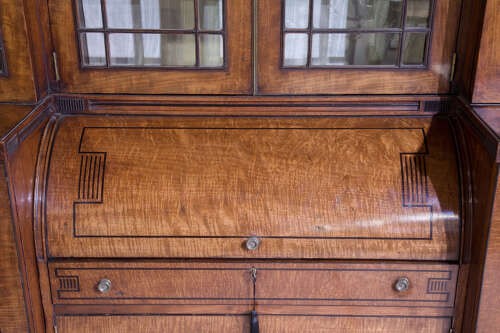
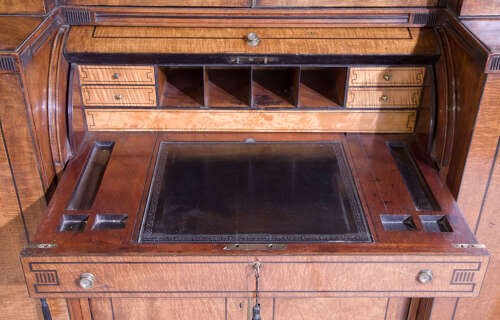
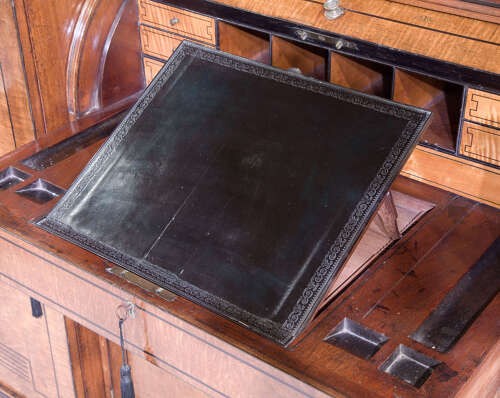
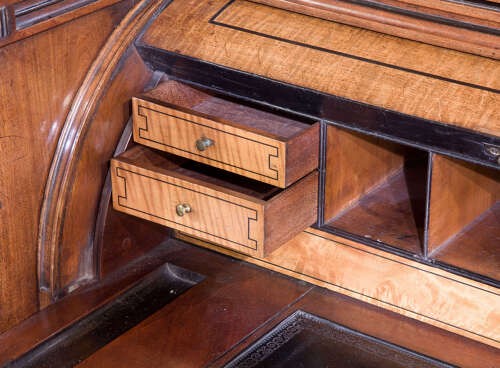
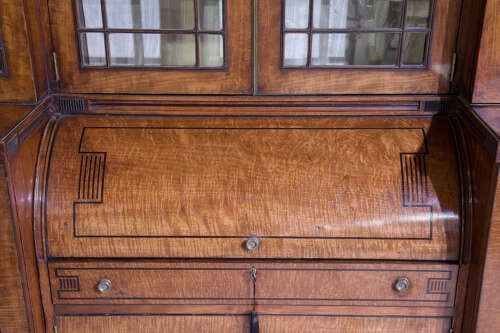
The lower section is of equally impressive quality, with a central cylinder-fronted secretaire flanked by tall cupboards. The cylinder opens to reveal a fitted writing interior, incorporating an arrangement of small satinwood-fronted drawers and pigeonholes above a writing surface inset with tooled black leather. The writing surface incorporates a hinged adjustable reading or writing slope, together with recessed compartments for writing implements.
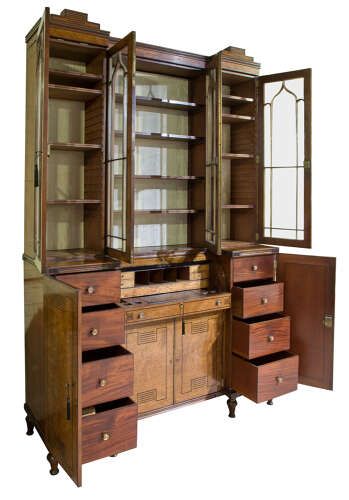
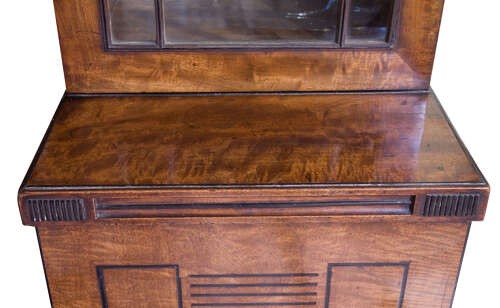
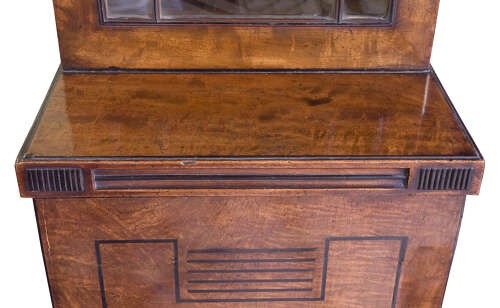
Below is a long drawer and a pair of cupboard doors, while the flanking pedestals conceal banks of four graduated drawers to each side.
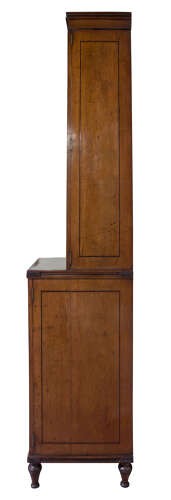
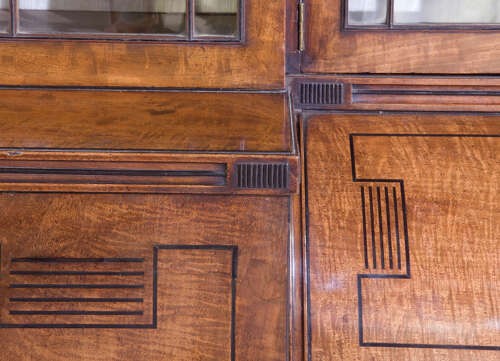
Throughout, the cabinet is decorated with restrained ebony line inlay and geometric Greek-key inspired motifs, repeated across the cylinder, drawers and cupboard fronts. Fine reeded and moulded details, beautifully figured veneers and the architectural stepped pediments complete the design. Raised on short turned feet.
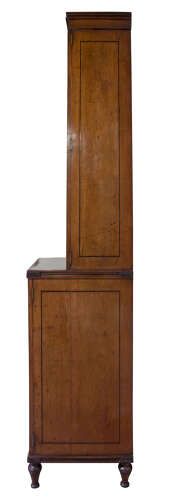
The combination of Grecian decoration, Gothic glazing, richly figured veneers and sophisticated fitted interior is characteristic of the highly fashionable Regency cabinetmaking of the early 19th century. The piece has traditionally been attributed to George Oakley (c.1773–1840), one of the leading London cabinetmakers of the Regency period, noted for his use of contrasting exotic timbers and refined inlaid decoration.
A particularly impressive and highly functional piece of Regency cabinet furniture, retaining a wonderful colour and displaying exceptional craftsmanship throughout.
English, circa 1810. Attributed to George Oakley.
Salisbury Antiques Centre has dated this Regency Breakfront Secretaire Bookcase to the 19th Century.

You can view the stock and full dealer information on the Salisbury Antiques Centre Profile Page
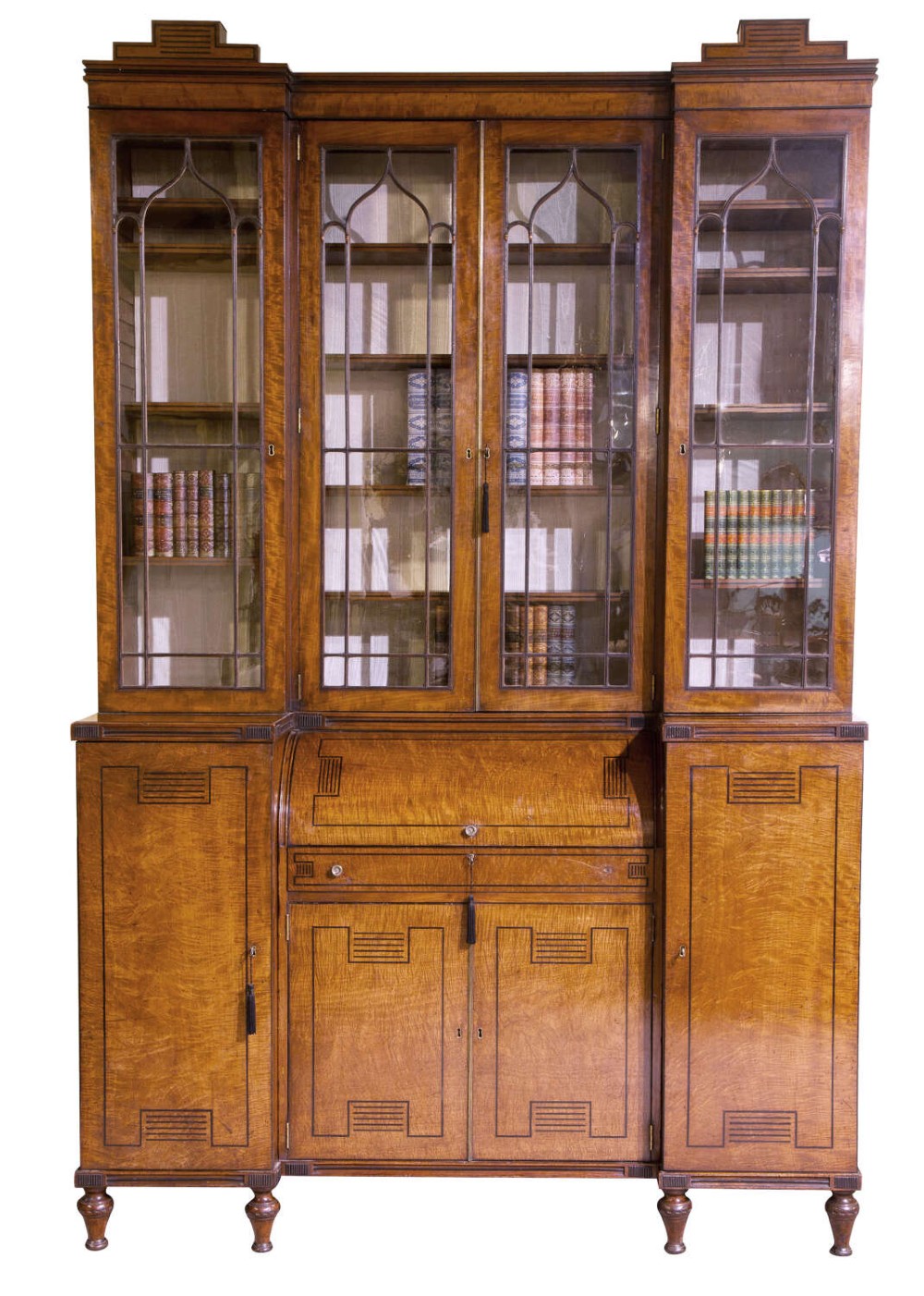
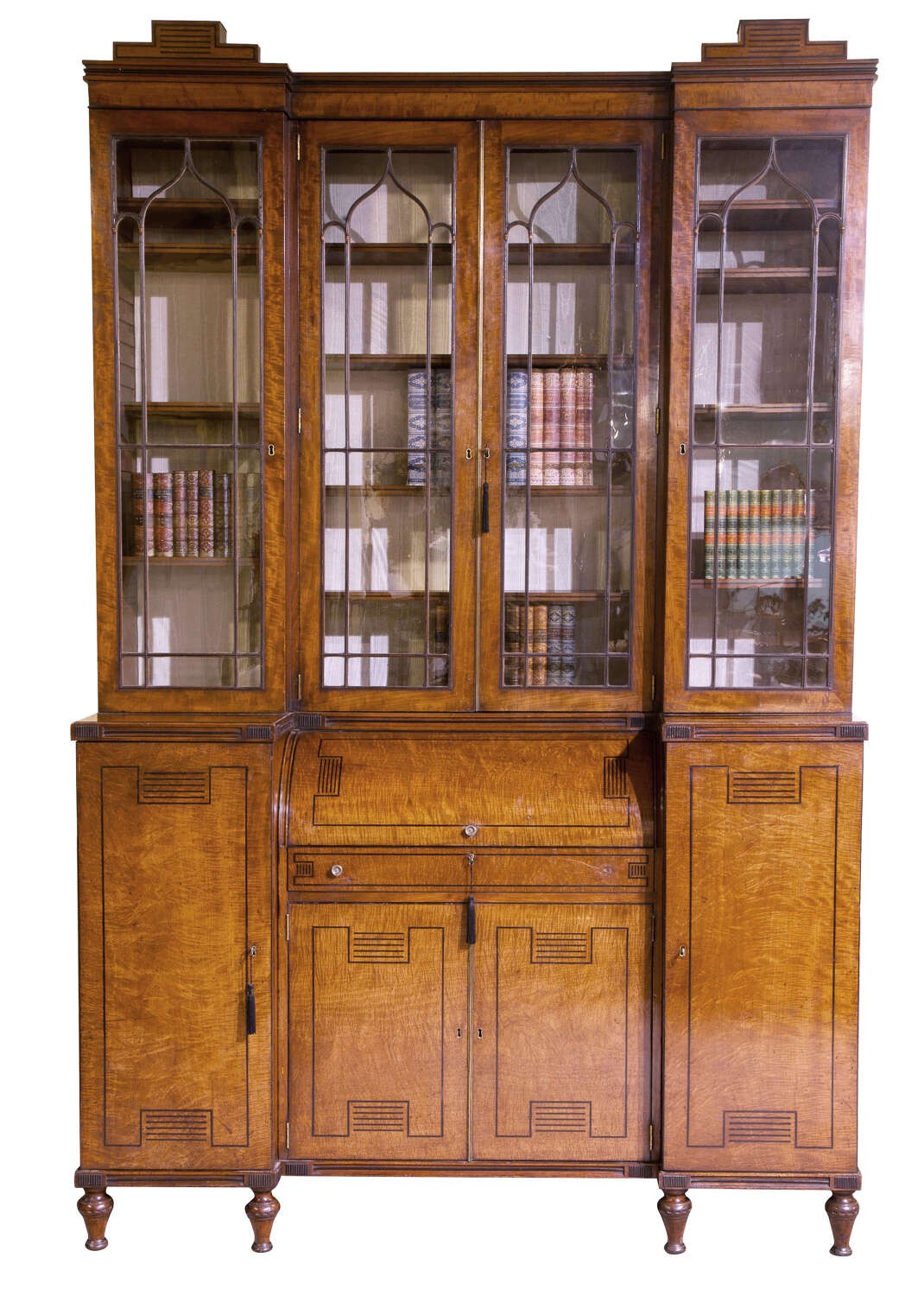
Important Regency Mahogany, Satinwood & Ebony Inlaid Breakfront Secretaire Bookcase