Antique Open Bookcases
A bookcase with no doors or glass, shelves open at the front, made for houses where books were kept to hand rather than shut away.

What They Are
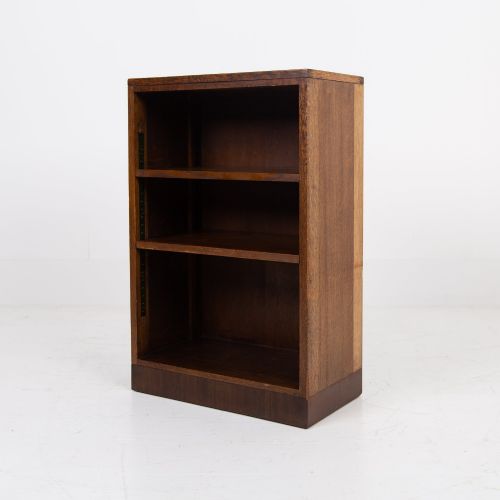
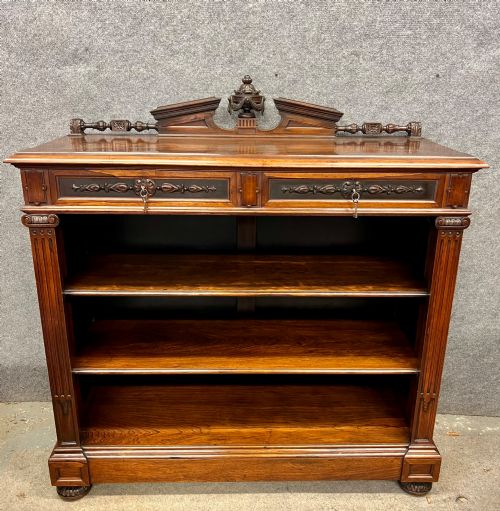
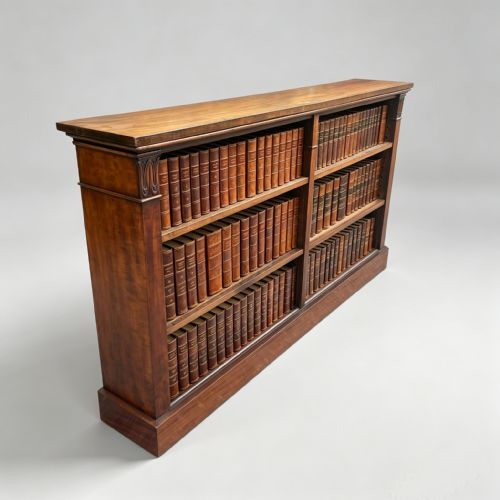
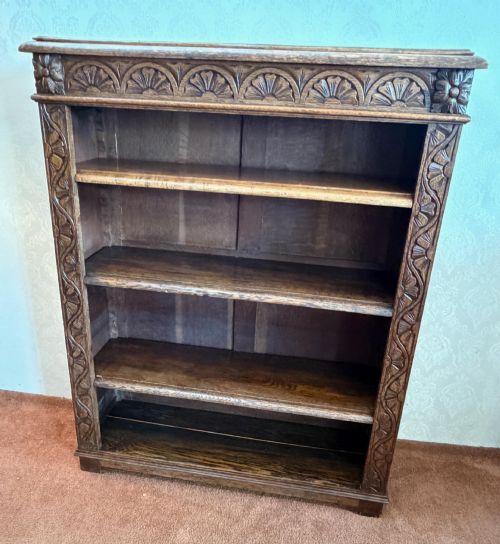
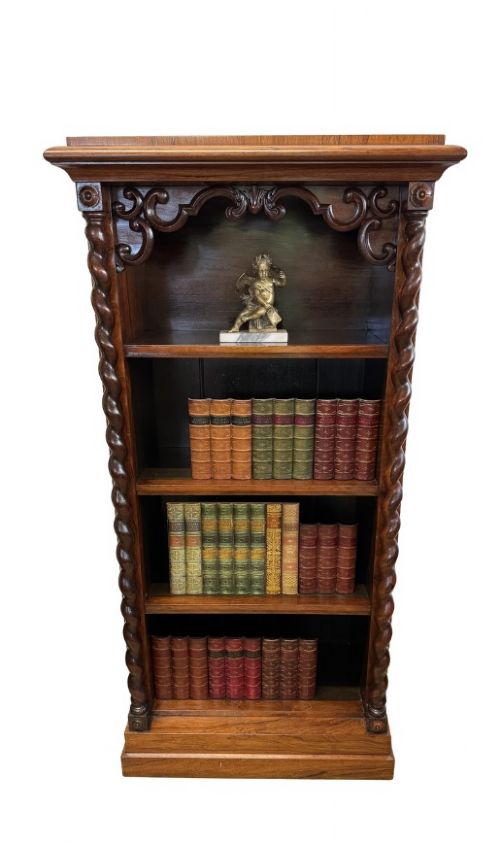
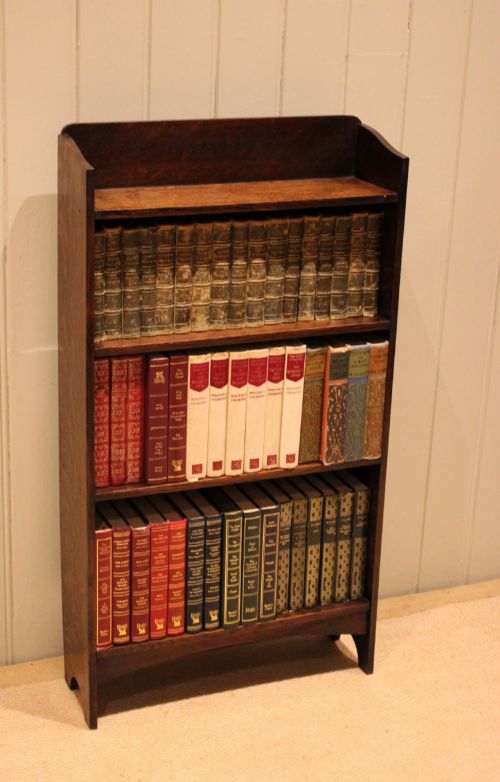
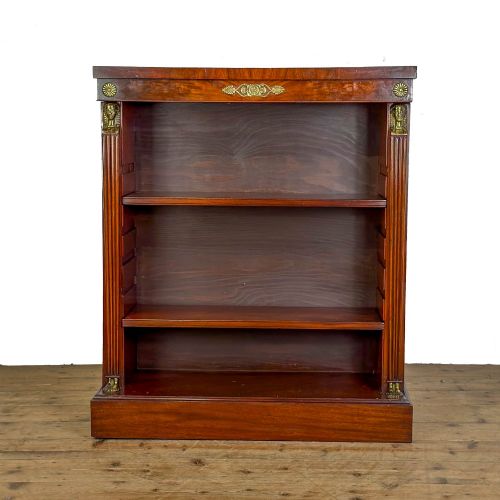
An open bookcase is freestanding, shelved and unglazed, with fixed or adjustable shelves and a plinth, bracket or turned feet. A minority pair open shelving above with a cupboard or drawer base. A few come described as bookshelves or open shelves rather than bookcases, which amounts to the same thing.
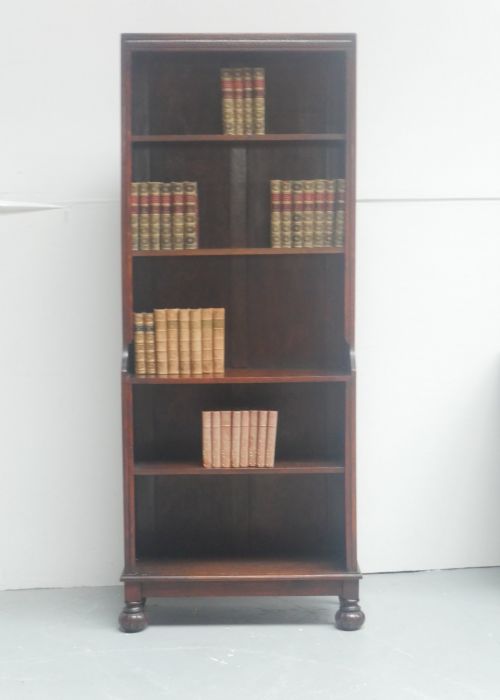
Timber names them before anything else: mahogany leads the titles, oak follows close behind, then walnut and rosewood. Victorian is the commonest period word, with Edwardian next. The one you are most likely to meet is a single-piece mahogany or oak case of domestic scale, three to five shelves, no further qualifier in the title.
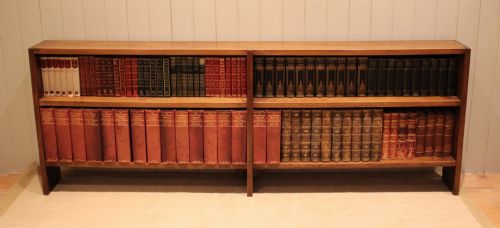
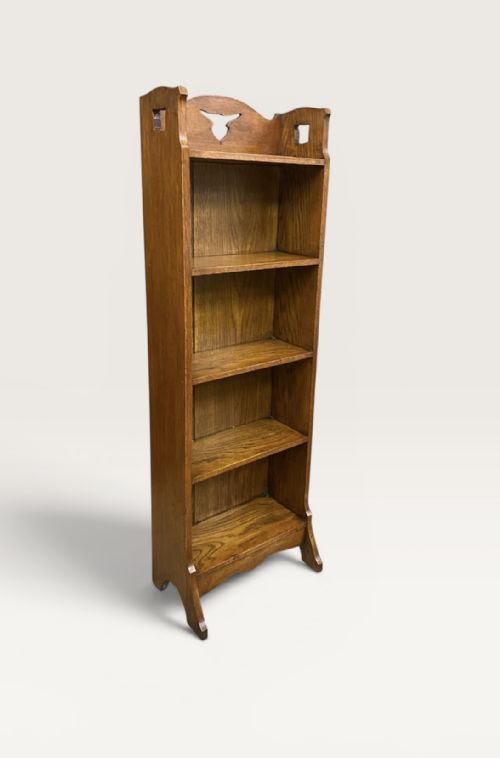
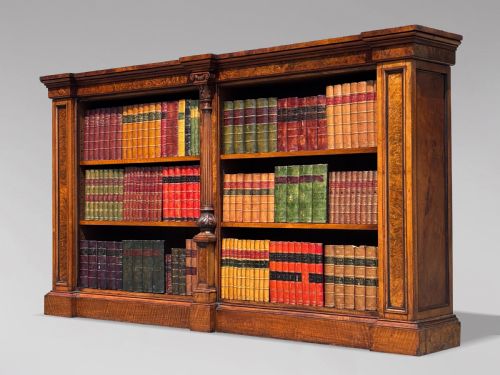
Scale splits both ways. Small and slim uprights and low dwarf cases sit at one end, breakfront library ranges of six, eight and nine feet at the other, but both are minorities against the middling free-standing case. Adjustable shelving and breakfront fronts each appear in only a small share of titles.
Dates run 1800 to 1940, and under half the listings carry a clean year. The 1880s and 1890s cluster on one side, the Edwardian, 1900s, 1910s and 1920s entries on the other, so the early twentieth century is as well represented as the high Victorian. Regency turns up throughout, Georgian rarely.

What Moves The Range
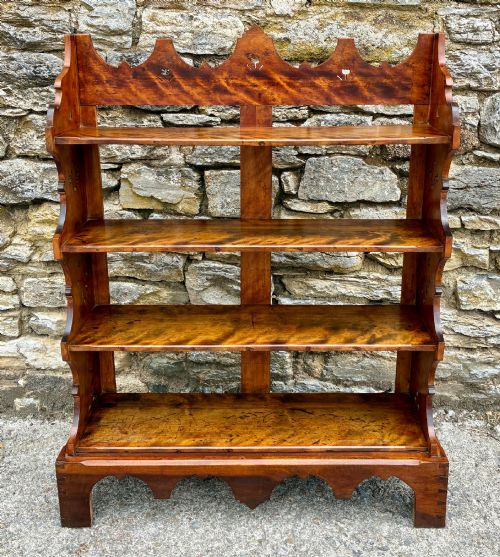
Wood does most of the work. Plain oak and pine hold the bottom of the range, while rosewood, burr and figured walnut, satinwood, birdseye maple and goncalo alves sit at the top. Odd timbers turn up once in a blue moon: tiger bamboo, satin birch, kingwood, yew, elm, ash, chestnut.
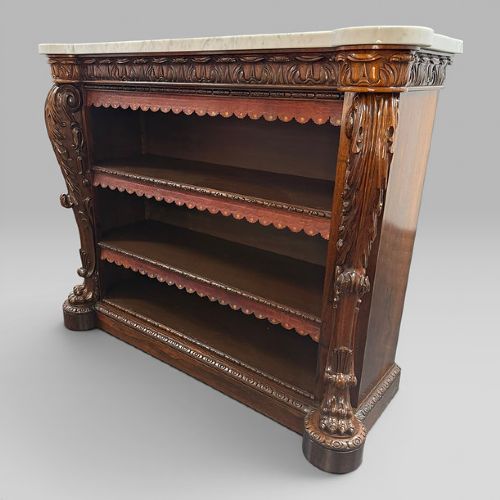
Then scale and form. Breakfront and library titles concentrate in the upper part of the range, including the widest sampled cases; small and slim ones sit at the bottom. Applied decoration pushes the same way, with inlay, carving, brass inlay, parcel gilding, ormolu mounts, marquetry and marble tops clustering high. Adjustable shelves rather than fixed shelves come paired with library and breakfront descriptions.
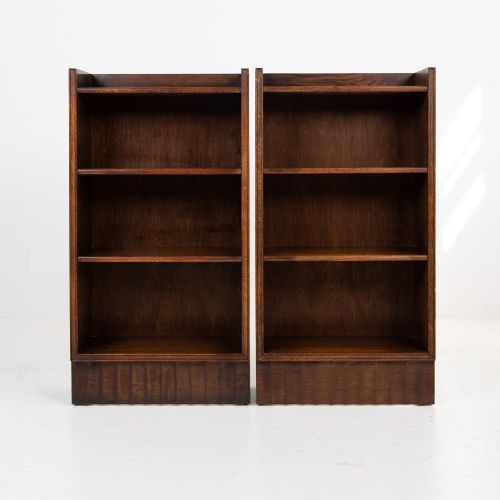
Pairs are commoner than you would expect and sit consistently towards the upper half, whatever the timber. The very top is held by pairs and by country-house commissions, among them a documented birdseye maple case made for an Oxfordshire hall and a pair of Irish bookcases.
Retail Price Guide 2026
Typical UK retail prices for open bookcases, calculated from the Sellingantiques database of over a million retail prices indexed since 2003. This retail price guide relies exclusively on Sellingantiques data; no external sources or auction records are used, so the figures do not describe the wider market.
Victorian is the period label used most on Sellingantiques for open bookcases, with 19th Century next and Edwardian third.

Gillows·Maple & Co
The Antique Open Bookcases Glossary
- Open bookcase
- A bookcase without doors or glazing, shelves exposed at the front.
- Breakfront
- A front whose centre section projects forward of the sections flanking it. It shows in a small share of titles and tends to go with library scale.
- Adjustable shelves
- Shelves that can be moved on notched uprights or pegs, as against shelves fixed in place. A minority specification.
- Dwarf
- A low bookcase, waist height or below. Sized to books rather than to a wall.
- Waterfall
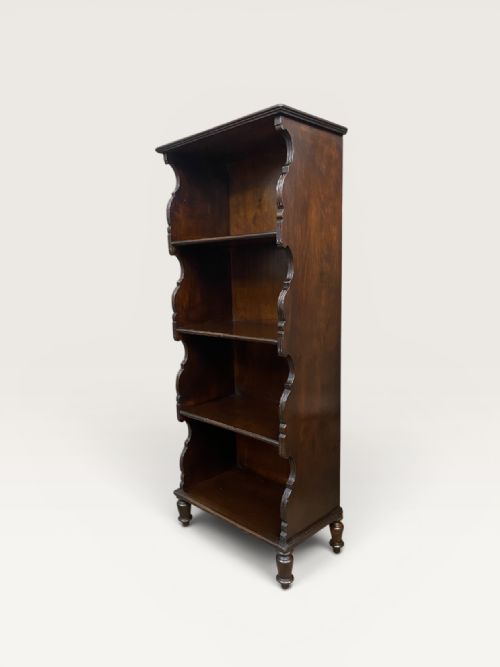
- Shelves graduating in depth or width from bottom to top, usually with shaped or open ends. Often paired with Regency or dwarf in the title.
- Sectional
- A case built in two or three separable parts for moving, written up as 2 section, 3 section or in two parts.
Frequently Asked Questions
What wood are open bookcases usually made from?
Mahogany and oak dominate, with walnut and rosewood behind them. Between them these four account for the biggest terms in the titles.
Beyond that the range thins fast. Satinwood, birdseye maple, pollard oak, satin birch and goncalo alves each appear only once or twice across the archive.
How wide do they get?
Width is the rarest boast in these listings, and only a handful of titles state a measurement at all. The widest sampled run to six, eight and nine feet.
Those are breakfront and library cases. The default is a domestic single-piece case of three to five shelves.
Are the shelves adjustable?
Usually not. Adjustable shelving is called out in only a small share of titles, so fixed shelves are the norm.
Where adjustable does appear, it keeps company with library and breakfront descriptions and sits in the upper part of the range.
Which periods are best represented?
Victorian is the commonest label, with 19th Century next, and both cover a lot of ground without narrowing it. Under half the listings carry a clean year at all.
Decades cluster twice: the 1860s through 1890s, then the Edwardian years through the 1920s and into the 1930s. Regency appears steadily, Georgian seldom.
Do open bookcases come in pairs?
More often than you would guess. Pairs run across the whole spread, from small dark oak to rosewood, walnut and Regency cases.
They sit consistently towards the upper half of the range, and pairs share the very top with country-house commissions.
How often do named makers turn up?
Attributions are scarce. Gillows is claimed by four dealers and Maple & Co by three, and no other name reaches even that.
Around 343 open bookcases are listed on Sellingantiques in a year, and 225 different dealers have handled one, so this is a form the general furniture trade meets rather than a specialism.