

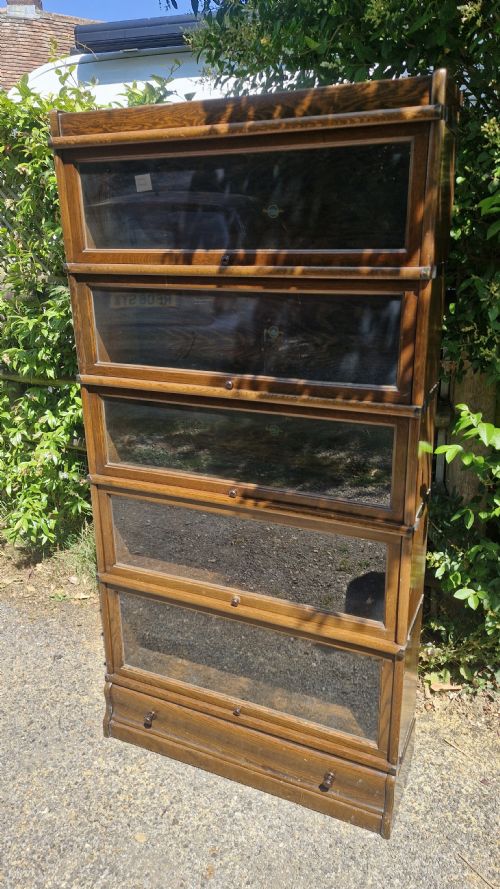
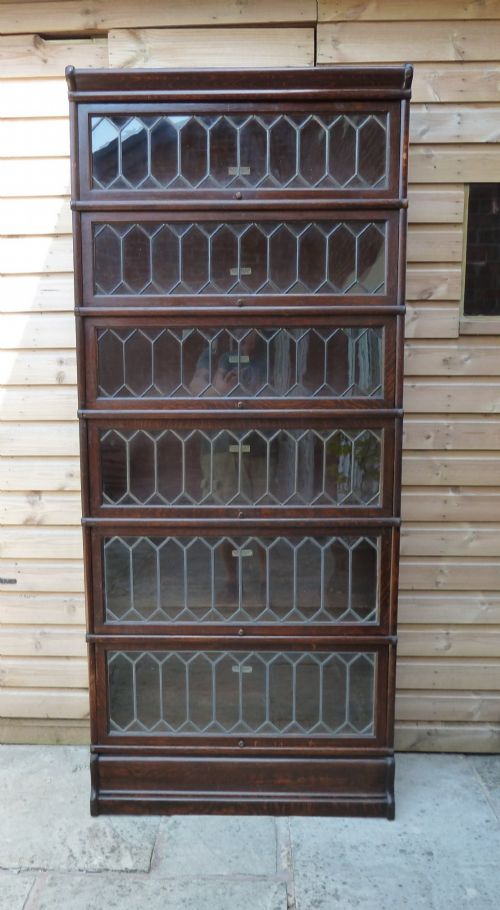
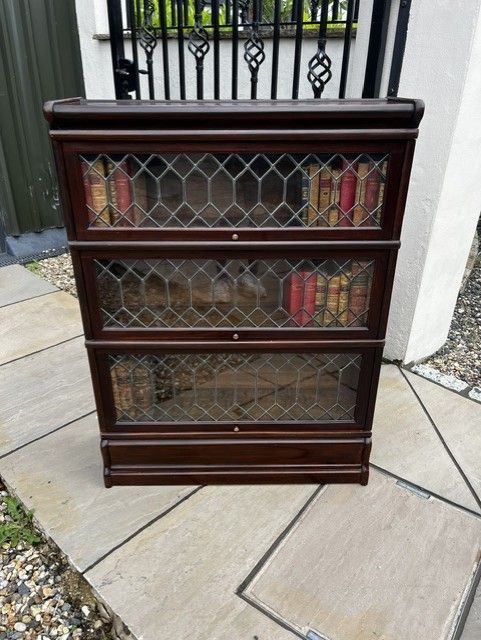
Antique Globe Wernicke Bookcases
A stacking bookcase built as separate glazed units, each with a door that lifts and slides back over the books, sold a section at a time so an office or library shelf could grow.
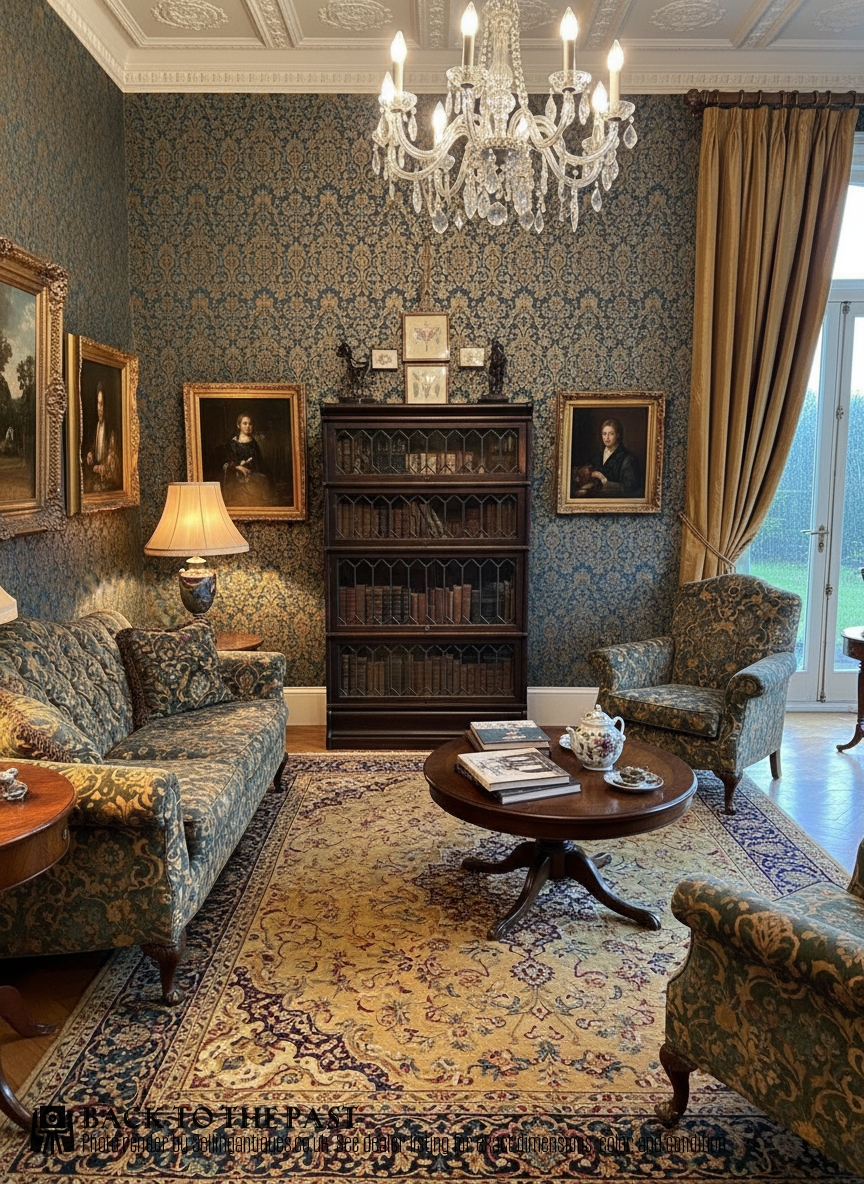
Antique Globe Wernicke Bookcases
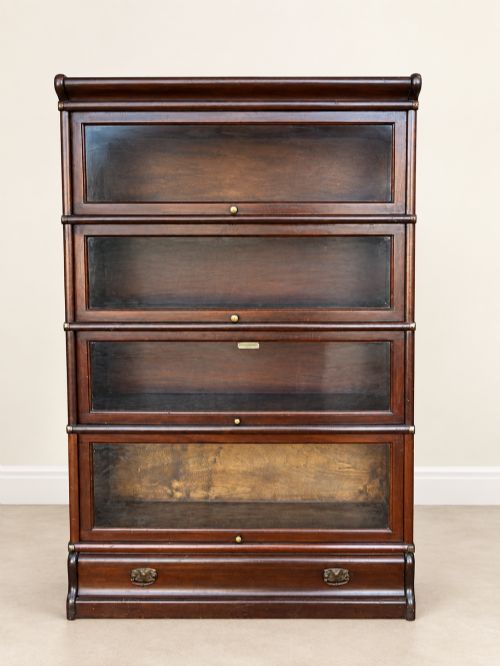
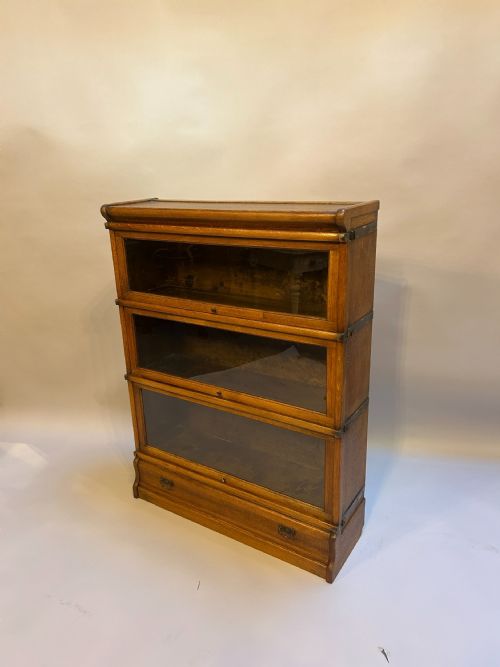
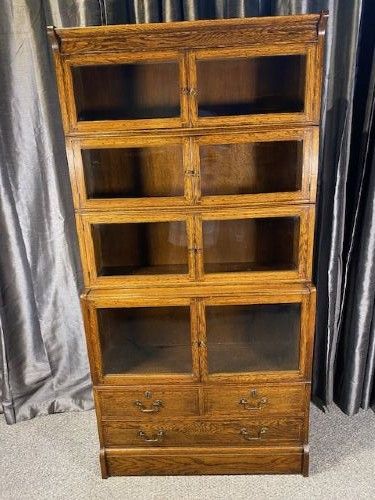
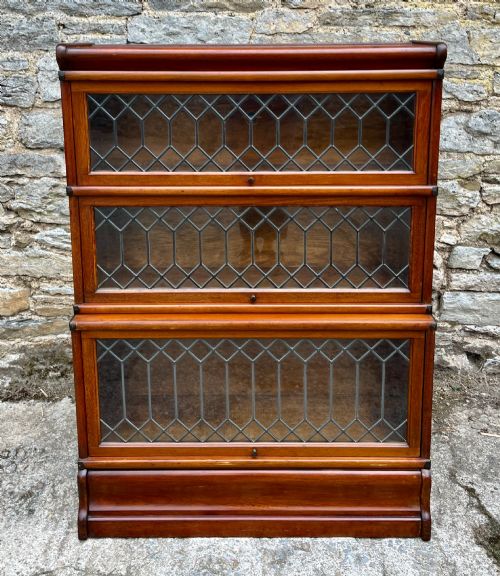
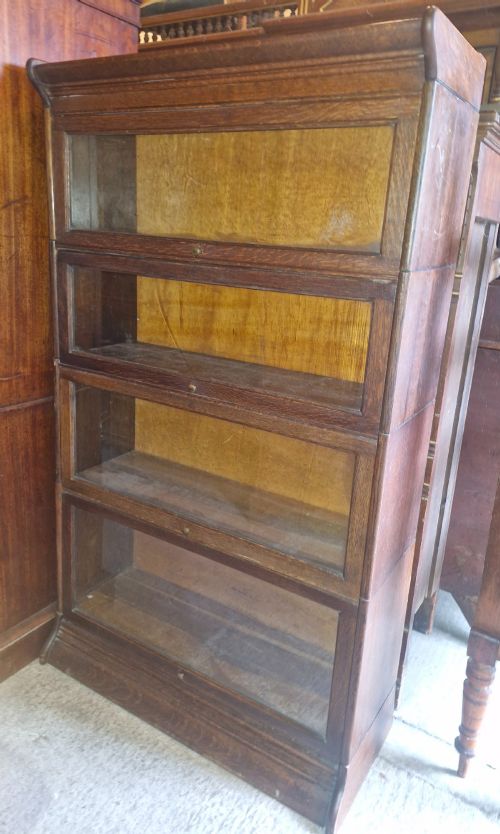
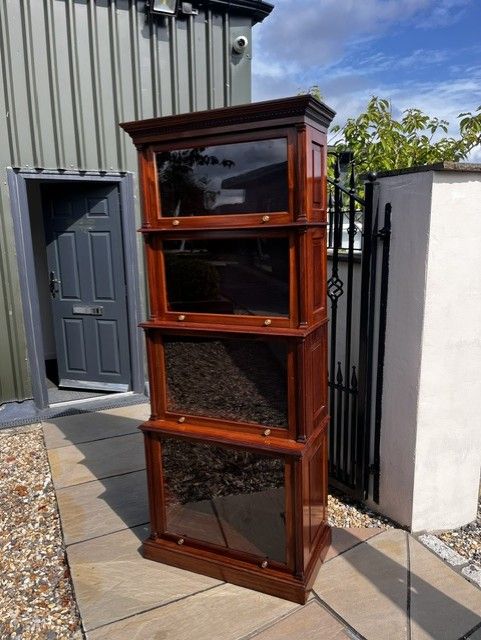
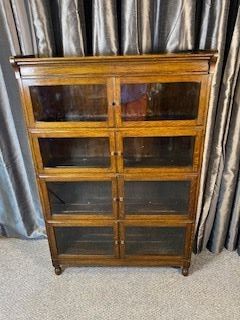
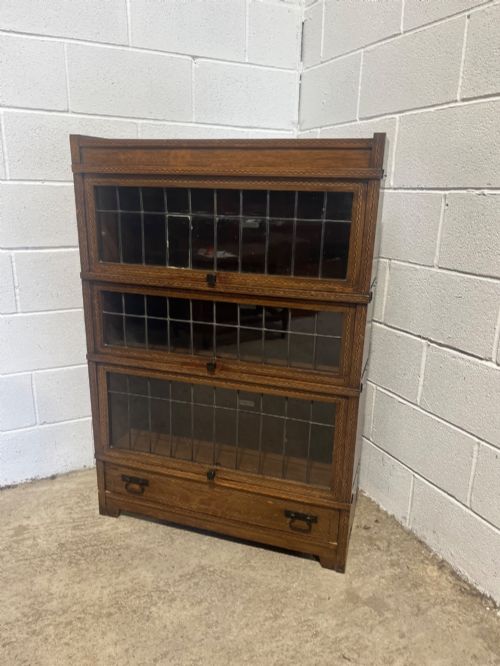
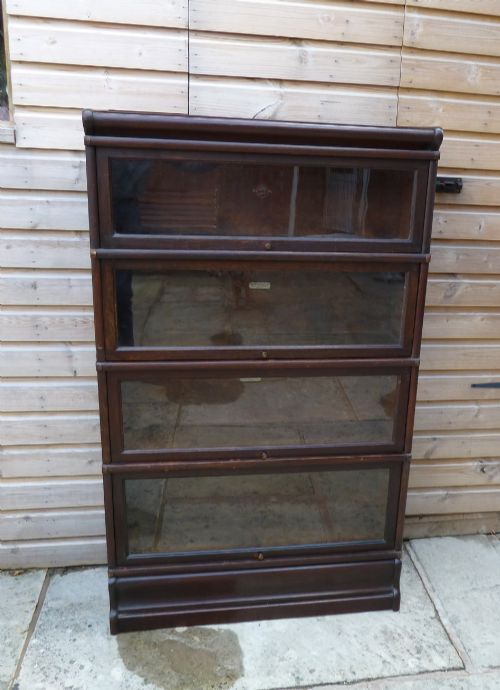
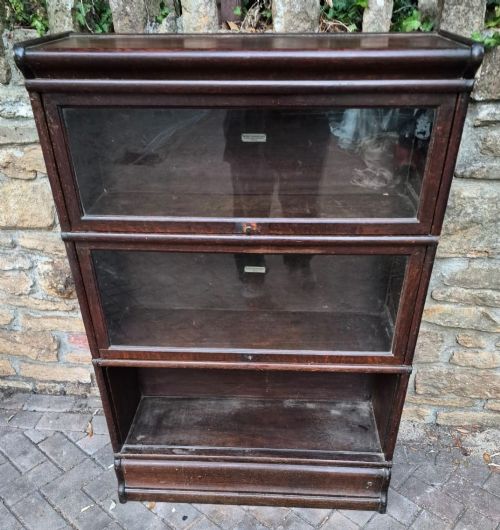
Separate glazed units sit one on another between a base plinth and a moulded cornice. Each unit holds a shelf of books behind a hinged, retractable door. The point of the design was extension: buy another section, add it to the stack, and the run grows with the collection.
The form came out of the late nineteenth-century office trade, sold to solicitors and businessmen as much as to private libraries, which is why the trade still calls it a barrister's, lawyer's or solicitor's bookcase. On Sellingantiques the same object appears under all three names.
Oak dominates at nearly half of all listings, with mahogany the clear second timber and walnut only a handful of times. Titles count units rather than describe the case, so you read "3 section", "4 tier", "5 stack" or "6 high", running from two units up to seven. Dates run 1880 to 1940 with the mass in 1900-1930; the 1920s alone account for more dated listings than the 1910s and 1900s combined.
The branded article carries the majority of titles outright. A substantial minority are hedged as "style", "type", "design" or even "Globe Wernicke taste", and rival stacking bookcases turn up named for their own makers, so the heading covers the whole family of stacking bookcases as well as one firm's output.
Where The Range Sits
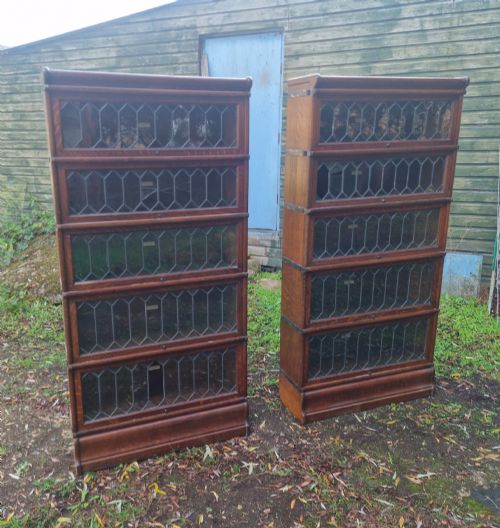
Height does most of the work. Two- and three-section cases sit at the bottom of the range, while six and seven sections sit high, and the top is occupied almost entirely by pairs and sets of six-section oak cases dated around 1900. Pairs are a real sub-market: about an eighth of listings offer two cases, and the archive holds two separate sets of three matching oak cases.
Attribution separates otherwise similar stacks. A case sold as by Globe Wernicke or by The Globe-Wernicke Co Ltd sits above one described only as being in the style or of the type, and dealers use those hedged words when no attribution is claimed.
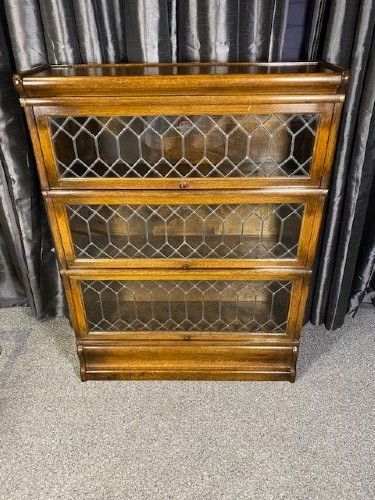
After that it comes down to glazing, timber and what else is in the stack. Leaded or astragal glazed doors get called out as a feature rather than assumed. Golden oak, light oak and dark oak are named to distinguish identical cases, and a drawer, cupboard, secretaire or bureau unit in the stack lifts a case above a plain run of shelves.
Antique Globe Wernicke Bookcases Retail Price Guide 2026
Typical UK retail prices for globe wernicke bookcases, calculated from the Sellingantiques database of over a million retail prices indexed since 2003. This retail price guide relies exclusively on Sellingantiques data; no external sources or auction records are used, so the figures do not describe the wider market.
Sellingantiques has carried these stacking bookcases since 2008, with more than four hundred listed in that time.
Globe Wernicke·Gunn
The Antique Globe Wernicke Bookcases Glossary
- Section, tier, stack, height
- Four words for one glazed unit. "4 section", "4 tier", "4 stack" and "4 height" all describe the same four-unit case.
- Stacking and sectional
- The two standard trade words for the construction, separate units piled between base and top. Stacking appears in around a quarter of titles, sectional in rather fewer.
- Retractable door
- The glazed door of each unit lifts and slides back inside the case, above the books, instead of swinging out into the room.
- Barrister's bookcase
- Trade nickname from the form's office use, alongside lawyer's and solicitor's. Barristers is the commonest of the three in titles here.
- Globe Wernicke style, type, design or taste
- Dealer shorthand for the pattern rather than the firm, used when no attribution is claimed.
- Golden oak
- The warm honey-toned oak finish of the period, singled out in a small run of titles where light oak and dark oak do the same job.
Antique Globe Wernicke Bookcases: Frequently Asked Questions
How many sections do these usually have?
Titles count units, and among the counted heights three, four, five and six sections all appear in numbers. Six section alone shows up in sixteen titles.
The extremes are two units at one end and seven at the other. A single seven-section stack turns up in the archive, and so does a pair of seven-section oak cases.
What timbers were used?
Oak is nearly half of everything listed, at 248 titles. Mahogany is the clear second at 96.
Walnut, including red walnut, appears only a handful of times, making it the rarest named timber in the category. Finish words like golden oak, light oak and dark oak are used to separate cases that are otherwise the same.
An ebonised case and an inlaid one each surface once.
Why are some listed as Globe Wernicke style?
The stacking bookcase was a pattern the whole furniture trade made, not one firm's alone. Where no attribution is claimed, dealers write style, type, design or Globe Wernicke taste.
Roughly one title in twenty-five is hedged as type, and more again as style. Rival stacking bookcases also appear under their own makers' names.
When were stacking bookcases made?
The dated field runs 1880 to 1940, with 386 listings carrying a clean year. The single 1880 title and the single 1940 title are the outer edges.
Everything else crowds into 1900 to 1930. The 1920s account for 175 dated listings, more than the 1910s and 1900s together, and a further 91 are given only as Edwardian.
Are pairs of these bookcases common?
Pairs are a genuine sub-market rather than an oddity: 71 titles offer two cases, described as a pair, a matched pair or a very close pair.
The archive also holds two separate sets of three matching oak cases. Pairs and sets cluster at the top of the range.
What unusual variants turn up?
Odd forms surface once each. A book trough, a secretaire version, a bureau bookcase, a corner sectional and a French haberdashery stacking case are all in the archive.
More often the variation is a unit added to the stack, recorded in titles as with drawer to base or as a large cupboard and drawer to the bottom.