
Antique Bookstands
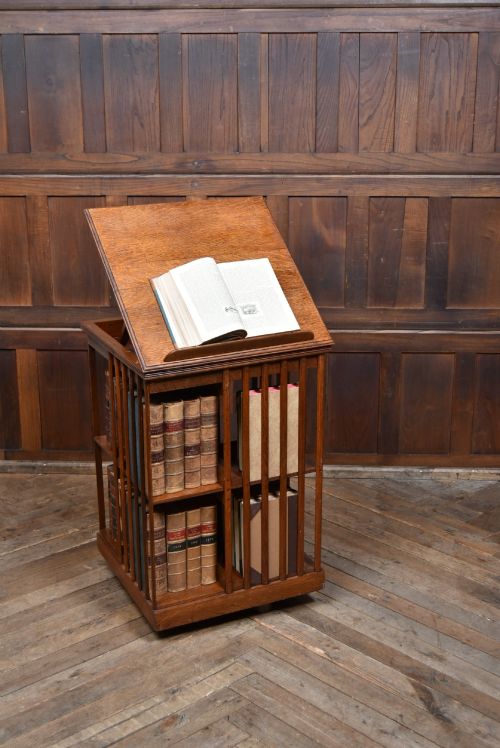
A bookstand is small furniture made to hold a working set of books within arm's reach of a chair or a table, rather than to store a library.
Antique Bookstands
The heading covers small free-standing and table-top bookcases: revolving columns of shelves, low open bookcases, waterfall and cascading shelves, extending book slides and book troughs. The revolving type dominates. More than half of all titles on Sellingantiques say "revolving", and two in five use the exact phrase "revolving bookcase".
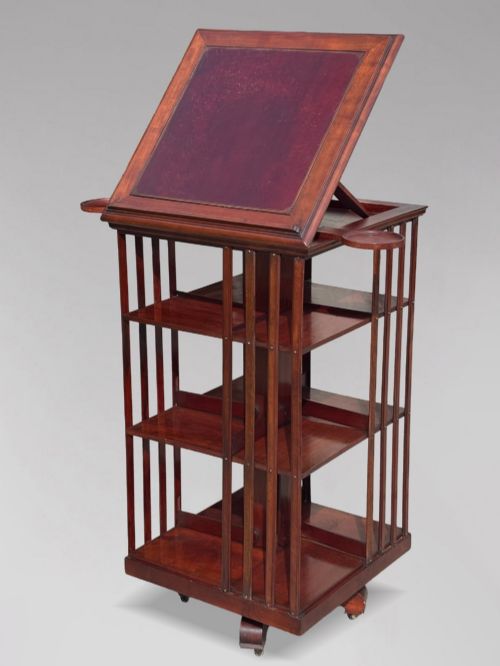
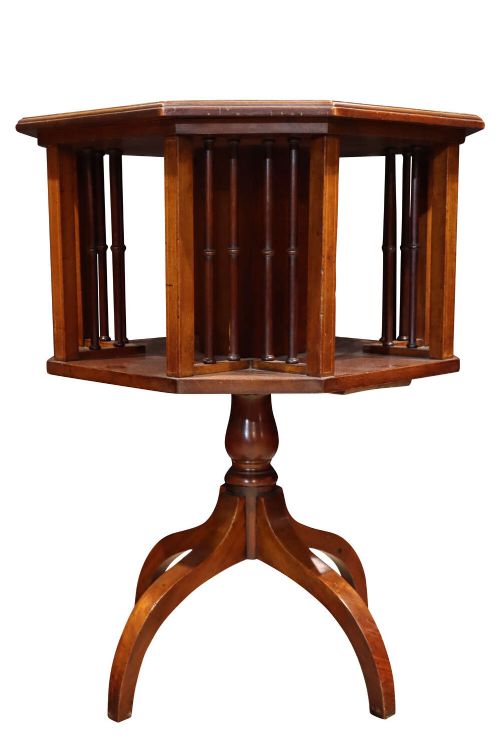
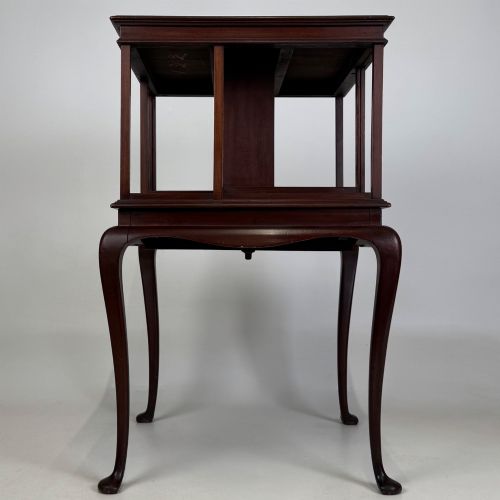
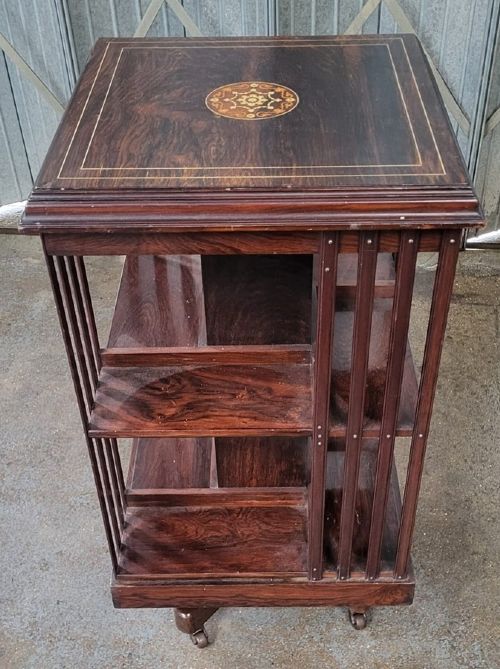
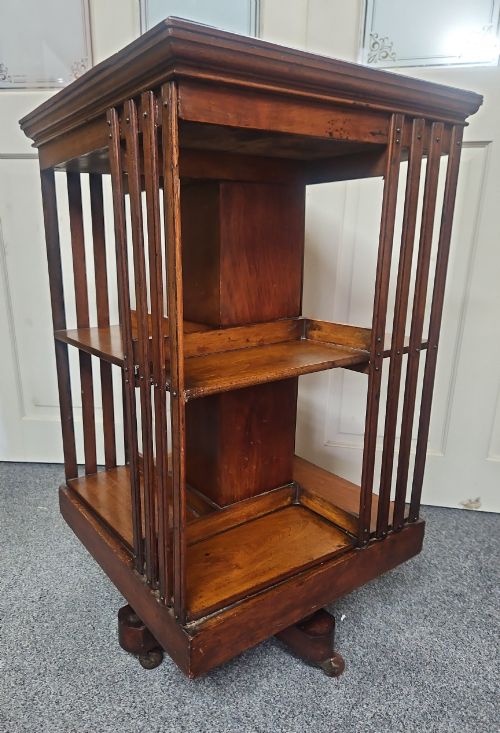
That revolving form is a column of shelves, usually two tiers, turning on a central pivot over a cruciform or circular base. It spread in the second half of the nineteenth century as reference works and domestic libraries reached ordinary households, giving a room a set of books to hand without a full wall of shelving.
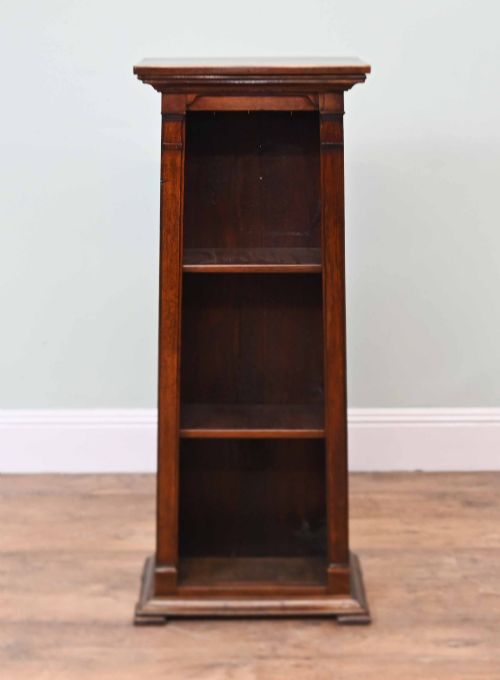
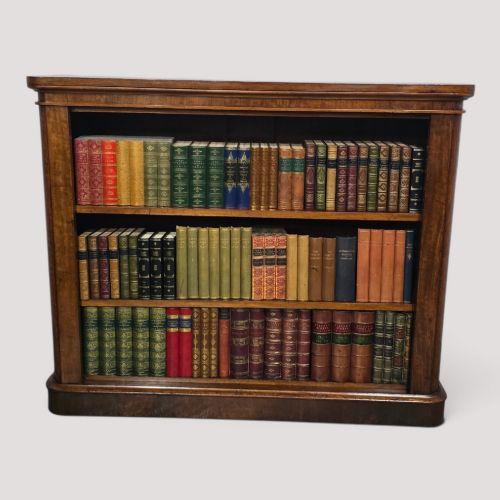
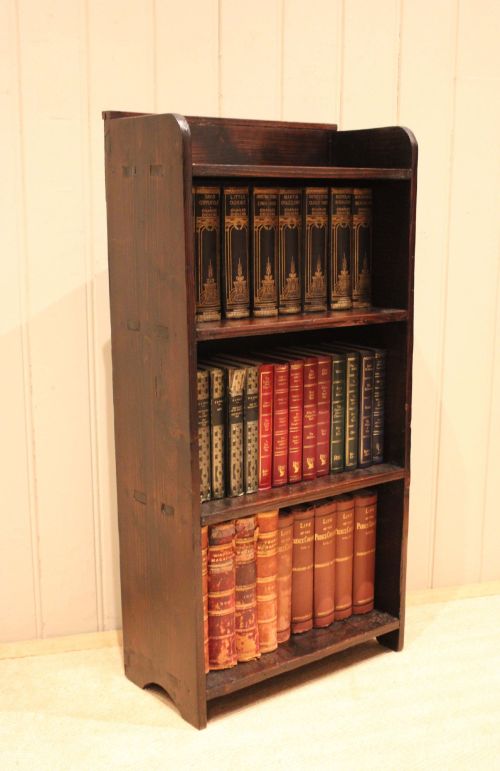
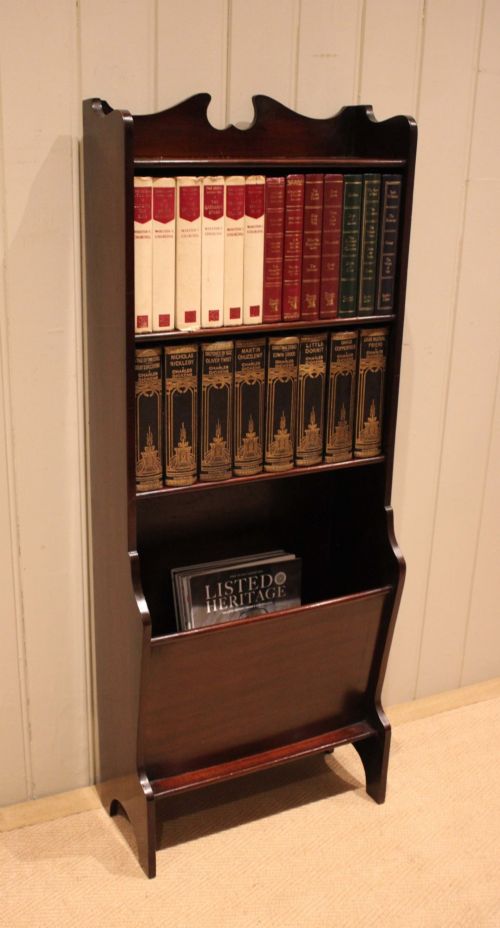
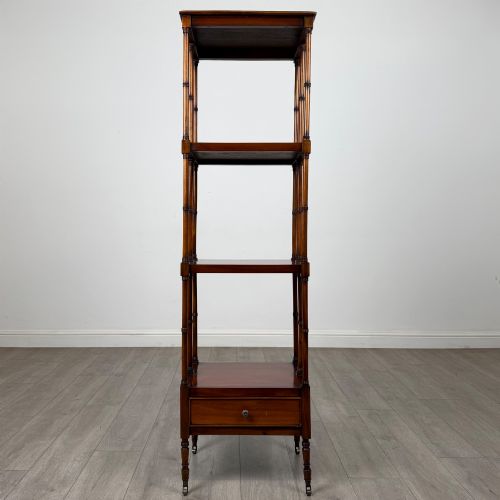
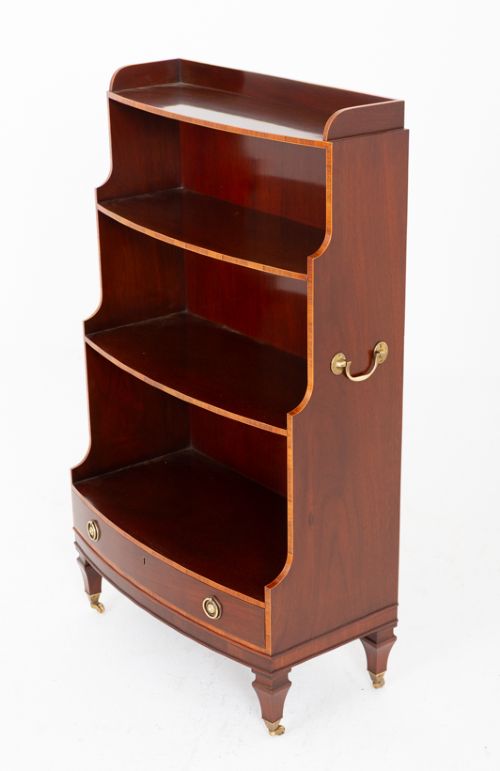
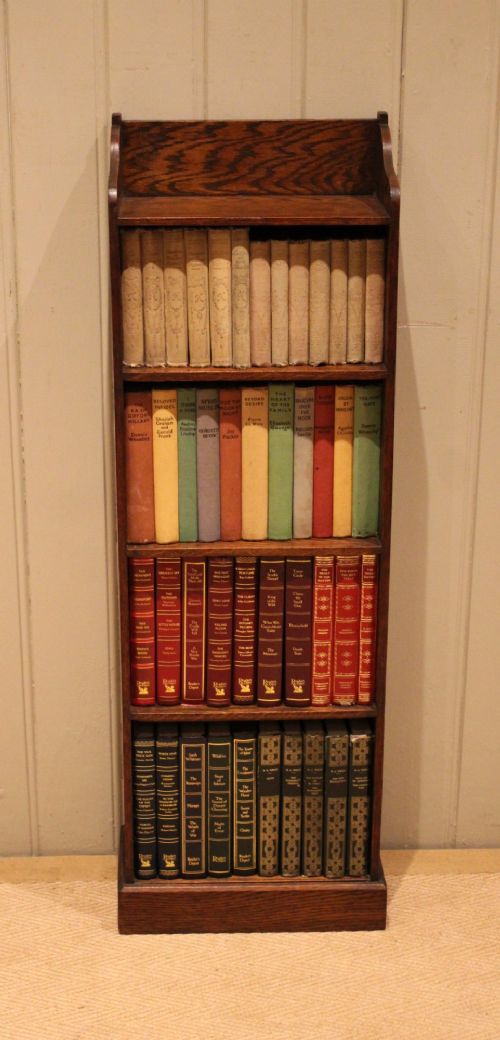
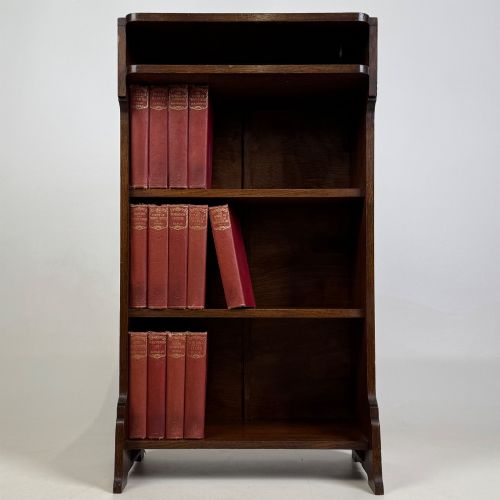
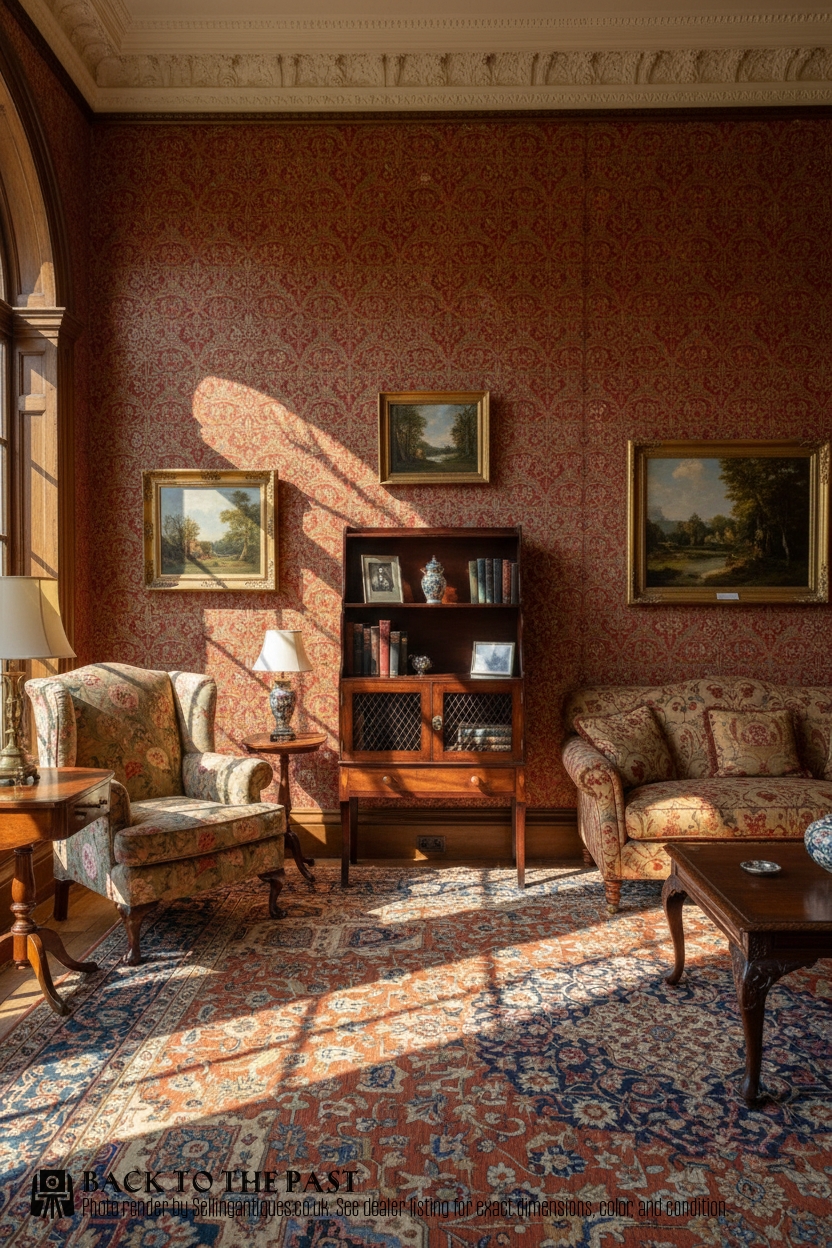
Open dwarf bookcases make up roughly a fifth of listings: shelves without doors, low enough to stand under a window or against a wall, including open-front, adjustable library and double-sided versions. Waterfall and cascading shelves, with tiers stepping down in width or depth, are a smaller strand in mahogany, oak and rosewood. Book slides and troughs turn up as one-offs.
Dating clusters at the turn of the twentieth century. Edwardian is the single most common era word, with 1900s, 1910s and 1920s behind it and fewer Victorian, 1890s and Regency labels. The dated field runs 1880 to 1930, though only a third of listings carry a clean year. Mahogany leads the timbers, then oak, then walnut, and the mahogany examples are often inlaid.
Where The Range Splits
Timber sets the floor and the ceiling. Plain oak and pine sit low. Rosewood, burr walnut, pollard oak, satinwood, flame mahogany and kingwood each appear only once or twice and cluster in the upper half of the range. Decoration follows the same line: inlay is named in thirteen titles, and stringing, fretwork, carving and ormolu mounts gather at the dearer end while undecorated pieces sit at the bottom.
Number matters more than you might expect. Seven listings offer a matching pair, and every one sits well above its single equivalent, from paired walnut open bookcases up to a pair of Regency rosewood open bookcases at the very top of the archive.
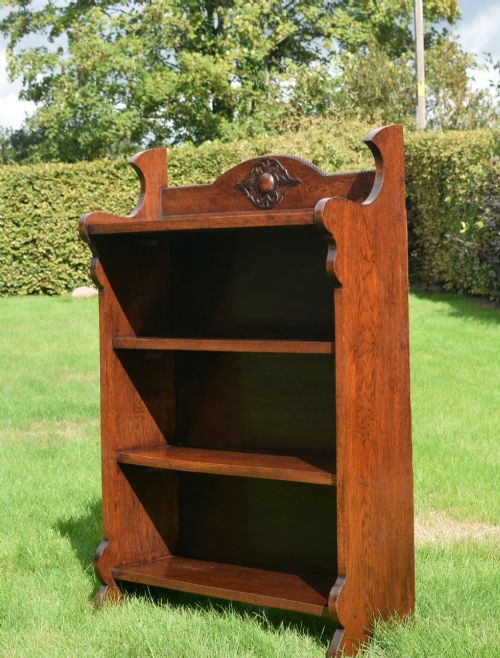
Scale pulls both ways. "Small" appears in nine titles, and table-top revolving bookcases sit near the bottom, while large and tall examples sit higher. Date works in one direction only: the two Regency-labelled pieces and several nineteenth-century rosewood and walnut examples sit above the Edwardian mainstream. Arts and Crafts is the one style movement that recurs, on oak.
Antique Bookstands Retail Price Guide 2026
Typical UK retail prices for bookstands, calculated from the Sellingantiques database of over a million retail prices indexed since 2003. This retail price guide relies exclusively on Sellingantiques data; no external sources or auction records are used, so the figures do not describe the wider market.
About ten bookstands are listed on Sellingantiques each year, yet 54 different dealers have listed one.
The Antique Bookstands Glossary
- Revolving bookcase
- A column of shelves, usually two tiers, turning on a central pivot over a cruciform or circular base. The commonest form in the category.
- Open bookcase
- Shelves without doors or glazing, generally low enough to stand against a wall or beneath a window.
- Table top
- Used of a revolving bookcase small enough to sit on a table rather than the floor.
- Waterfall
- Graduated shelves stepping down in width or depth from top to bottom. "Cascading" is used in titles for the same stepped-shelf idea.
- Book slide
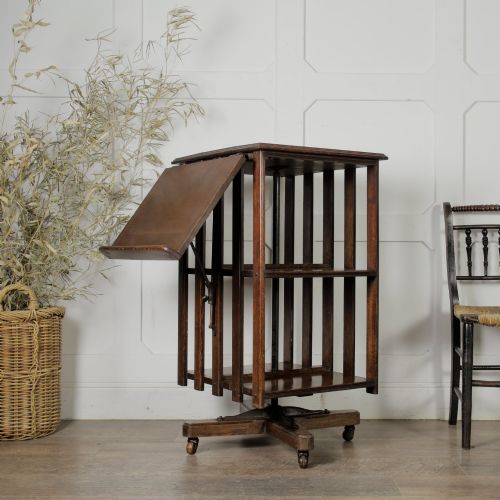
- An extending rack that opens out to hold a row of books and closes flat when not in use. A book trough is a shallow open-sided stand with sloping ends that holds books upright.
- Pollard oak
- Figured oak cut from a pollarded tree, appearing once across the archive. Fretwork means pierced decorative panels, named on rosewood and oak pieces.
Antique Bookstands: Frequently Asked Questions
What is a revolving bookcase?
It's a column of shelves, usually two tiers, that turns on a central pivot set over a cruciform or circular base. Books face outward on all four sides, so a turn brings any of them round to you.
It is the dominant form under this heading. More than half of all titles say "revolving", and titles also call the same thing a revolving bookstand, rotary bookstand or book table.
Which timbers turn up most?
Mahogany leads, then oak, then walnut. Mahogany examples are frequently inlaid, and the pairing of Edwardian and mahogany is the single most common description in the archive.
Rosewood, satinwood, kingwood, pollard oak and burr walnut each appear only once or twice, and those pieces sit in the upper part of the range.
How old are most of these?
Dealers date them mostly to the turn of the twentieth century. Edwardian is the largest single label, with 1900s, 1910s, 1920s and 1930s behind it, and a smaller number of Victorian, 1890s, 1880s and Regency pieces.
Ten listings say only "19th Century", which is a bracket rather than a year. The dated field spans 1880 to 1930, and only a third of listings carry a clean year at all.
Are bookstands sold in pairs?
Sometimes. Seven listings across the archive offer two matching pieces: open bookcases, revolving bookcases and small rosewood bookstands.
Pairs sit at the upper end of the range, above single pieces of similar type and timber.
How many come up for sale?
Around ten a year on Sellingantiques. Yet fifty-four different dealers have listed one, so almost nobody handles them as a speciality.
That spread means the mix arriving in any given year is unpredictable, from plain oak table-top stands to paired rosewood.
What are the unusual ones?
Alongside the revolving and open types there are one-offs: an extending book slide, a library book trough, and a waterfall cupboard bookcase.
British work dominates, but the archive also holds an Anglo Indian revolving bookcase, a low French revolving bookcase and a kingwood example with ormolu mounts. Arts and Crafts recurs on four oak pieces.