

Antique Glazed Bookcases
A case-piece with glass-fronted doors, made to keep books visible while shielding them from dust, smoke and damp.
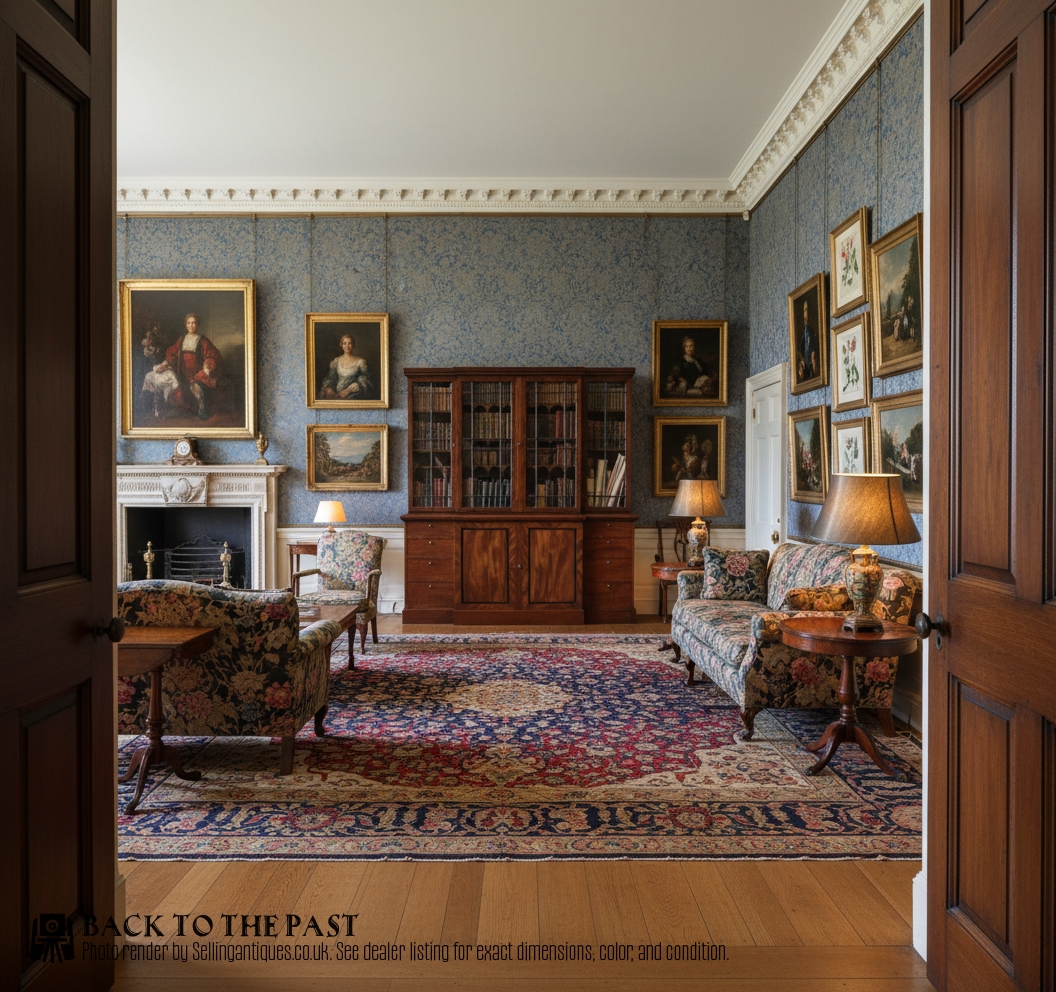
Antique Glazed Bookcases
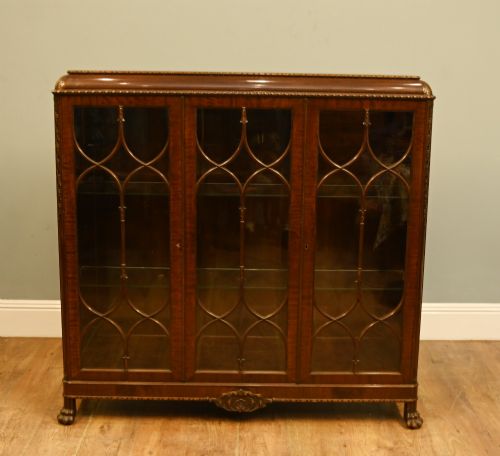
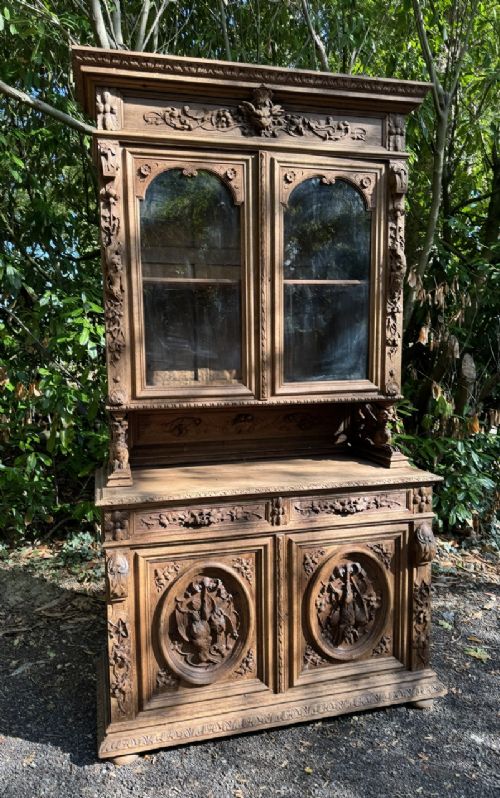
Glazed bookcases turn up on Sellingantiques under a spread of names - bookcase, cabinet, display cabinet, cupboard, dresser - and the form covers a lot of ground. Small hanging wall cabinets and single stacking sections sit at one end, four-door breakfront library bookcases and two-part secretaires at the other. Mahogany leads the timbers, with oak behind it, then walnut and pine.
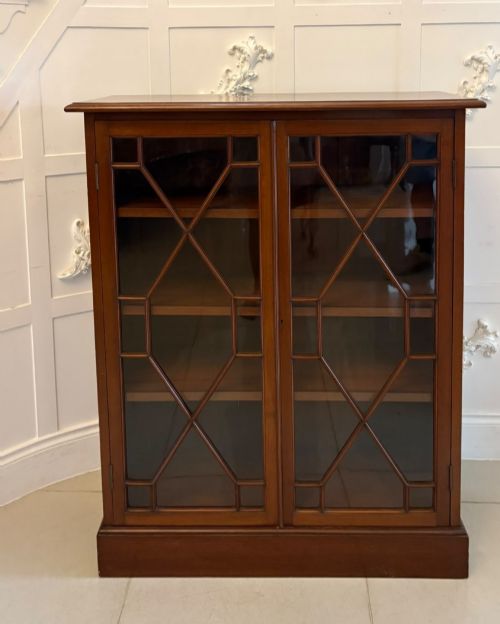
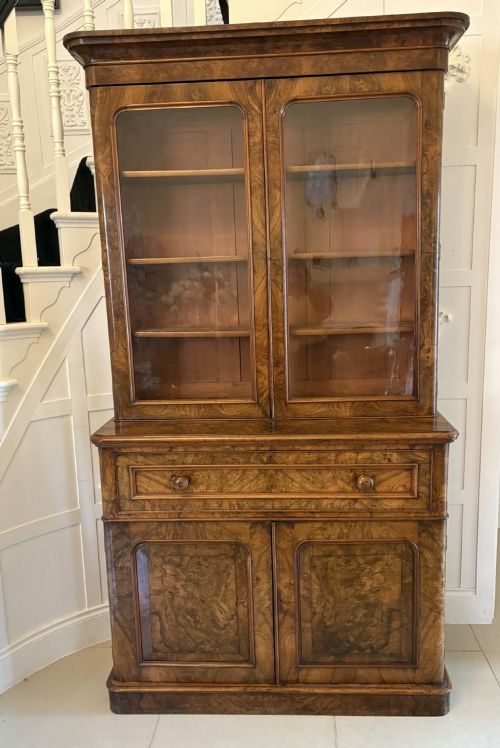
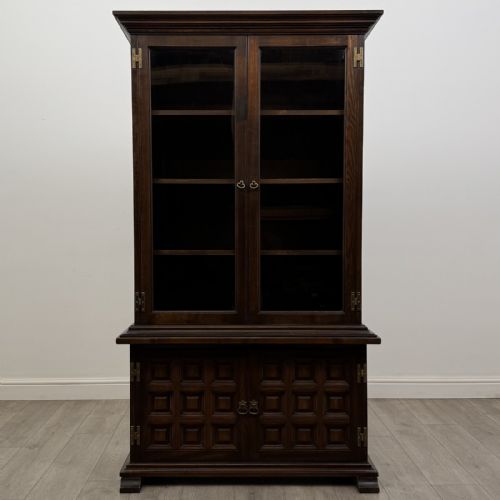
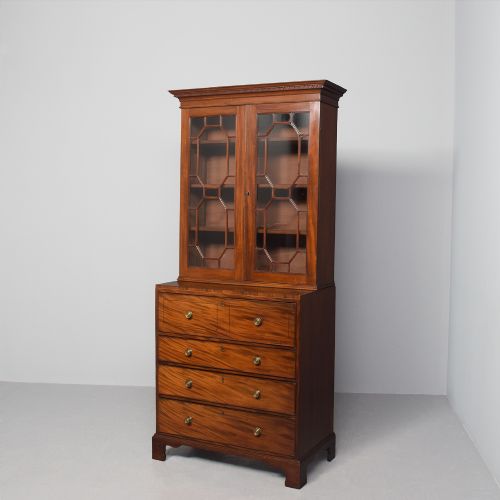
The piece you'll meet most is a Victorian or late 19th-century mahogany two-door glazed bookcase, often standing on a solid cupboard base. Titles tend to count the doors, so two, three and four-door phrasings do much of the describing, along with the glazing: astragal in some titles, spelled 'astral' in others.
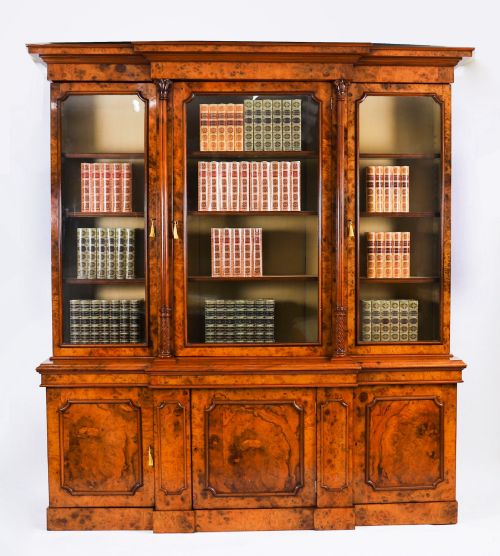
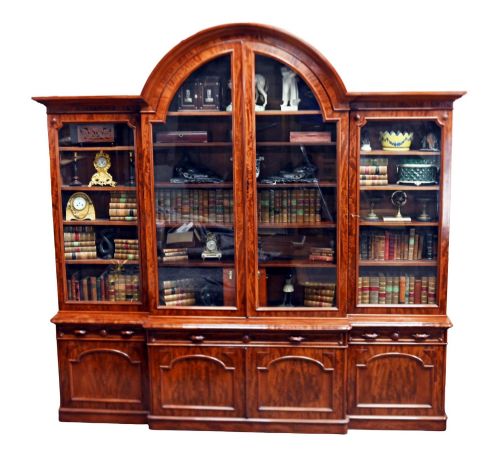
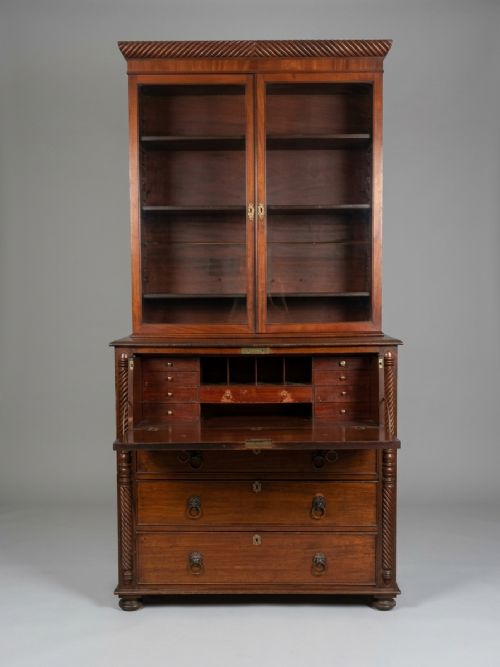
Beyond that main run there are four recurring branches. Breakfront and library bookcases, where the centre section projects forward, account for about one in ten and cluster at the top of the range. Secretaire and bureau bookcases, with a fall-front writing section under the glazed stage, are a smaller seam. Stacking sectional bookcases, sold by the tier, are smaller still. Display cabinets, pier cabinets and glazed dressers make up a substantial minority.
The dating runs 1700 to 1940, but only around 650 of the 1,531 listings fix a clean year, and Victorian and 19th Century between them cover over half of those - a reign or a century, not a date. The profile leans twentieth-century: the 1920s bucket alone holds more listings than the whole Georgian label. Georgian, Regency and eighteenth-century pieces are the tail here rather than the body. French examples surface occasionally, and Swedish, Dutch, Italian and American work once or twice each.
Where The Range Splits
Scale does most of the work. Two-door examples run through the lower and middle ground, while three and four-door, breakfront and library pieces cluster high. The largest recorded carry their measurements in the title - a George III breakfront at 238 by 286 centimetres, a Victorian mahogany one described as fifteen feet long - and both sit near the very top.
Timber and glazing sort the rest. Pine and plain oak dominate the bottom; satinwood, rosewood, amboyna, kingwood, harewood, birds-eye maple and burr walnut appear only in the upper half. Astragal bars turn up disproportionately on Georgian, Regency and breakfront pieces, while plain single panes and leaded glazing sit lower down. Painted pieces mostly sit low too, though West Country and Irish painted dressers climb well up.
Period pulls the same direction: 1920s and 1930s oak and mahogany bookcases occupy the bottom of the range, George II, George III and Regency pieces the top. A name helps sharply - labelled, stamped or attributed pieces appear almost exclusively in the upper reaches. So do pairs, which recur near the top, along with one set of three stacking office bookcases.
Antique Glazed Bookcases Retail Price Guide 2026
Typical UK retail prices for glazed bookcases, calculated from the Sellingantiques database of over a million retail prices indexed since 2003. This retail price guide relies exclusively on Sellingantiques data; no external sources or auction records are used, so the figures do not describe the wider market.
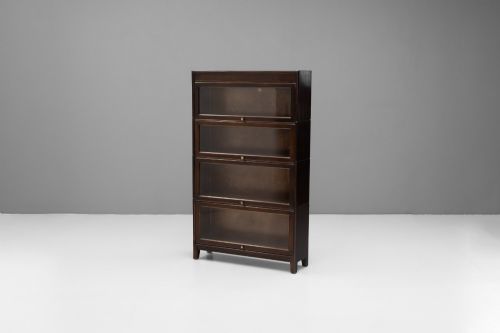
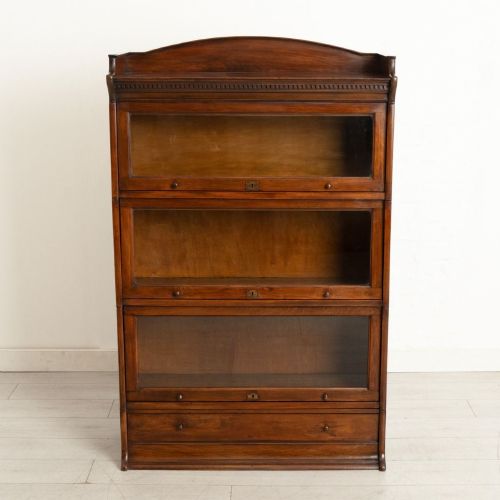
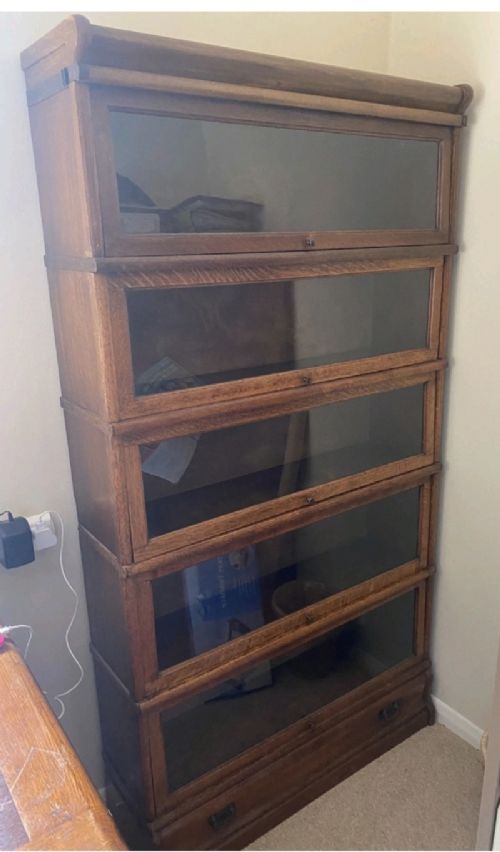
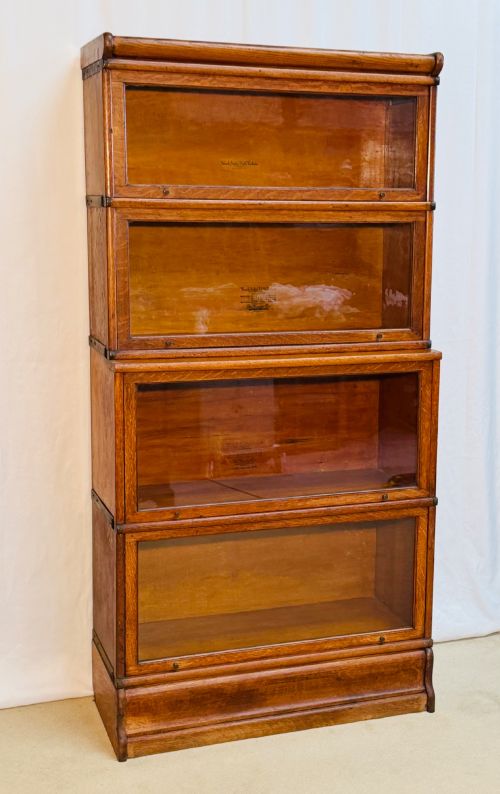
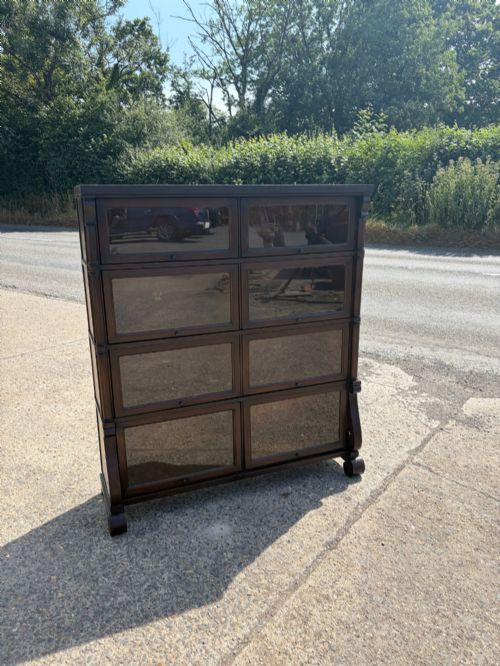
Stacking sectional bookcases, sold by the tier, make a small seam on Sellingantiques - from three sections up to six with a cupboard and drawer below.
Minty·James Winter & Sons
The Antique Glazed Bookcases Glossary
- Astragal glazed
- Doors divided by slender moulded glazing bars into small panes. Dealer titles use both 'astragal' and the variant 'astral', so a search on one spelling misses a good number of the other.
- Breakfront
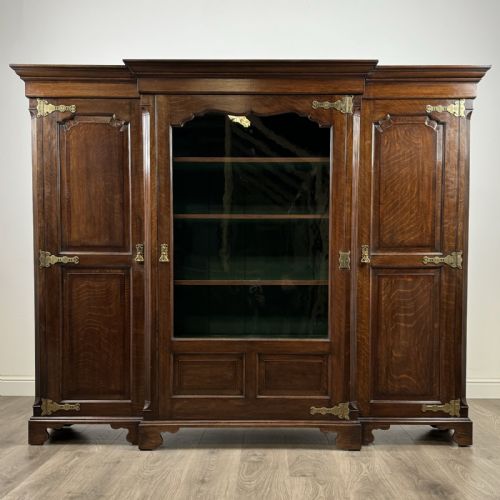
- A front whose centre section projects forward of the flanking sections. It runs through around a hundred titles and sits mainly with the larger library pieces.
- Bookcase on cupboard
- A two-stage piece with a glazed upper section standing on a solid-door base. A recurring phrase, and the shape behind a great many of the two-door listings.
- Secretaire bookcase
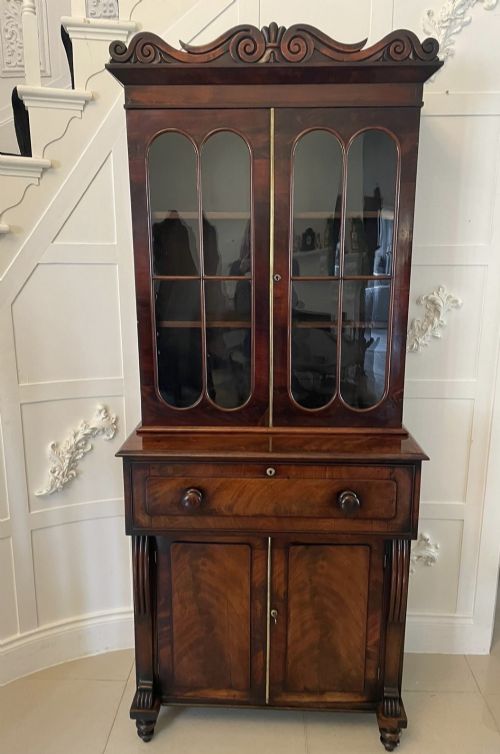
- A glazed bookcase over a drawer front that pulls out and drops to form a writing surface. Georgian, Regency and William IV examples all appear.
- Sectional bookcase
- Separate glass-fronted tiers that stack, sold by the number of sections. The samples run from three sections up to a six-section example with a cupboard and drawer in the base.
- Pier cabinet
- A narrow glazed cabinet made for the wall pier between windows. Around thirty titles use the term.
Antique Glazed Bookcases: Frequently Asked Questions
What wood are glazed bookcases usually made from?
Mahogany appears in about 619 of the 1,531 titles and oak in 300, so between them they cover the bulk of the category. Walnut and pine follow.
Above those sit the figured and exotic timbers - satinwood, rosewood, amboyna, kingwood, harewood, birds-eye maple and burr walnut. They appear only in the upper half of the range.
Why do some listings say astral instead of astragal?
Both spellings run side by side in dealer titles: astragal in 66, astral in 31. They describe the same thing, slender moulded glazing bars dividing the doors into small panes.
It matters for searching. A search on one spelling misses roughly a third of the glazing-bar pieces.
What is a breakfront bookcase?
One whose centre section projects forward of the sections either side. Around a hundred titles use the word, often alongside 'library' and 'large'.
These are the pieces that cluster at the top of the range, and the biggest of them carry their measurements in the title.
Are stacking sectional bookcases common in this category?
They're a distinct but small seam, about fifty titles, sold by the tier. The samples run from three sections up to a six-section example with a cupboard and drawer in its base.
A name is often attached to the form in titles, though half the sampled examples qualify it as 'style', 'taste' or 'similar to' rather than claiming the firm itself.
How old is a typical glazed bookcase?
The dated listings stretch from 1700 to 1940, but only 650 of 1,531 pin down a year, and Victorian and 19th Century together account for more than half of those.
The twentieth century is better represented than the eighteenth. The 1920s bucket holds 147 listings against 68 for the whole Georgian label, with Edwardian, 1900s, 1910s and 1930s all showing in force.
Do pairs of glazed bookcases come up?
Pairs appear in 38 titles, more often than you'd expect for furniture of this size. Pairs of bookcases, pier cabinets and library bookcases all recur.
They sit near the top of the range, and once there was a set of three stacking office bookcases.