Antique Rosewood Bookcases
A rosewood bookcase is usually a low, open-shelved piece from the first half of the 19th century, made to hold books at seat height in a drawing room rather than line a library wall.

What They Are
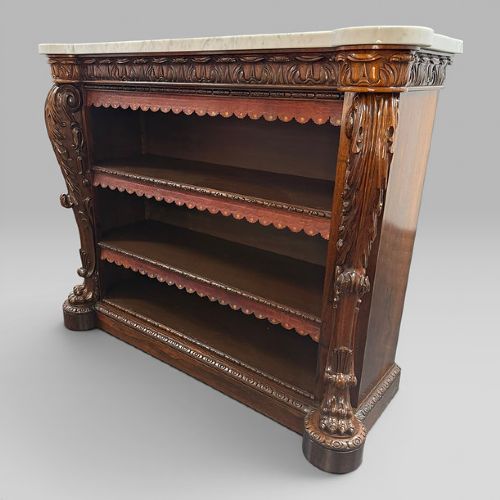
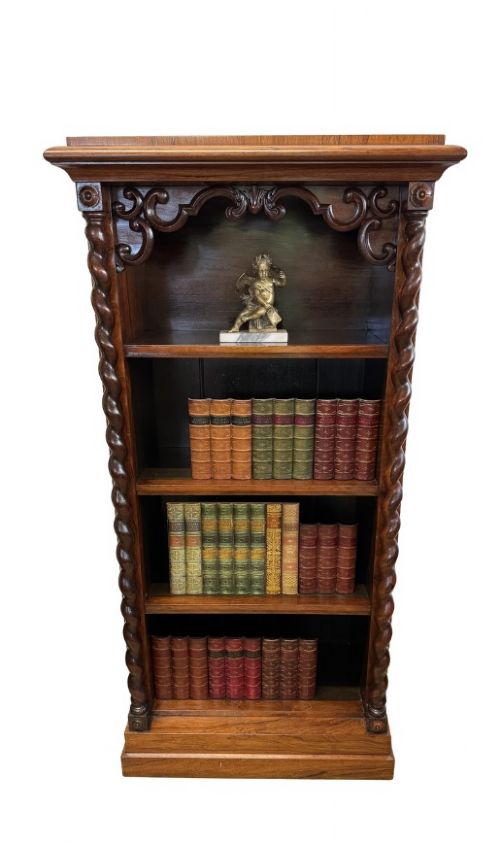
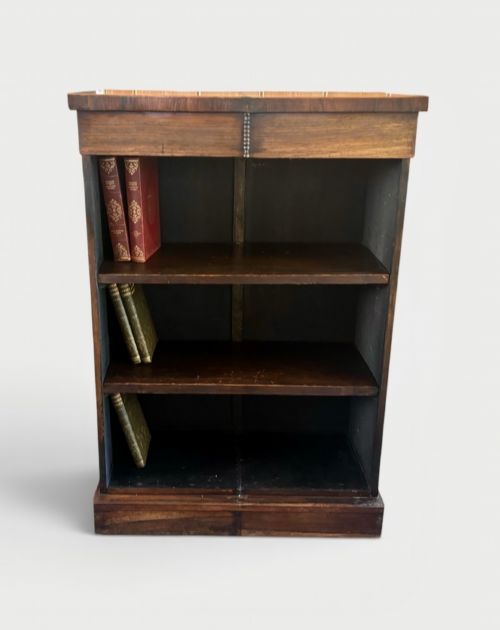
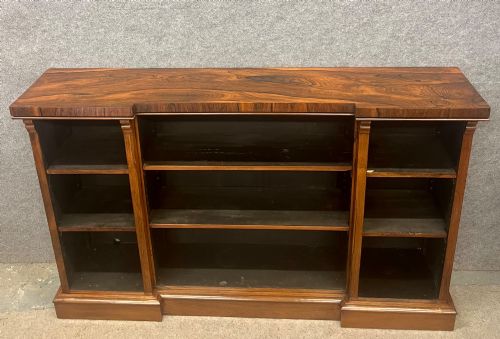
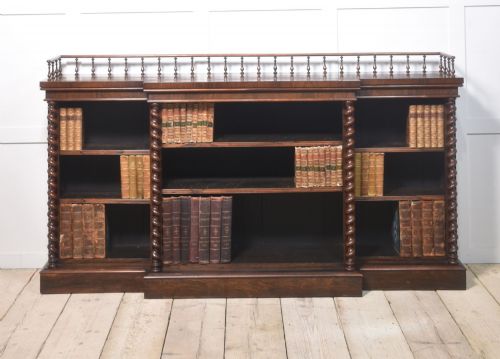
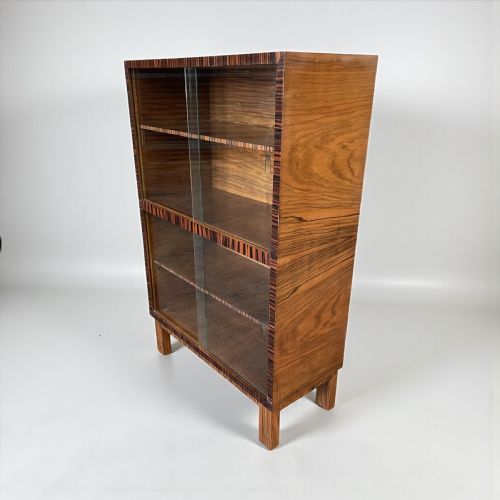
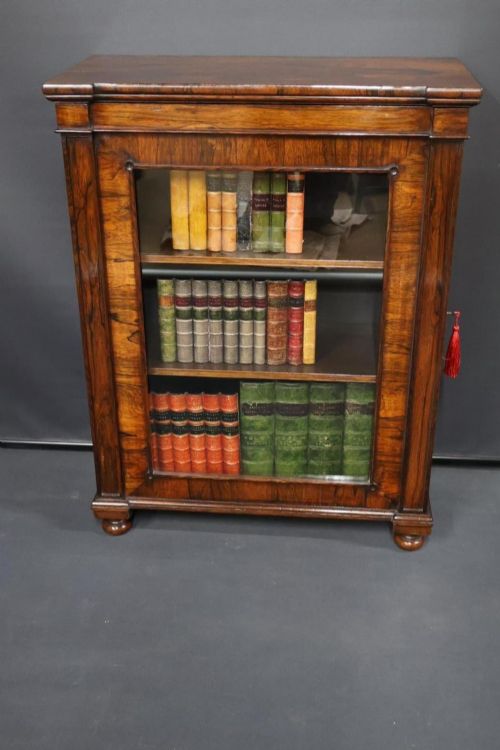
Rosewood bookcases are overwhelmingly English and overwhelmingly early 19th century. The form that defines the category is the low open bookcase: shelves with no doors and no glass, often on a plinth, sometimes with a marble slab top or a brass gallery running round it. Of 418 titles on Sellingantiques, 183 say "open" and only 14 say "glazed".
The dark exotic timbers came into fashion in the late Georgian drawing room, and the low bookcase was designed for it, sitting under a window or against the pier between two windows. Dwarf height is normal. "Breakfront" appears in 32 titles, where the centre section steps forward of the sides, and scale gets stated either way, small or large.
Dating is loose. Dealers more often give an era than a year, and "19th Century" and "Regency" together cover the majority of listings. Where a clean year is given it runs from 1800 to 1920, and title words like Victorian and William IV sit alongside a Regency date field often enough that all of them read as shorthand for the first half of the century.
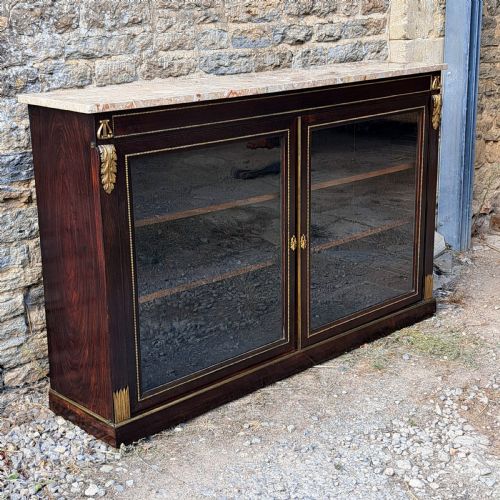
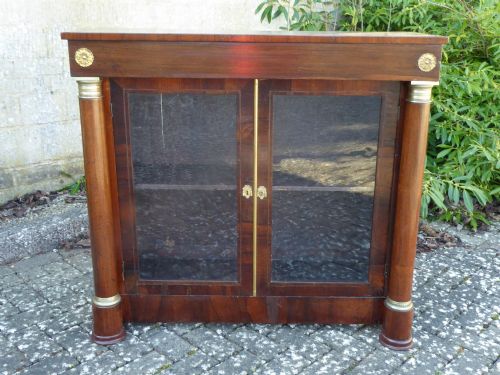
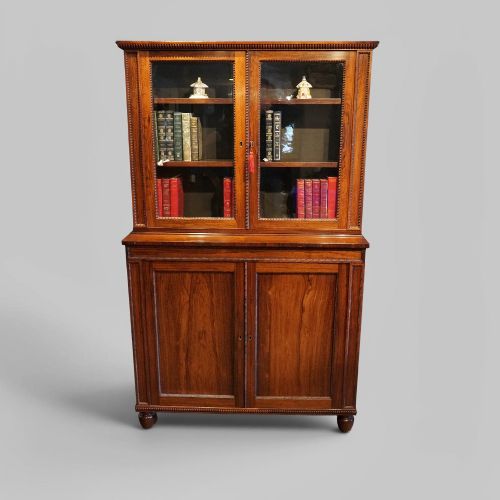
Around a tenth are cabinet forms rather than shelves: side cabinets, chiffoniers, pier cabinets, and that share is higher in current stock. Glazed and doored bookcases are a small minority. Revolving bookcases, about one in twenty, cluster at the late end, mostly 1890s to 1910, and waterfall bookcases with graduated tiers are more visible now than in the archive.

What Lifts One
Pairs sit at the top. Only 19 titles in 418 say "pair", and the largest sums in the archive are almost all pairs or near pairs of Regency open bookcases. A single bookcase, however good, competes in a different part of the range.
After that it's decoration and shaping. Brass inlay, brass galleries and brass grilles recur well above the middle of the range, and so do breakfront, inverted breakfront and serpentine fronts against plain rectangular ones. Marble tops lift a piece too, with the colour worth stating: white, green, pink, patinated, and in one case specimen marble at the top end.
The timber itself is the other axis. Titles separate solid and figured rosewood from veneered work, and from the simulated, faux and grained finishes that imitate it, which sit lower and mid range. Scale counts as well, with library bookcases and country-house pieces holding the upper half.
Retail Price Guide 2026
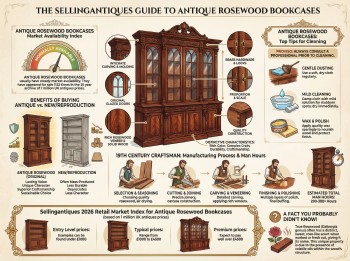
Typical UK retail prices for rosewood bookcases, calculated from the Sellingantiques database of over a million retail prices indexed since 2003. This retail price guide relies exclusively on Sellingantiques data; no external sources or auction records are used, so the figures do not describe the wider market.
About 41 rosewood bookcases are listed on Sellingantiques each year, and 131 different dealers have handled one.

The Antique Rosewood Bookcases Glossary
- Open bookcase
- Shelves with no doors or glazing, and the commonest form in this category by a wide margin. Usually low enough to stand free in a room.
- Dwarf bookcase
- A low bookcase, waist height or below, meant to be seen from all sides rather than pushed into a recess.
- Breakfront
- A front whose centre section projects forward of the flanking sections. Thirty-two titles use the word, and it tends to signal a larger piece.
- Brass inlaid
- Brass line or scroll let into the rosewood surface, a Regency habit that turns up in 19 titles.
- Waterfall
- Open shelves that step or graduate downward in width or depth from the top tier to the bottom.
- Simulated rosewood
- Softwood or another timber grained and painted in imitation of rosewood. Dealers say so plainly, alongside faux and original grained finish.
Frequently Asked Questions
Are rosewood bookcases usually glazed?
No. Open shelving dominates: 183 of 418 titles say the piece is open, against 14 that say glazed and 11 that mention a door.
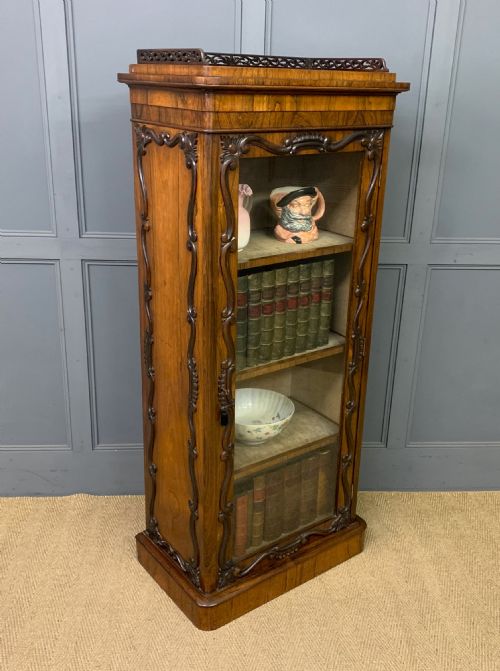
Glazed and doored bookcases do turn up, including four-door, two-door and five-door examples and one with a vitrine top, but they are a small minority of the category.
What period do most of them come from?
The first half of the 19th century. "19th Century" and "Regency" between them account for the majority of the date fields, with Victorian and Georgian also used broadly.
Only 100 of 418 listings carry a clean year, and those run 1800 to 1920. Decade tags cluster in the 1850s, then thin out through the 1890s, 1860s and 1900s.
Why do some listings say simulated or faux rosewood?
Because the piece isn't rosewood. Softwood or another timber has been grained and painted in imitation, and dealers describe it as simulated, faux, grained or in original grained finish.
The archive also holds bookcases in related exotic timbers: amboyna, goncalo alves, palissander and kingwood.
Do rosewood bookcases come in pairs?
Rarely. Nineteen titles in 418 say pair, and they sit at the very top of the range, mostly Regency open bookcases and bookshelves.
Everything else is a single piece.
What is a revolving rosewood bookcase?
A square tiered bookcase on a central pivot, so books can be reached from all four sides. Some are titled revolving book table or revolving library table.
Nineteen appear in the archive and they sit late, mostly 1890s to 1910, forming a Victorian and Edwardian tail to a category otherwise weighted to the Regency.
How often do these come up for sale?
Around 41 rosewood bookcases are listed on Sellingantiques in a year.
They are spread thin across the trade: 131 different dealers have handled one, so a dealer typically has a single example rather than a stock of them.