
Antique Library Bookcases
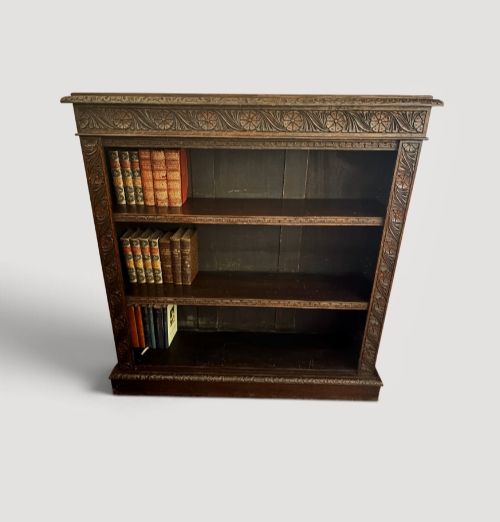
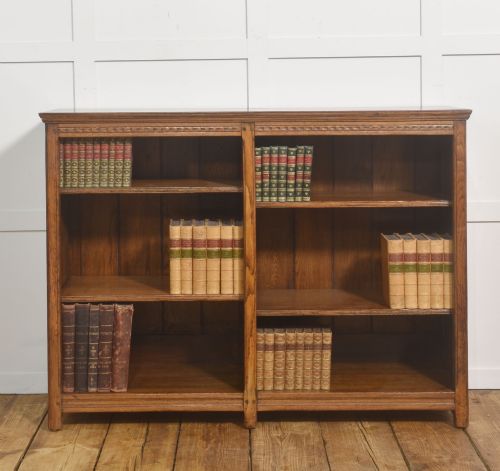
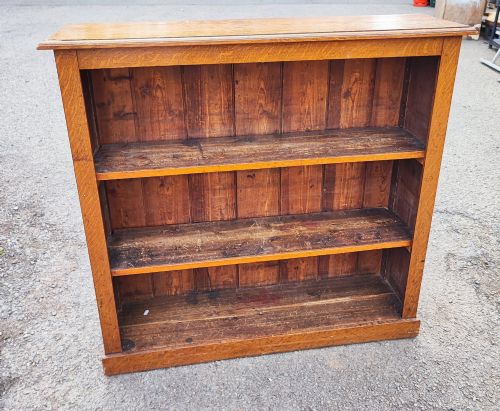
A free-standing wooden case made to hold books in a library or study, from open shelves on a plinth to tall glazed cabinets on cupboard bases.
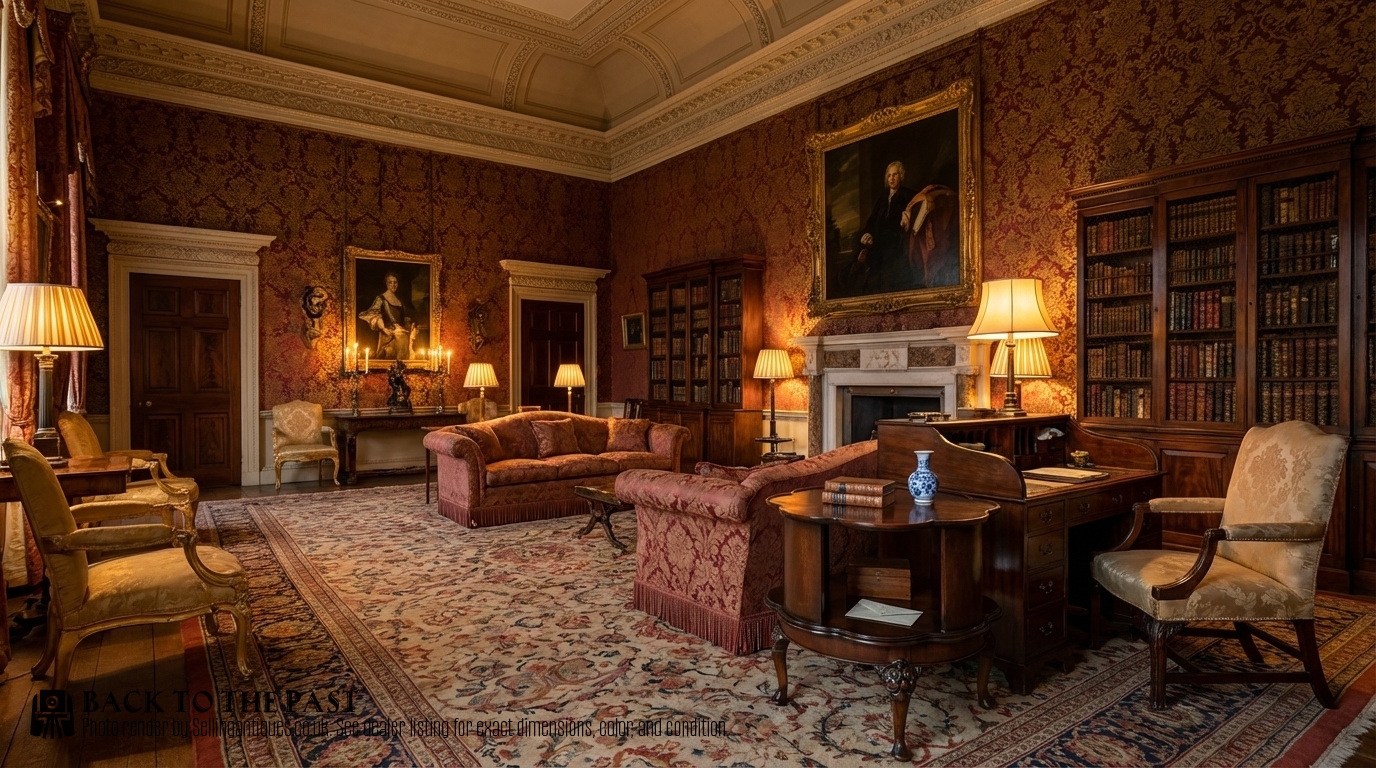
What You're Looking At
Purpose-made bookcases became standard English furniture in the 18th century as private book collections grew, and the type spread through the 19th century into houses and offices of every kind. Almost all of what turns up is English. Mahogany names 531 of the 1,188 titles, oak 215, walnut 119 and rosewood 38, so mahogany is close to a default.
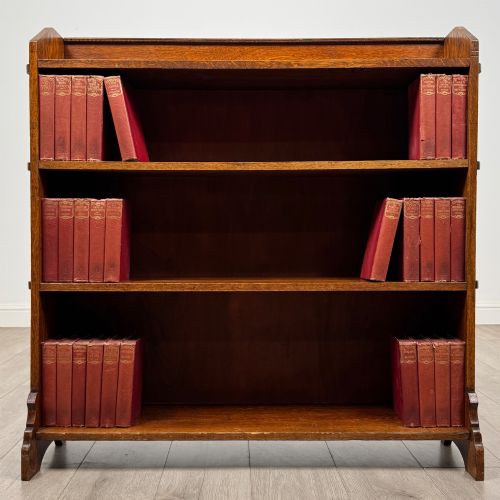
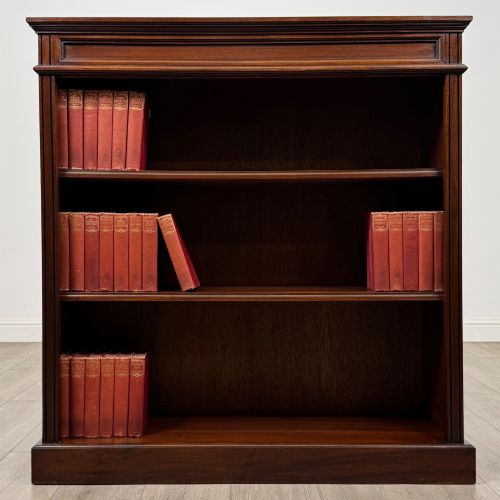
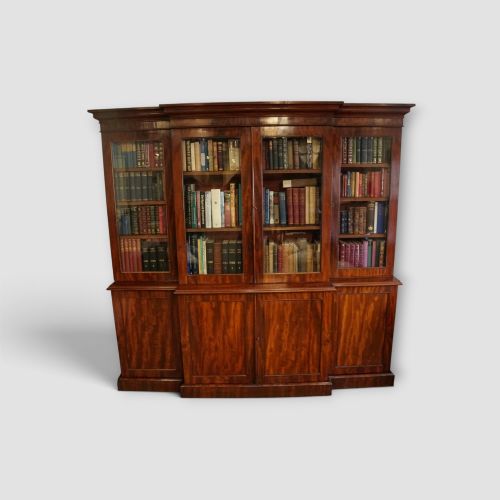
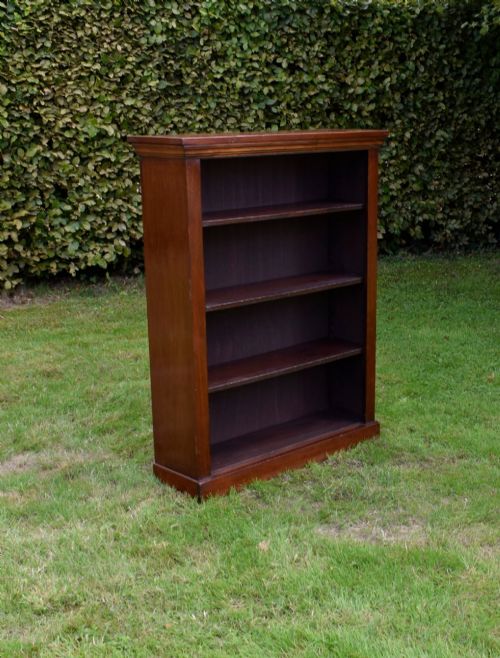
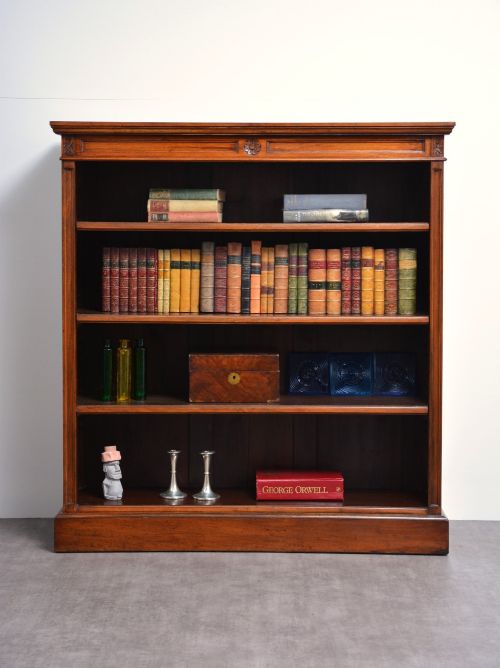
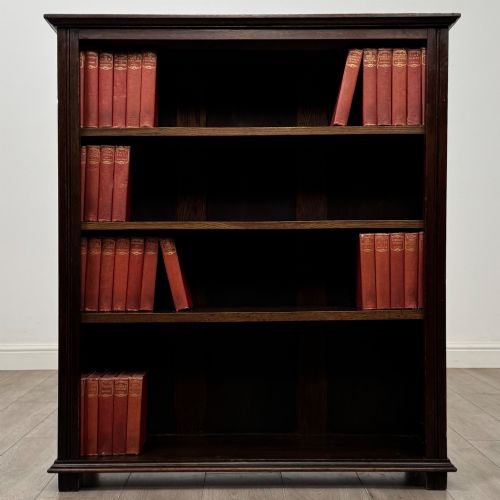
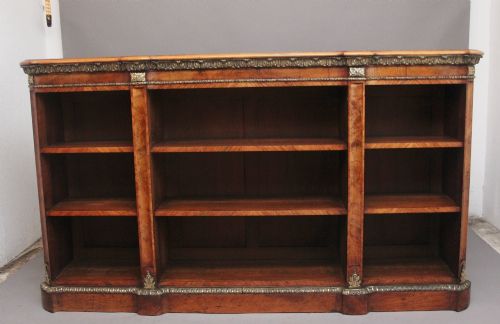
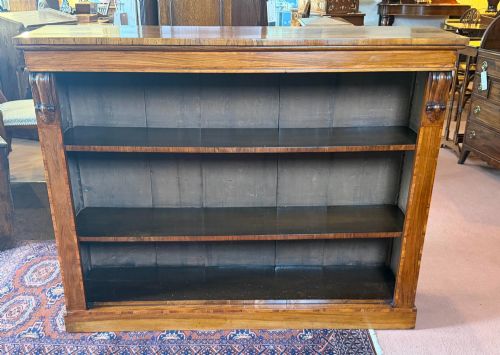
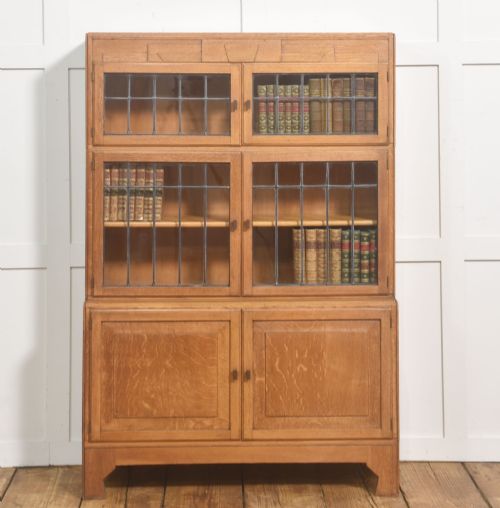
The commonest single thing a buyer meets is a Victorian mahogany open bookcase with adjustable shelves. Open appears in 238 titles, victorian in 292, and "victorian mahogany" alone in 106. Glazed and door-fronted cases are the second reading of the form, some of them sitting on a cupboard or chest base, several astragal glazed.
Breakfront cases, where the centre section projects forward of the flanking ones, account for 161 titles. Scale runs a long way: dwarf and "neat size" pieces at one end, and at the other cases given in feet rather than inches, including two 10ft four-door breakfronts and a 12ft late 19th-century library bookcase.
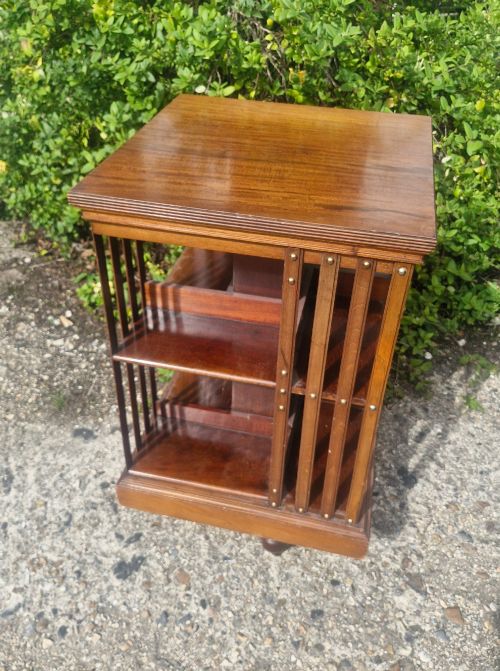
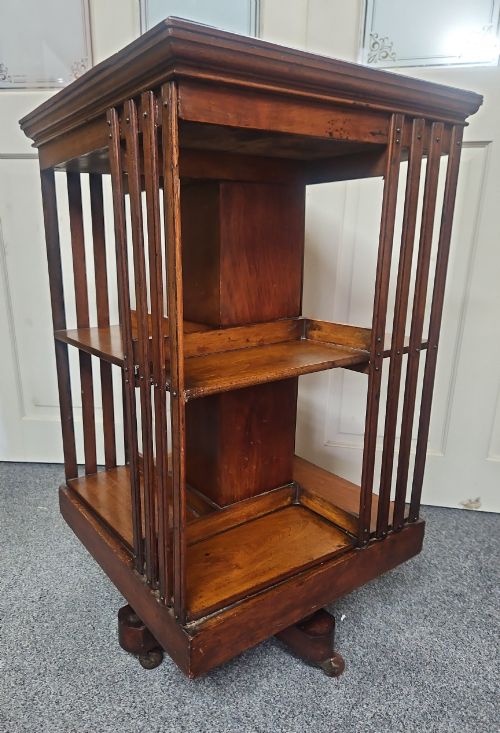
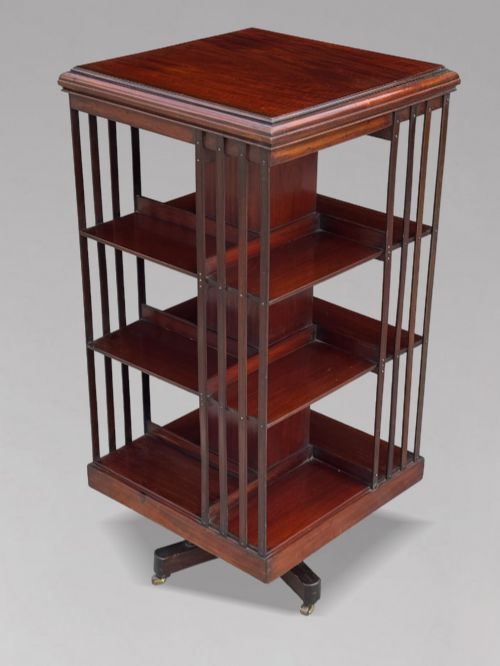
Two later families sit apart from the main run. Small revolving bookstands, square, round or octagonal on a central pivot, name 78 titles and are rising in current stock. Sectional or stacking barrister-type cases, glazed tiers built up to height, are a small but persistent minority. Dates run 1800 to 1950, though only 441 listings carry a clean year, the rest filed under period words, so read title and date together.

Where The Range Stretches
Size and door count do most of the work. The upper end of the range is dominated by four-door and breakfront cases, with large appearing in 134 titles, while breakfront construction is scarce at the cheapest end. The bottom is held by small revolving bookcases, book troughs and modest open oak shelves; the very top by 18th-century mahogany breakfront cases.
Timber and figure separate two pieces of the same shape. Burr walnut, flame and figured mahogany, rosewood, satinwood, pollard oak and birdseye maple sit in the dearer samples; plain oak and deal at the cheaper end. Exotics such as partridge wood, amboyna, kingwood, lacewood and yew appear only once or twice across the whole category.
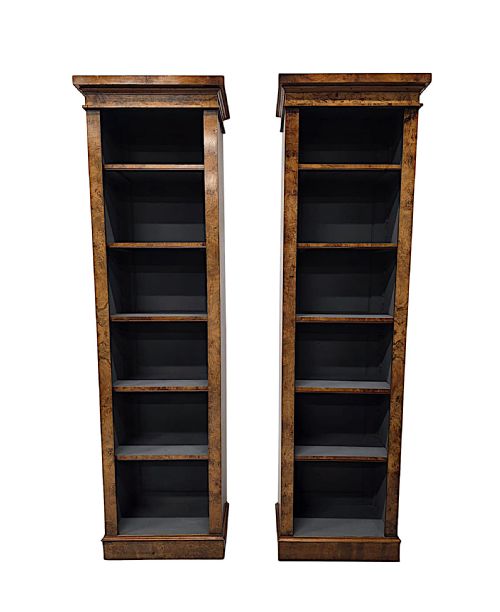
Decoration and a name lift things further. Inlaid appears in 56 titles, carved in 40, painted in 30, with ormolu-mounted, marquetry and gilt-mounted examples well up the range, and named makers or a documented house behind a piece pull the same way. Unattributed cases make up the bulk. Pairs are their own sub-market: 45 titles offer two at a time, and they cluster in the upper half.
Retail Price Guide 2026
Typical UK retail prices for library bookcases, calculated from the Sellingantiques database of over a million retail prices indexed since 2003. This retail price guide relies exclusively on Sellingantiques data; no external sources or auction records are used, so the figures do not describe the wider market.
19th Century is the period label used most on Sellingantiques for library bookcases, with Victorian next and Edwardian third.
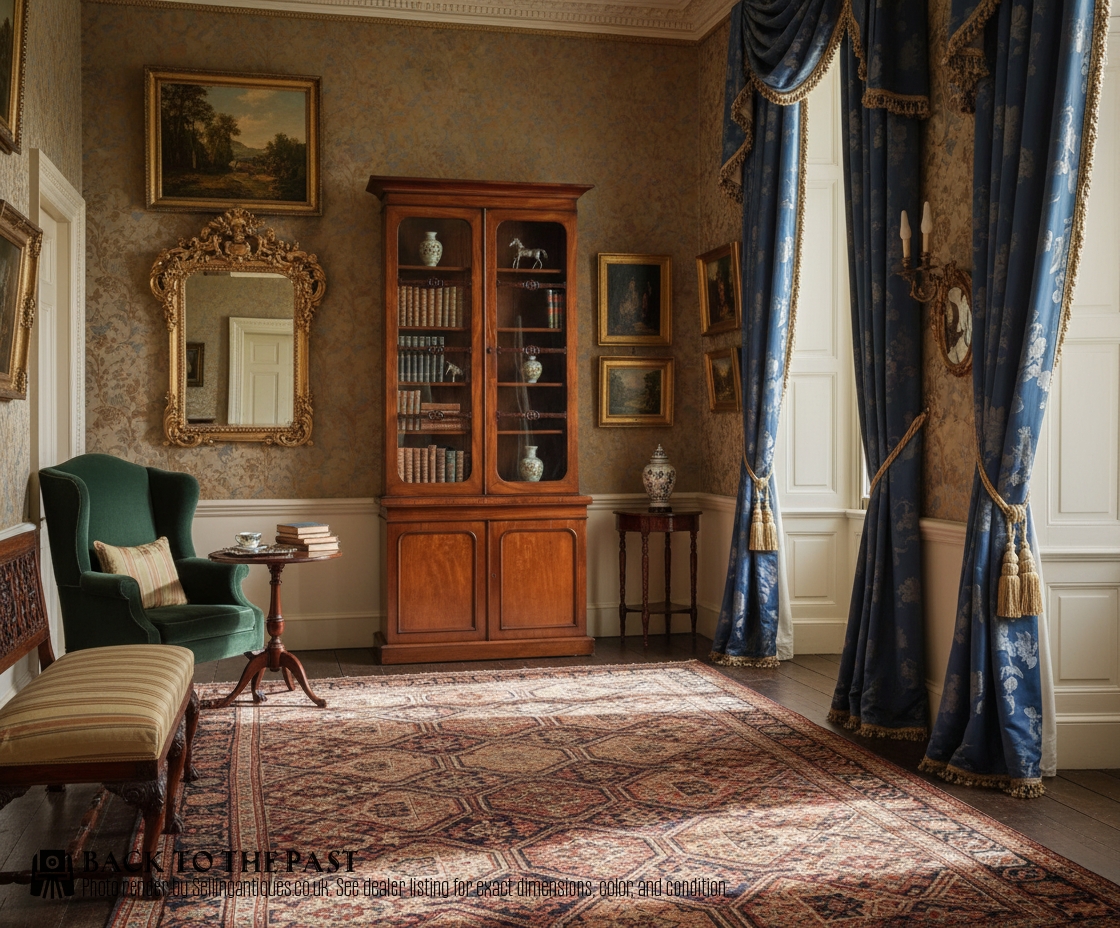
Minty·Gillows·Maple & Co
The Antique Library Bookcases Glossary
- Open bookcase
- Shelves without doors, the commonest form in this category and named in a fifth of titles.
- Breakfront
- A case whose centre section projects forward of the flanking sections. Inverted breakfront means the centre is set back instead.
- Astragal glazed
- Glazed doors divided by slender moulded glazing bars, a term used in several Georgian and Regency titles.
- Adjustable shelves
- Shelves that can be repositioned on notches or bearers, named in 61 titles and often paired with the word open.
- Secretaire bookcase
- A bookcase with a fitted writing drawer or fall in the base. Nineteen titles carry the term.
- Waterfall bookcase
- A low open case with graduated shelves stepping down in width or depth.
Frequently Asked Questions
What wood are library bookcases usually made from?
Mahogany dominates. It names 531 of the 1,188 titles in the category, and oak follows at 215.
Walnut accounts for 119 titles and rosewood 38. Beyond those, timbers like satinwood, amboyna, kingwood and partridge wood show up in single sampled titles rather than as a regular option.
How big do these bookcases get?
Sizes run from dwarf and "neat size" pieces up to cases measured in feet. Two separate 10ft four-door breakfronts and a 12ft late 19th-century library bookcase are recorded in titles, and one Georgian breakfront is given as 238 x 286 x 62 cm.
At the other end, small revolving bookstands and book troughs take up little floor space.
Are open or glazed bookcases more common?
Open cases are the larger group, appearing in 238 titles and often described with adjustable shelves.
Glazed and door-fronted cabinets are the second reading of the form, with glazed in 72 titles, door in 76 and cabinet in 86. Some of those sit on a cupboard or chest base.
What is a revolving bookcase?
A small unit that turns on a central pivot, made square, round or octagonal. Seventy-eight titles use the word, and "mahogany revolving" accounts for 26 of them.
They belong to the later 19th and early 20th centuries, when book storage was sold as a modular or space-saving convenience. Rotary bookstands and book mill reading tables sit in the same family, and revolving pieces are rising as a share of current stock.
Why do dates on these listings vary so much?
The dated field spans 1800 to 1950, but only 441 of the 1,188 listings carry a clean year. The rest are filed under period words instead.
"19th Century" is the largest single label at 224, then Victorian at 166, Edwardian at 75 and Georgian at 55. Where decades are given they cluster in the 1850s to 1900s, with the 1920s a real second group.
Some titles carry a period label that sits oddly against the filed date, so title and date are worth reading together.
Do pairs of library bookcases come up?
Yes. Forty-five titles offer bookcases two at a time, and one sampled entry runs to a set of three stacking office bookcases.
Pairs recur disproportionately in the upper half of the sampled range.