
Antique Small Bookcases
A small bookcase is a reduced-scale version of the library bookcase, made for bedrooms, private rooms and houses where a full library run would never fit.
Antique Small Bookcases
Freestanding storage for books, usually under a metre or so wide, running from plain open shelves through glazed-door cabinets to bookcases built on a cupboard base. They were made from the late 18th century onward, and demand widened through the 19th and early 20th centuries as cheap printed books reached ordinary homes.
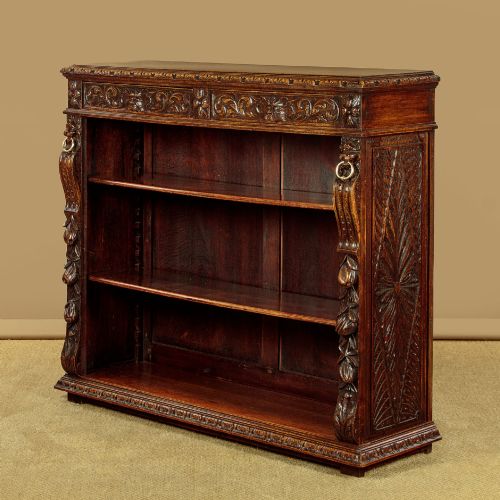
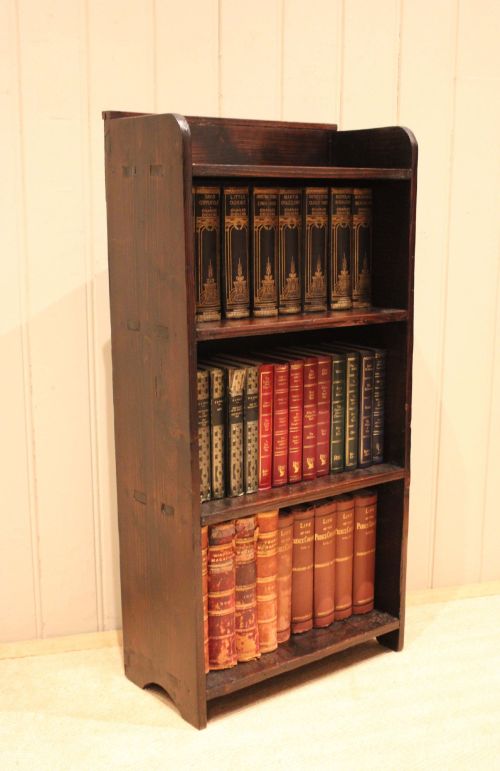
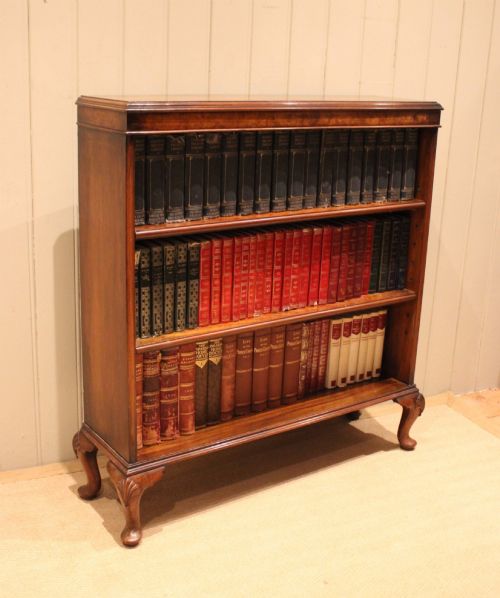
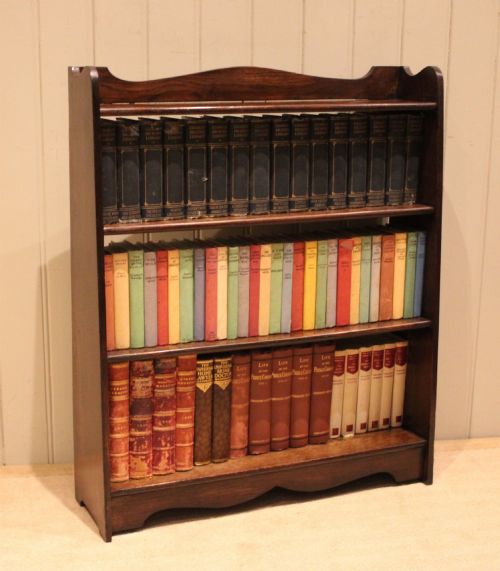
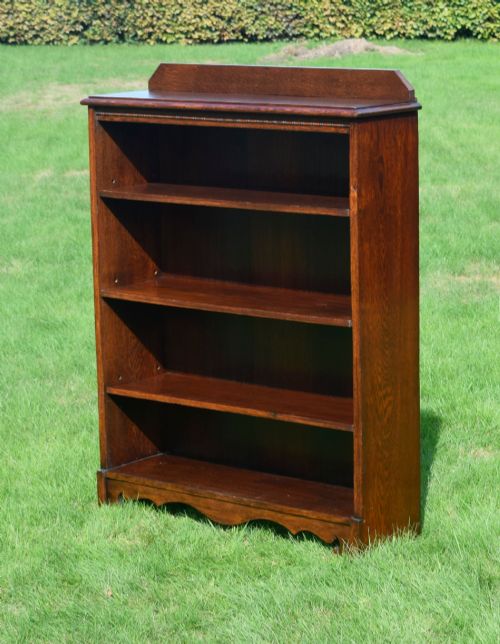
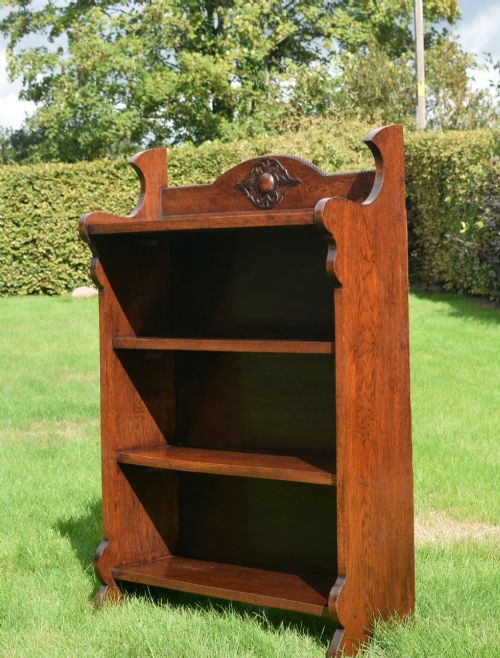
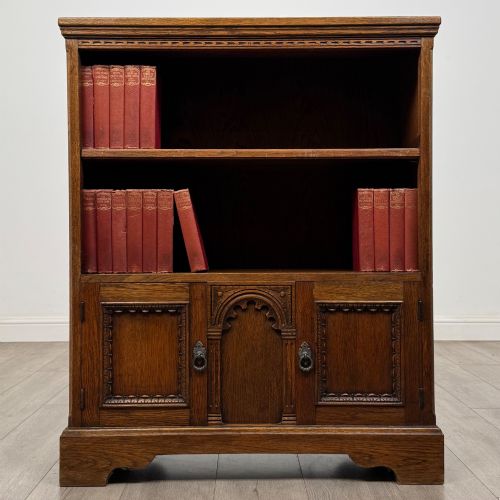
The version you're most likely to meet is an open oak bookcase with no doors and no glass. Oak appears in 213 of 603 titles on Sellingantiques and 'open' in 176, against glazed in only 61. Mahogany runs a close second at 192 titles. The commonest title in the whole sample is simply 'Small Oak Open Bookcase'.
Dating runs from 1800 to 1940, and the 1920s is the largest single bucket at 120 listings, with the 1910s and 1930s behind it. In this archive the small bookcase is largely an interwar object. Plenty of listings carry an era label rather than a year, so a piece dated '19th Century' is a hundred-year window rather than a date.
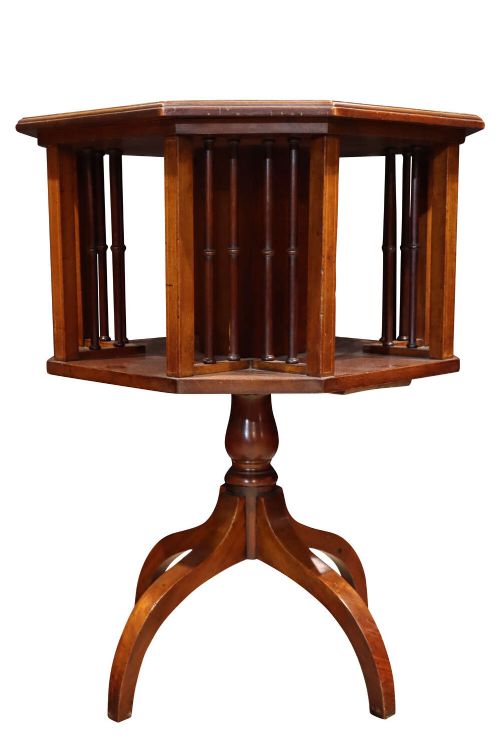
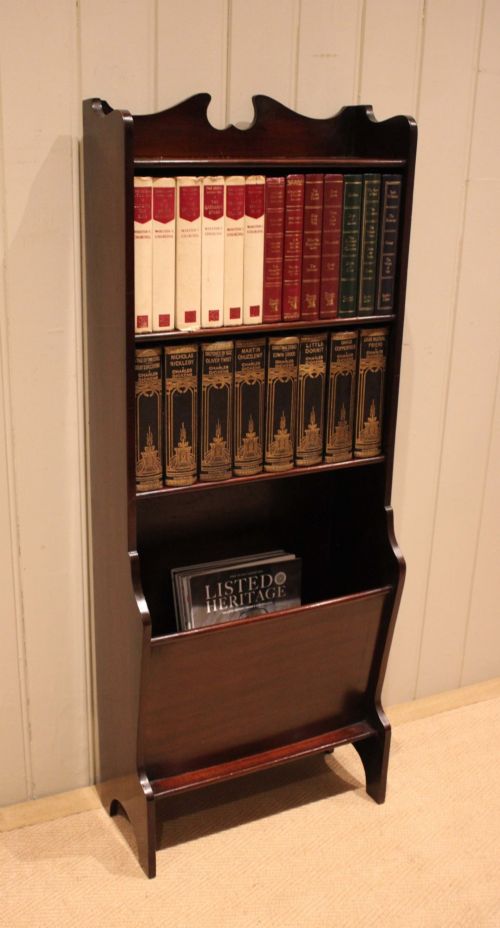
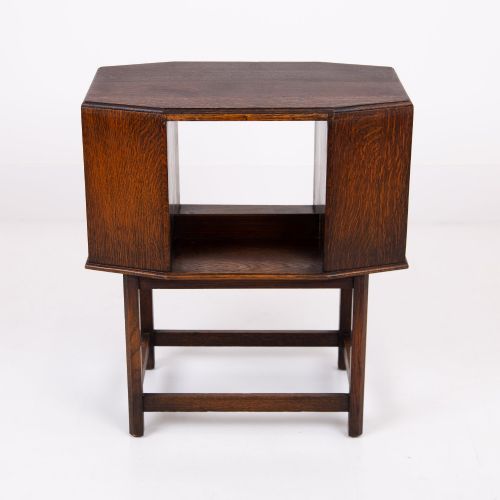
Away from the oak and mahogany mainstream sit the smaller branches. Revolving and table-top cases, book troughs and bookstands make up under a tenth of listings but are rising in current stock. Georgian and Regency waterfall, secretaire and breakfront pieces in mahogany and rosewood are about a tenth of listings and hold most of the upper range.
Where The Range Splits
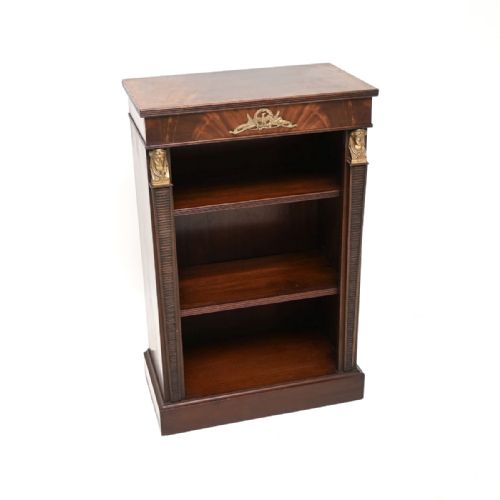
Timber does most of the work. Plain oak and beech sit at the bottom of the sample; rosewood, satinwood, burr walnut and figured mahogany sit at the top, along with the odd kingwood, tulipwood, amboyna or partridge wood piece that surfaces once and never again. Decoration follows the same line, with inlaid, carved and marquetry titles placed above the undecorated 'Small Oak Bookcase'.
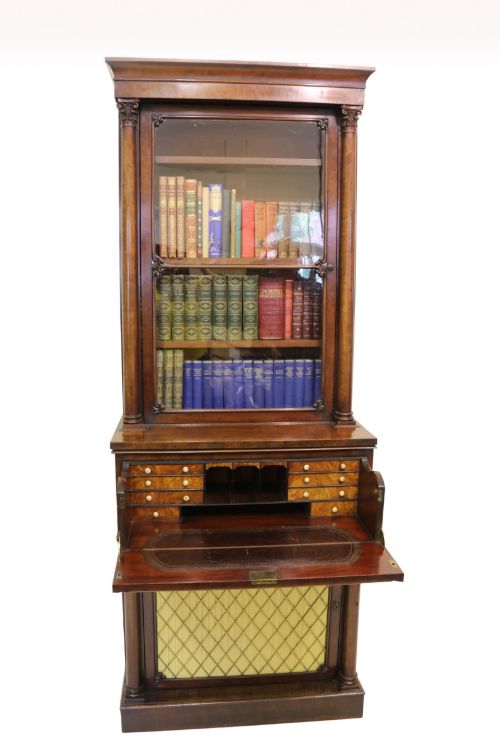
Form separates the two ends as clearly as material. Plain open shelving is the cheapest recurring type. Secretaire bookcases with a pull-out writing front, breakfront fronts and bookcases on cupboard bases cluster at the top, and they cluster there with period behind them: Georgian, Regency, George III and William IV titles are almost all in the upper part of the sample, while 1920s and 1930s oak fills the lower band.
Pairs matter more than their number suggests. Only 18 titles in 603 are pairs, and pairs of open bookcases, waterfall bookcases and rosewood bookcases all sit consistently above comparable singles.
Antique Small Bookcases Retail Price Guide 2026
Typical UK retail prices for small bookcases, calculated from the Sellingantiques database of over a million retail prices indexed since 2003. This retail price guide relies exclusively on Sellingantiques data; no external sources or auction records are used, so the figures do not describe the wider market.
The most expensive small bookcase ever sold on Sellingantiques was a Regency period breakfront bookcase of small size, in April 2021.
The Antique Small Bookcases Glossary
- Open bookcase
- Shelves without doors or glazing. It's the commonest form in this category, named in 176 titles out of 603.
- Glazed
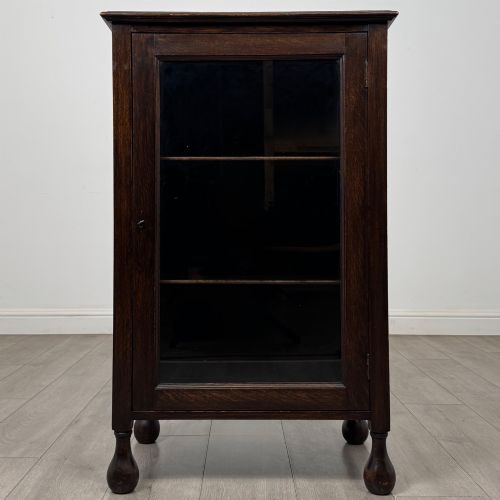
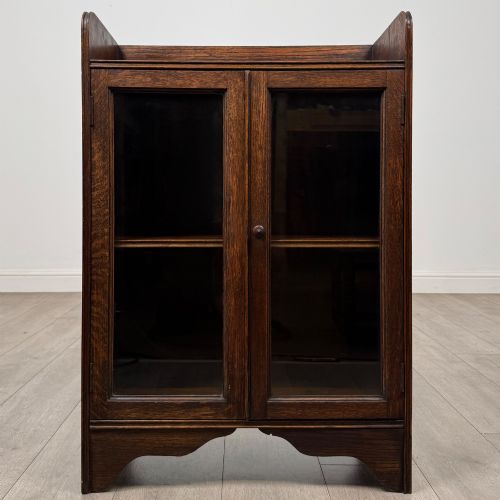
- Fitted with glass doors, sometimes leaded or part-glazed. Sixty-one titles use the word, so it's the exception rather than the rule.
- Of small proportions
- Dealer shorthand for a reduced-scale piece of a normally large form. 'Proportioned' turns up in 42 titles and 'proportions' in 29, a habit of description that has become a dialect of the category.
- Waterfall
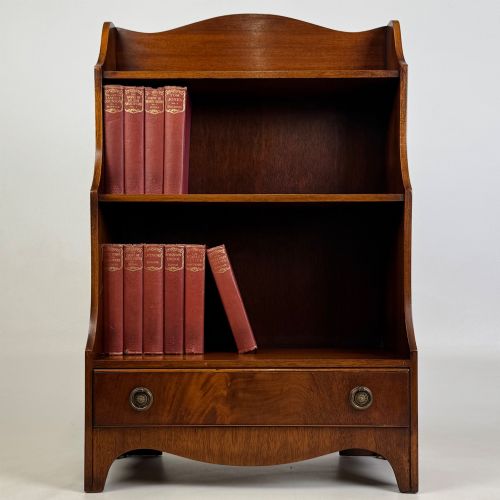
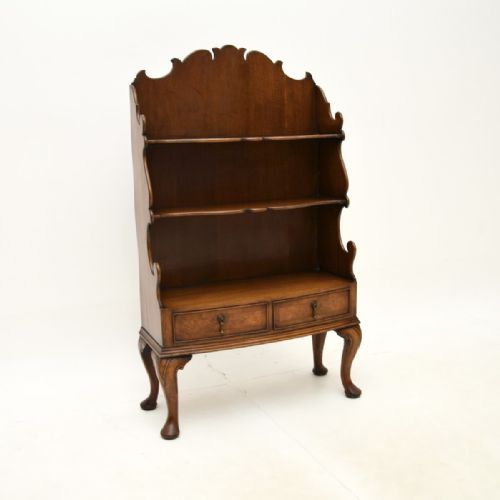
- An open bookcase whose shelves step forward and downward in graduated depths. Thirty-six titles use the word.
- Secretaire bookcase
- Shelves above a drawer front that pulls out to give a writing surface. Twenty-eight titles, concentrated at the top of the range.
- Adjustable shelves
- Shelves that move on pegs or slots. Thirteen titles say so; the rest say nothing either way.
Antique Small Bookcases: Frequently Asked Questions
What wood are small bookcases usually made from?
Oak and mahogany between them account for the overwhelming majority of titles, 213 and 192 out of 603. Walnut is a distant third at 53, rosewood at 23.
Beyond that the timbers thin out fast. Partridge wood, amboyna, kingwood, tulipwood, apple wood and yew each surface once in the whole sample.
How old are most of these?
The dealers' own dating runs from 1800 to 1940, and 295 of 603 listings carry a clean year. The 1920s is the largest bucket at 120, followed by the 1910s and 1930s.
Earlier pieces exist but are a small minority. Georgian, Regency and pre-1830 titles are relatively few, and they sit at the top of the range rather than in the middle of it.
Are glazed doors common on small bookcases?
No. Glazed appears in 61 titles out of 603, against 176 for open shelving.
Glazed and cabinet-form pieces, including bookcases on cupboard bases and part-glazed doors, together make up somewhere between a tenth and a sixth of the category.
Which forms sit at the top of the range?
Georgian and Regency mahogany and rosewood hold the top almost entirely, in breakfront, secretaire and waterfall forms.
The bottom is plain interwar oak shelving. Between them, figure, inlay and carving lift a piece within its own band.
Do revolving bookcases turn up often?
Revolving appears in 37 titles out of 603, both floor-standing and table-top.
With book troughs, novel rests and bookstands, this branch is under a tenth of the archive overall, though it makes up a larger share of current stock than of past sales.
Are non-English small bookcases easy to find?
Geography barely intrudes. 'French' appears in 17 titles, and single listings claim Irish, Scottish, Chinese and Anglo-Indian Kashmiri origin.
Everything else reads as English. Around 65 small bookcases are listed on Sellingantiques in a year, handled by 144 different dealers, so it's a category general furniture dealers touch rather than a specialist's preserve.