
Antique Secretaire Bookcases
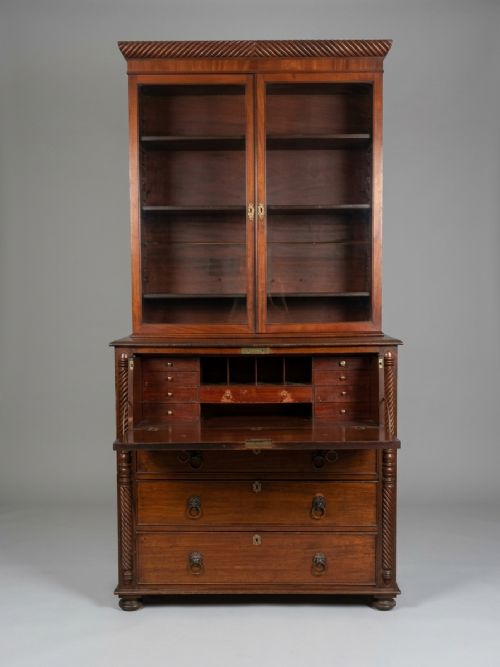
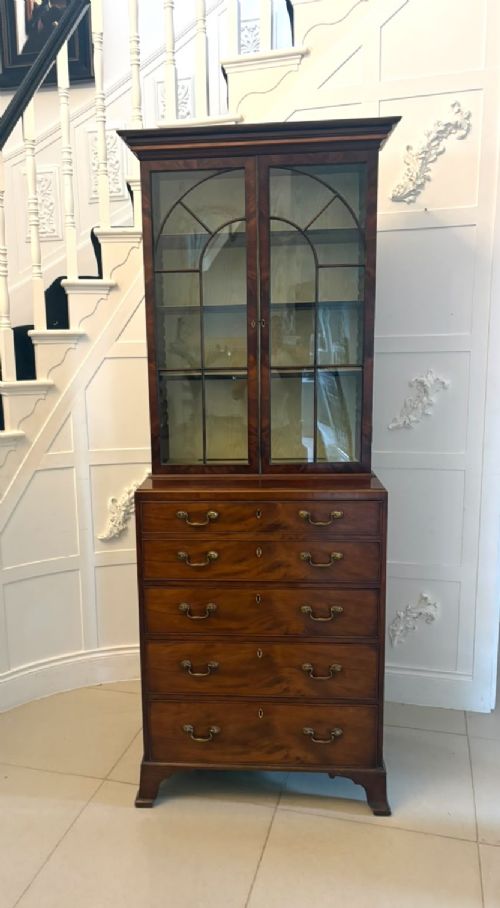
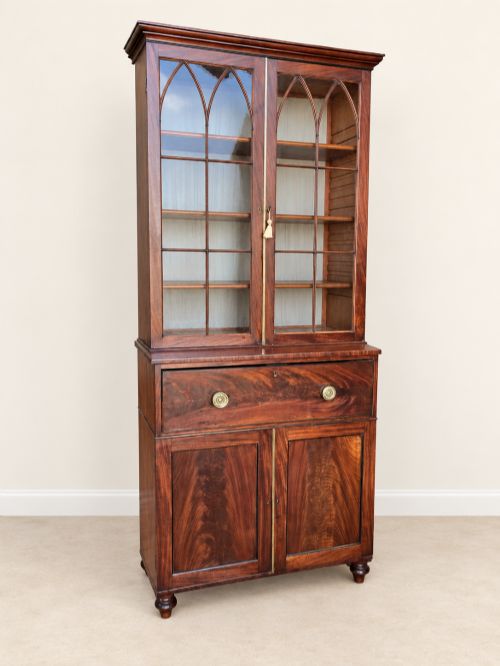
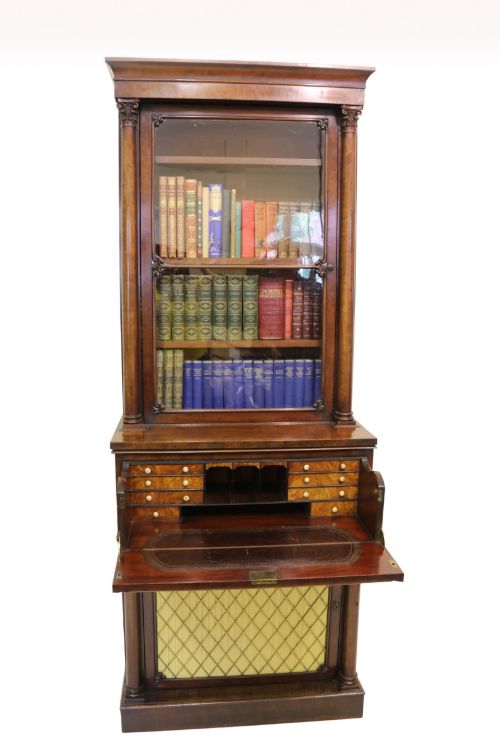
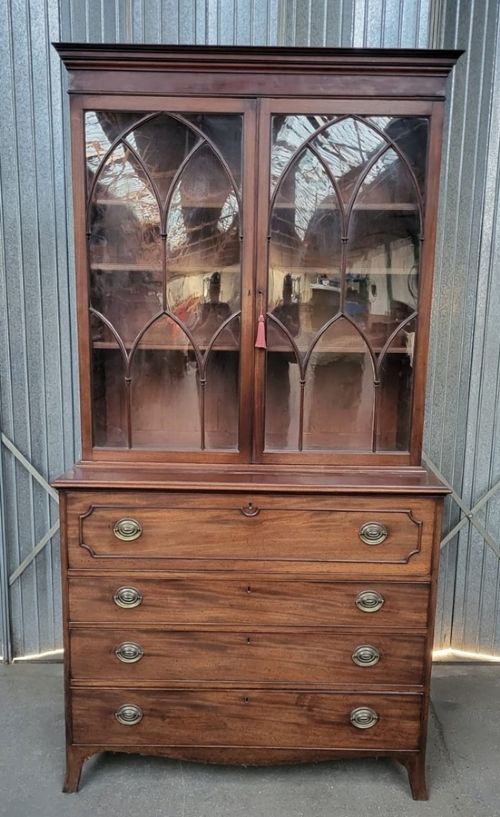
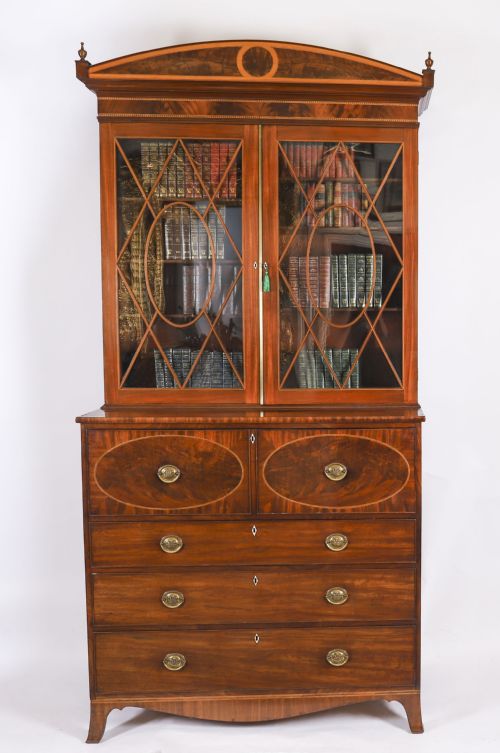
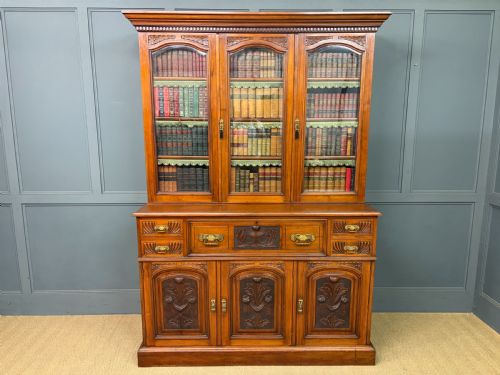
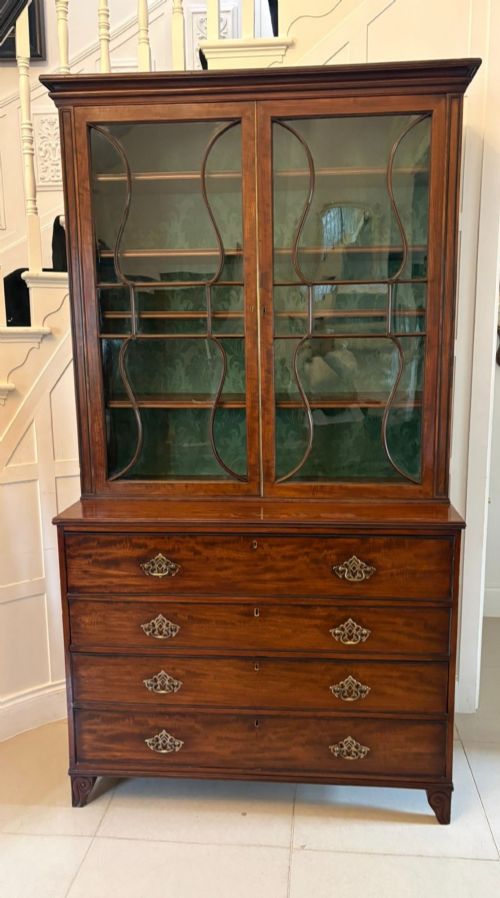
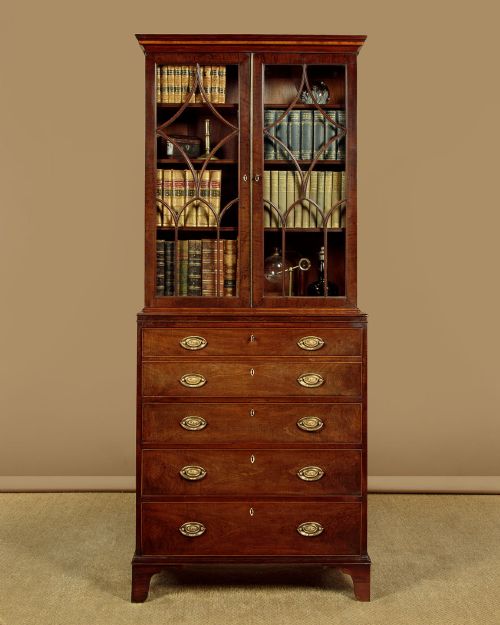
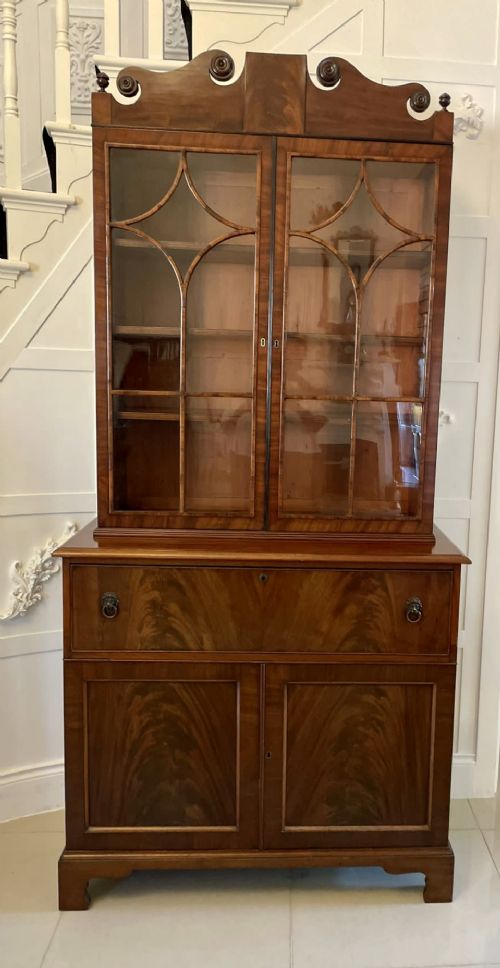
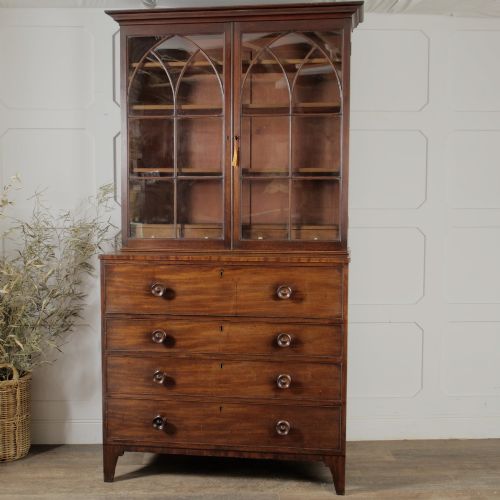
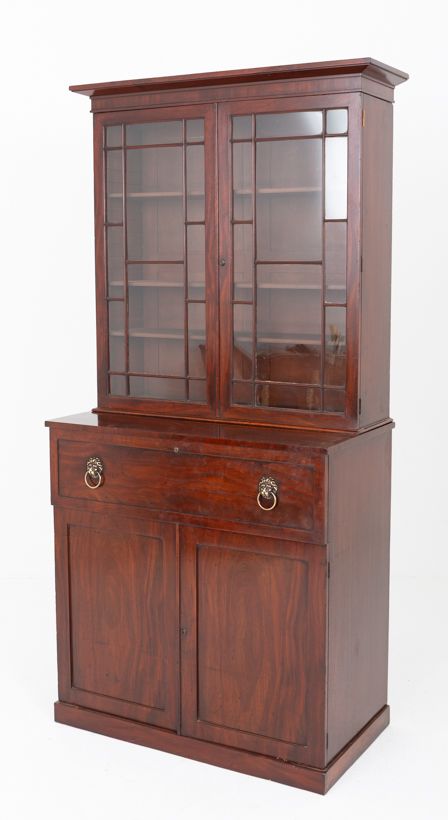
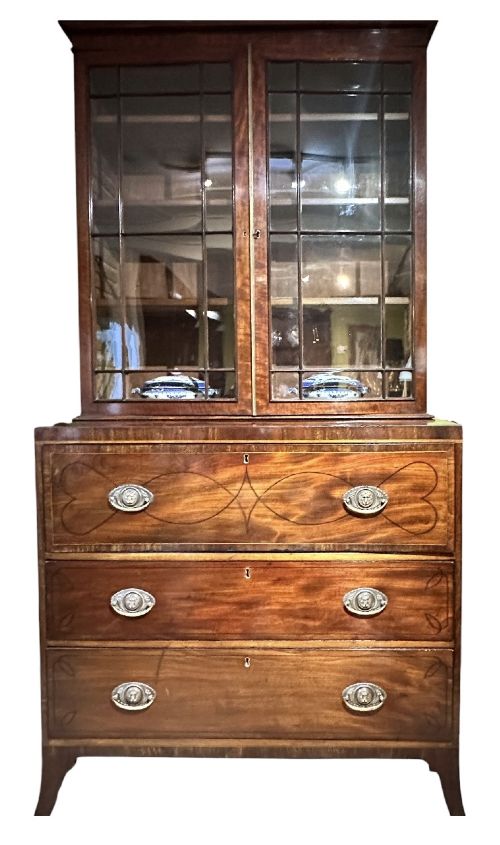
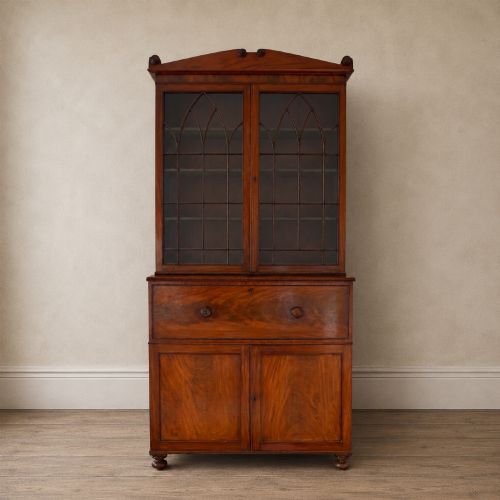
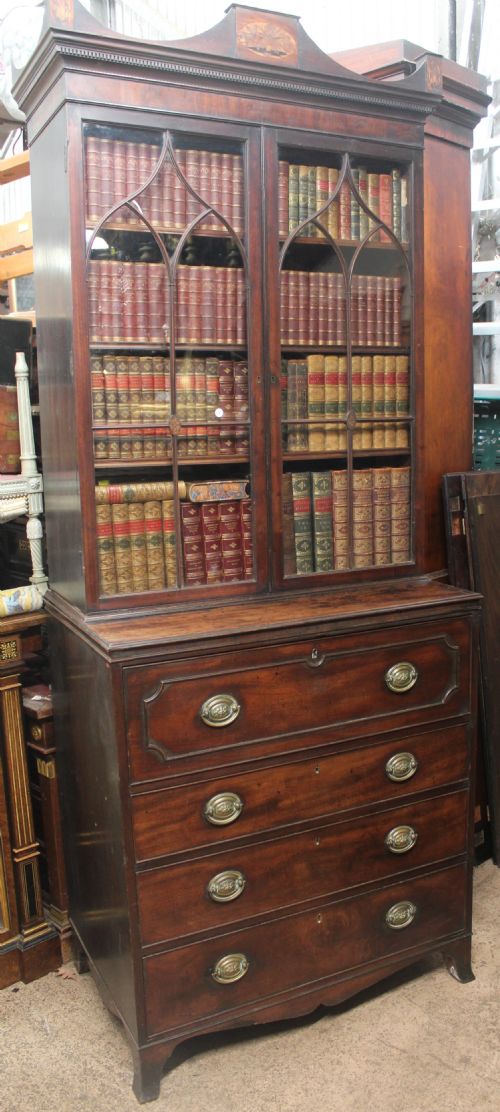
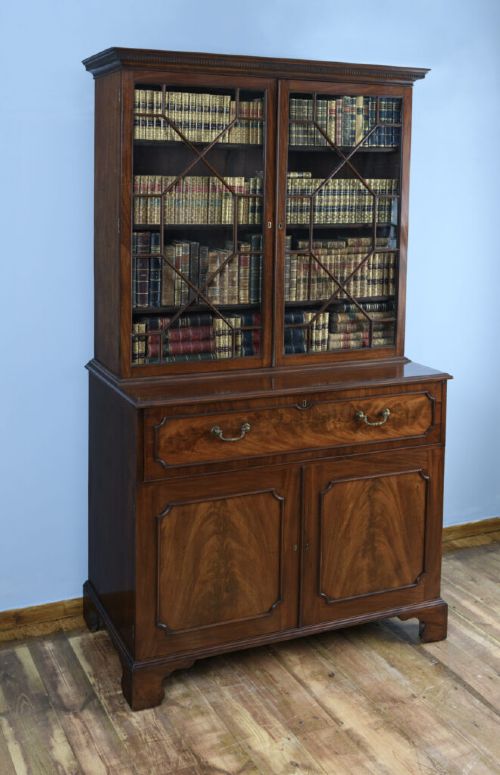
A two-part case piece: a bookcase or cabinet top set over a chest or cupboard base, with one deep drawer whose front falls forward to give a writing surface over a fitted interior.
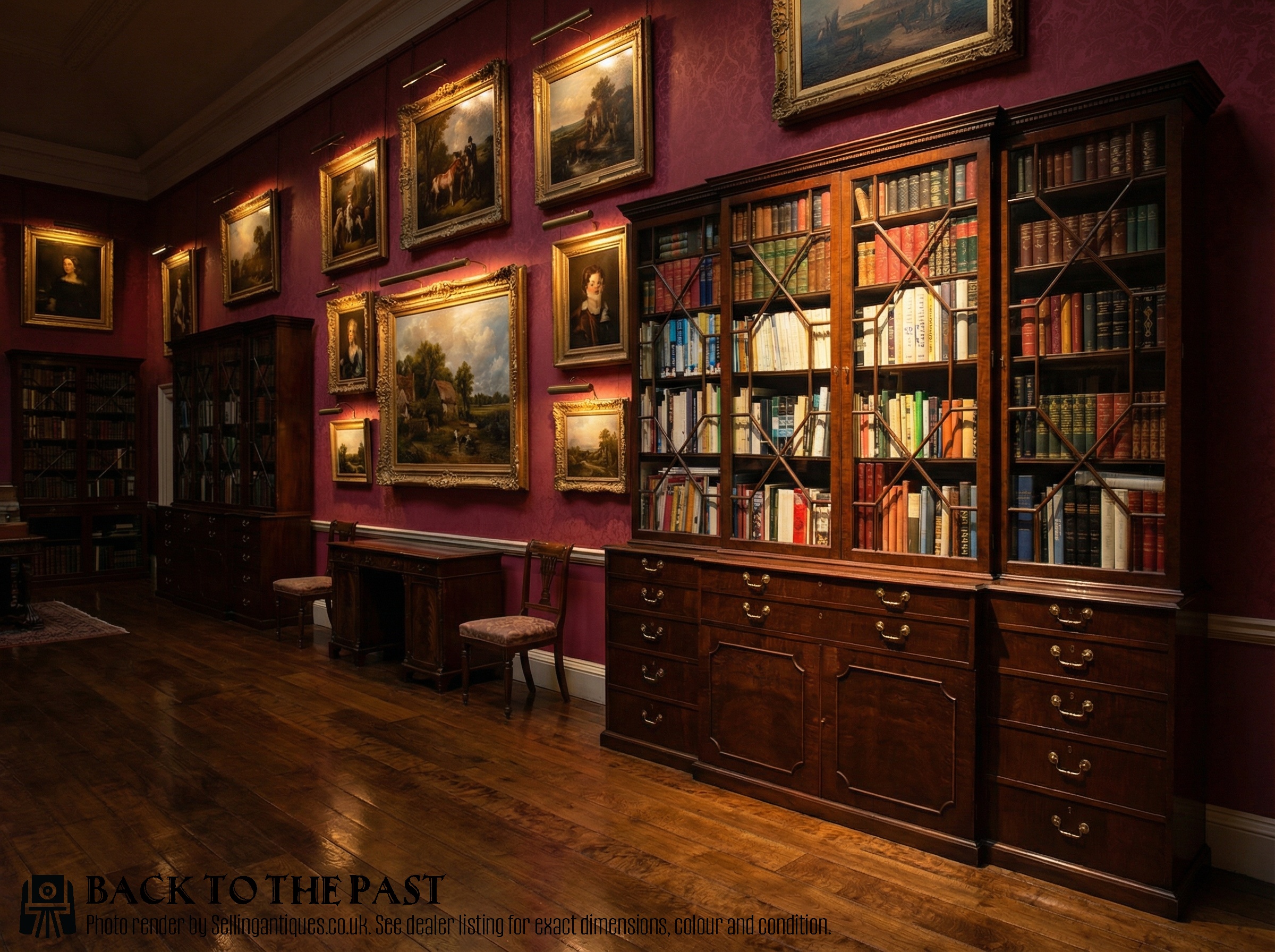
Antique Secretaire Bookcases
The form came out of eighteenth-century Britain, giving one piece of furniture the job of library and writing desk in a room short of floor space. The fall front drops on quadrant stays, opening onto small drawers and pigeonholes, and the top above is usually glazed or panel-doored.
In this archive it is a mahogany object above all else. Two-thirds of the 409 titles name mahogany, and no other timber reaches a tenth. Walnut, oak, satinwood and painted examples make up the remainder. The commonest title on Sellingantiques is nothing more elaborate than a period word, mahogany, and the category name.
Four groups account for most of what turns up. Georgian and George III mahogany, plain or lightly strung, is the largest and carries the bulk of the upper range. Regency and William IV pieces, often figured or flame, come next. Victorian and later mahogany or walnut sits mainly at the lower and middle of the range. Breakfront and library-scale cases are scarce, roughly one title in twenty, and small, narrow or slim examples turn up at both extremes.
Dating is loose. Dealers more often reach for a period word than a year: Georgian, 19th Century, Regency and Victorian between them cover far more listings than the 98 that commit to a clean date. Those years run 1750 to 1930. Titles and dated fields sometimes disagree, so read the two as separate claims.
Where The Range Splits
Timber and figure do most of the work. Plain mahogany and plain walnut sit at the bottom; figured, flame and burr surfaces climb. The scarcest woods appear once apiece near the top of the range, among them satinwood, tulipwood, kingwood, amboyna, coromandel and purple heart, against 274 mahoganies.
Decoration follows the same line. Inlay is named in a good number of titles, and the ones reading marquetry, ebony inlaid, brass inlaid or boxwood-strung sit high. Scale pushes upward too: breakfront and library forms are uncommon and cluster hard toward the top, while small examples appear at both ends, small Regency pieces low and small George III pieces high.
The period a dealer states matters as much as anything. Titles reading George III or 18th Century dominate the highest asks; Victorian, late Victorian and Edwardian dominate the lowest. Named country-house provenance is rare, only two titles carry it, and both sit well up the range.
Antique Secretaire Bookcases Retail Price Guide 2026
Typical UK retail prices for secretaire bookcases, calculated from the Sellingantiques database of over a million retail prices indexed since 2003. This retail price guide relies exclusively on Sellingantiques data; no external sources or auction records are used, so the figures do not describe the wider market.
Mahogany is named in two thirds of secretaire bookcase titles on Sellingantiques. No other timber reaches a tenth.
The Antique Secretaire Bookcases Glossary
- Secretaire drawer
- The deep drawer whose front falls forward to make the writing surface. It's the feature that separates the form from a plain bookcase.
- Fitted interior
- The small drawers and pigeonholes revealed behind the fall, named in titles as fitted interior or fitted drawers.
- Astragal glazed
- Upper doors with slim moulded glazing bars. Titles record it as astragal or astral glazed.
- Breakfront
- A case whose centre section projects forward of the flanking sections. Around 22 titles use the word, and they gather at the top of the range.
- Flame mahogany
- Strongly figured veneer with a flame-like grain, named in ten titles. Figured covers any pronounced grain pattern; burr walnut is walnut cut from a burr for its dense swirl.
- Swan neck pediment
- A broken scrolled cresting to the cornice, recorded once. A linen press base, with sliding trays behind cupboard doors instead of graduated drawers, also appears once.
Antique Secretaire Bookcases: Frequently Asked Questions
What timber are they usually made from?
Mahogany, and by a wide margin. It's named in 274 of the 409 titles on Sellingantiques, and no other timber reaches a tenth of the total.
Walnut is the next most common, including burr walnut. Oak, satinwood and painted examples make up a small remainder.
Which period turns up most often?
George III is the single most-invoked monarch, named in 62 titles. Georgian as a broad label appears in more again, and Regency close behind.
George II, George IV and William IV each show up only a handful of times, and George I once. Victorian pieces are well represented and sit lower in the range.
How many come up for sale each year?
About 39 a year are listed on Sellingantiques.
Across the archive, 137 different dealers have handled one. That works out at roughly a single example each, so almost nobody carries the form in depth.
Are breakfront examples common?
No. Breakfront appears in around 22 titles, roughly one in twenty, and library-scale pieces are scarcer still.
Where they do appear they cluster hard toward the top of the range, and titles pairing both words are among the highest asks.
Do small or narrow ones exist?
They do, and they're commoner than the breakfront forms. Titles read small, narrow, slim, tall and narrow, diminutive, or of small proportions.
Scale on its own doesn't decide the range. Small Regency examples sit low, small George III examples high.
Were any made outside Britain?
Very few. Single titles name French, American, Eastern European and Channel Island work, against a British archive of over four hundred.
Regional British attribution is thin too. Scottish appears in three titles and nowhere else.