
Antique Walnut Bookcases
Shelved furniture for books in walnut and walnut veneer, from small open shelf units to breakfront library cases, with pier cabinets, revolving book tables and stacking sections listed under the same heading.
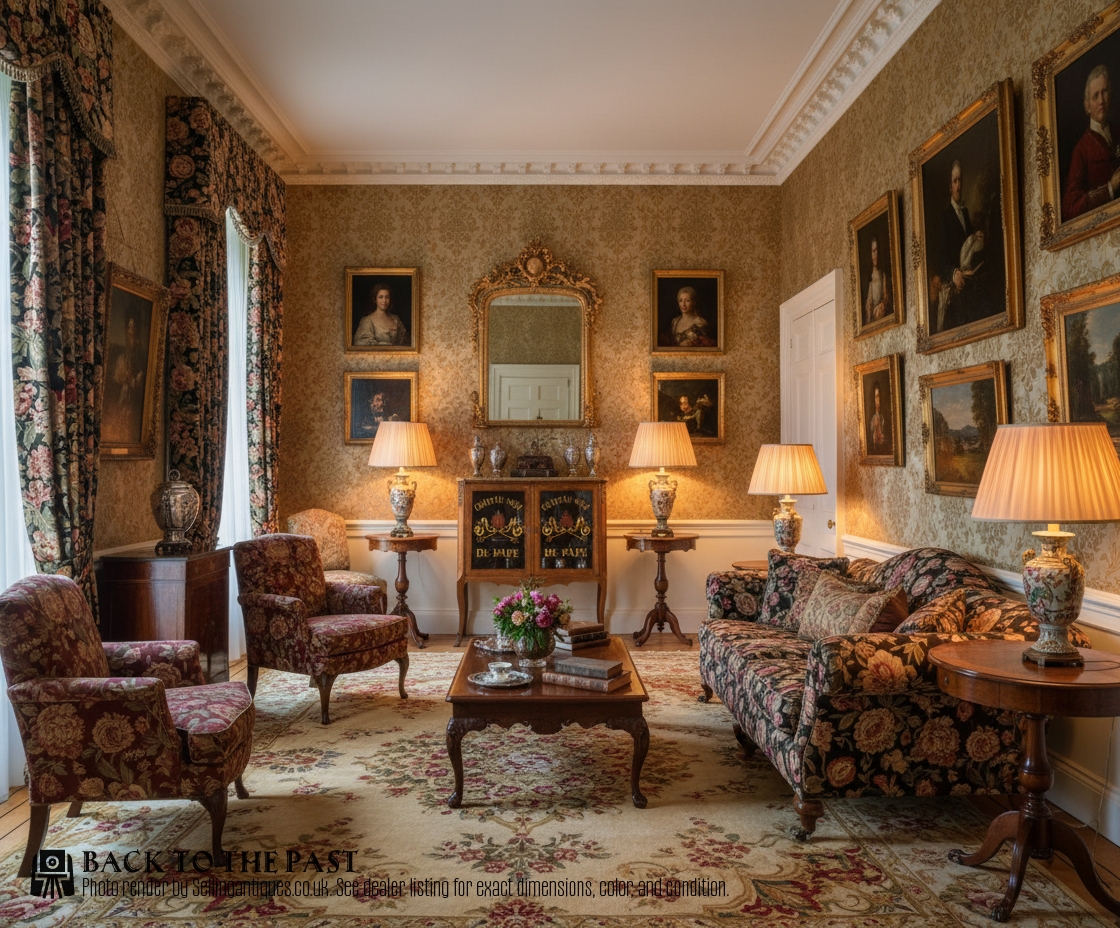
What You're Looking At
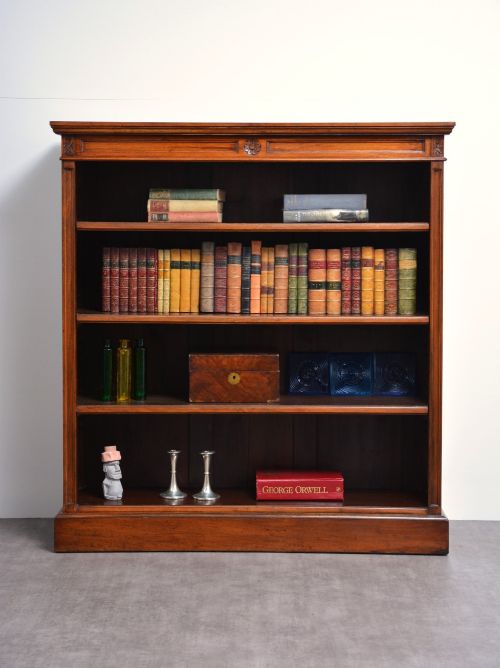
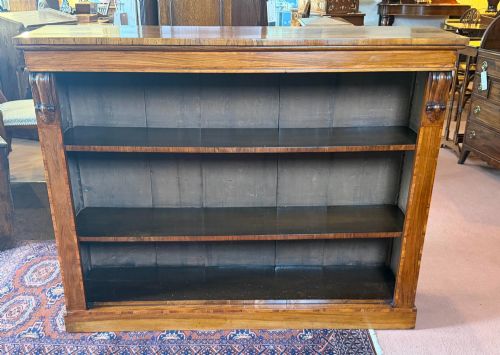
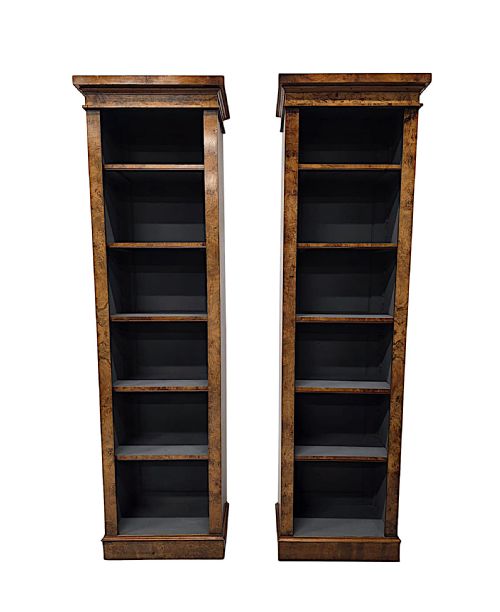
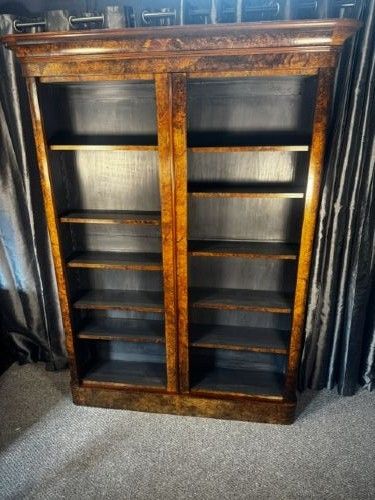
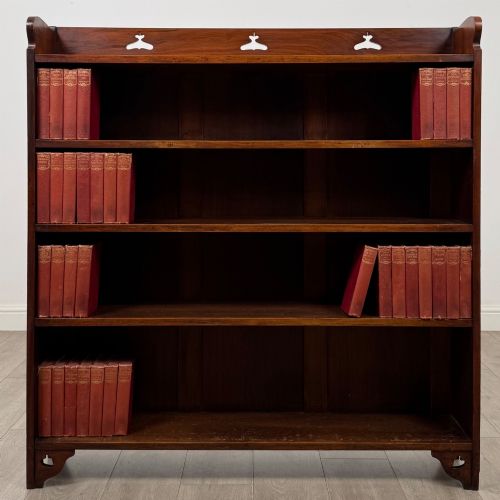
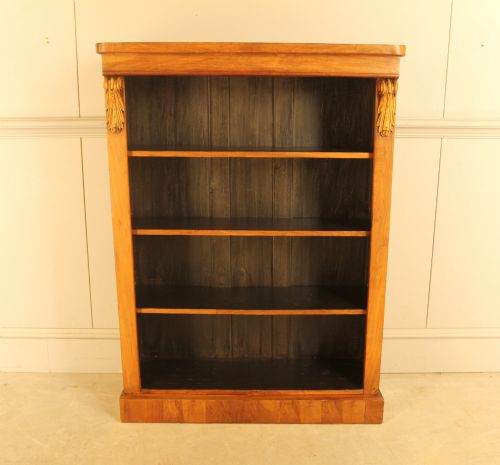
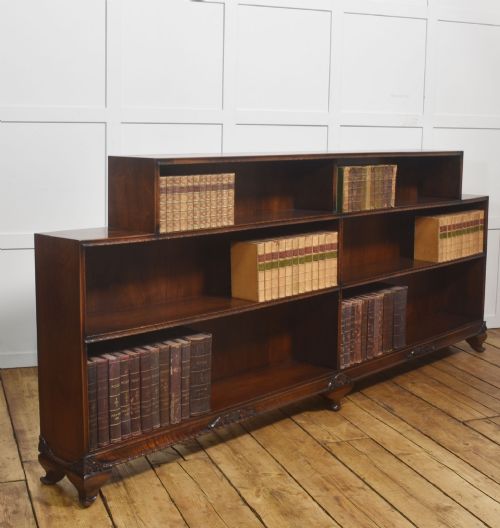
The doorless case dominates. "Open" appears in 410 of 1,311 titles against 103 saying glazed, so open shelving outnumbers glass three to one. Adjustable shelves are named often enough to count as a standard feature rather than a bonus. If you're browsing this heading, an open Victorian shelf case is the piece you'll meet most.
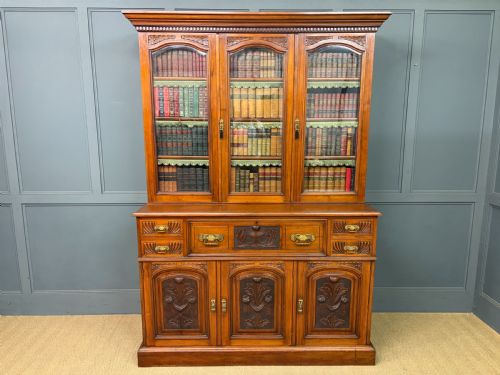
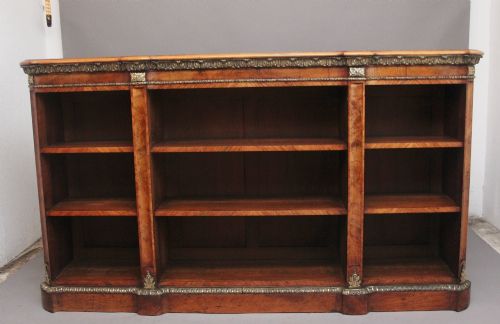
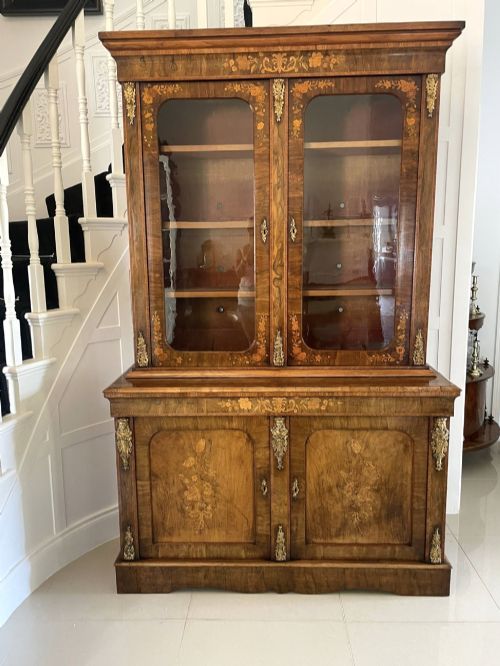
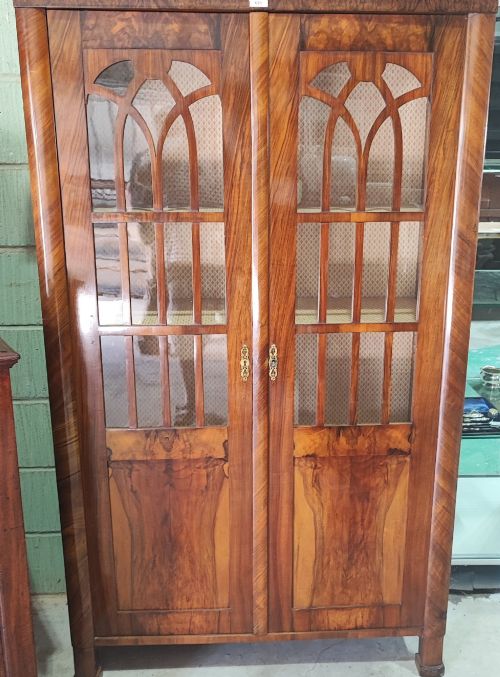
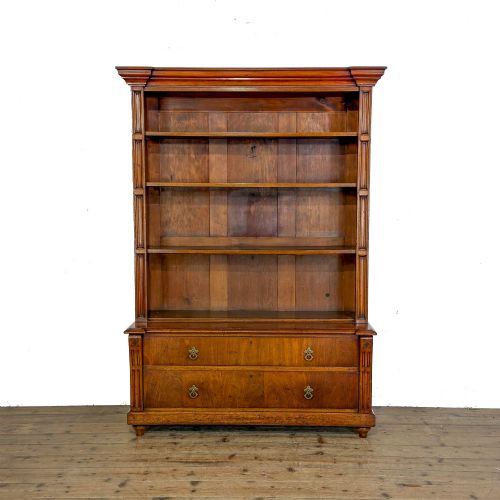
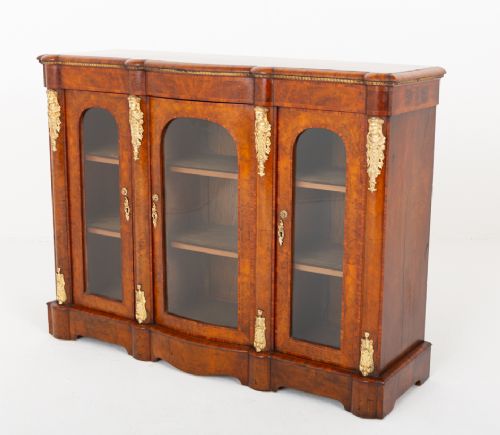
Victorian is the single largest label, in 509 titles. Beyond that the heading covers glazed and doored cases, bookcases over cupboards, secretaire bookcases with a fall-front writing section, and breakfront library cases. Cabinet forms sit here too: pier cabinets, display and side cabinets, some with marquetry and ormolu mounts, and they take a larger share of what's currently for sale than of what's sold.
Revolving bookcases and book tables run through the category at a steady trickle, 74 titles, in three-tier and four-sided forms. Sectional stacking cases of barrister type turn up as well, once as a set of six. Odd shapes surface now and again: a triangular open bookcase, a semi-circular three-tier Art Deco case, a cascading bookcase.
Dating is often broad rather than precise. Victorian and 19th Century between them account for the largest buckets and carry no year at all. Where decades are given they run from the 1860s well into the 1930s, with Edwardian and Art Deco both properly represented, so the twentieth century is better covered than the word antique suggests. Pre-1800 pieces are scarce, and the dealer's date field sometimes disagrees with the title, so read it as shorthand.
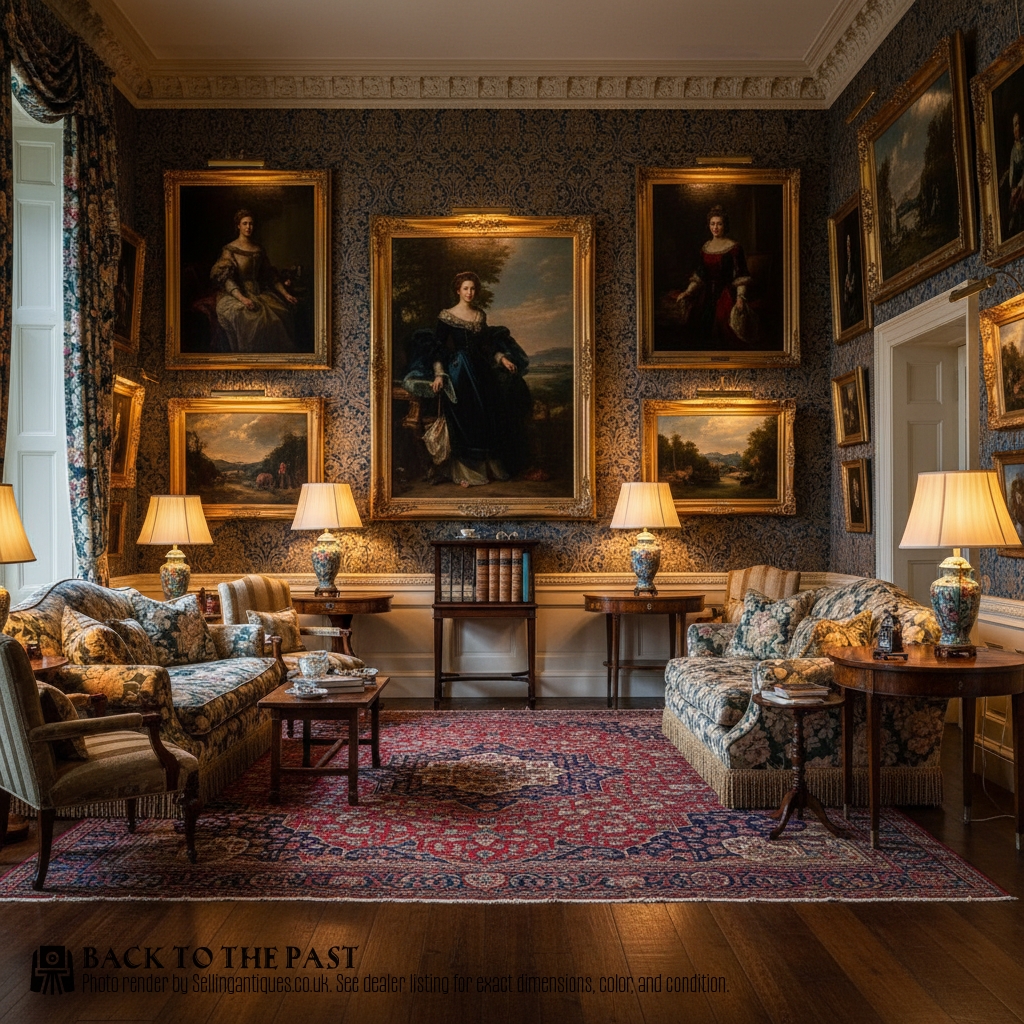
Where The Range Splits
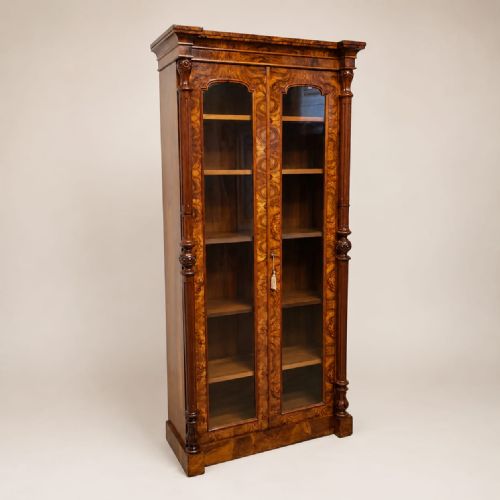
Figure does most of the work. Burr walnut is named in 282 titles and figured in another 68, and those words cluster in the upper samples: burr breakfront, burr library and burr secretaire cases sit high, while a plain "walnut bookcase" sits low. Figure is the most-described feature in this category after the period itself.
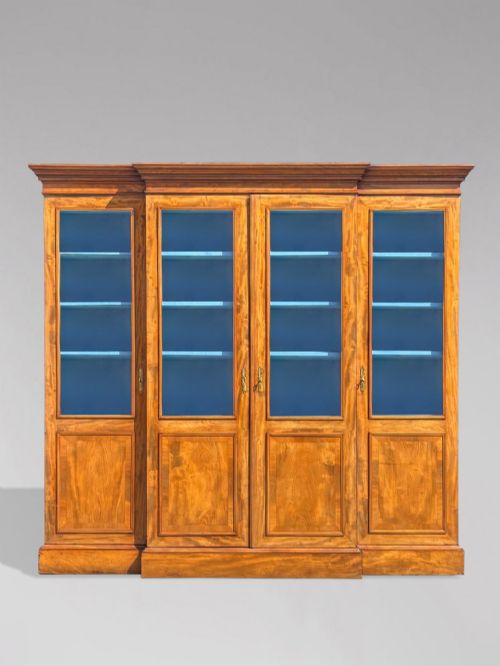
Scale and configuration come next. Three- and four-door breakfront library cases occupy the top of the range, and titles saying large or three tend to follow them up. Small and dwarf cases cluster lower. Matched multiples pull the same way: 51 titles say pair, and paired dwarf and tall open bookcases sit consistently above single equivalents.
Applied decoration separates the rest. Inlay appears in 72 titles, with marquetry and ormolu mounts in around twenty each, and the marquetry-inlaid, ormolu-mounted cabinets appear only near the top. A named retailer lifts a piece above an anonymous one, though names attach to few enough listings that figure and size decide the majority.
Retail Price Guide 2026
Typical UK retail prices for walnut bookcases, calculated from the Sellingantiques database of over a million retail prices indexed since 2003. This retail price guide relies exclusively on Sellingantiques data; no external sources or auction records are used, so the figures do not describe the wider market.
The top sale of the last year on Sellingantiques was an exhibition quality four door Victorian carved burr walnut cabinet bookcase, in April 2026.
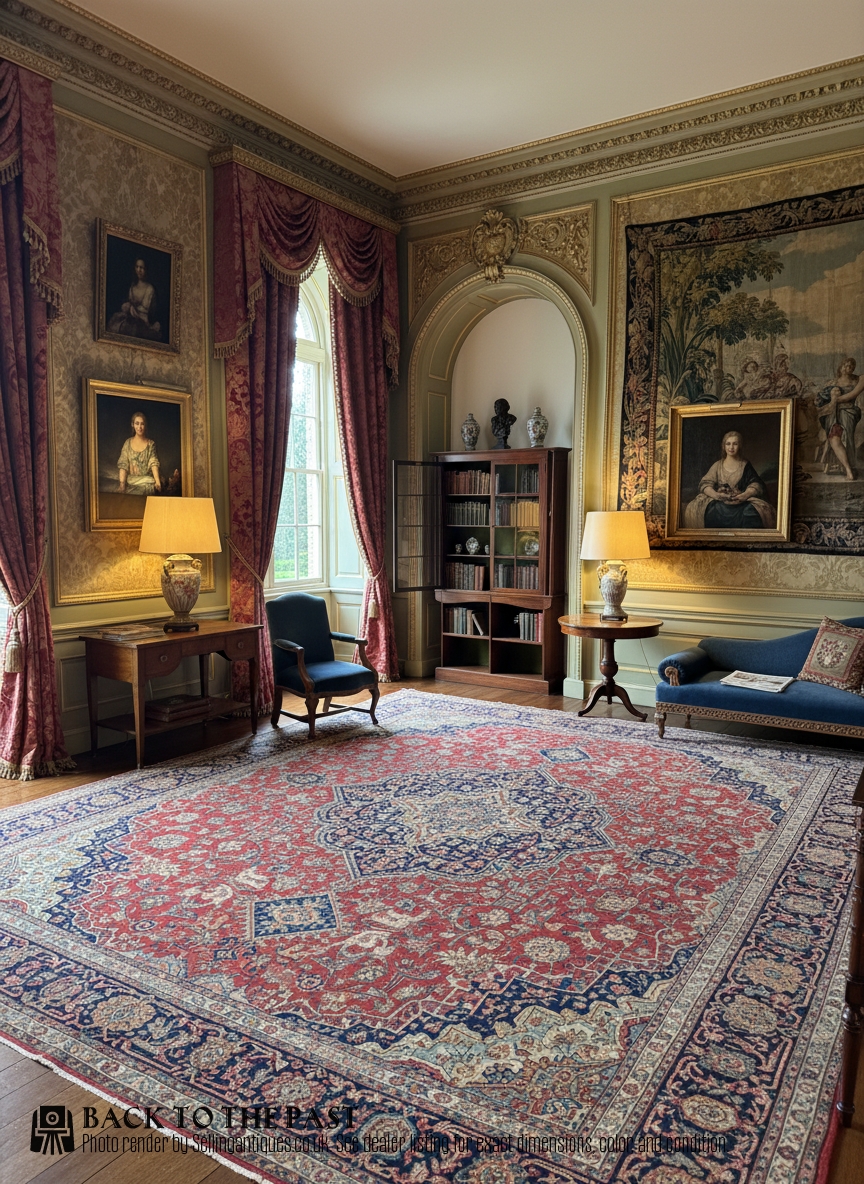
Maple & Co
The Antique Walnut Bookcases Glossary
- Open bookcase
- A shelved case with no doors, and the commonest form under this heading, in roughly a third of titles.
- Glazed
- Fitted with glass doors. Astragal glazing means the door is divided by slender moulded bars.
- Burr
- The swirling figure cut from a burr growth on the tree, named in around a fifth of titles. Figured means veneer chosen for pronounced grain.
- Breakfront
- The front stepped forward in the centre section, a word that mostly attaches to the larger library cases.
- Dwarf or low bookcase
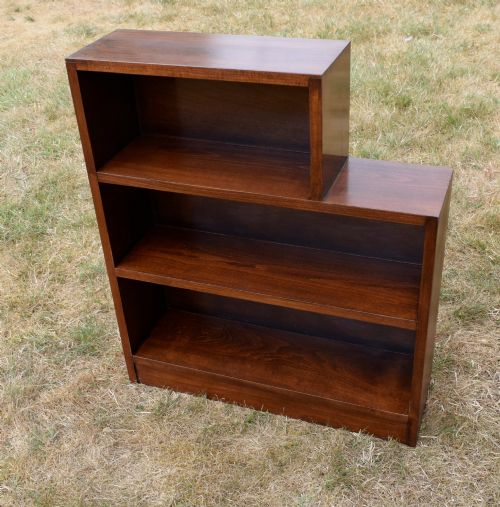
- A short case, waist height or less. Its opposite in the listings is simply large.
- Secretaire bookcase
- Shelving above a fall-front writing section. Pier cabinet means a narrow cabinet made for the wall between two windows.
Frequently Asked Questions
Are most walnut bookcases glazed or open?
Open. The word appears in 410 of 1,311 titles against 103 saying glazed, so doorless shelving outnumbers glass by three to one.
Adjustable shelves come up often alongside it, described as movable on notches or pegs. The glazed library press is the minority reading in this category, not the type.
What does burr walnut mean in these listings?
Burr is the swirling figure cut from a growth on the trunk. It's named in 282 titles, and "victorian burr" alone accounts for 89 of them.
After the period label, figure is the feature dealers describe most. Burr and figured titles sit toward the top of the range, and plain walnut titles sit lower.
How old are they usually?
Victorian is the largest single label, in 509 titles. The dealer date field spans 1700 to 1930, and 706 listings carry a clean year rather than a period word.
Where decades are given, they run 1860s through the 1930s. The 1900s to 1930s together account for 357 listings, with 44 titles naming Art Deco and 94 saying Edwardian.
Pre-1800 dating is scarce. The earliest entries are outliers, including one eighteenth-century glazed bookcase dated 1700.
Why are cabinets listed under bookcases?
The heading stretches to adjacent cabinet forms. Pier cabinets, display cabinets and side cabinets account for a good slice of the titles, and they take a larger share of current stock than of what has sold.
Some carry marquetry and ormolu mounts. Revolving book tables and sectional stacking cases sit under the same heading too.
Do walnut bookcases come in pairs?
Yes, though it's a thin thread. Fifty-one titles say pair.
Matched pairs of dwarf and tall open bookcases sit consistently toward the top of the range, above single equivalents. A set of six sectional cases has come through as well.
Which dealers handle this category?
About 132 walnut bookcases come to market on Sellingantiques in a year, and 176 different dealers have listed one.
That spread means the category isn't held by a handful of specialists. It passes through the trade broadly, which is why the range of forms under the heading is so wide.