
Antique Low Bookcases
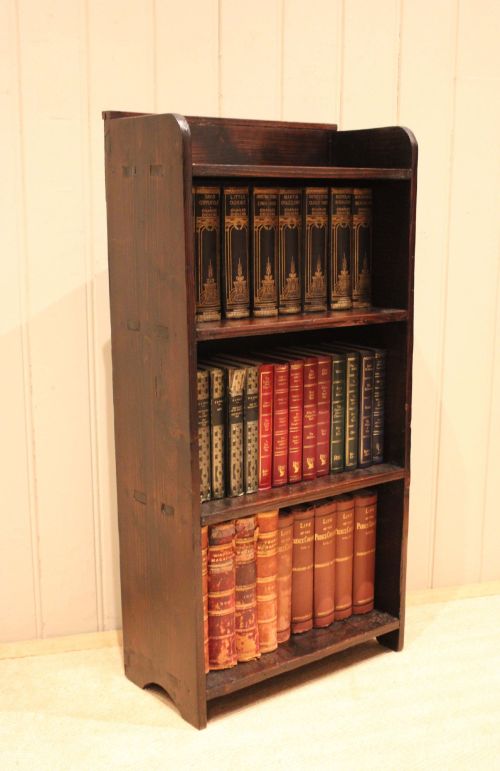
A low bookcase is a freestanding shelved case that stops around waist or chest height, made to stand under a window or against a dado rather than fill a wall.
Antique Low Bookcases
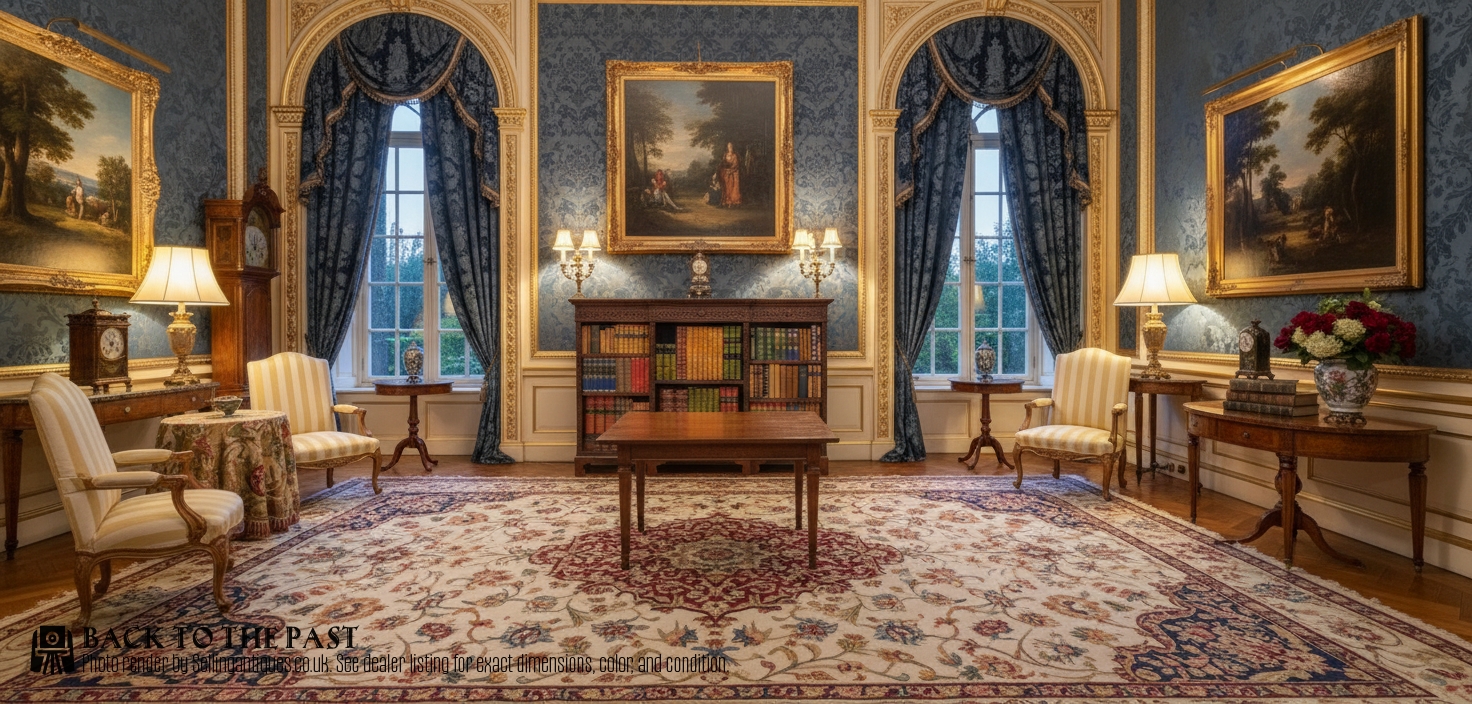
Low, dwarf and open bookcases became standard English furniture from the late 18th century, when private libraries outgrew fitted shelving and needed cases that could stand free in a room. Stopping below eye level, the top doubles as a surface, which is much of the reason the form stuck.
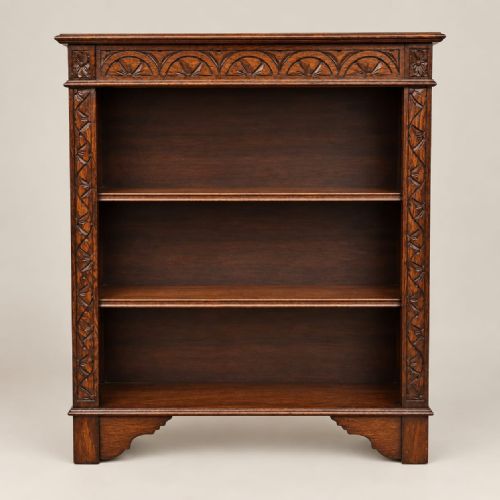
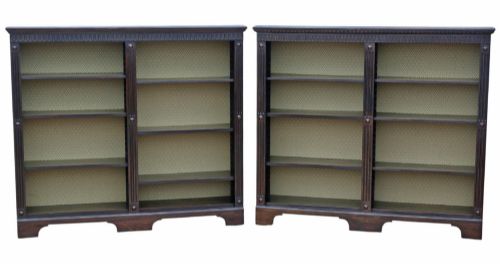
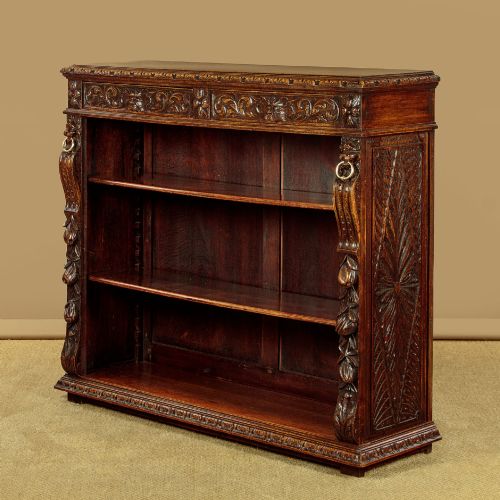
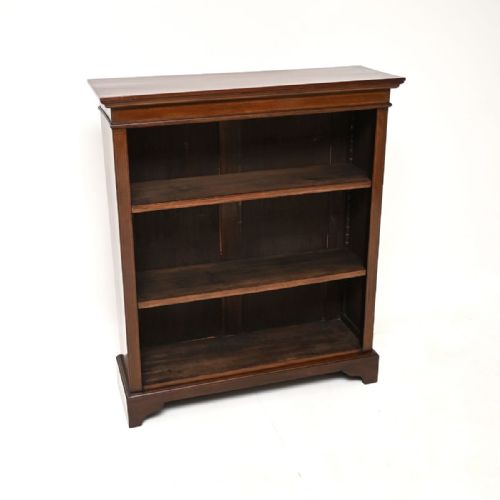
The version you're most likely to meet on Sellingantiques is the open type, with no doors at all: "open" appears in 191 of 368 titles, against 26 calling out glazing. Mahogany and oak dominate the timbers, Victorian and Edwardian the dating, and two to four shelves the layout, fixed or adjustable on notched uprights.
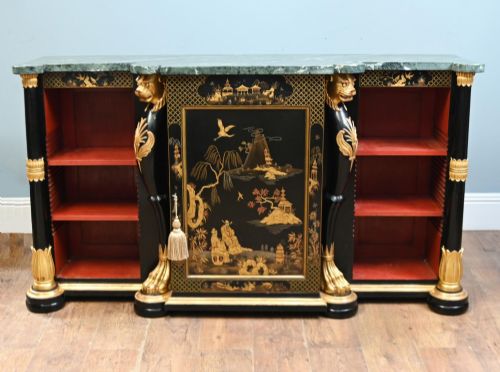
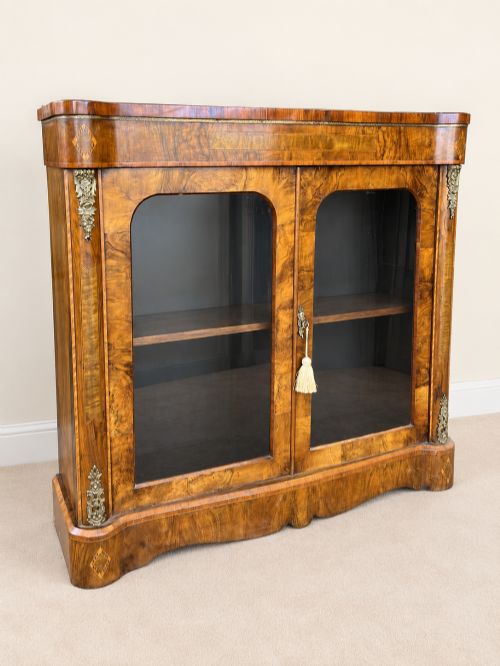
The heading also takes in the wider family of low shelved cases. Breakfront and library bookcases run to about one in ten listings, glazed and cabinet-type cases under a fifth, and there's a smaller group of waterfall and dwarf bookcases, usually rosewood or mahogany with Regency or William IV dating. Art Deco and Arts and Crafts oak accounts for around one in eight.
Dating is often loose. Only 117 of the 368 listings carry a clean year, and "19th Century" alone is used 73 times, with "Victorian" a further 44. Where a decade is given it tends to be the 1880s or the 1900s to 1930s stretch. Origins are almost entirely English, with ten French titles and a scattering of Swedish, Scandinavian and Anglo-Indian outliers.
Where The Range Splits
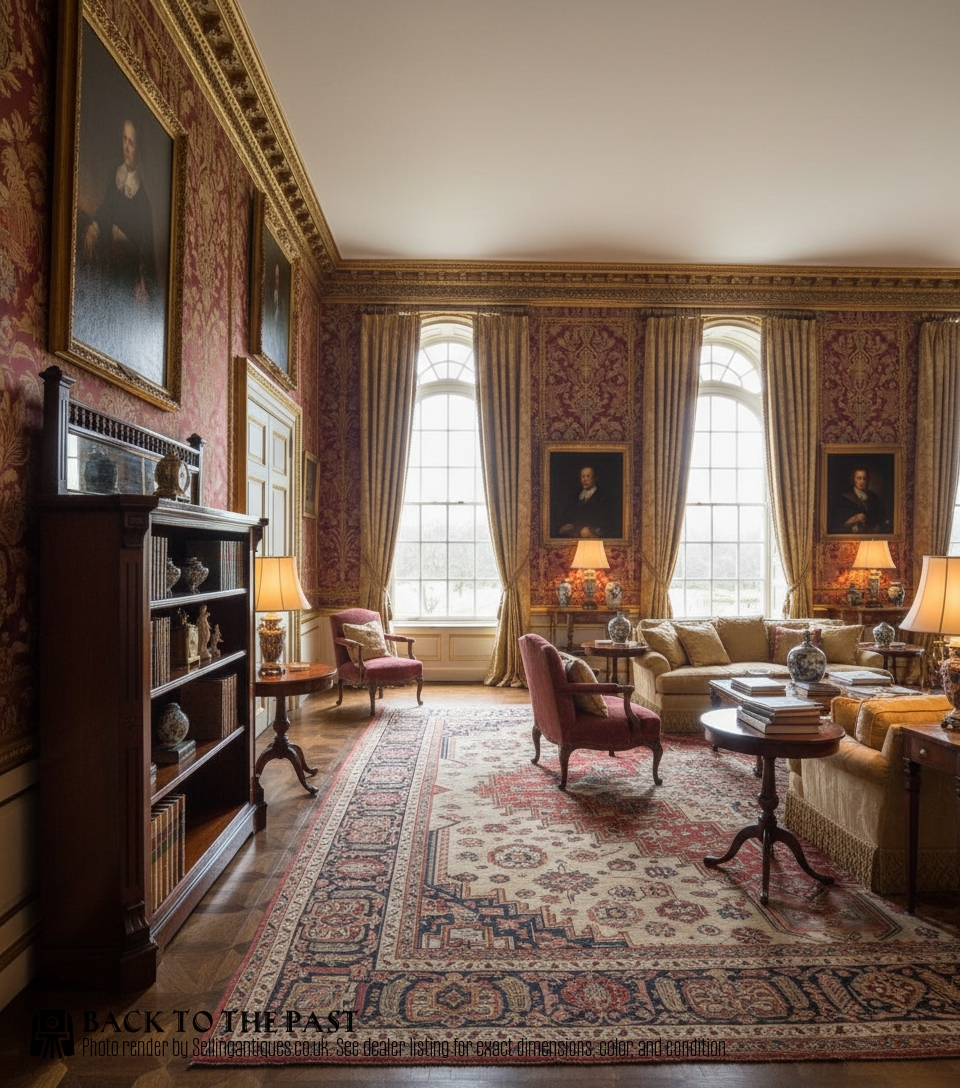
Timber does most of the work. Rosewood runs to 48 titles and burr walnut to 12, and those, with one-off satinwood, kingwood, amboyna, goncalo alves and olive wood pieces, hold the upper reaches. Oak, at 84 titles, and pine sit at the bottom of the range. Marble tops turn up on a handful of the rosewood and walnut cases.
Form and period pull the same way. Breakfront and inverted breakfront fronts, 35 titles in all, sit consistently high, and Regency and William IV pieces concentrate there too, while 20th-century oak and the Art Deco cases fall lower. Scale matters in the same direction: large and long-and-low examples price above small proportioned ones.
Pairs are the strongest single lift. Only 22 titles out of 368 are pairs, and matched Regency rosewood and mahogany sets account for much of the very top. Applied decoration follows: brass inlay, marquetry and ormolu or gilt-metal mounts, with "mounted" carried by eight titles.
Antique Low Bookcases Retail Price Guide 2026
Typical UK retail prices for low bookcases, calculated from the Sellingantiques database of over a million retail prices indexed since 2003. This retail price guide relies exclusively on Sellingantiques data; no external sources or auction records are used, so the figures do not describe the wider market.
Low bookcases have been listed on Sellingantiques since 2010, with 368 through the archive so far.
The Antique Low Bookcases Glossary
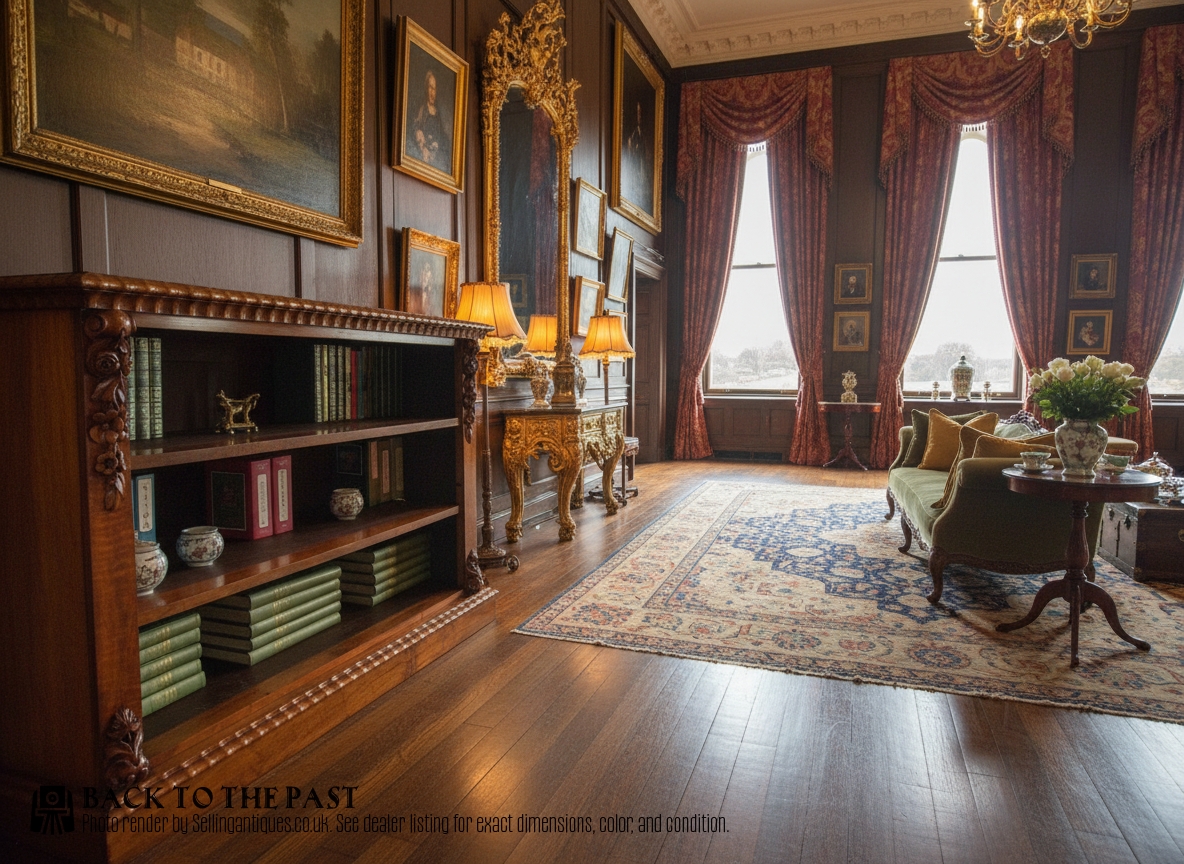
- Open bookcase
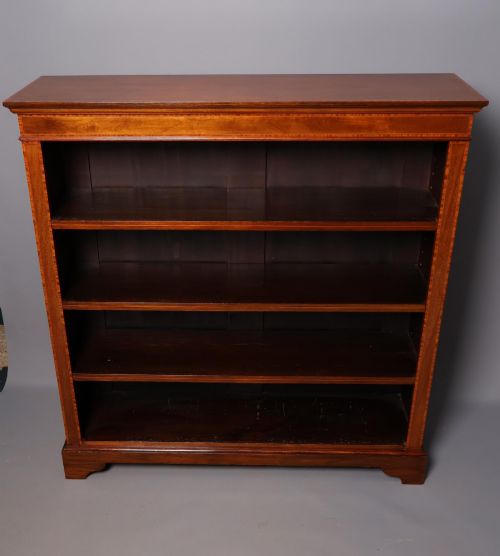
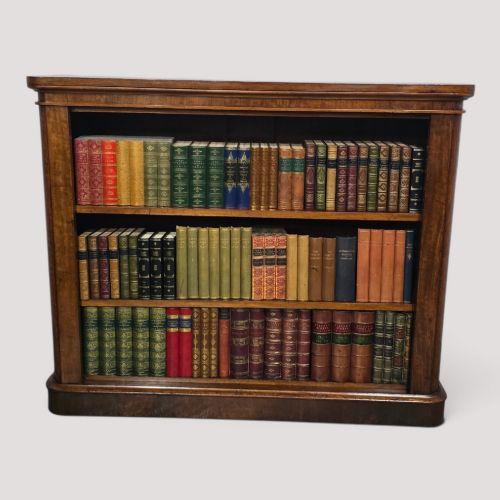
- A bookcase with no doors, shelves exposed. It's the commonest form under this heading, at just over half of all titles.
- Breakfront
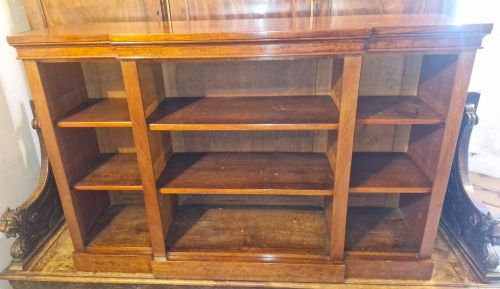
- A centre section projecting forward of the flanking sections. Inverted breakfront is the reverse, with the centre set back.
- Waterfall
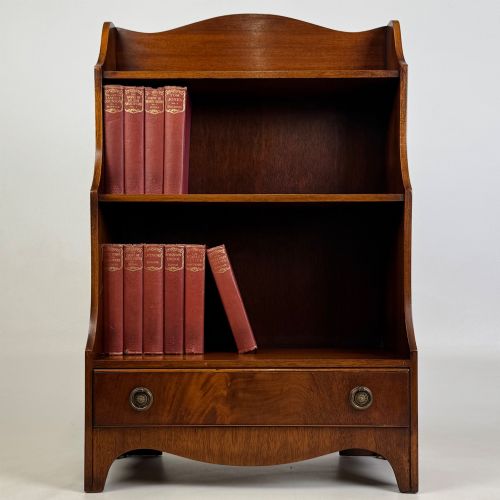
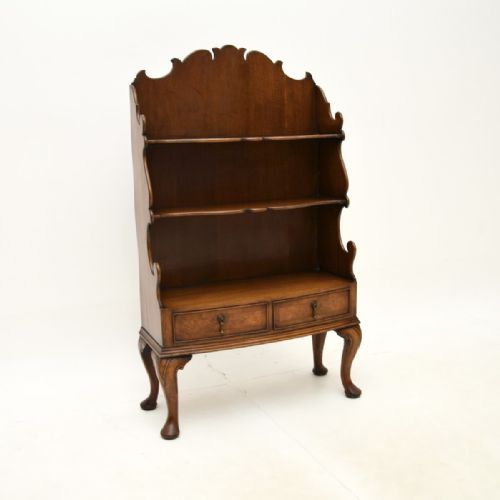
- Shelves stepping back and narrowing as they rise, so the sides read as a cascade. Fourteen titles, mostly rosewood or mahogany.
- Astragal glazed
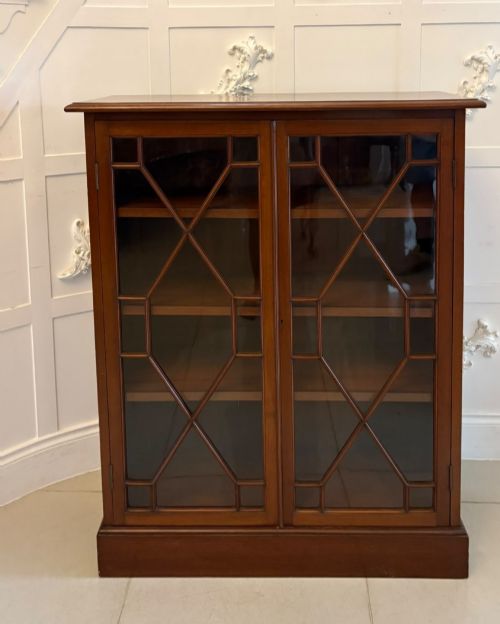
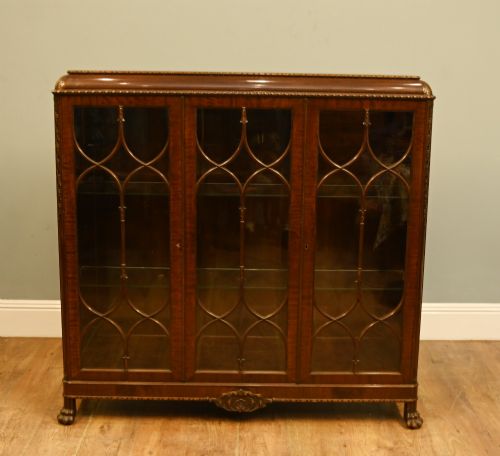
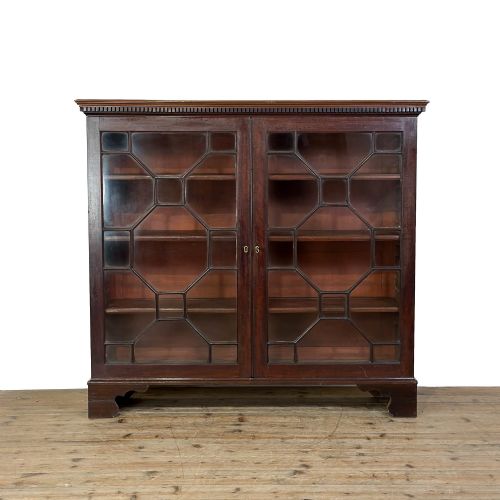
- Glass doors divided by slim moulded bars. Glazing of any sort appears in 26 titles, a minority reading of the form.
- Burr
- Figured veneer cut from a burr growth on the tree. Burr walnut accounts for nearly all the burr listings.
- Pier cabinet
- A low cabinet made for the wall pier between two windows, catalogued alongside low bookcases along with chiffoniers and side cabinets.
Antique Low Bookcases: Frequently Asked Questions
Are low bookcases usually open or glazed?
Open, more often than not. "Open" appears in 191 of 368 titles, so just over half the category has no doors at all.
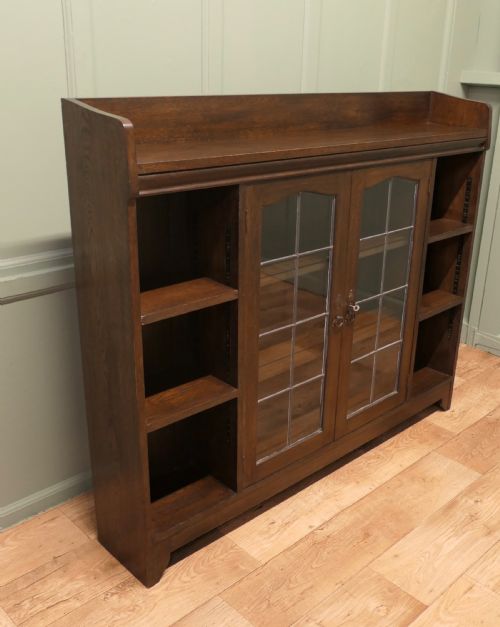
Glazing is called out in 26 titles, sometimes as astragal glazed where the panes are divided by moulded bars. Glazed and cabinet-type low cases together stay under a fifth of the heading.
What timbers do these come in?
Mahogany leads at 104 titles, oak follows at 84, then rosewood at 48 and walnut. The compound "oak open" alone runs to 39 titles.
Beyond those four the archive has thrown up satinwood, kingwood, amboyna, goncalo alves, olive wood, birch, elm, teak, ash, sycamore and pollard oak, mostly as one-offs.
How old are most low bookcases on the market?
The dated field runs 1800 to 1930. The earliest clean years attach to Regency and William IV rosewood and mahogany pieces, the latest to Art Deco and oak cases of about 1930.
Much of the category is dated by era rather than year. "19th Century" is used 73 times and "Victorian" 44, so a large share is pinned only to a span of decades.
Do low bookcases have adjustable shelves?
Some do. Adjustable appears in 27 titles, with the shelves moving on notched uprights or pegs, and "adjustable library" turns up in eight.
Two to four shelves is the usual layout, fixed or adjustable.
Why are pairs of low bookcases priced so highly?
Because there are so few. Pairs account for 22 titles out of 368, and they show up repeatedly at the very top of the sampled range.
Matched Regency rosewood and mahogany sets make up much of that top end, combining the scarcity of the pairing with the timbers and period that already sit high.
What unusual forms turn up under this heading?
Revolving bookcases surface half a dozen times, and breakfront library cases, waterfall and dwarf bookcases, pier cabinets and chiffoniers all sit within the category.
One-offs include a double-sided bookcase, a corner open bookcase, a mirror-backed example, a captain's bookcase, a bibliothèque, and one case catalogued as shop fitting.