

Georgian Bookcases
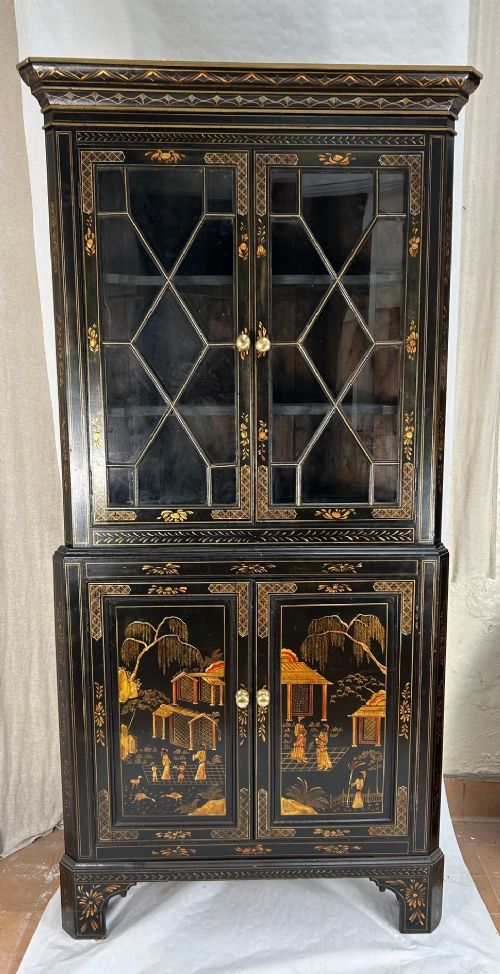
Case furniture made to hold books, listed as Georgian or in the Georgian taste, and mostly in mahogany, running from hanging shelves to library breakfronts ten feet wide.
What You're Looking At
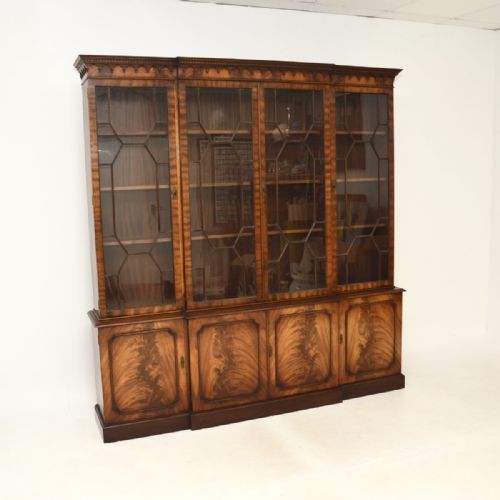
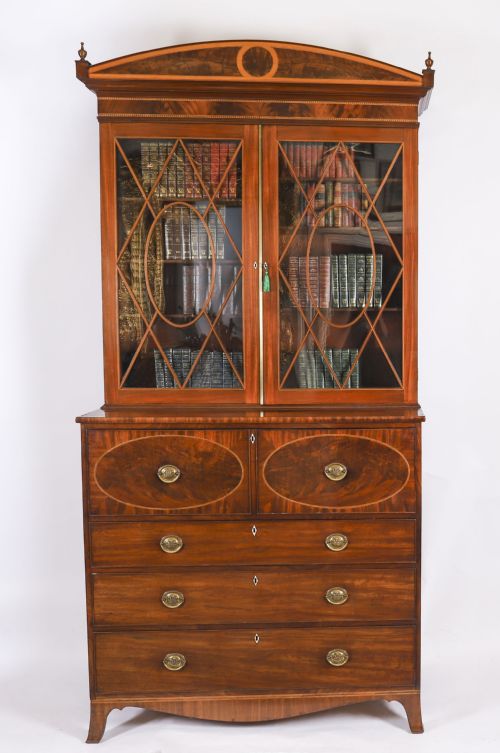
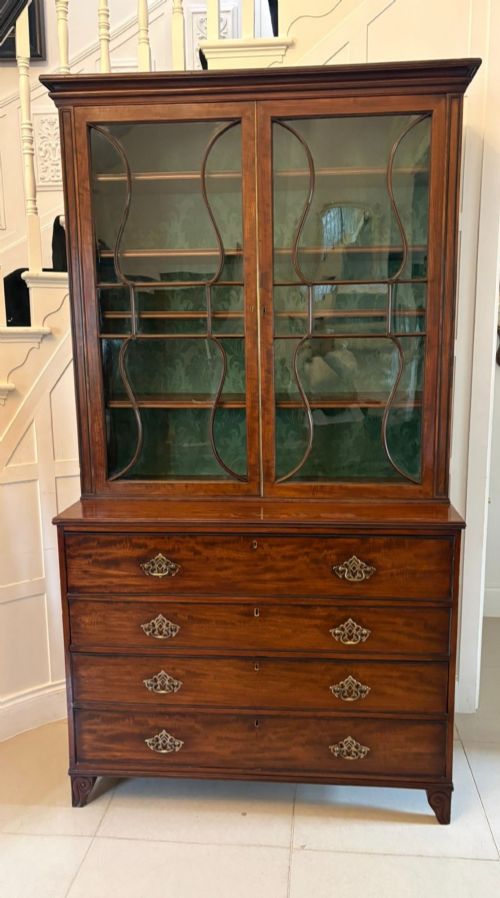
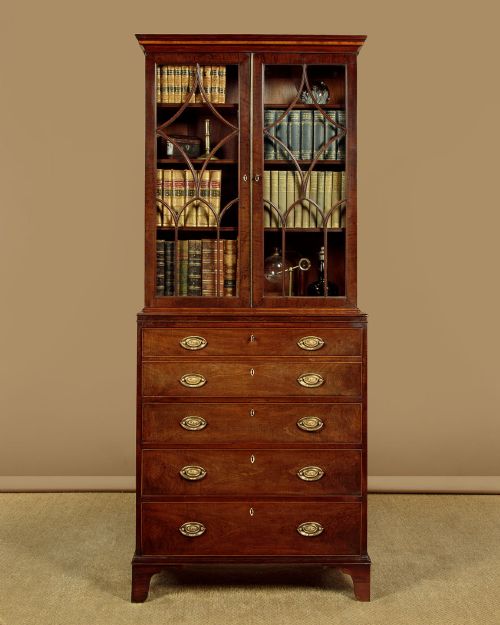
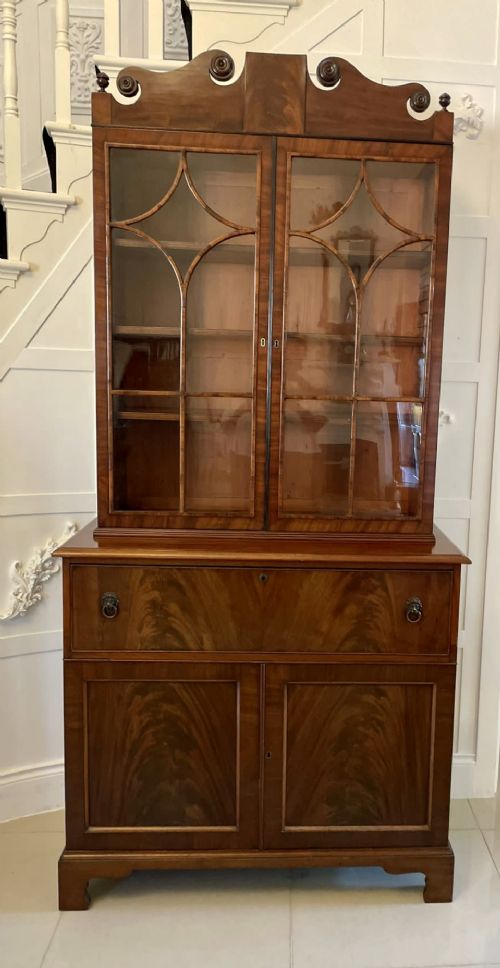
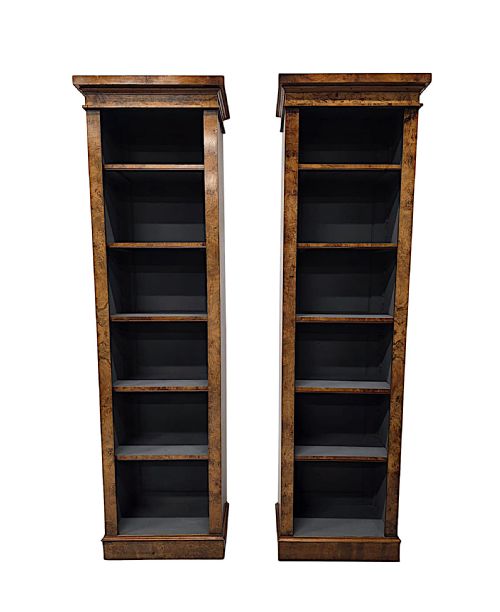
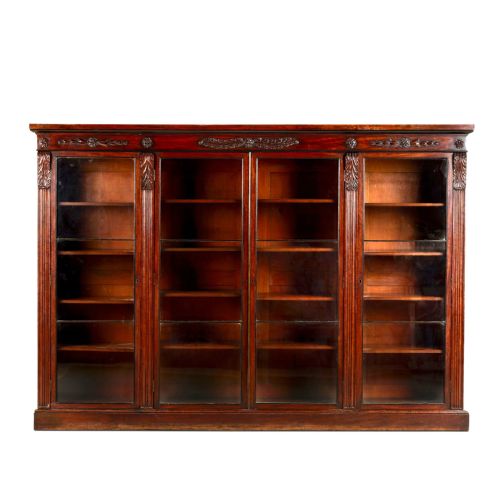
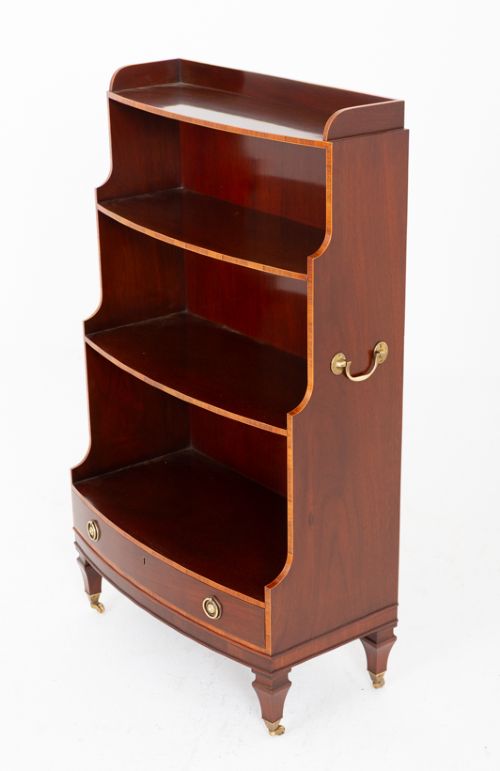
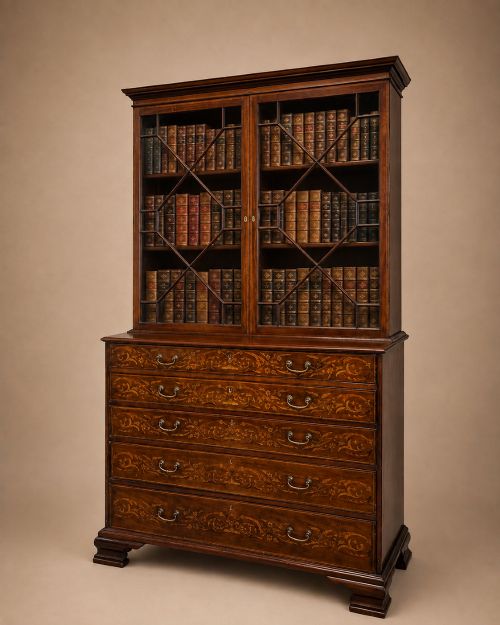
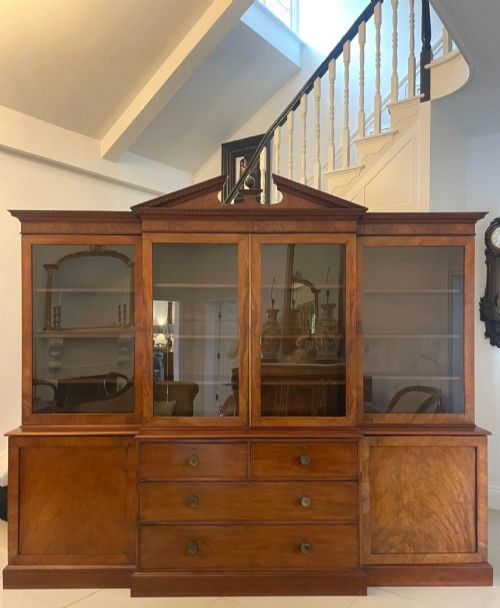
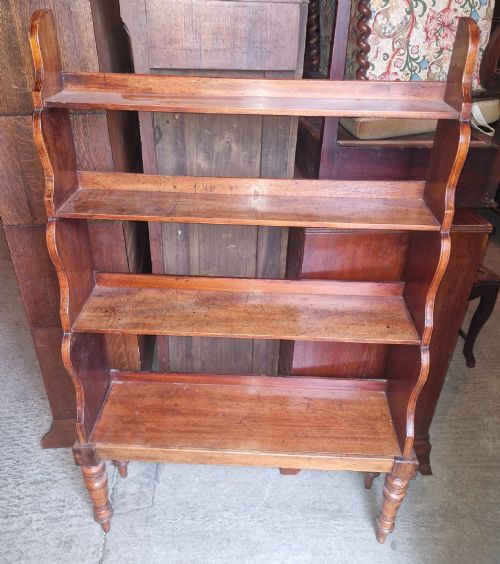
The heading covers several physically different things. Secretaire and bureau bookcases, with a fall front or pull-out fitted writing drawer below, account for roughly a fifth of the archive. Breakfront library bookcases, where the centre section projects forward of the wings, make up about a sixth and carry the largest pieces. Open and shelf-only types, including graduated waterfall shelves, form another fifth.
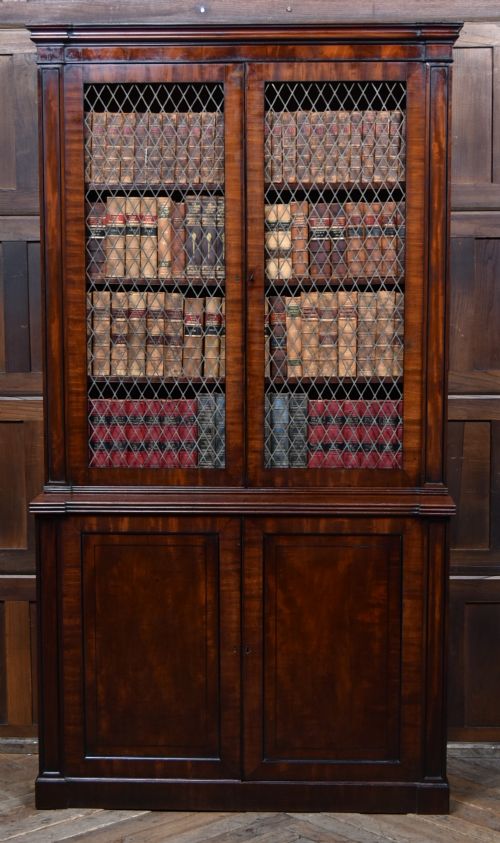
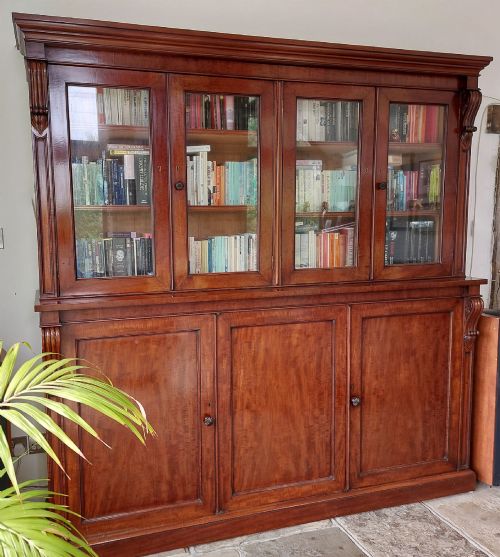
Mahogany is close to the definition. It's named in 388 of 577 titles, and the next timbers are a long way behind: walnut, satinwood, oak and rosewood in the teens each. Glazed and astragal-glazed cupboard tops overlap all the groups, so a single piece may be a mahogany astragal-glazed secretaire bookcase and be filed under any of those words.
Dates need reading with care. Only 176 listings carry a clean year, and those run from 1750 to 1960 in a category named for a period that ended in 1837. That's because Georgian Revival and Georgian-style pieces from the 1900s, 1910s, 1920s and 1930s sit here alongside period ones, roughly one listing in six. Era labels do the rest of the work, with 'Georgian' used 168 times and '19th Century' 78, and they're applied loosely, so the title is worth reading against the date field.
Scale runs the full distance. The largest stated piece measures 238 by 286 by 62 cm, one four-door breakfront is described as ten feet wide, and at the other end sit hanging shelves, dwarf bookcases and desktop pigeon holes. Around 60 come up a year on Sellingantiques, and 169 different dealers have handled one.
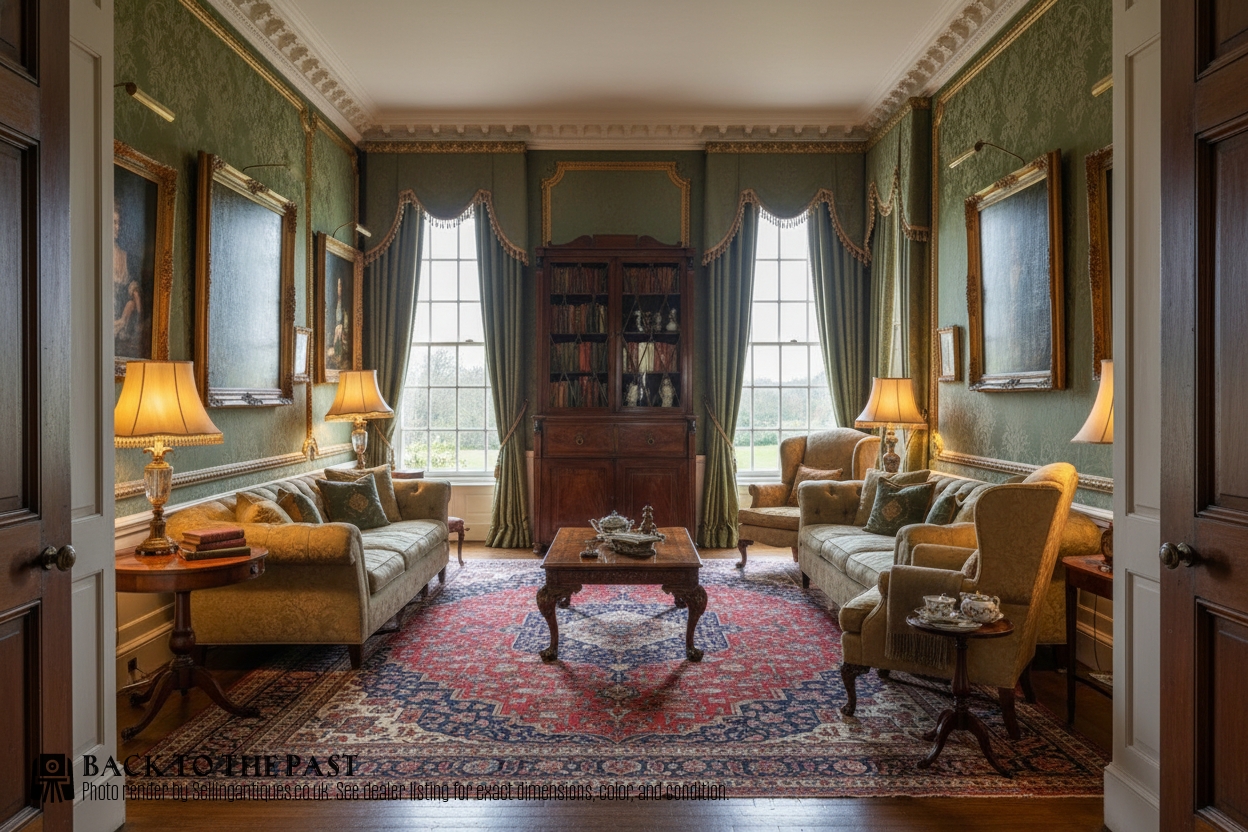
Where The Range Splits
Form and scale set the frame. Breakfront and library bookcases sit at the top, especially four-door and inverted-breakfront examples, while small waterfall, hanging and desktop shelving sits at the bottom of the same category. Pairs are scarce, 16 titles in 577, and a pair of alcove or waterfall bookcases stands well above a single one of the same form.
Age separates the field next. Pieces titled 18th Century or plain Georgian occupy the upper reaches; the Georgian Style and Georgian Revival group dated 1900 to 1930 sits lower, and there are 96 such listings across those four decades. The two are catalogued side by side, so the wording in the title does the sorting.
After that it's timber and surface. Satinwood, rosewood and figured or flame mahogany appear disproportionately in the upper part of the sample, plain mahogany in the middle, oak and painted pine lower. Inlay, marquetry, brass stringing, crossbanding and swan-neck pediments push a piece up, and an attribution or a named-house provenance takes it to the very top.
Retail Price Guide 2026
Typical UK retail prices for georgian bookcases, calculated from the Sellingantiques database of over a million retail prices indexed since 2003. This retail price guide relies exclusively on Sellingantiques data; no external sources or auction records are used, so the figures do not describe the wider market.
Georgian is the period label used most on Sellingantiques for these bookcases, with 19th Century next and 1800s third.

Gillows of Lancaster
The Georgian Bookcases Glossary
- Secretaire
- A bookcase with a writing section below, either a fall front or a pull-out fitted drawer. Spelt secretaire, secretarie and secrataire across 102 titles.
- Breakfront
- A front whose centre section stands forward of the flanking wings. It appears in 92 titles and covers the biggest pieces in the category.
- Astragal glazed
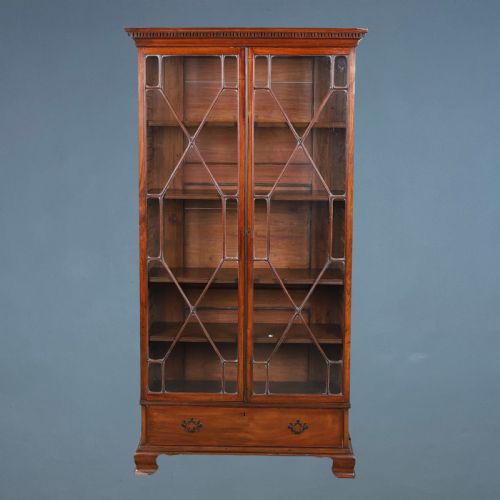
- Glazed doors divided by slender moulded glazing bars. Eleven titles use it, one written 'astral' and one 'astrigal'.
- Waterfall
- Open shelves graduating in depth from bottom to top, often over a cupboard base. Forty-eight titles, and usually a room-sized rather than library-sized piece.
- Dwarf bookcase
- A low bookcase, roughly chest height, made to stand under a picture or a window. Sits with the chiffoniers and small waterfall types.
- Bookcase on stand
- An upper case raised on a separate open stand instead of a cupboard or drawer base.
Frequently Asked Questions
Why are 20th century pieces in a Georgian category?
Because Georgian Revival and Georgian-style bookcases are catalogued under the same heading as period ones. Blocks of listings date to the 1900s, 1910s, 1920s and 1930s, 96 in all.
The dated field runs 1750 to 1960 as a result. Titles reading 'Georgian style' or 'Georgian Revival' mark out that group.
What timber are they made of?
Mahogany, for the most part. It's named in 388 of 577 titles, including 64 mahogany secretaires and 57 mahogany breakfronts.
The others are thin on the ground: walnut, satinwood, oak and rosewood run to the teens each. Partridge wood, sabicu, harewood, yew and pitch pine each turn up once, at the top of the range.
What's the difference between a secretaire and a bureau bookcase?
A secretaire bookcase has a flat writing surface behind a fall front or inside a pull-out fitted drawer. There are 102 of them in the archive.
A bureau bookcase sits on a sloping-fall bureau base instead. Only 12 titles use the term, so it's the rarer of the two forms here.
Which type is the largest?
The breakfront library bookcase. One four-door example is described as ten feet wide, and the largest stated piece measures 238 by 286 by 62 cm.
At the other extreme are hanging shelves, dwarf bookcases and desktop pigeon holes, all filed under the same heading.
Are pairs common?
No. Sixteen titles in 577 name a pair, among them pairs of alcove bookcases, waterfall bookcases and slim open bookshelves.
Most of them sit well up the range, above singles of the same form.
Do unusual shapes ever appear?
Occasionally. Single examples include an octagonal freestanding bookcase, a four-sided collector's cabinet bookcase, a revolving bookcase, a double-sided open bookcase and a cylinder bookcase.
There are also one-off regional attributions: Channel Island, Anglesey Welsh, Scottish and Irish.