
Regency Bookcases
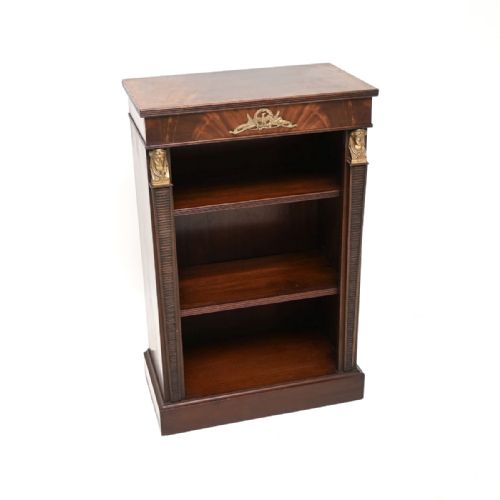
Free-standing English bookcases in the Regency taste, mostly mahogany or rosewood, built low and open so they could stand in a living room rather than a dedicated library.
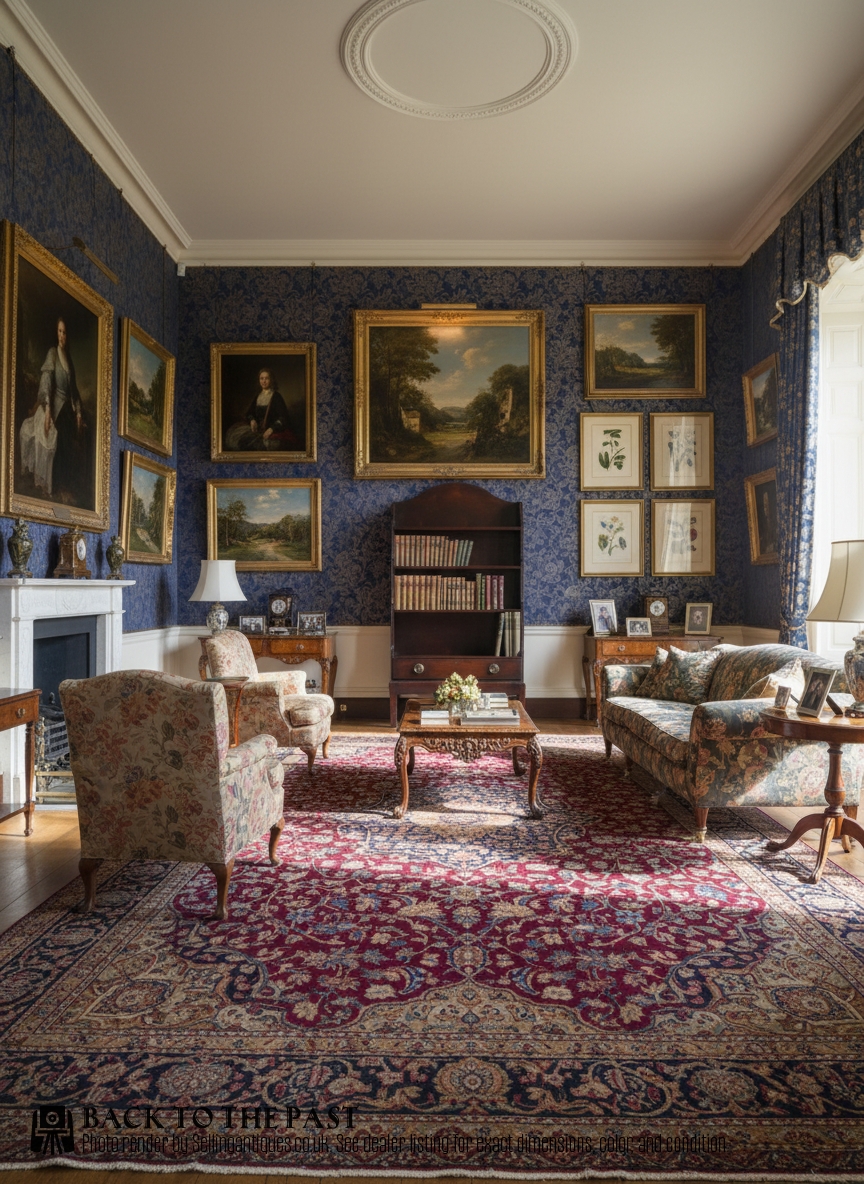
What You're Looking At
The heading covers everything from a small set of open shelves to a full-length breakfront library case, but two timbers dominate. Mahogany appears in just over half of all titles on Sellingantiques and rosewood in just under a quarter; between them they account for three quarters of what gets listed.
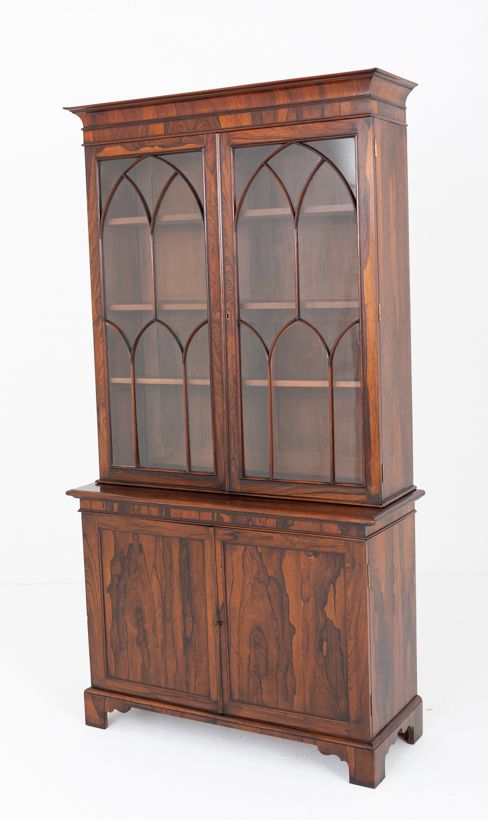
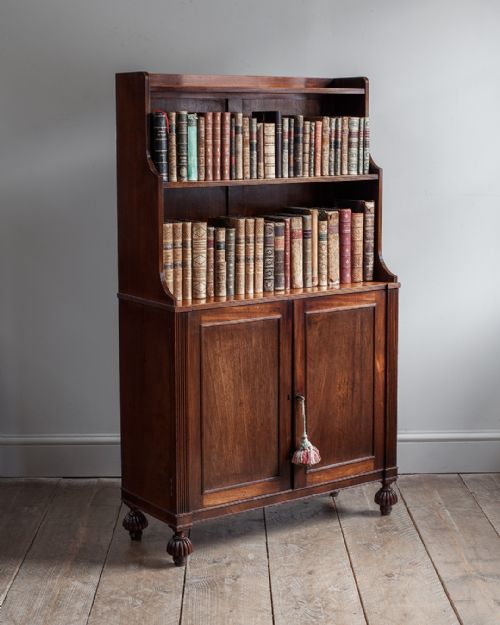
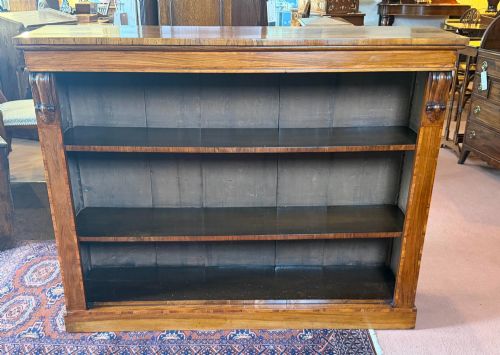
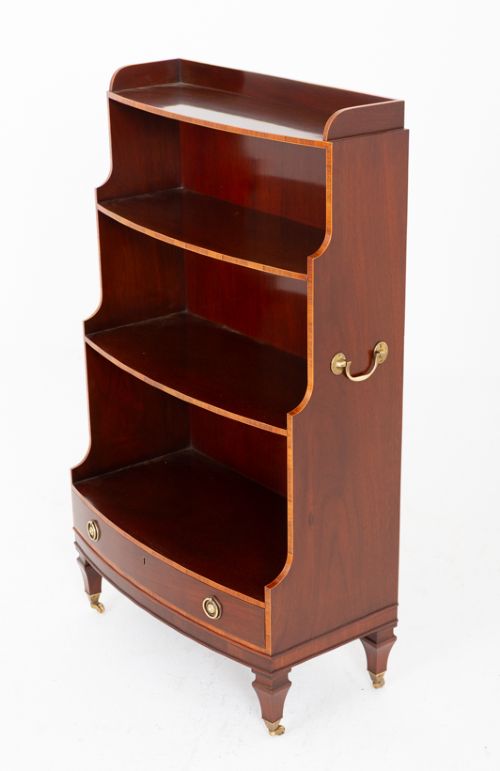
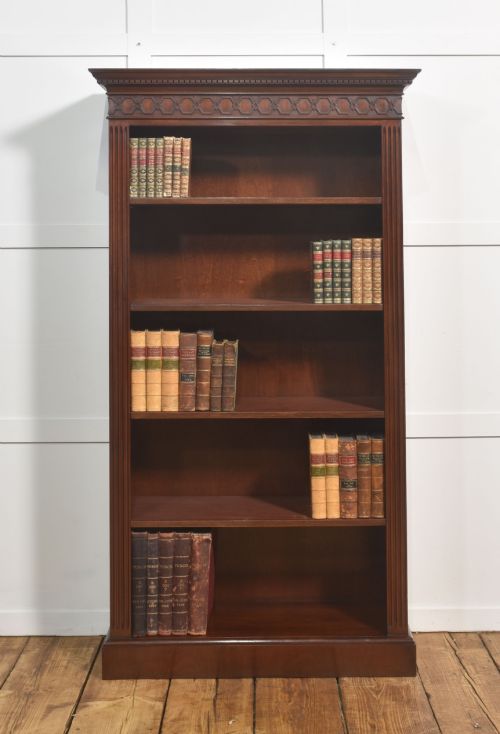
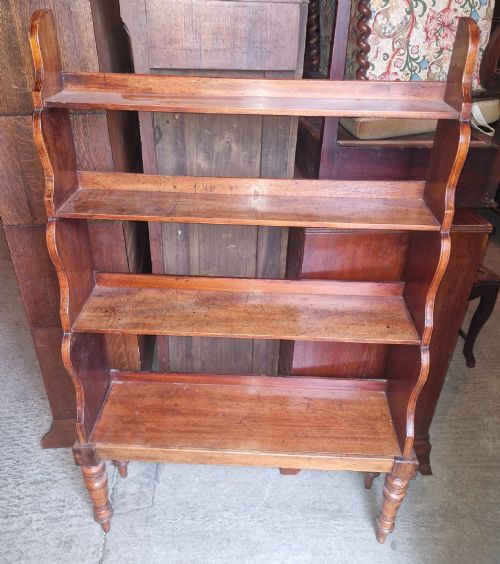
The commonest single description is the open bookcase, shelves with no doors and no glazing, in 165 titles against 42 for glazed. Within that group the waterfall form, where the shelves step forward and downward in graduated tiers, is the shape a buyer meets most often. Titles lean towards smallness as well: 'small' and 'dwarf' together turn up in 63 titles, against 18 for 'large'.
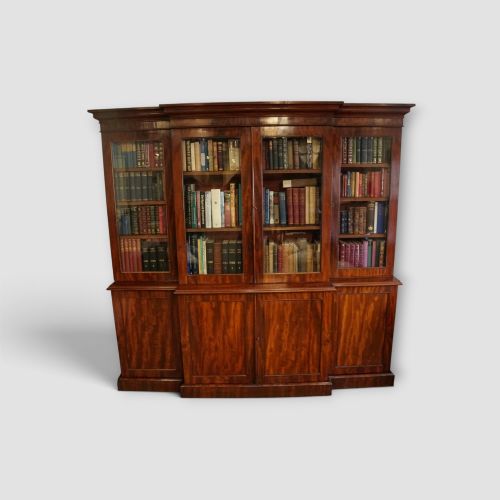
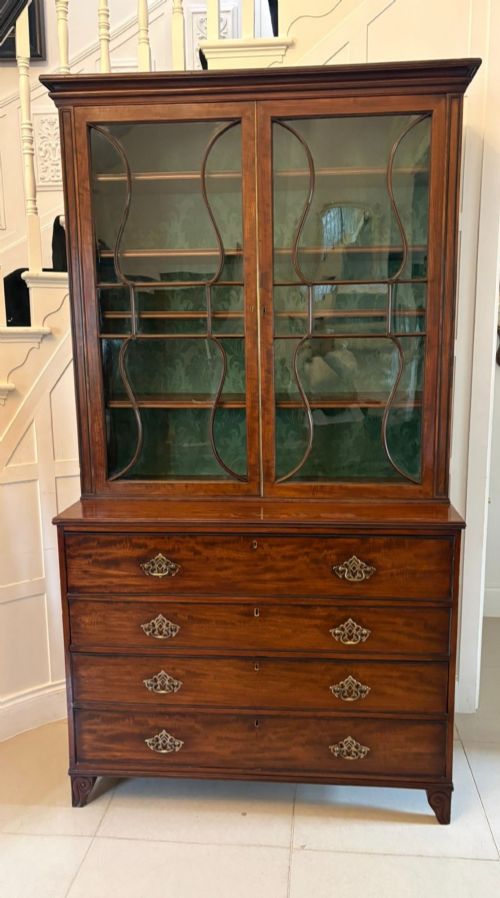
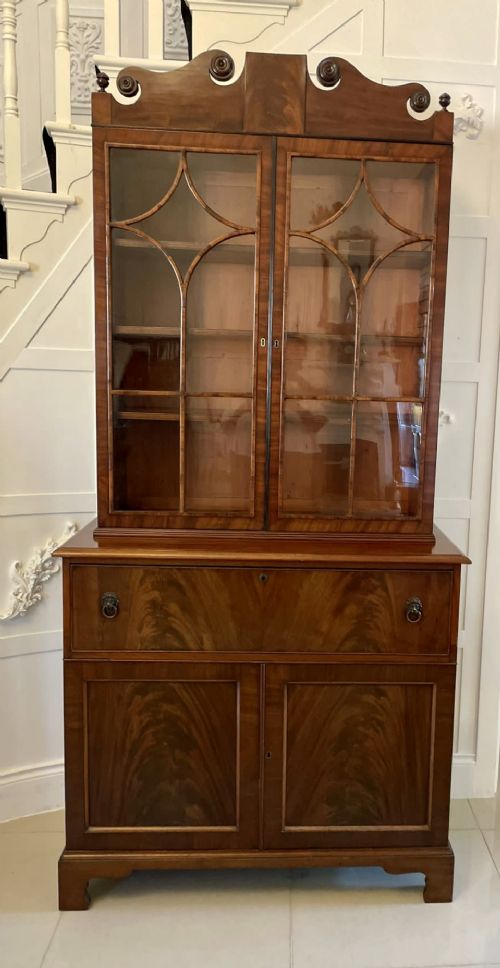
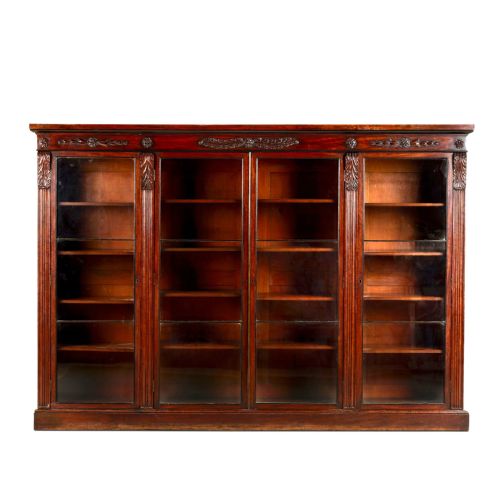
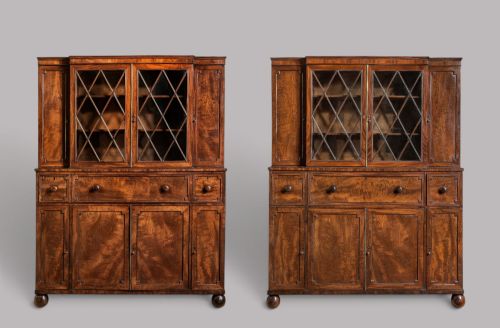
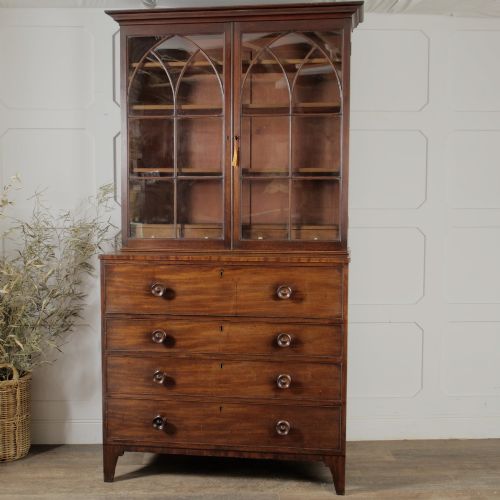
After the open shelves come two smaller groups. Secretaire bookcases, with a fall front dropping to a writing surface over a fitted interior, run to 87 titles. Breakfront library cases are fewer, around one in ten, and they carry the top of the range, up to a ten-foot four-door example among the samples.
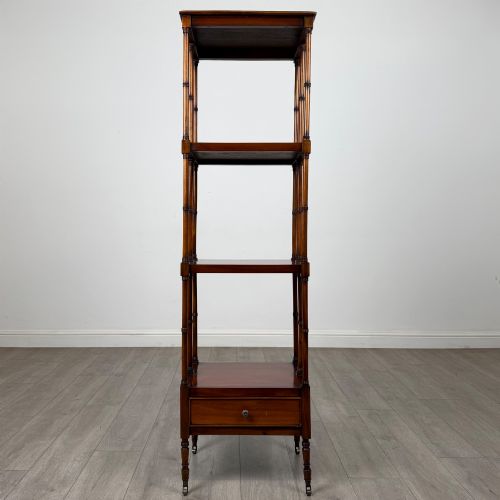
The date field is mostly a style label rather than a year. 'Regency' is used 335 times and '19th Century' 147, with only 79 of 630 listings carrying a clean year. Where years do appear they run from 1800 to 1930, and titles such as 'Regency Style' and 'Regency Revival' confirm a share of the category is later work in the taste. Chiffoniers, pier cabinets, book troughs and whatnots get filed under the same heading.
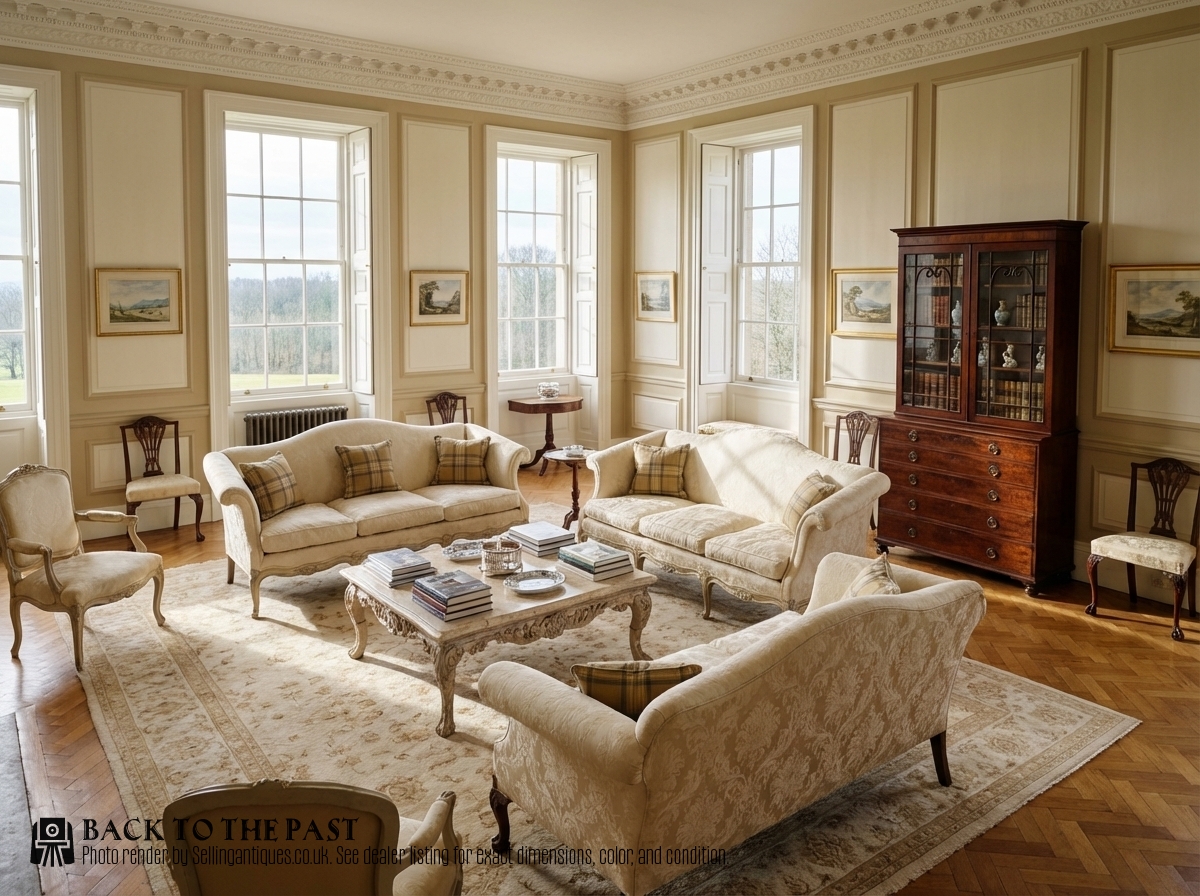
Where The Range Splits
Timber does most of the work. Figured and flame mahogany, Cuban mahogany and good rosewood sit at the upper end, while pine and painted softwood cluster in the cheapest sample titles. Unusual woods surface once or twice each across the samples: partridge wood, bird's eye maple, burr yew, satinwood, palisander and burr walnut among them.
Scale and form separate the rest. Breakfront and library cases dominate the upper sample titles; small open and waterfall shelves sit low. Applied decoration pushes a piece up too, with brass inlay, ebony and satinwood stringing, marble tops and ormolu mounts recurring in the higher titles.
Two other things count. Pairs are a genuine sub-market, 35 titles offering two at once, and they sit consistently near the top. And period work stands above the Regency Style and Regency Revival pieces, which sit largely in the lower half of the range along with the painted and simulated-finish pine.
Retail Price Guide 2026
Typical UK retail prices for regency bookcases, calculated from the Sellingantiques database of over a million retail prices indexed since 2003. This retail price guide relies exclusively on Sellingantiques data; no external sources or auction records are used, so the figures do not describe the wider market.
Regency bookcases have been listed on Sellingantiques since 2009, and more than 400 have passed through since then.
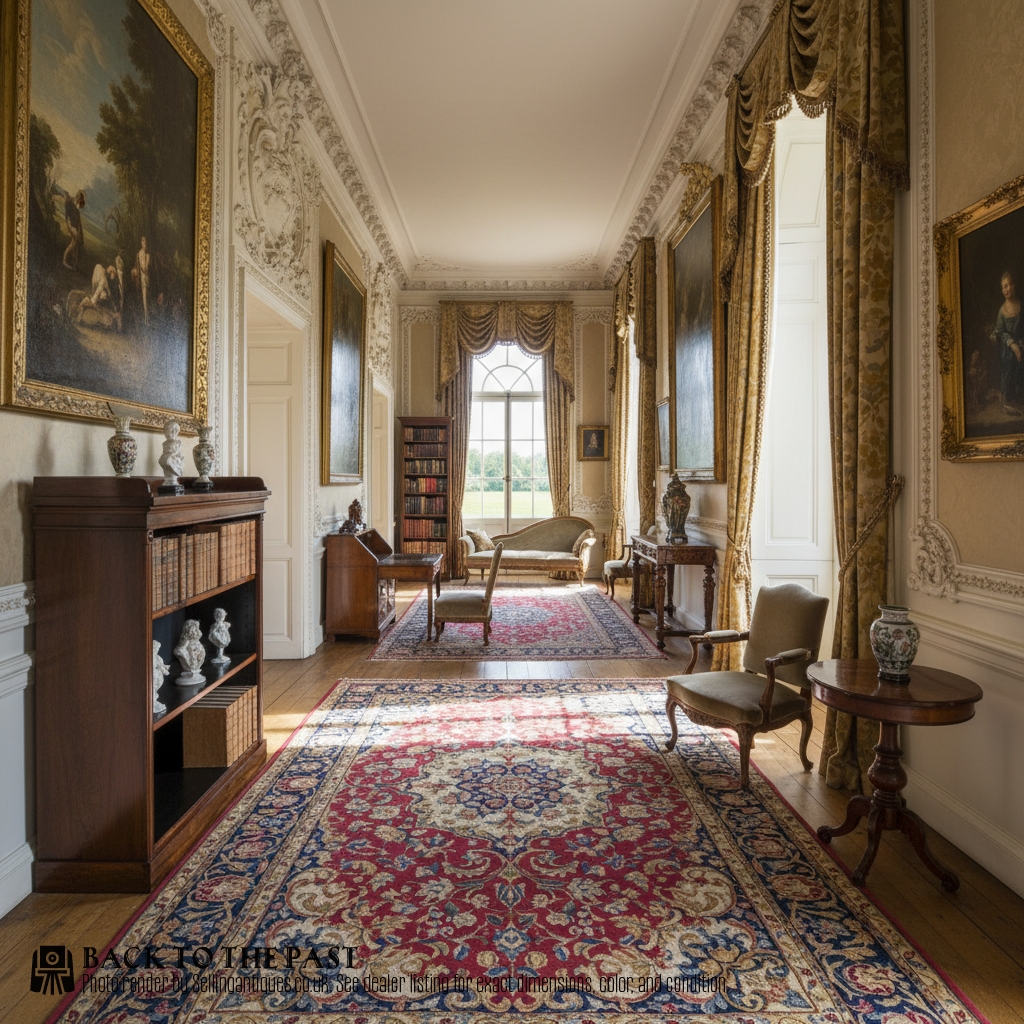
Gillows of Lancaster
The Regency Bookcases Glossary
- Open bookcase
- Shelves without doors or glazing. The commonest form under this heading, in 165 titles.
- Waterfall
- Open shelves that step forward and downward in graduated tiers, narrowest at the top. The single most recognisable Regency shape.
- Secretaire bookcase
- A bookcase above a drawer with a fall front that opens to a writing surface and fitted interior. 87 titles.
- Breakfront
- A front whose centre section projects forward of the sections flanking it. The term that carries the largest cases here.
- Astragal glazed
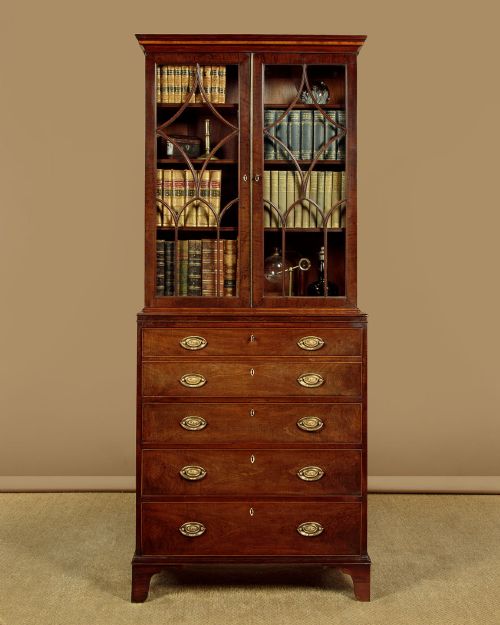
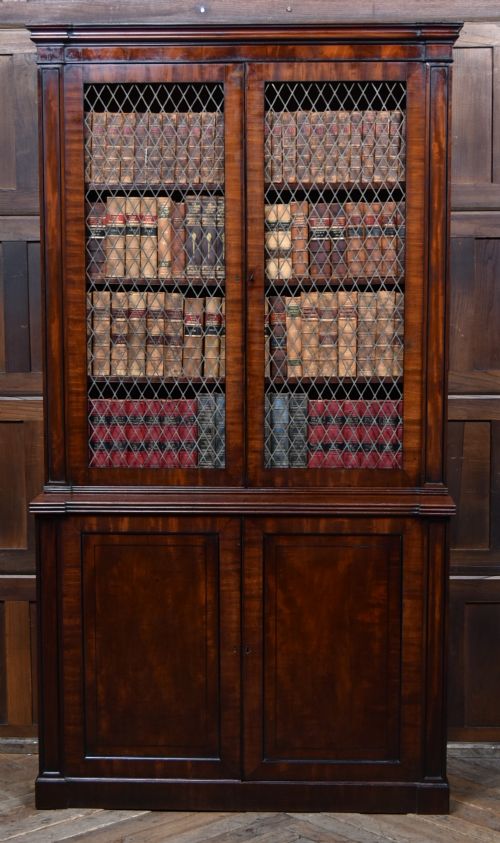
- Glazed doors divided by slender moulded glazing bars. A small group, 13 titles.
- Simulated
- Paint imitating a costlier timber, rosewood or coromandel most often. Turns up alongside the painted pine pieces.
Frequently Asked Questions
What wood are Regency bookcases usually made from?
Mahogany and rosewood, overwhelmingly. Mahogany appears in just over half of all titles listed and rosewood in just under a quarter.
Painted and simulated-finish pine makes up a small group, around one in twenty, and single examples turn up in Goncalo Alves, burr yew, satinwood, teak and bird's eye maple.
Are open or glazed bookcases more common?
Open, by a wide margin. Door-less shelves appear in 165 titles against 42 for glazed, roughly four to one.
Astragal glazing, where slender bars divide the door panes, shows up in 13 titles. Display and vitrine cabinets filed here are fewer still.
What is a waterfall bookcase?
A set of open shelves that step forward and downward in graduated tiers, so the case is deepest and widest at the base.
It runs to 94 titles, most in mahogany, and it's the form a buyer is most likely to meet under this heading.
Does Regency mean the piece was made in the Regency?
Not always. Only 79 of 630 listings carry a clean year, and the date field otherwise falls back on the style label, with 'Regency' used 335 times.
Where years are given they run from 1800 to 1930. Titles including 'Regency Style' and 'Regency Revival' mark out the later work in the taste, and 1920s, 1910s and 1930s entries all appear.
Which forms sit at the top of the range?
Breakfront library cases. They're about one in ten of the category, and the samples run up to a ten-foot four-door example.
Pairs also sit consistently high, with 35 titles offering two at once. Brass inlay, ebony and satinwood stringing, marble tops and ormolu mounts recur in the upper titles.
How often do these come up for sale?
About 67 a year on Sellingantiques, from a pool of 159 different dealers who have listed one.
That spread tells you something: almost no dealer specialises in them, and almost every furniture dealer handles one sooner or later.