

Antique Mahogany Breakfront
An antique mahogany breakfront brings architectural presence to a room through its recessed and projecting central sections.
Antique Mahogany Breakfront
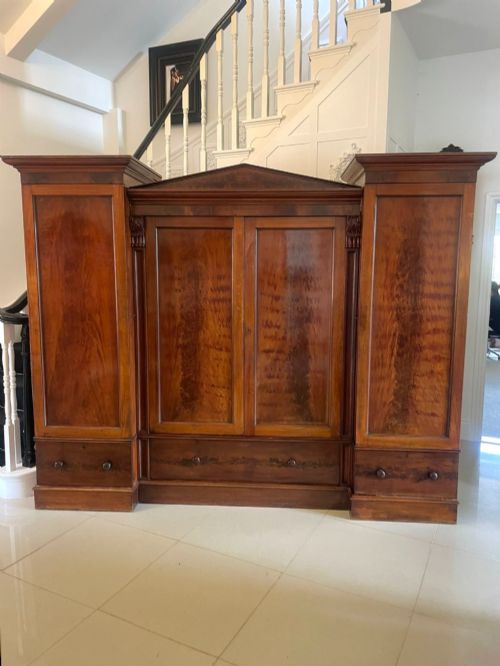
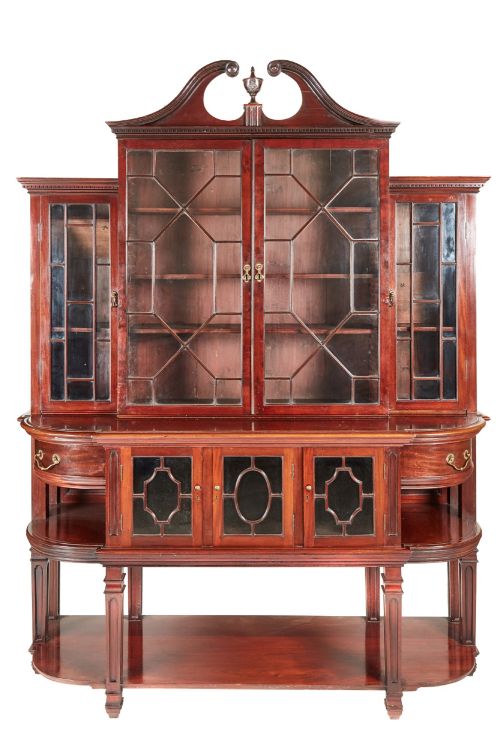
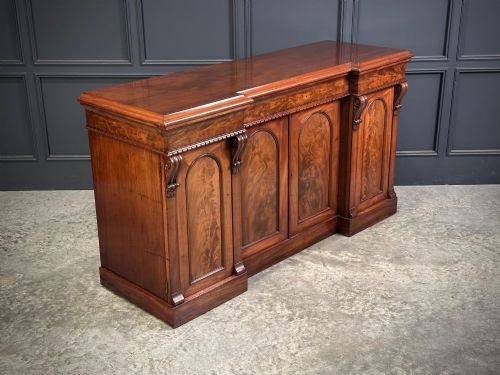
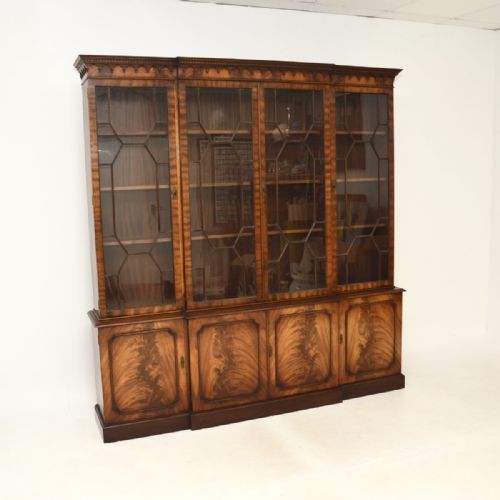
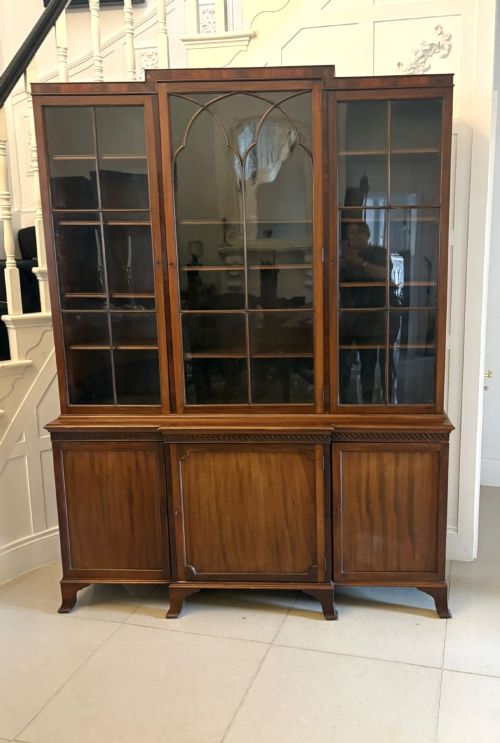
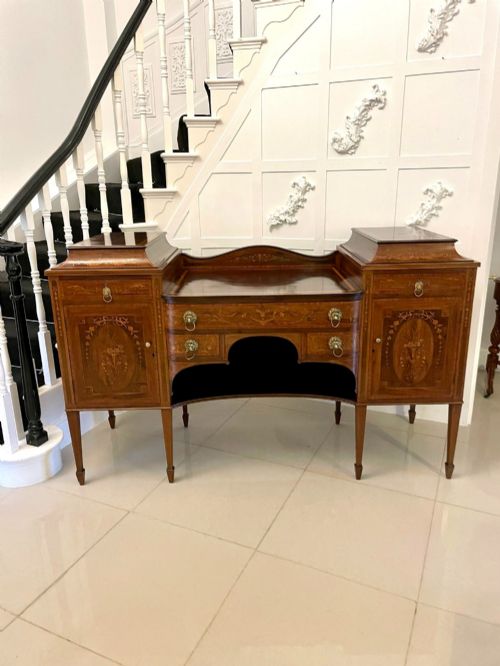
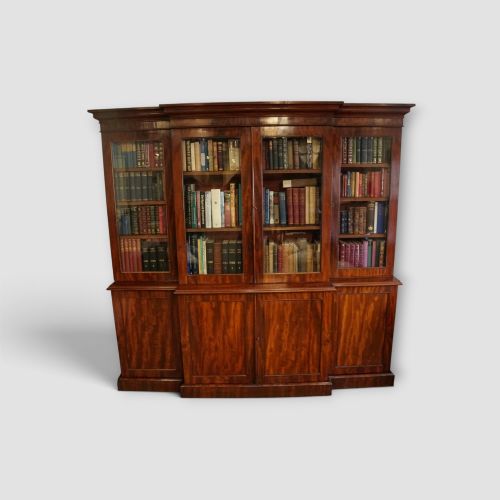
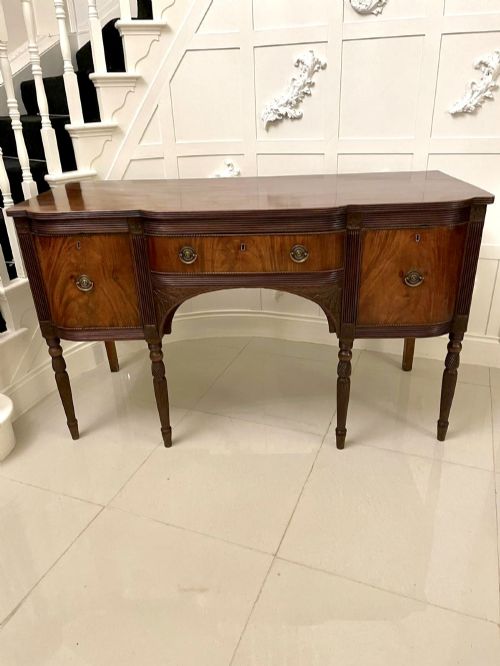
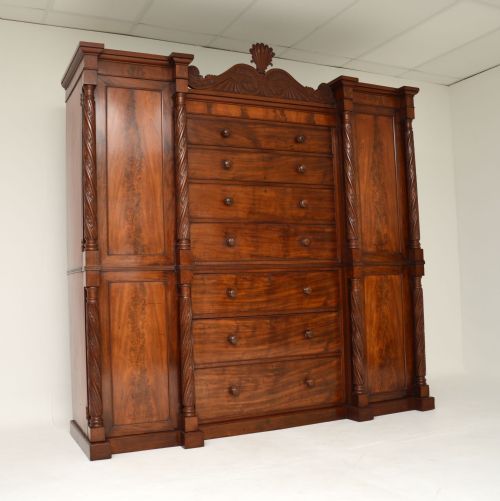
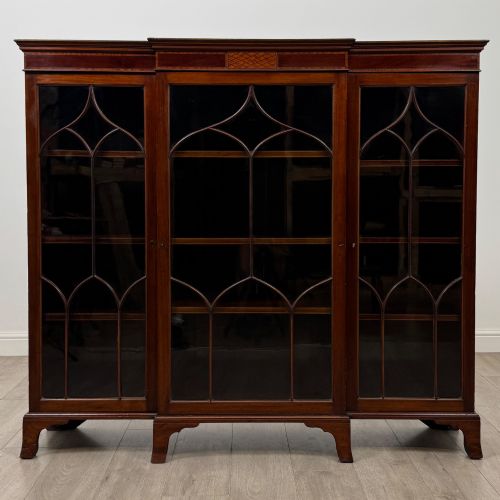
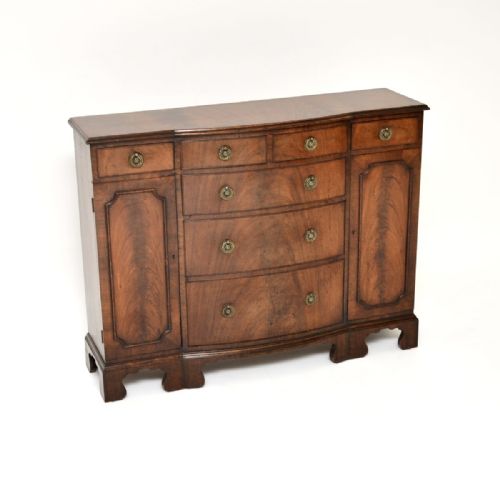
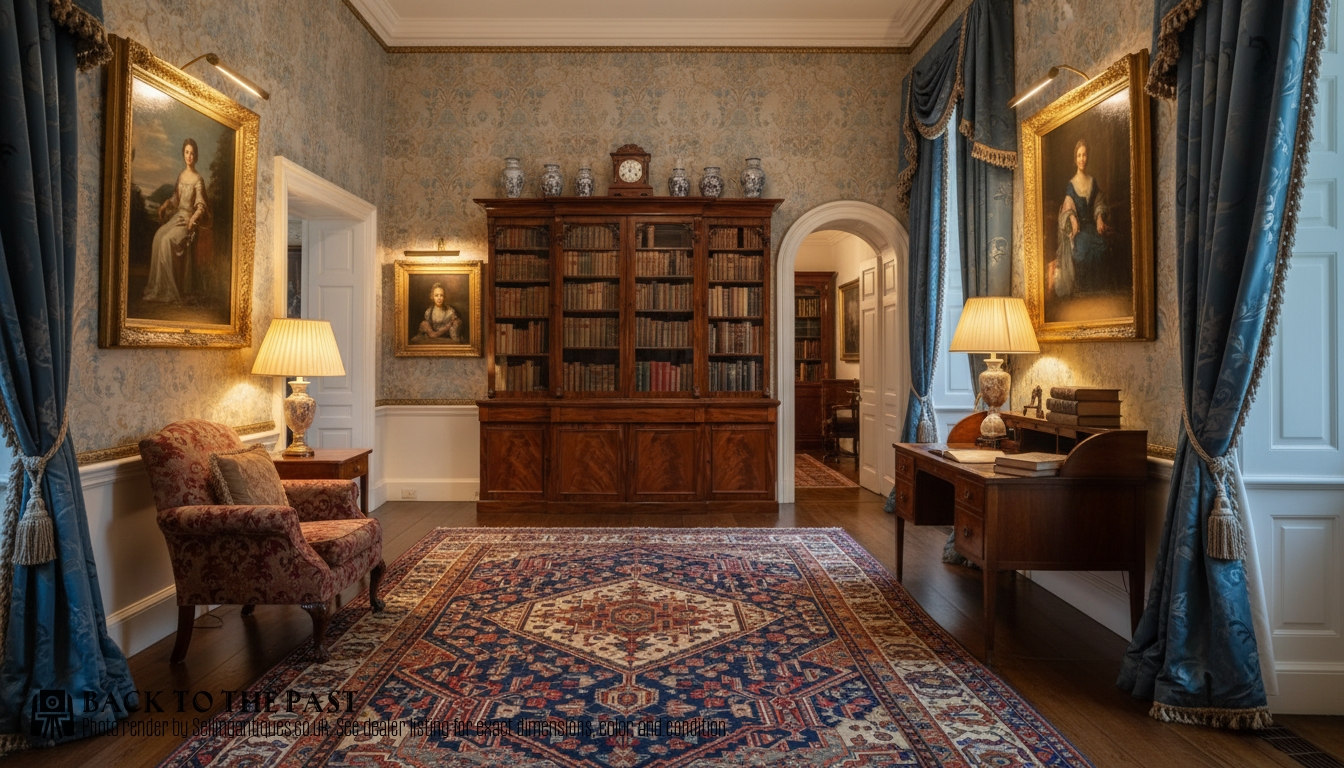
An antique mahogany breakfront is a substantial cabinet, bookcase, or sideboard characterised by a facade that steps forward and backward in three sections. The central portion projects outward while the flanking wings step back, creating shadow and depth across the front of the piece. On this page, buyers find these grand architectural forms spanning the eighteenth century through the Edwardian period.
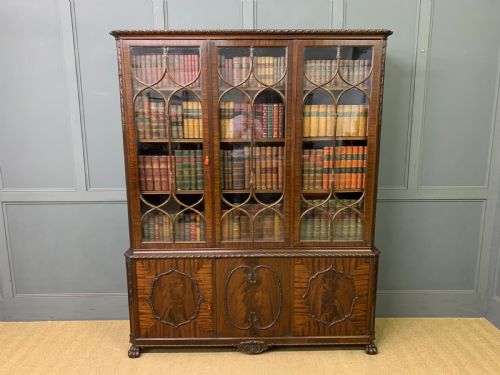
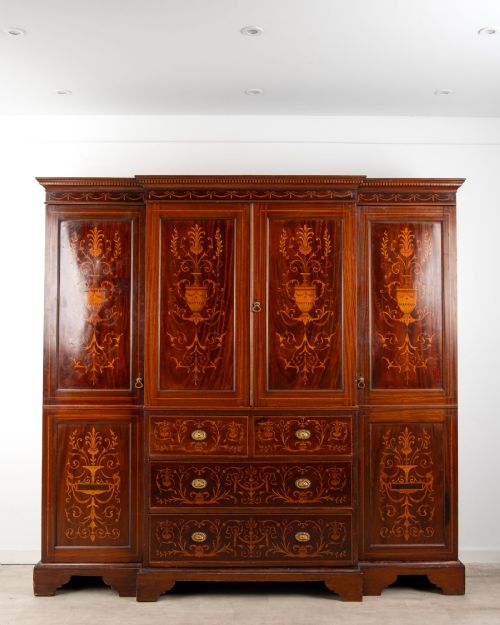
The selection comprises tall library bookcases with glazed upper doors, broad sideboards fitted for dining rooms, and capacious wardrobes such as compactums. Bookcases dominate the material record, often featuring astragal glazing bars dividing the glass panes into geometric patterns. Sideboards frequently present low, long profiles designed to anchor a dining space.
Origins stretch from George III workshops through Regency refinements and into Victorian interpretations of earlier styles. Makers incorporated satinwood inlay, brass mounts, and carved details into these formats, adapting the projecting facade to storage units of varying heights and functions.
How they were made
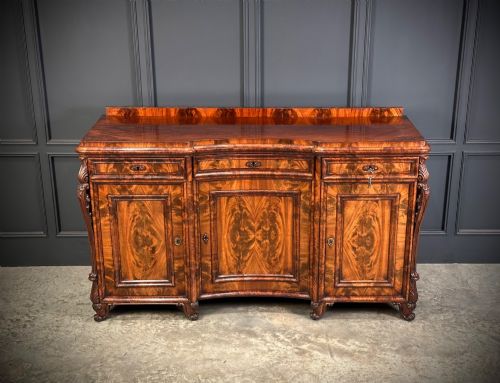
Cabinet makers constructed these pieces using solid mahogany framing combined with figured mahogany veneers applied to carcases of secondary timbers. Flame mahogany and fiddleback veneers provided striking grain patterns across large doors and drawer fronts, while satinwood supplied contrasting inlay lines and decorative motifs.
Joinery relied on traditional techniques such as dovetailed drawer construction and mortise and tenon frames to support the heavy proportions. Brass inlays, brass mounts, and carved lion paw feet added decorative emphasis to Regency and Victorian examples, while glass was held by timber astragals in glazed bookcase doors.
Lion paw feet support several Regency sideboards, allowing fierce feline dignity to anchor the dining room.
What varies in quality
The distinction between tiers of quality rests upon the selection of timber and the ambition of the joinery. Superior examples display carefully matched flame mahogany veneers that flow symmetrically across multiple cabinet doors, whereas ordinary pieces rely on plain, uniform timber boards.
Refinement in carving, the precision of inlaid satinwood stringing, and the presence of original brass hardware elevate certain pieces above standard production. The structural integration of the projecting breakfront sections themselves, whether harmonious in proportion or abrupt, marks the hand of a more accomplished workshop.
Hewetsons London·Jas Shoolbred·Gillows·Edwards and Roberts
The Antique Mahogany Breakfront Glossary
- Breakfront
- A cabinet facade divided into three sections where the middle section projects forward from the flanking wings. This configuration breaks up a flat wall and creates visual depth.
- Astragal
- A moulded timber strip used in glazed doors to hold individual panes of glass in place. Fine examples use slender glazing bars forming Gothic arches or geometric lattices.
- Compactum
- A multi-functional wardrobe providing compartmentalised storage including hanging space, sliding trays, and drawers. These large units often incorporate the breakfront plan.
- Flame mahogany
- A veneer cut from the fork of the mahogany tree where the branch meets the trunk, producing a rippling, flame-like pattern. It was favoured for high-status furniture fronts.
- Marquetry
- The art of forming decorative patterns using fitted pieces of different coloured veneers, such as satinwood on a mahogany ground. It appears on Edwardian and Sheraton Revival pieces.
Antique Mahogany Breakfront: Frequently Asked Questions
How do I date a mahogany breakfront?
Dating relies on observing stylistic markers, construction methods, and timber characteristics. George III pieces show restrained classical lines, while Victorian examples often embrace heavier proportions and Gothic or revival detailing.
Secondary woods, drawer linings, and the type of veneer figure also help establish whether a piece belongs to the eighteenth century or the Edwardian revival.
Where were these pieces used?
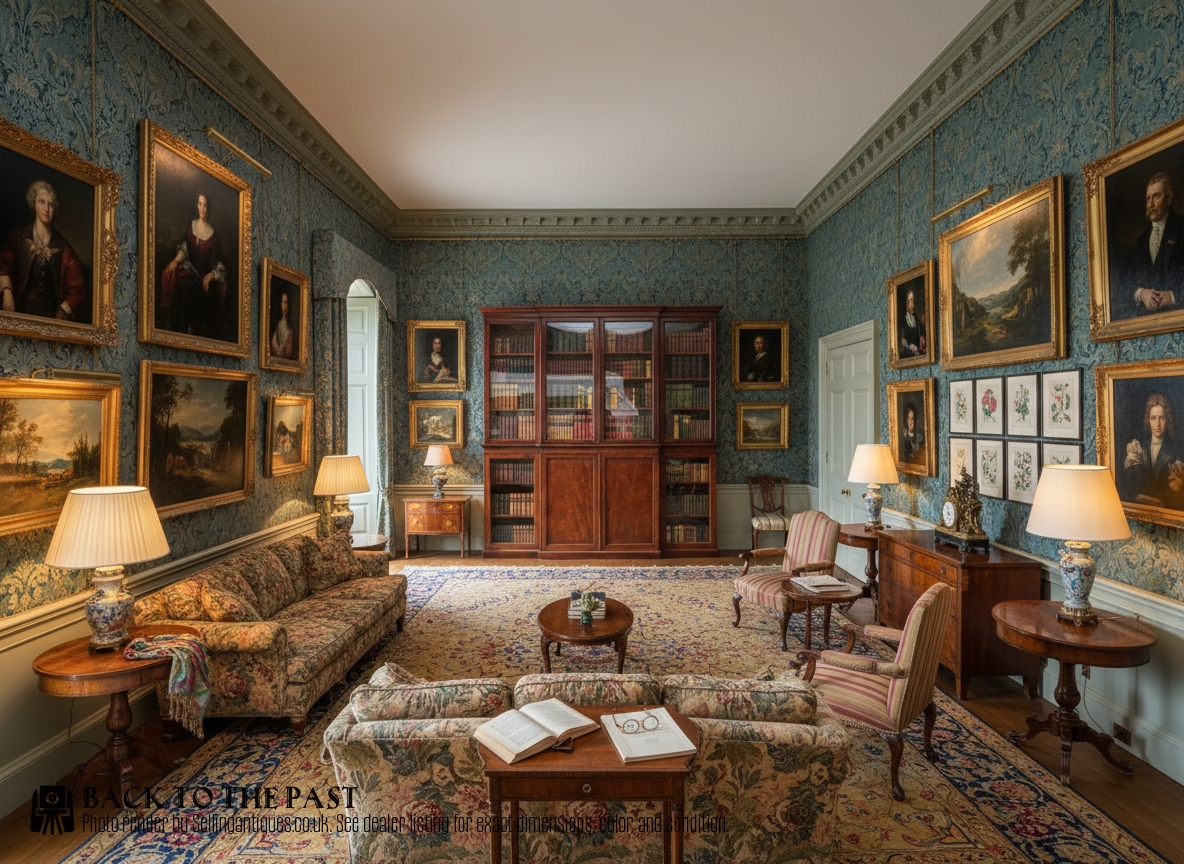
Breakfront bookcases served in grand libraries and drawing rooms to house leather-bound volumes behind glass doors.
Sideboards and compactum wardrobes anchored dining rooms and bedrooms, offering extensive concealed storage suited to period domestic life.
How do I care for antique mahogany?
Maintain antique mahogany by keeping it away from direct sunlight and steady humidity sources to prevent veneer lifting. Regular dusting with a dry, soft cloth preserves the polished surface without the need for heavy modern polishes.
Feeding the timber occasionally with appropriate wax helps maintain the depth of the mahogany grain.