
19th Century Library Bookcase
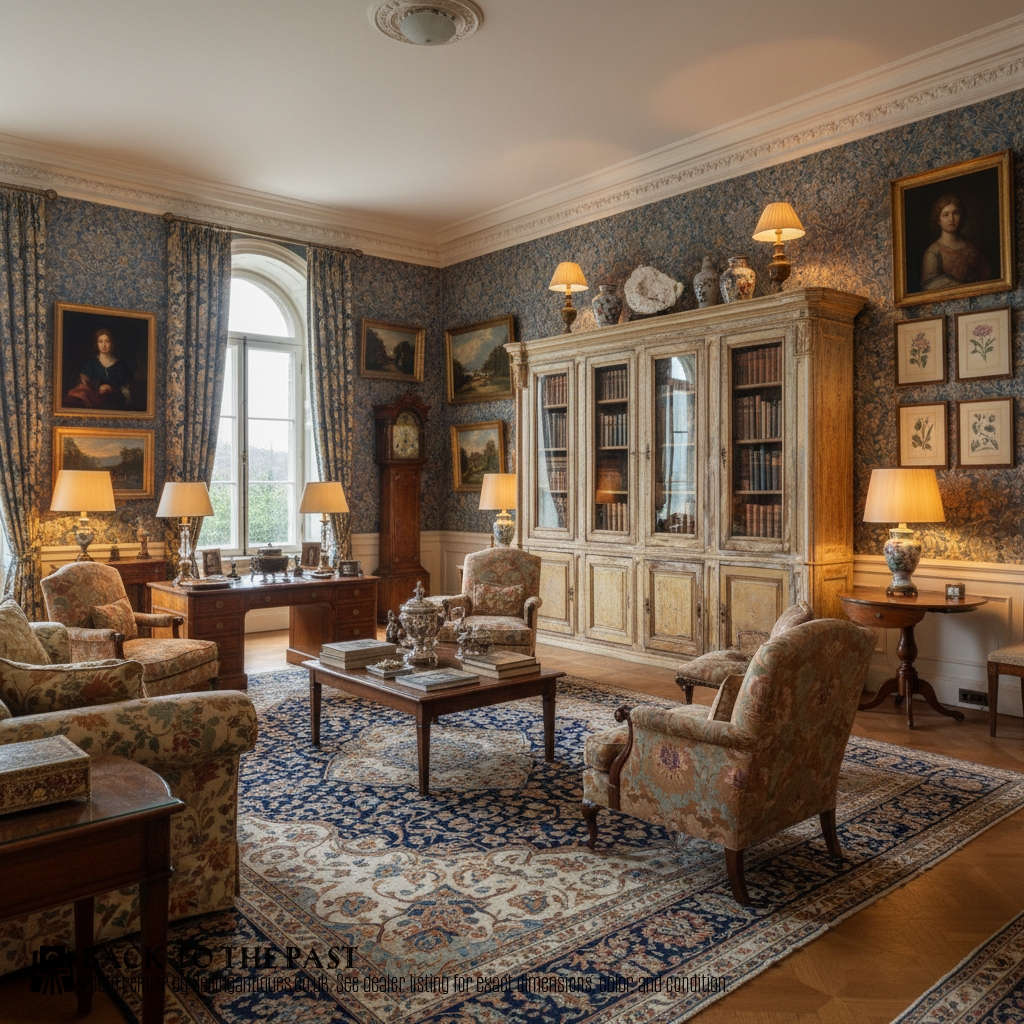
A 19th century library bookcase brings grand proportion and practical organisation to a room.
19th Century Library Bookcase
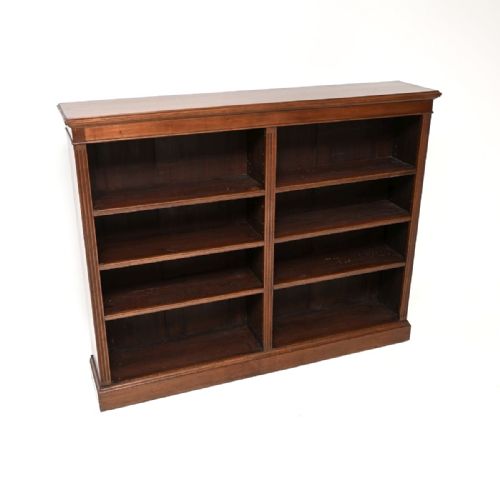
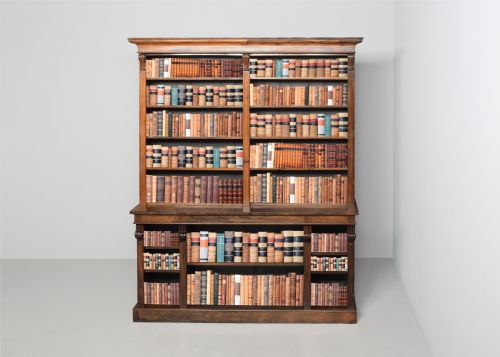
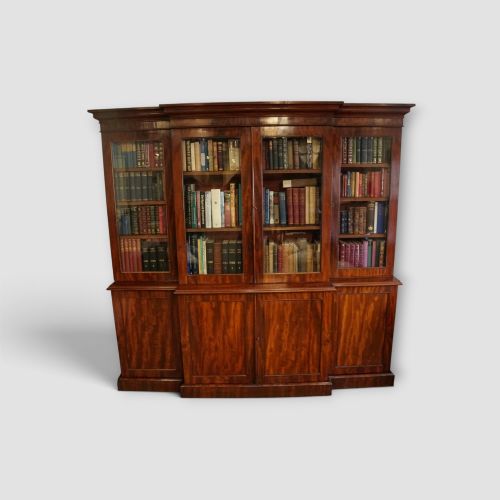
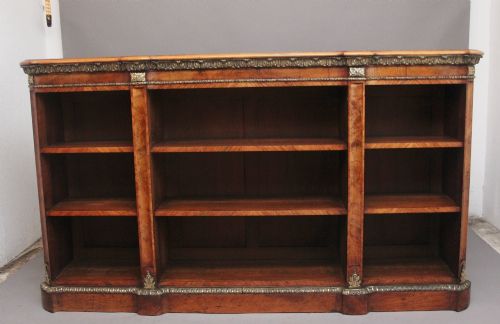
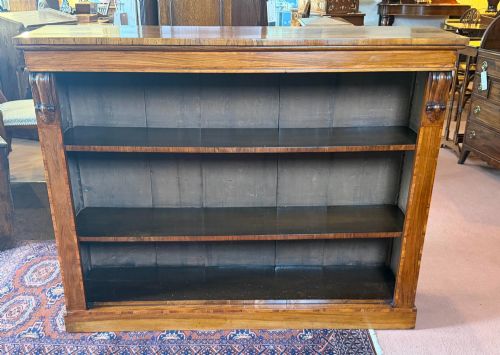
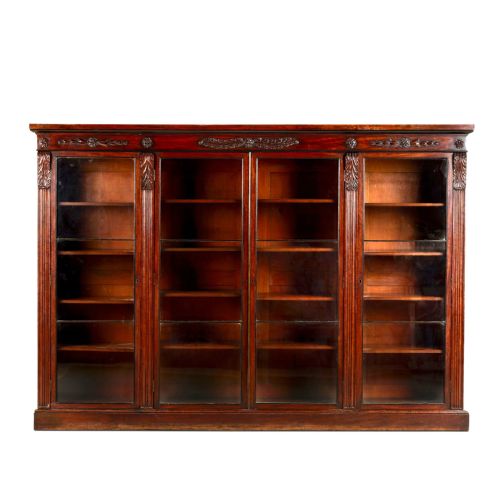
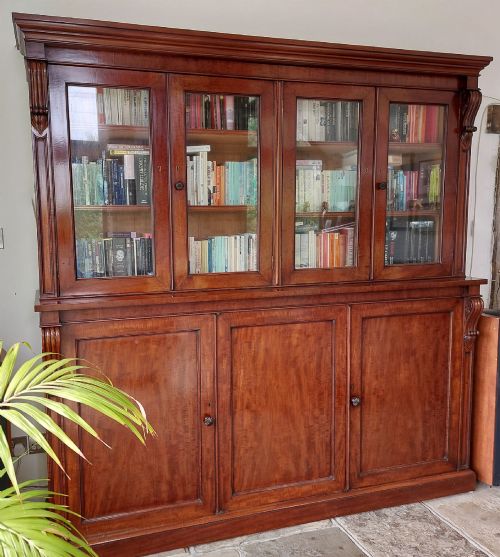
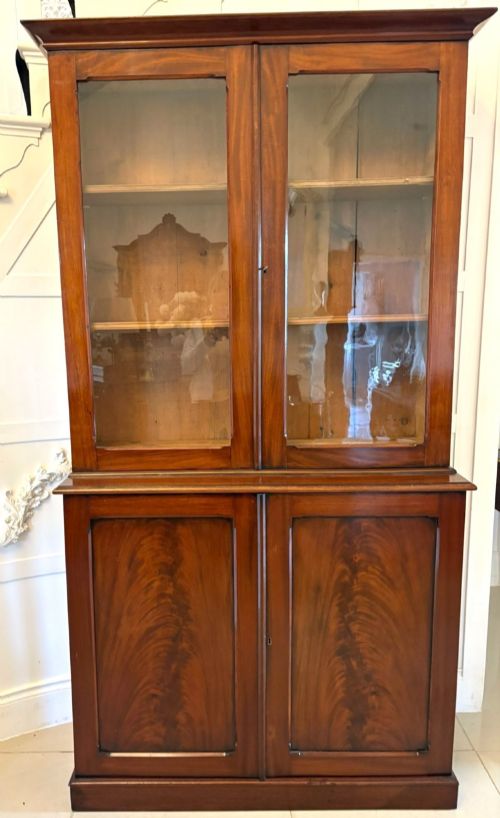
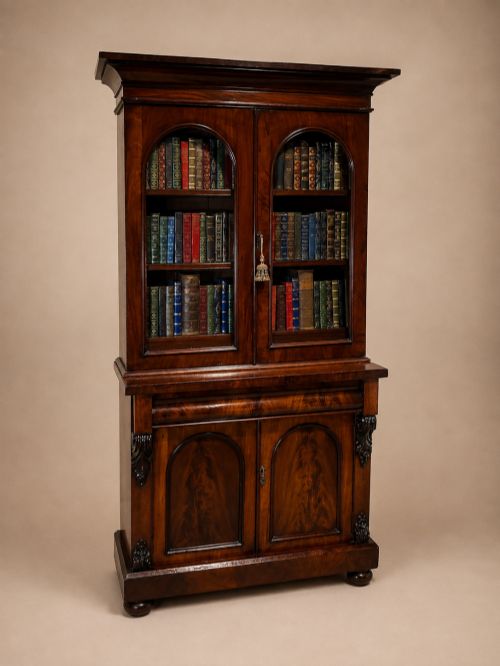
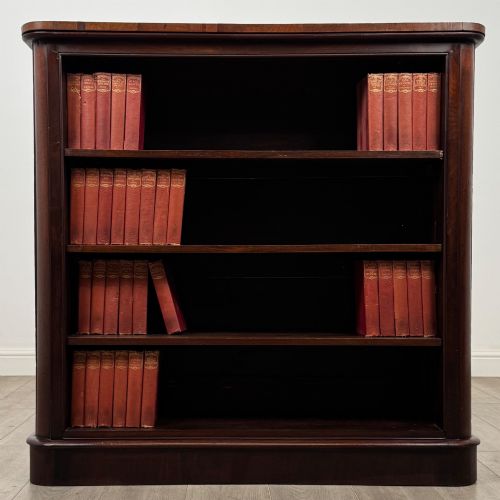
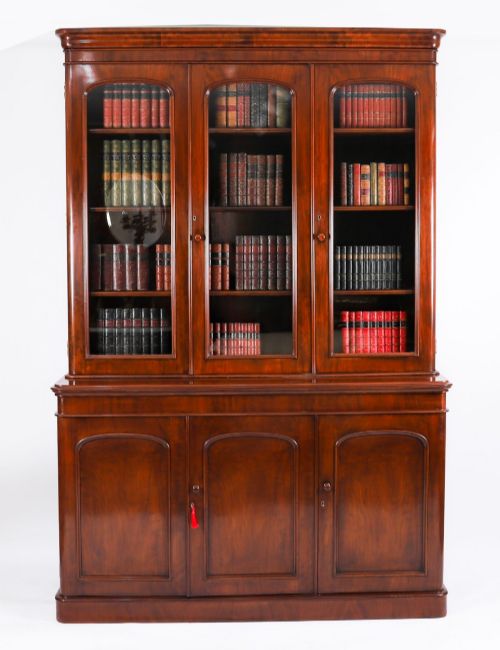
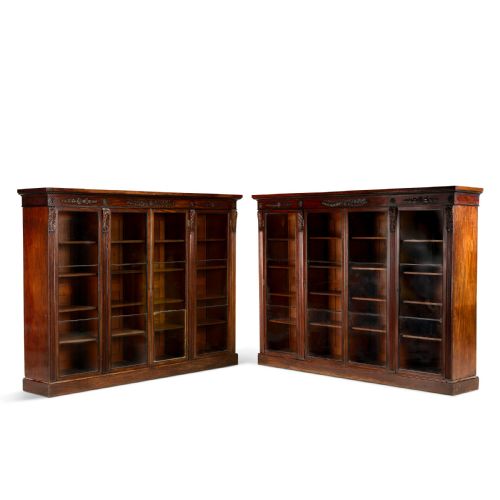
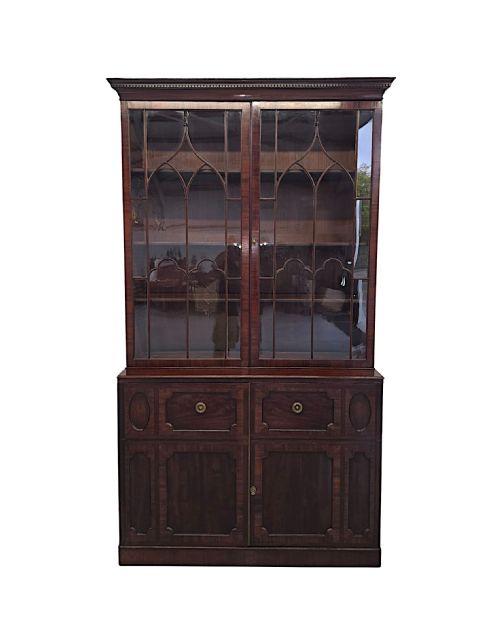
A 19th century library bookcase serves as a substantial piece of furniture designed to house extensive collections of books within domestic or institutional settings. These items appear in various configurations, ranging from open-fronted display units to large multi-door breakfront cabinets fitted with glazed panels or solid wood doors.
The material palette is dominated by rich hardwoods such as mahogany, walnut, and oak, often selected for their striking grain patterns. Pieces frequently incorporate adjustable shelving to accommodate volumes of differing heights, reflecting the practical demands of nineteenth-century libraries.
Makers of the period utilised regional stylistic influences, producing everything from restrained Regency and Georgian designs to ornate Victorian, French Louis Philippe, and Continental styles. Buyers encounter both compact open shelf units and monumental architectural cabinets designed to anchor large rooms.
Materials and Construction Techniques
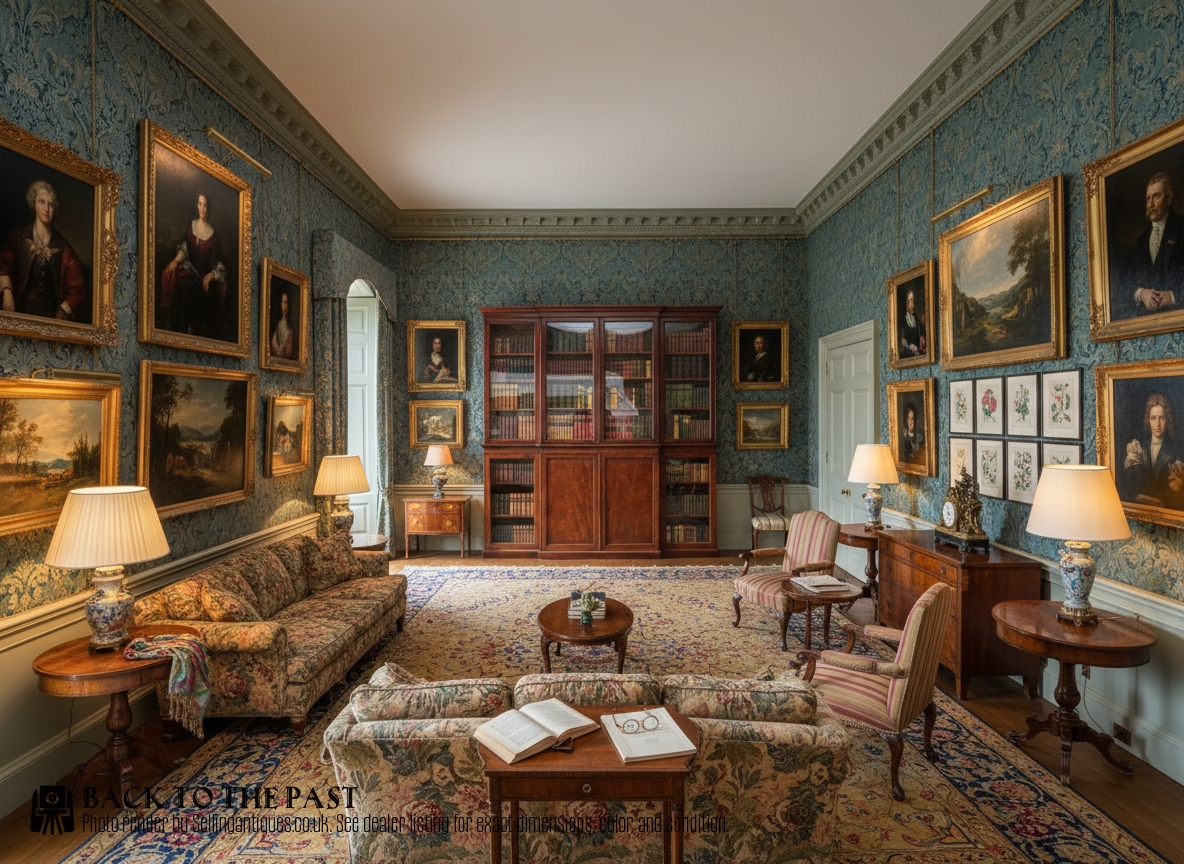
Cabinet makers constructed these pieces using solid timbers like oak, mahogany, and walnut for structural integrity, frequently applying figured veneers such as flame mahogany or burr walnut to the primary display surfaces. Secondary timbers like pine often appear in the interior construction of shelves and backboards.
Metal components played a functional and decorative role, with brass fixtures used for hinges, handles, and shelf support ratchets, while ormolu and gilt mounts added decorative contrast on high-status continental and Victorian examples. Glazing involved leaded or fitted glass panes set into timber frame doors to protect valuable bindings from dust.
19th Century Library Bookcase Retail Price Guide 2026
Typical asking prices for 19th century library bookcase among the pieces listed under this phrase on Sellingantiques today, from the lower quarter to the upper quarter. They describe what is for sale here now, not the wider market.
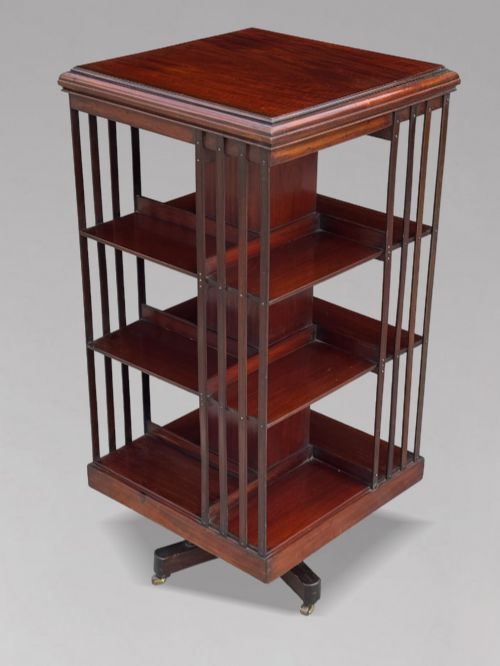
Revolving bookcases let scholars spin their entire reference shelf with a single finger.
Distinguishing Quality and Craftsmanship
The grade of timber selection and the precision of veneer matching dictate much of the visual hierarchy among these pieces. Superior examples feature continuous grain patterns across large breakfront doors and meticulously figured burr or flame timbers.
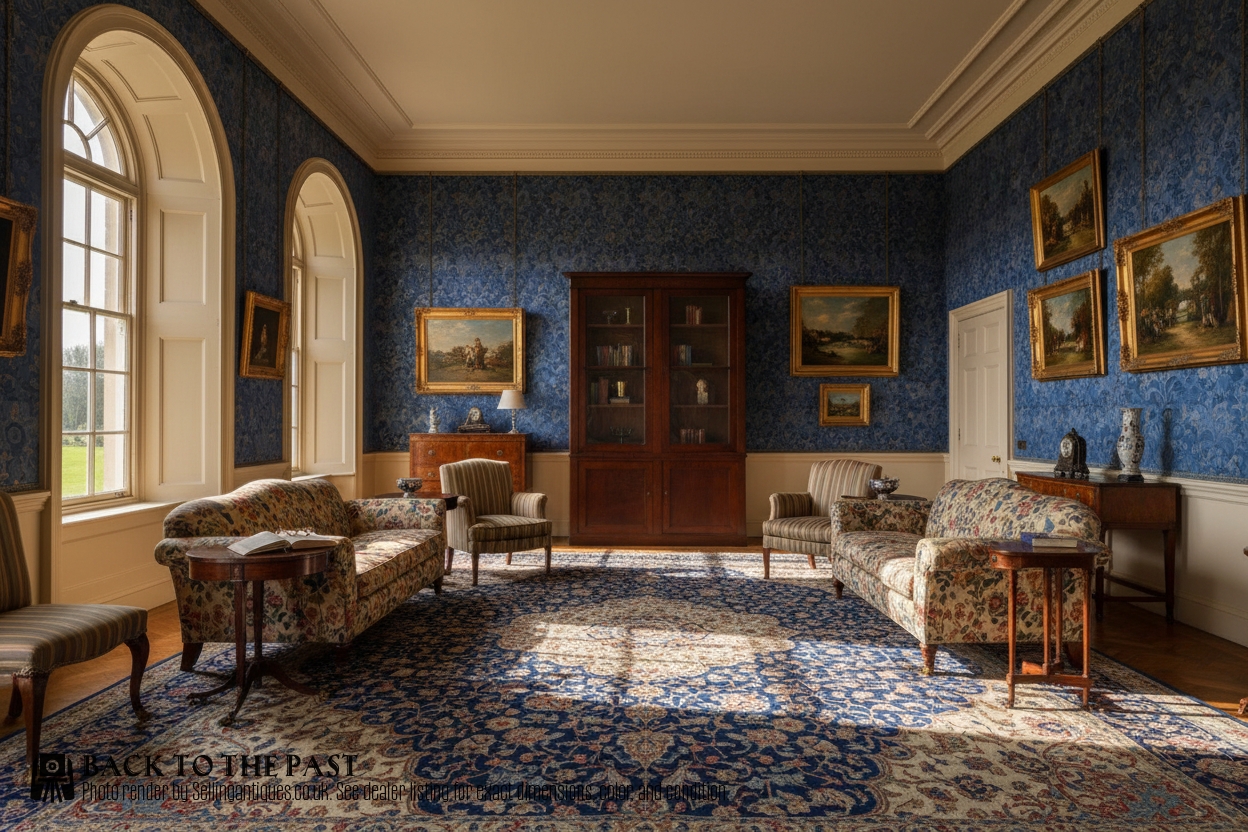
Structural sophistication also separates standard items from the best work, seen in finely cut dovetail joints, robust internal framing, and smoothly operating adjustable shelving systems. The inclusion of signed brass stamps or workshop attribution adds documented proof of premier nineteenth-century cabinet making.
Johnstone and Jeanes·James Shoolbred·Holland and Sons·T. Willson·Charles Norman
The 19th Century Library Bookcase Glossary
- Breakfront
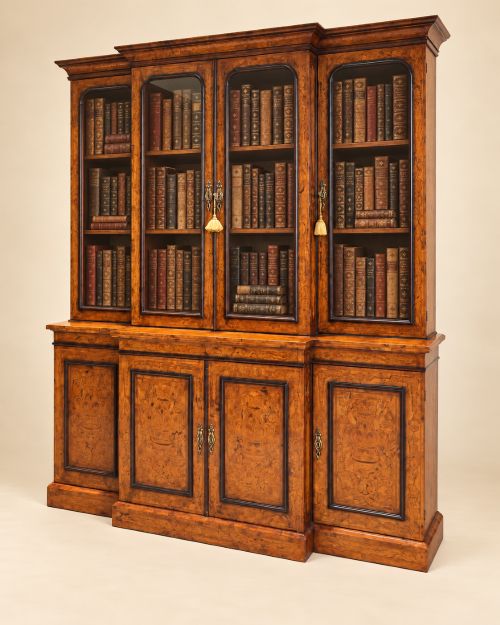
- A cabinet design where the central section projects forward from the flanking outer sections. This configuration creates architectural depth and visual rhythm in large library rooms.
- Ormolu
- Gilt bronze mounted onto furniture as a decorative trim. It appears frequently on French and high-end Victorian cabinets of the period.
- Secretaire
- A desk drawer containing a drop-front writing surface fitted with pigeonholes and small drawers. It transforms a standard bookcase into a dual-purpose workspace.
- Waterfall bookcase
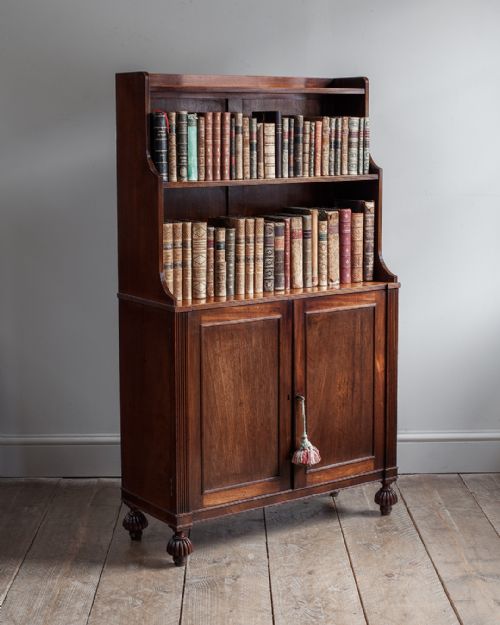
- A stepped shelving unit where each successive shelf narrows from bottom to top. This distinct Regency form creates a cascading profile.
- Revolving bookcase
- A compact, rotating book stand designed to sit on a tabletop or floor. It allows easy access to multiple volumes from a stationary position.
19th Century Library Bookcase: Frequently Asked Questions
How do I care for a mahogany bookcase?
Keep the timber away from direct heat sources and strong sunlight to prevent the wood from drying out and the rich polish from fading. Regular dusting with a soft, dry cloth preserves the finish.
Apply a microcrystalline wax polish occasionally to nourish the grain and protect the surface from minor scuffs and atmospheric moisture.
Are the shelves adjustable?
Many nineteenth-century examples feature adjustable wooden shelving supported by brass rack strips or wooden toothing. This clever mechanism allowed owners to alter shelf heights for varying book sizes.
Fixed shelves do appear in certain open configurations, so checking the internal fittings helps confirm whether the height arrangement can be altered.
How do I distinguish Regency from Victorian pieces?
Regency pieces, dating from the early part of the century, typically display clean classical lines, restrained brass inlay, and influences from ancient Greek and Roman design. They favour exotic veneers and architectural simplicity.
Victorian items, produced later in the century, often embrace heavier proportions, exuberant carving, and richer figured timbers like burr walnut alongside revivalist Gothic or French styling.
Can these bookcases be dismantled for moving?
Large breakfront and multi-door library bookcases were traditionally constructed in modular sections to facilitate transport and installation in grand homes. The cornices, central carcase, side wings, and plinths often separate.
Careful examination of the joints and internal fixings reveals how the modular components interlock for safe assembly and relocation.