

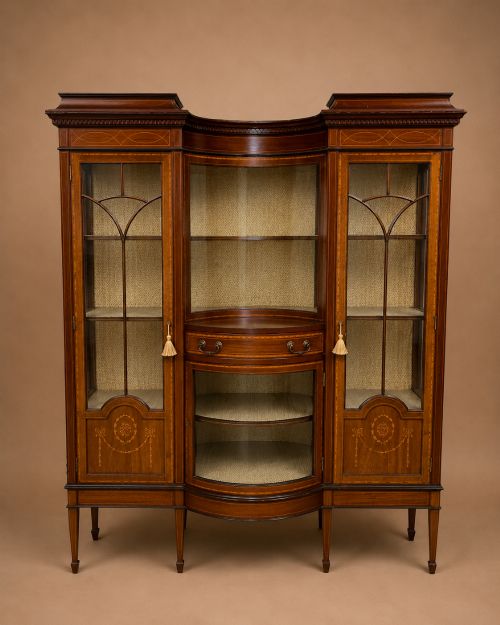
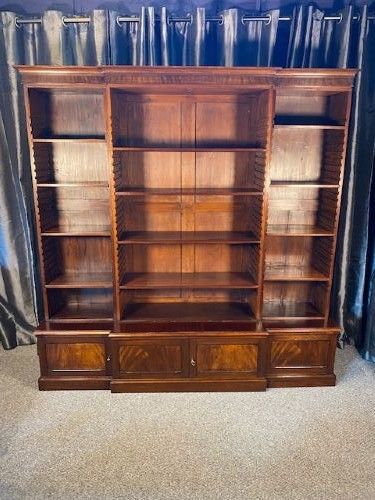
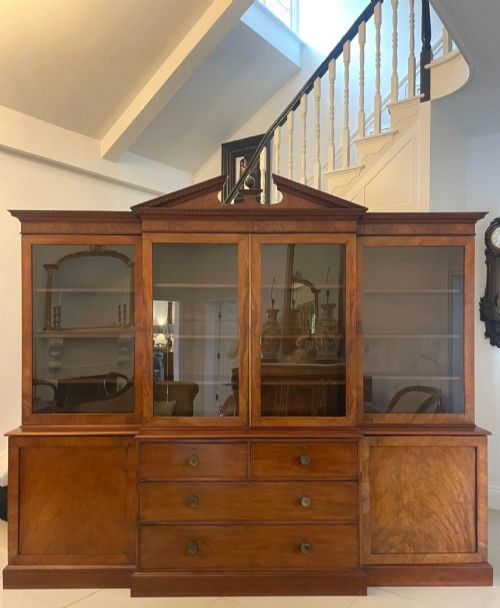
Mahogany Breakfront Cabinet
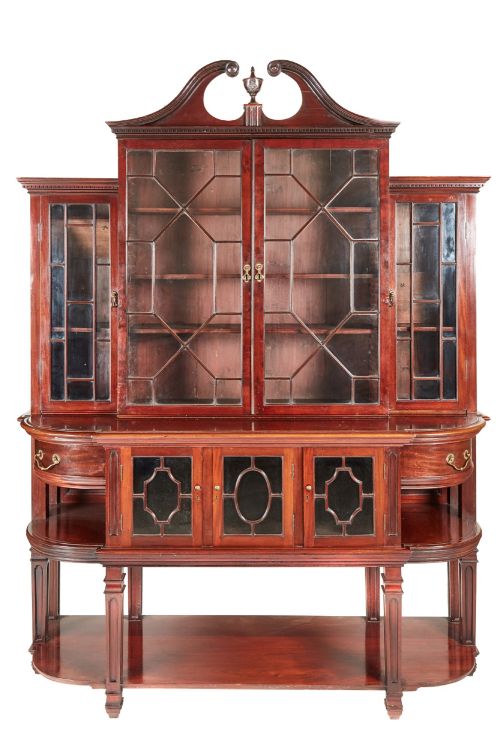
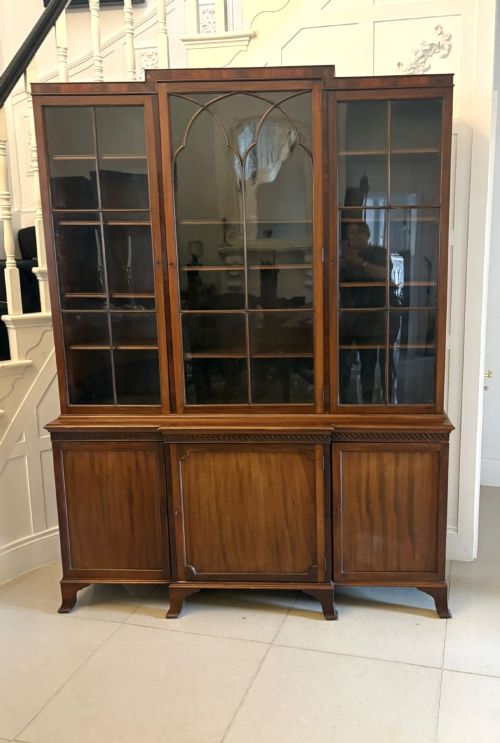
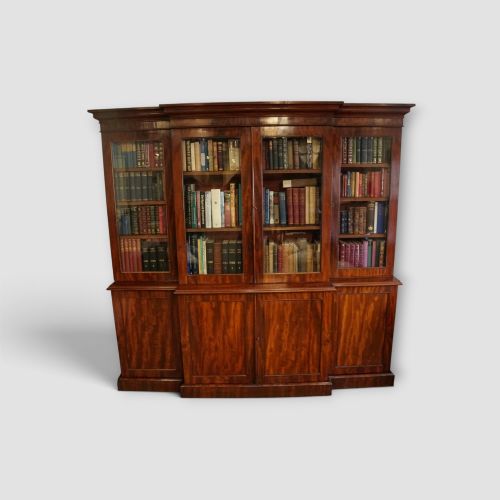
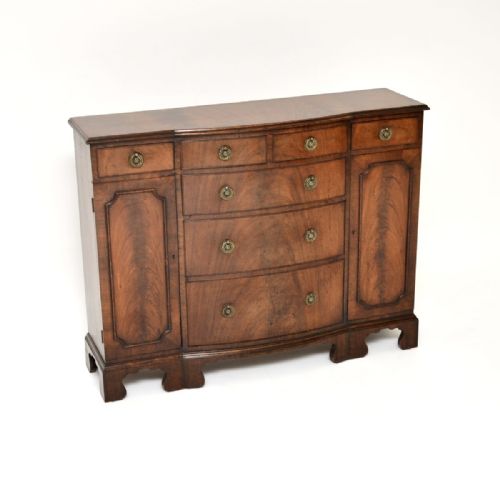
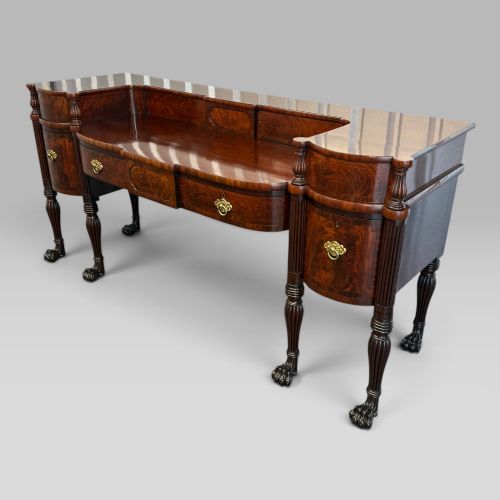
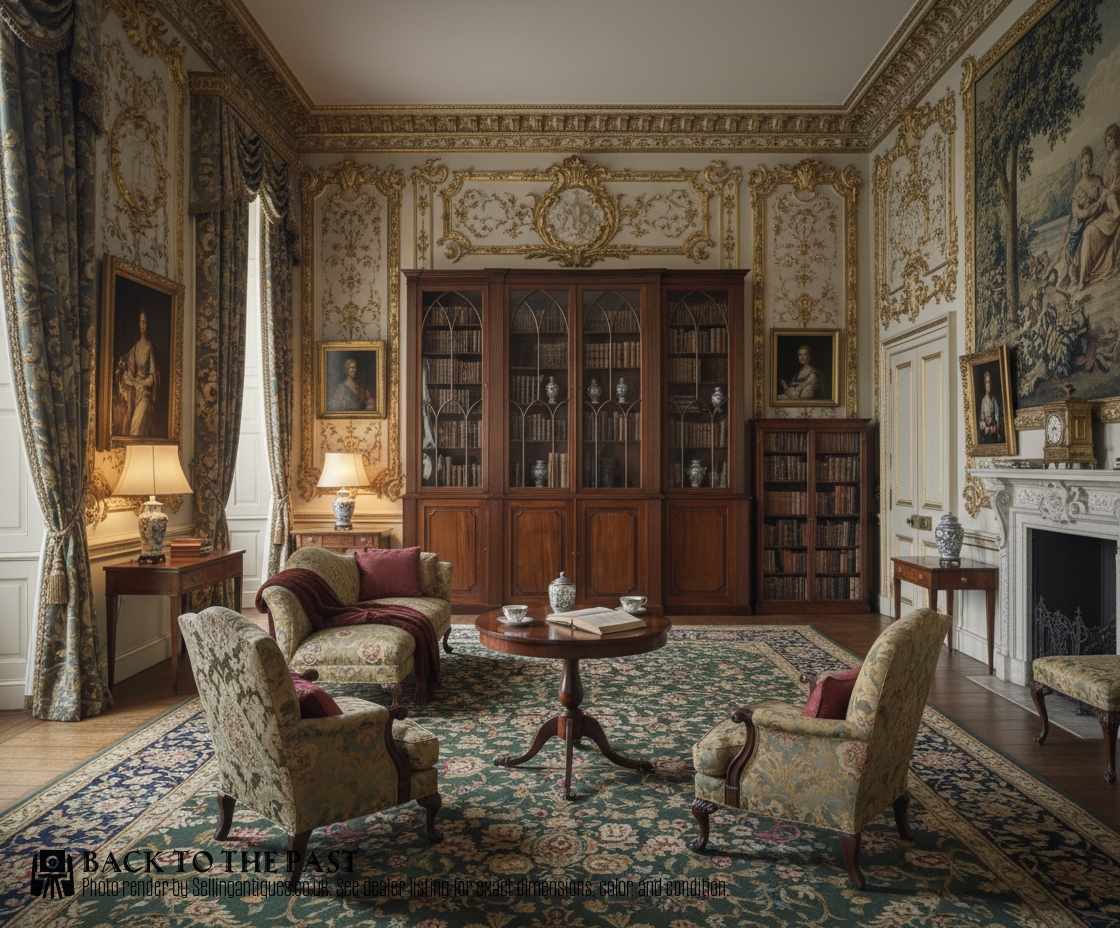
A mahogany breakfront cabinet commands attention in a room through its projecting central section and rich timber grain.

Mahogany Breakfront Cabinet
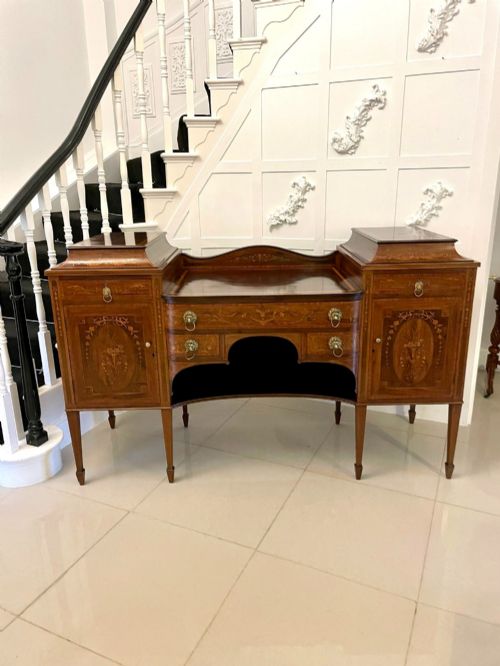
A mahogany breakfront cabinet is a substantial furniture form defined by a recessed central section flanked by forward-projecting wings, typically serving as a bookcase, display cabinet, or large sideboard. Buyers seek these pieces for their grand architectural presence and capacity to anchor a formal room.
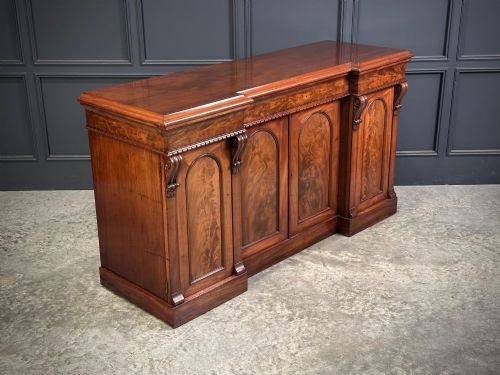
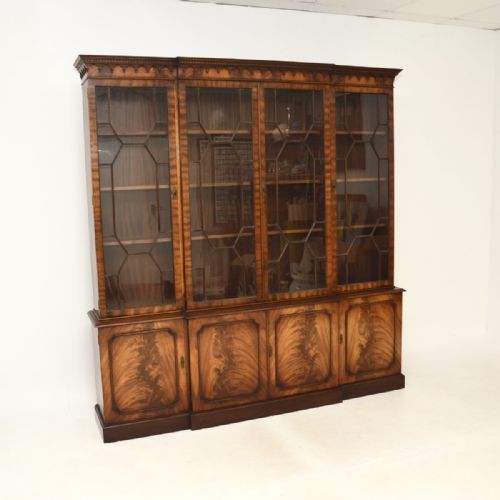
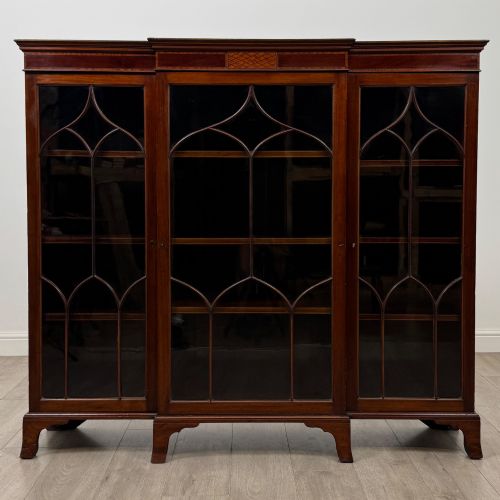
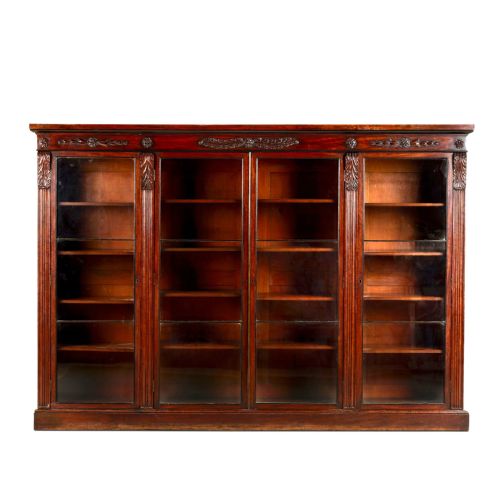
The versions met most frequently on this page date from the nineteenth century, including Victorian and Edwardian interpretations, alongside Regency and Georgian style revivals. These variations range from tall glazed library bookcases with astragal bars to low side cabinets featuring marble tops or flame mahogany doors.
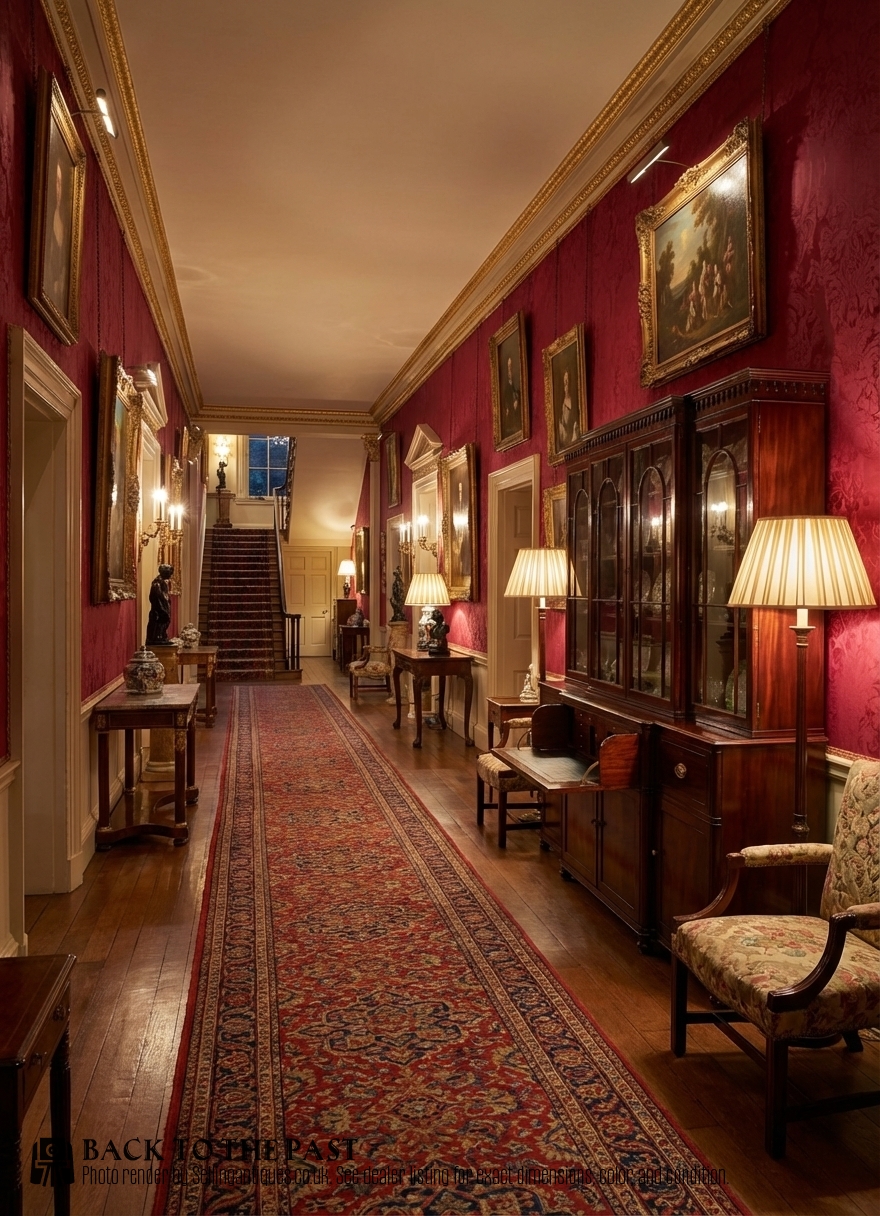
Materials and construction
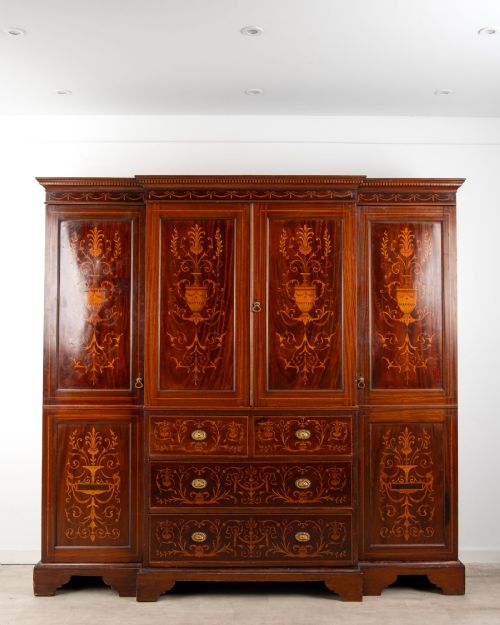
Cabinet makers utilised solid mahogany and applied flame mahogany veneer to large surfaces, selecting timber for its deep reddish-brown tone and dramatic figuring. Satinwood inlay, brass mounts, and glass panels provided contrast and detail.
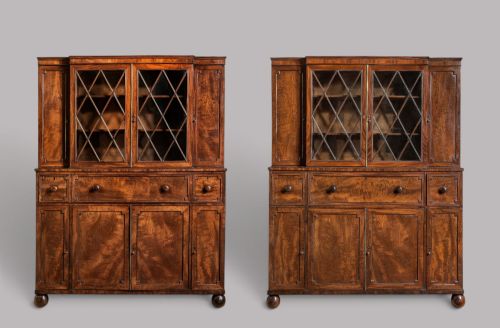
Joinery involved sturdy carcase construction, often integrating multiple sections to allow transport of these large items. Glazed doors utilised wooden astragal bars to hold individual panes of glass securely in geometric patterns.
Mahogany Breakfront Cabinet Retail Price Guide 2026
Typical asking prices for mahogany breakfront cabinet among the pieces listed under this phrase on Sellingantiques today, from the lower quarter to the upper quarter. They describe what is for sale here now, not the wider market.
Certain nineteenth-century editions come equipped with carved sphinx supports guarding the lower shelves.
Distinctions in quality
Quality rests upon the selection of timber veneers, such as richly figured flame mahogany, and the precision of decorative inlays like satinwood. The crispness of carved details, the weight of brass mountings, and the transparency of the glass elevate superior examples above standard production.
Proportion and architectural balance dictate the overall success of the piece, where skilled cabinet work ensures smooth operation of doors and drawers across the extended breakfront facade.
Hewetsons London·Jas Shoolbred·Edwards & Roberts·Gillows
The Mahogany Breakfront Cabinet Glossary
- Breakfront
- An architectural furniture design where the central section projects forward from the flanking wings. This configuration creates visual depth and breaks up the flat facade of large bookcases and sideboards.
- Astragal
- A moulding profile used to divide glass panes within a door frame. In bookcase construction, these wooden strips form delicate geometric grids.
- Flame mahogany
- A veneer cut from the fork of the mahogany tree where the branches meet the trunk. This produces a dramatic, undulating pattern resembling flickering flames.
- Compactum
- A multi-compartment wardrobe or cabinet designed for efficient clothing storage. These pieces incorporate hanging spaces, drawers, and linen shelves within a single integrated unit.
- Marquetry
- The art of applying pieces of veneer to a structure to form decorative patterns or pictures. Craftsmen used contrasting woods such as satinwood to create detailed floral or geometric motifs.
Mahogany Breakfront Cabinet: Frequently Asked Questions
How do I identify a breakfront cabinet?
A breakfront cabinet is instantly recognised by its stepped facade, where the middle portion advances further into the room than the sections on either side. This three-part division breaks the linear monotony of long walls.
Cabinet makers applied this layout to bookcases, sideboards, and display cabinets to create dynamic shadow lines and distinct functional zones across the front.
Where should I place a large mahogany cabinet?
These imposing cabinets require a primary wall in a reception room, library, or dining room where their scale can be appreciated without clutter. Placing them away from direct sunlight protects the timber and delicate veneers from fading.
Ensure the room has sufficient ceiling height and floor space, particularly because the projecting central section and opening doors need adequate clearance.
How do I care for antique mahogany furniture?
Maintain antique mahogany by keeping it away from rapid temperature shifts and heating vents, which cause timber and veneer to dry out and split. Dust regularly with a soft, dry cloth and apply beeswax periodically to nourish the grain.
Avoid commercial silicon polishes that build up a hazy residue over the original finish.