
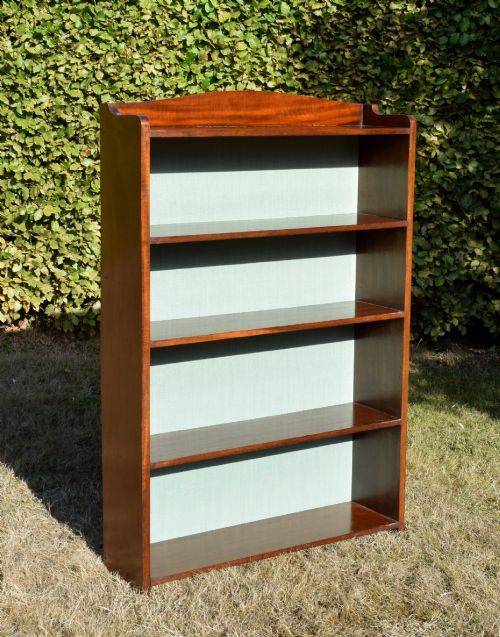
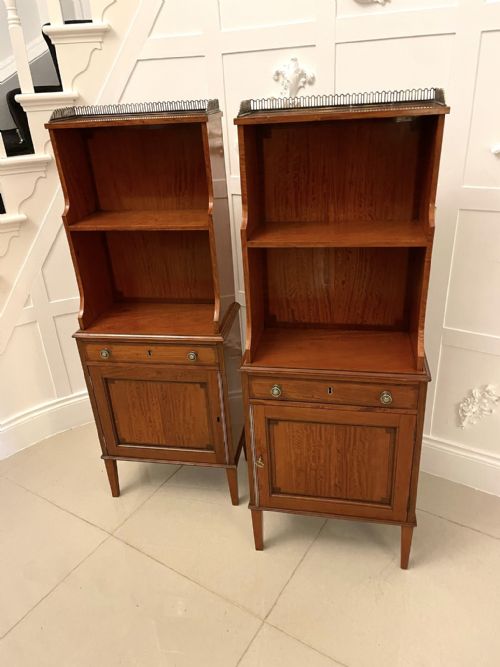
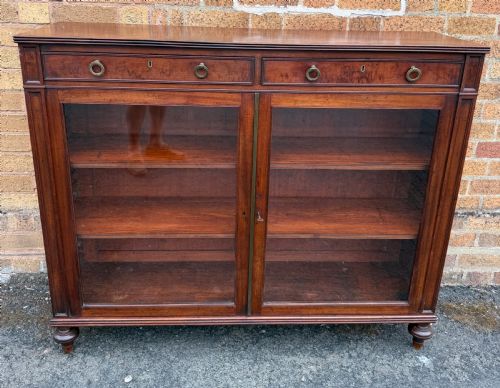
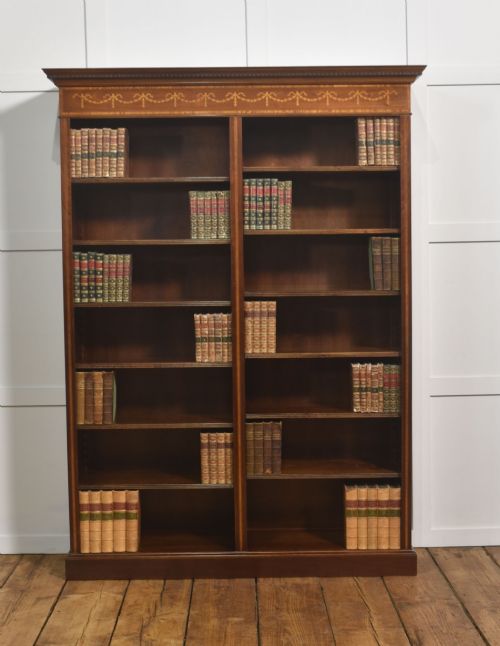
Georgian Library Bookcase
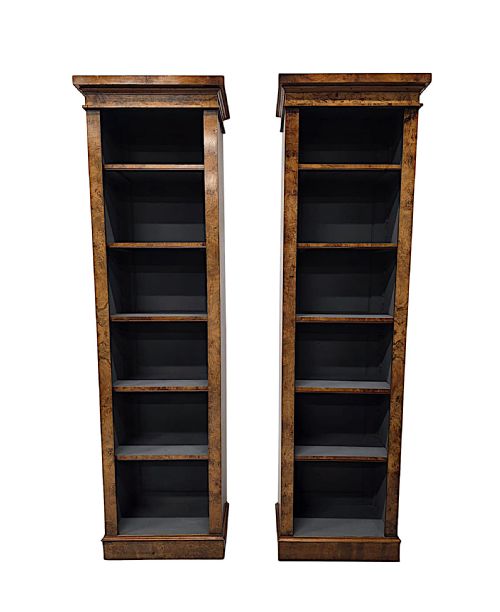
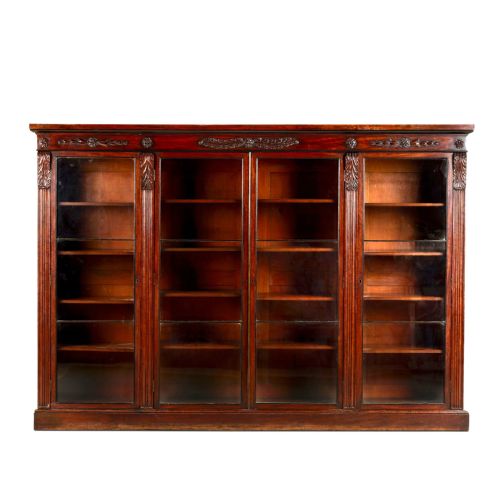
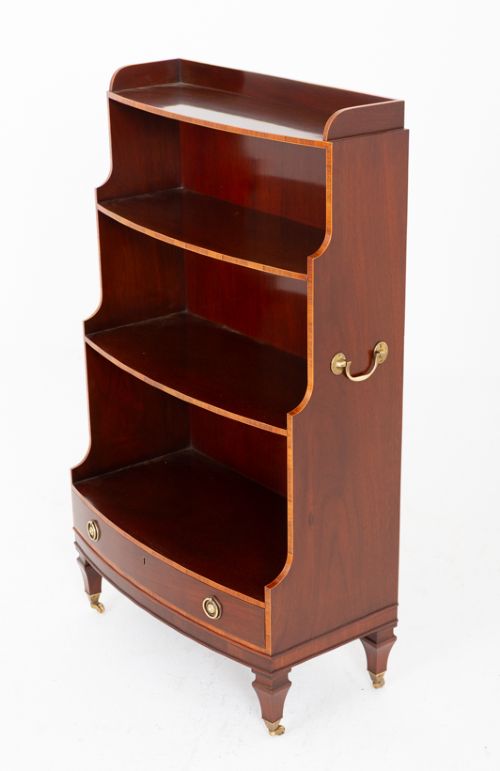
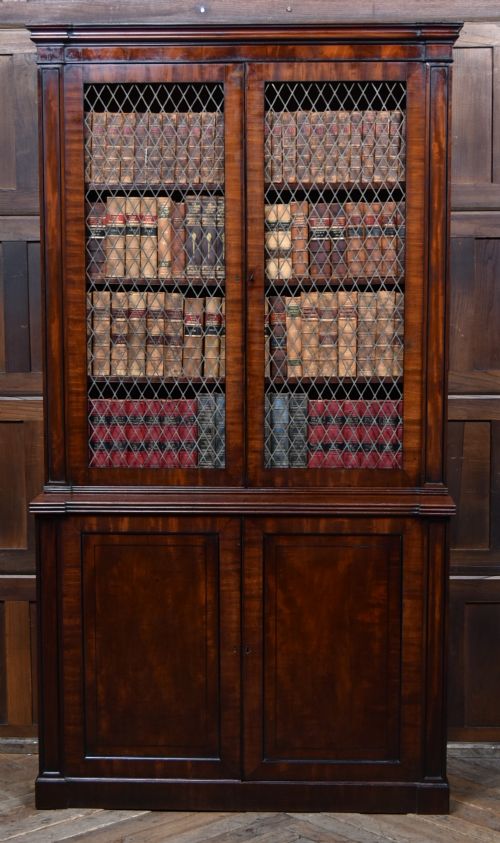
These substantial georgian library bookcase examples are grand storage pieces that bring architectural presence and rich timber tones into a room.
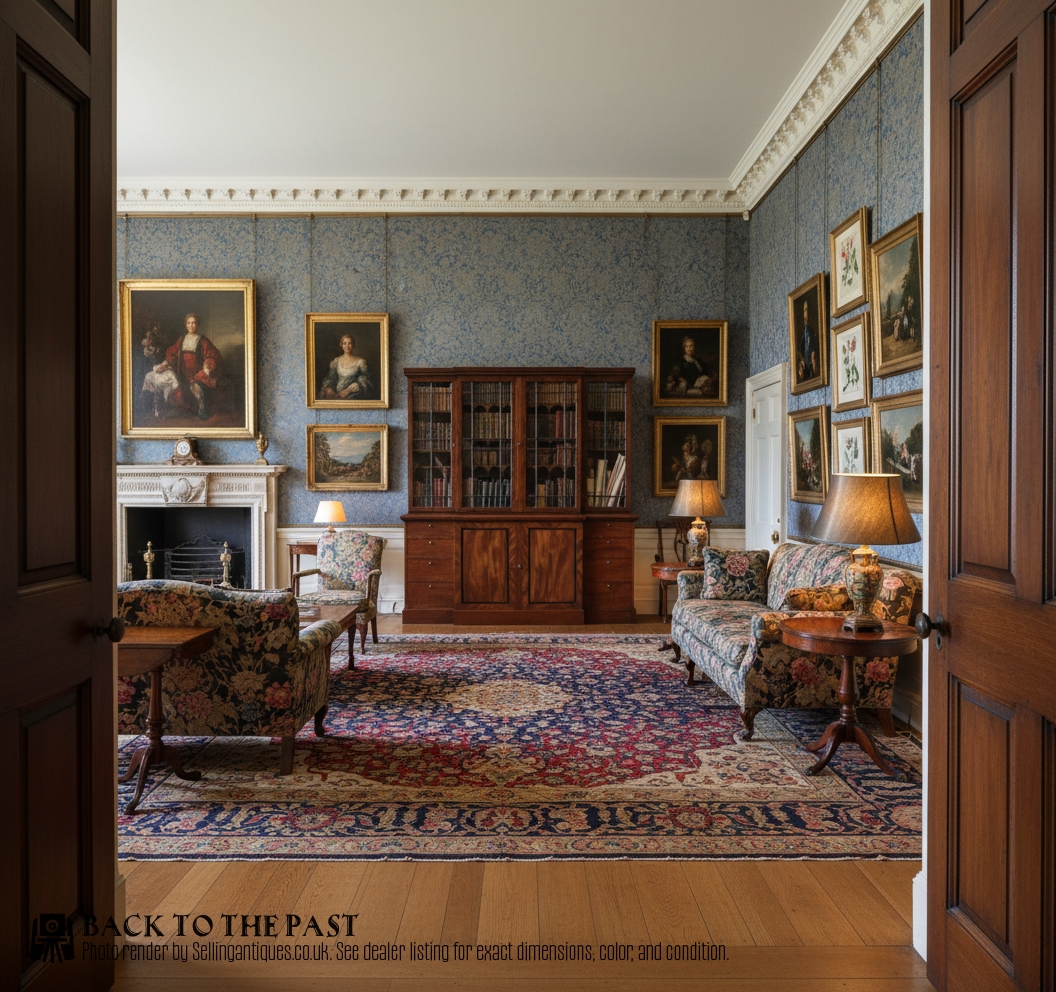
What They Are
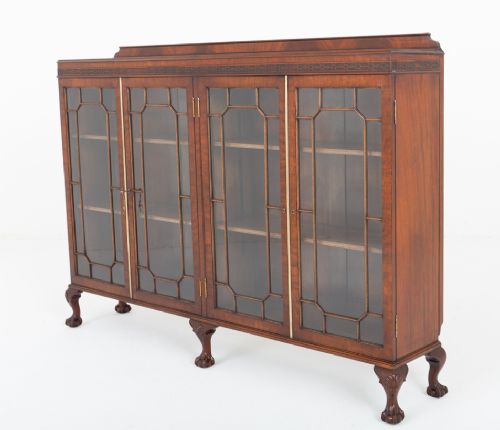
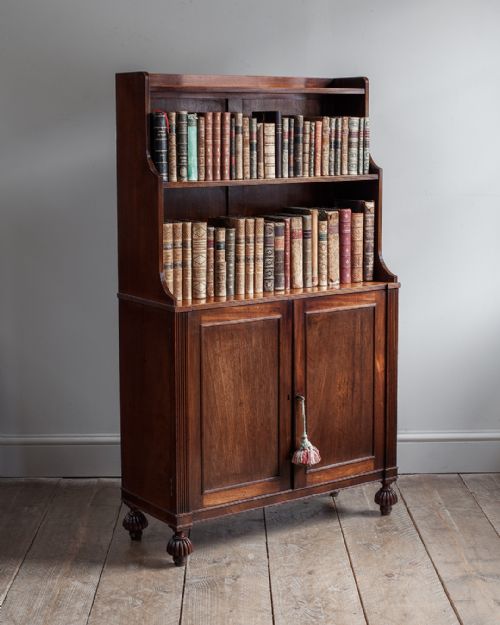
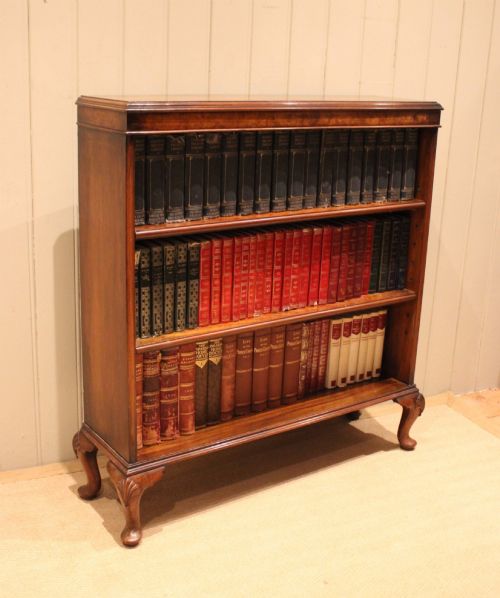
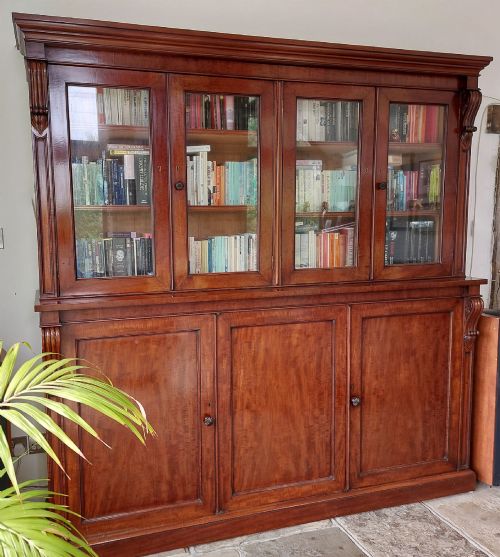
A georgian library bookcase is a tall timber storage unit designed for holding books, frequently combining glazed upper display sections with enclosed lower cupboards.
The pieces appearing on this page span several stylistic phases, including original Georgian items from the eighteenth and early nineteenth centuries, alongside later Georgian Revival interpretations from the twentieth century.
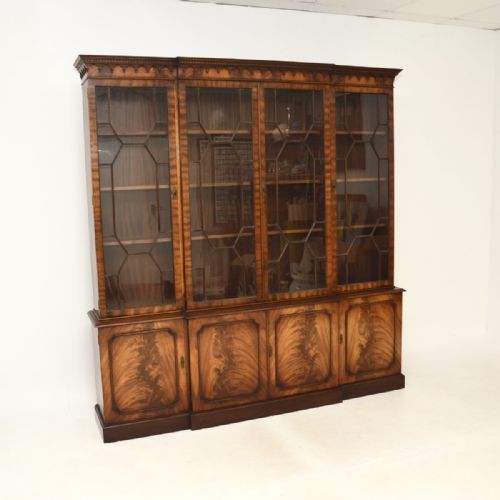
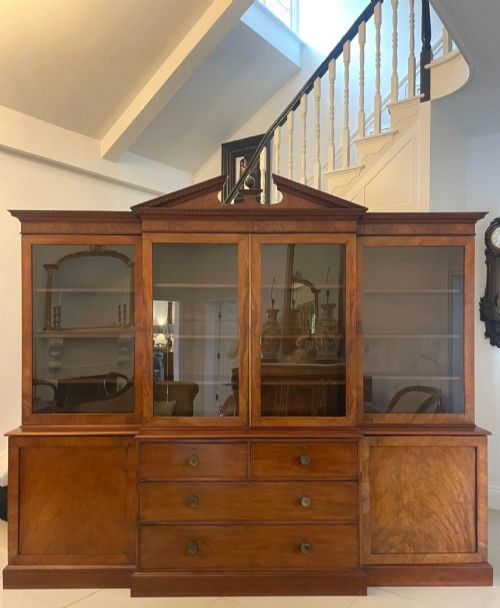
Forms range from standard upright bookcases and dwarf models to grand breakfront formats and specialised secretaire bookcase designs featuring integrated writing drawers.
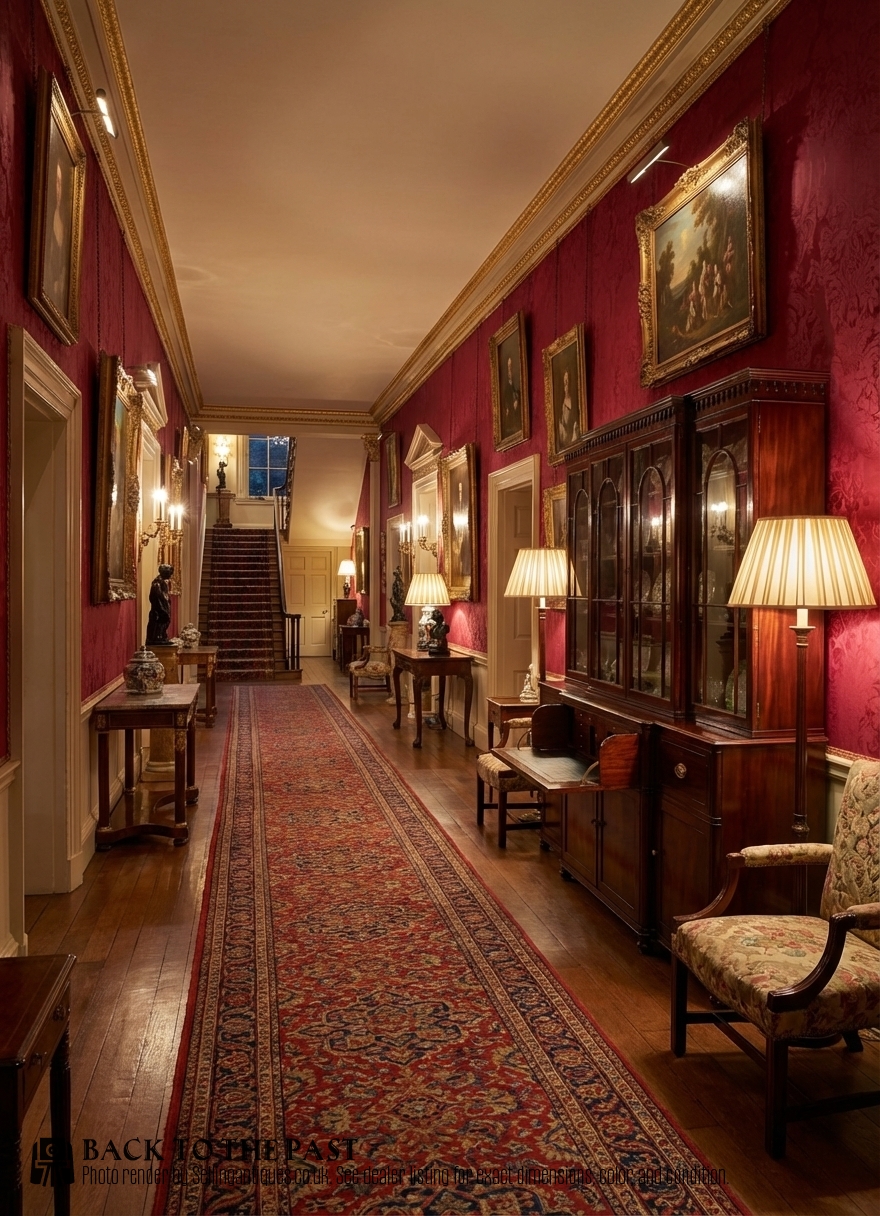
How They Were Made
Cabinet makers constructed these large pieces primarily in mahogany, utilising flame mahogany veneers, walnut, oak, and satinwood to create varied surface patterns.
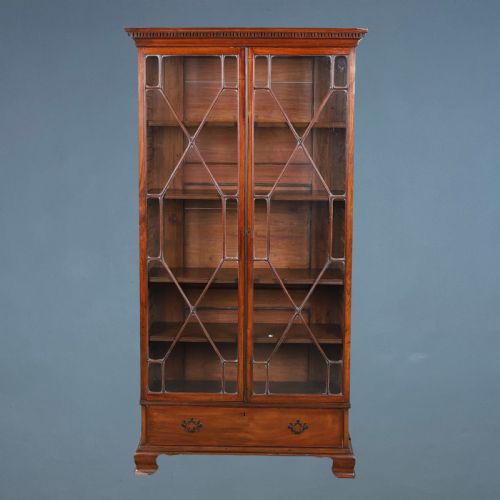
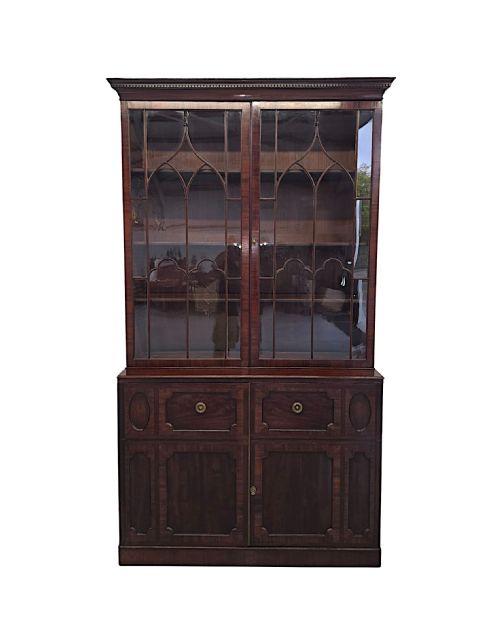
Upper sections typically feature glass doors divided by wooden astragal bars, while brass hardware provides functional fittings for drawers and cupboards.
Retail Price Guide 2026
Typical UK retail prices for georgian library bookcase, calculated from the Sellingantiques database of over a million retail prices indexed since 2003. This retail price guide relies exclusively on Sellingantiques data; no external sources or auction records are used, so the figures do not describe the wider market.
Periods represented span the Georgian era, the year 1800, and the 1930s Georgian Revival.
What Varies in Quality
The standard of timber selection fundamentally separates different examples, with choice flame mahogany or marquetry inlay marking out the more ambitious pieces.
Cabinet work finesse shows in the precision of the glazed astragal bars, the crispness of any carved wooden details, and the overall architectural proportion of the breakfront.
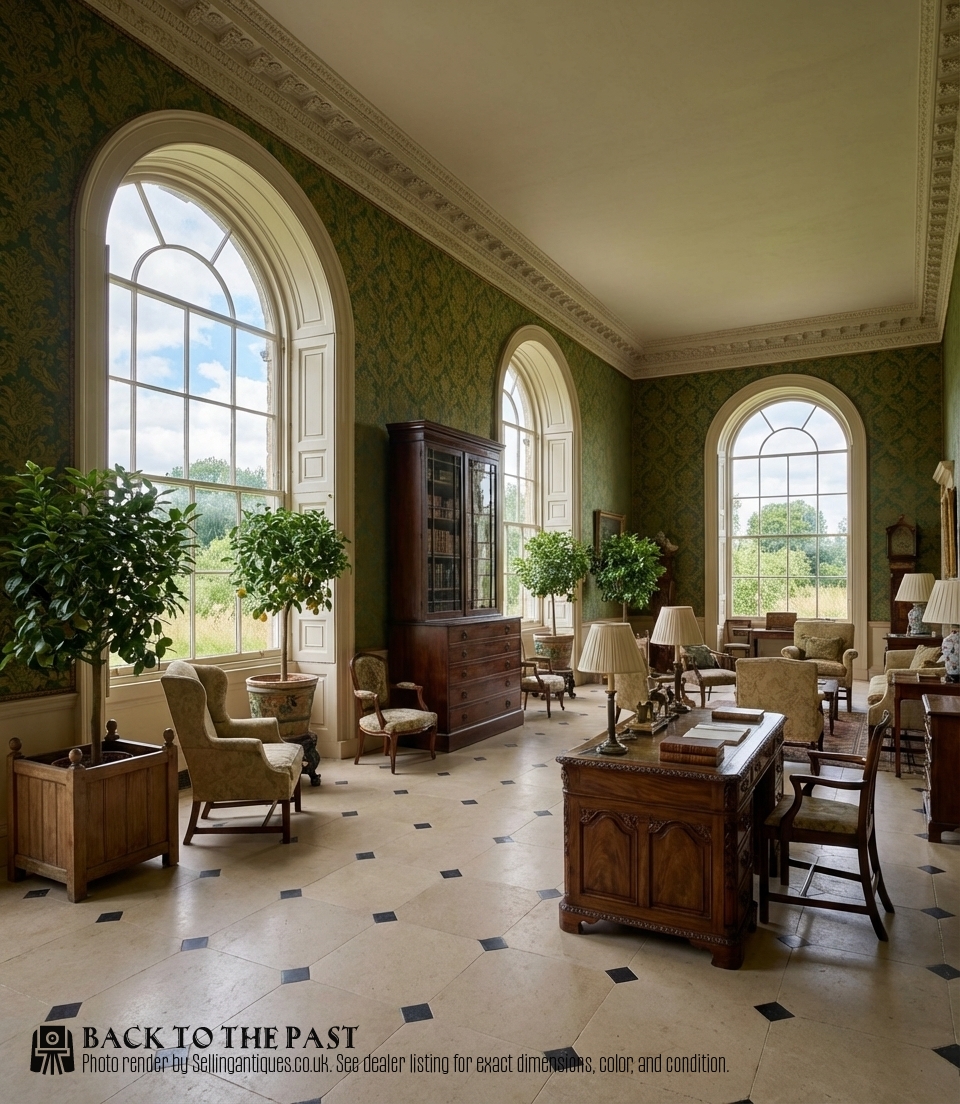
S&H Jewell of London
The Georgian Library Bookcase Glossary
- Breakfront
- A cabinet design where the central section projects forward from the flanking wings. This configuration creates architectural depth and visual weight across the facade.
- Astragal
- The narrow wooden moulding strips used to divide glass panes within a door. These bars form geometric lattice patterns across the bookcase front.
- Secretaire
- A fitted writing drawer containing a drop-front writing surface and small internal compartments. It adds a concealed desk function to the upper cupboard section.
- Satinwood
- A pale, lustrous hardwood utilised for decorative veneers and inlay work. It provides a bright contrast against darker timbers.
Frequently Asked Questions
What is a secretaire bookcase?
A secretaire bookcase includes a specialised drawer that pulls out and folds down to create a writing desk surface.
This built-in desk sits discreetly behind a drawer front, keeping writing materials enclosed when not in use.
How do I distinguish original Georgian from Revival pieces?
Original pieces date from the eighteenth or early nineteenth centuries and show the timber patination of active use over generations.
Georgian Revival pieces are later interpretations, often dating from the Edwardian period or the twentieth century, built using historical styles.
How were these large bookcases transported?
Most large library bookcases were constructed in distinct modular sections to allow for movement.
The heavy base cupboards usually separate entirely from the tall glazed upper bookcases for easier placement in a room.