

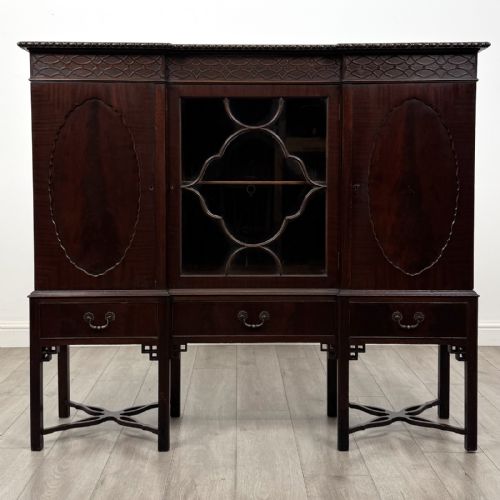
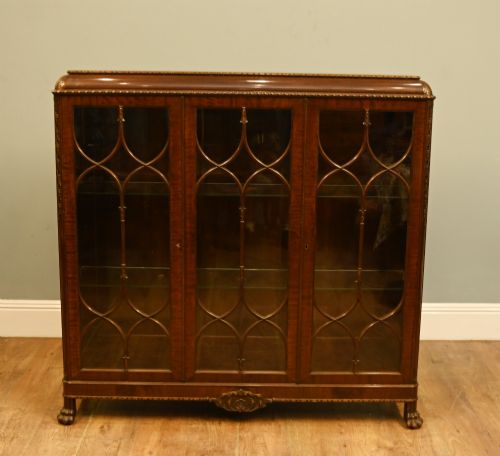
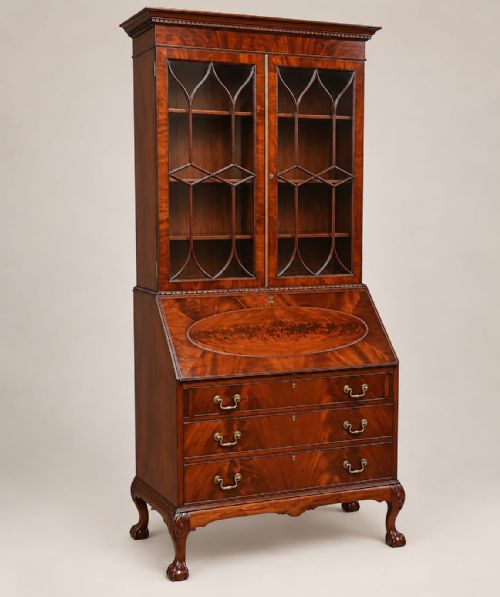
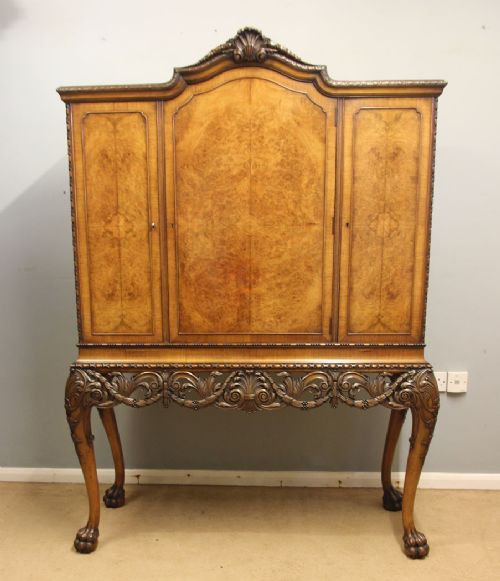
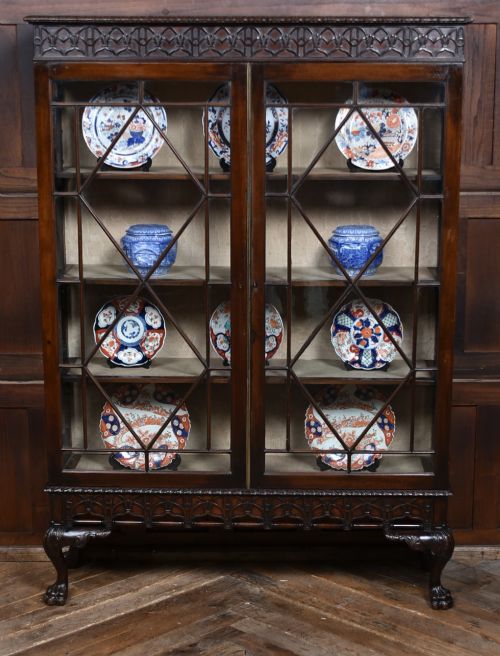
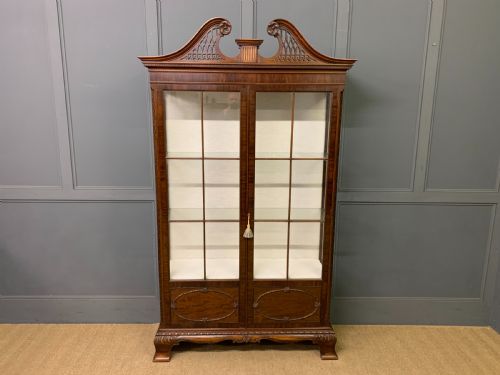


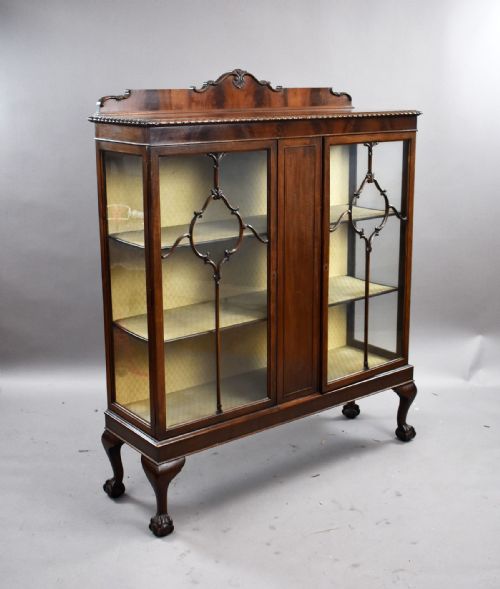


Chippendale Revival Cabinet
These pieces for a chippendale revival cabinet bring eighteenth-century elegance into domestic rooms through refined mahogany frames and glazed display spaces.
Chippendale Revival Cabinet
Most examples found on this page date from the late nineteenth century through the early twentieth century, spanning the 1860s to the 1920s. Mahogany is the predominant timber utilised, often complemented by glass doors and brass hardware.
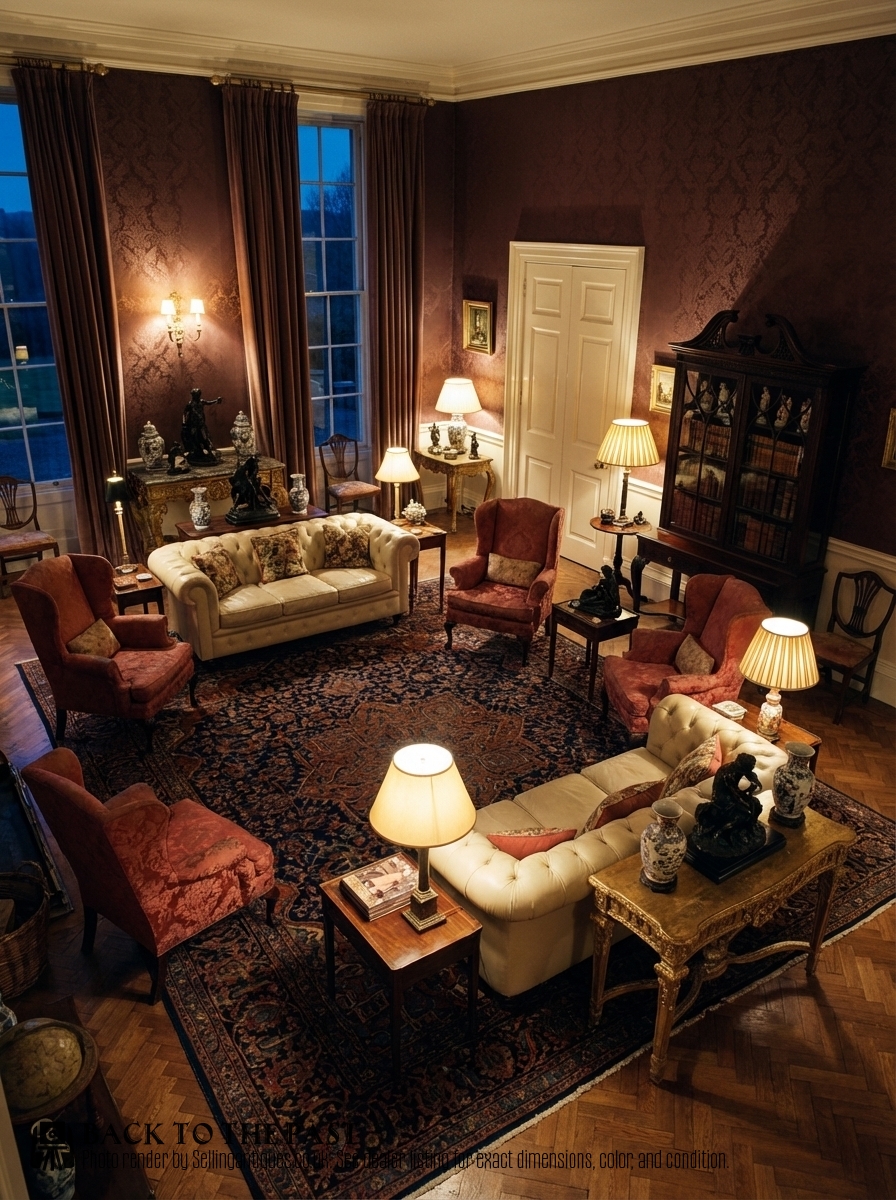
How they were made
Workshops constructed these cabinets using solid mahogany and mahogany veneers, frequently incorporating glass for astragal-glazed doors and display panels. Brass fittings and velvet or fabric linings appear within interior compartments.
Carving serves as the primary ornamentation, rendered by hand on frames, cornices, and stands. Cabinetmakers also applied burr walnut veneer and satinwood on specific side cabinets and bookcases.
Chippendale Revival Cabinet Retail Price Guide 2026
Typical asking prices for chippendale revival cabinet among the pieces listed under this phrase on Sellingantiques today, from the lower quarter to the upper quarter. They describe what is for sale here now, not the wider market.
Listings span multiple decades from the Victorian and Edwardian periods, utilising mahogany, glass, brass, and burr walnut veneer.
What varies in quality
The standard of carving defines the distinction between standard production and exceptional examples, particularly on frames and cabriole legs. Crisp, deep relief work executed by skilled hands elevates a piece.
Makership also dictates value, with signed works by known firms exhibiting superior joinery and timber selection. The integration of finer secondary woods and meticulous glazing bars marks the upper tier of the range.

James Winter & Sons·Edwards & Roberts·Warings
The Chippendale Revival Cabinet Glossary
- Astragal glazed
- Glass doors divided into smaller panes by narrow wooden bars. These bars form geometric or Gothic patterns across the front of the cabinet.
- Bijouterie cabinet
- A glazed display table or cabinet designed specifically for small valuables and trinkets. They often feature fabric or velvet lined interiors.
- Breakfront
- A piece of furniture where the central section projects forward from the flanking sides. This architectural layout creates depth in large bookcases and sideboards.
- Cellarette
- A dedicated cabinet or box used originally for holding bottles of wine. Victorian and Edwardian examples often sit on stands or incorporate fitted interiors.
- Chinoiserie
- Decorative style employing Chinese motifs and motifs interpreted in European workshops. It appears on pier display cabinets within this tradition.
Chippendale Revival Cabinet: Frequently Asked Questions
What periods do these cabinets date from?
The pieces span the Victorian and Edwardian eras, with many originating between eighteen-ninety and nineteen-twenty. Nineteenth-century examples also appear frequently.
Revival furniture from this span reinterprets earlier Georgian motifs using contemporary workshop techniques of the period.
Which woods were used for these cabinets?
Mahogany is the dominant timber across the selection, complemented by burr walnut veneer and satinwood details. Glass and brass provide structural and decorative contrast.
Interiors often feature fabric or velvet linings to cushion displayed items.
Where were these cabinets placed in a home?
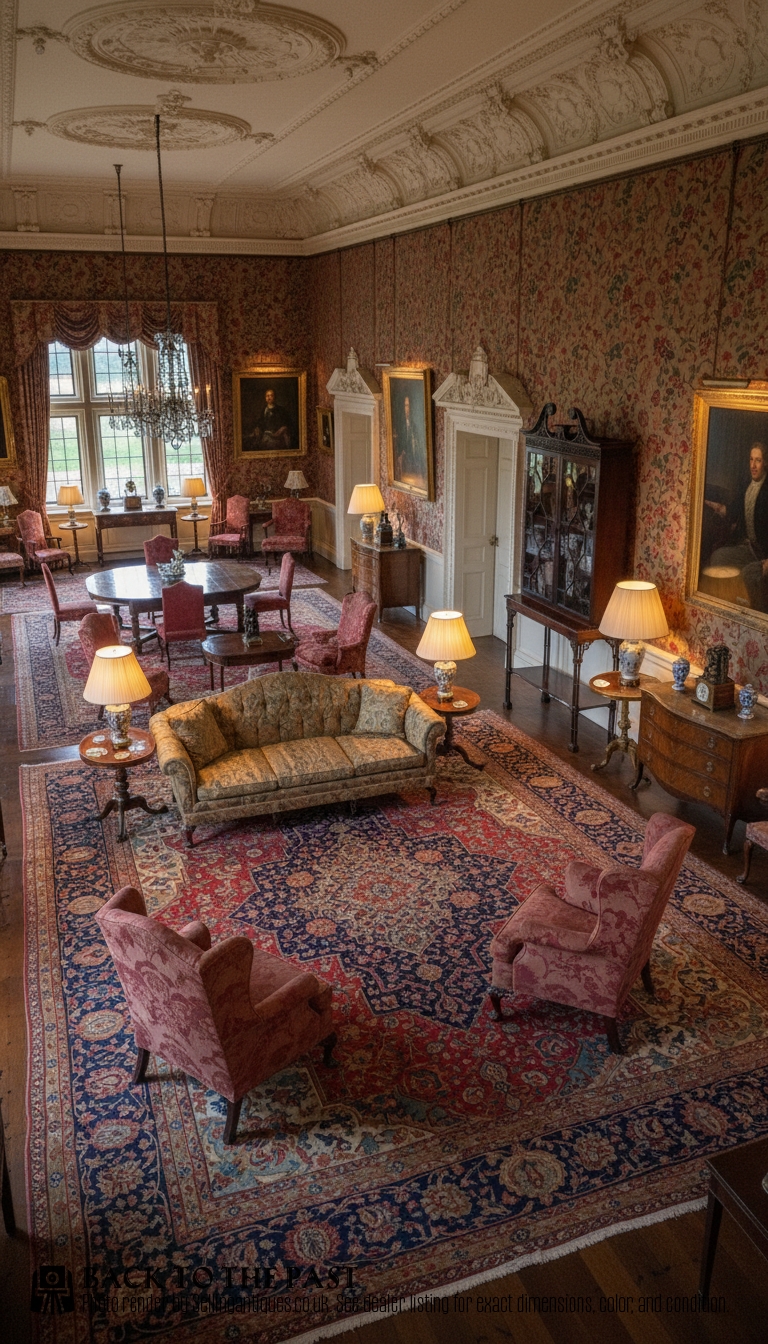
Display cabinets and bookcases stood in principal reception rooms to exhibit collections of porcelain and bound volumes. Corner cupboards and side cabinets utilised neglected wall space.
Smaller bijouterie cabinets and bedside formats served more intimate domestic quarters.
How do I identify a revival piece?
Revival items combine eighteenth-century proportions and carving styles with the timber preparation and construction methods of the late nineteenth and early twentieth centuries. Look for characteristic astragal glazing and carved mahogany frames.
Maker stamps and labels occasionally confirm the workshop origin.