

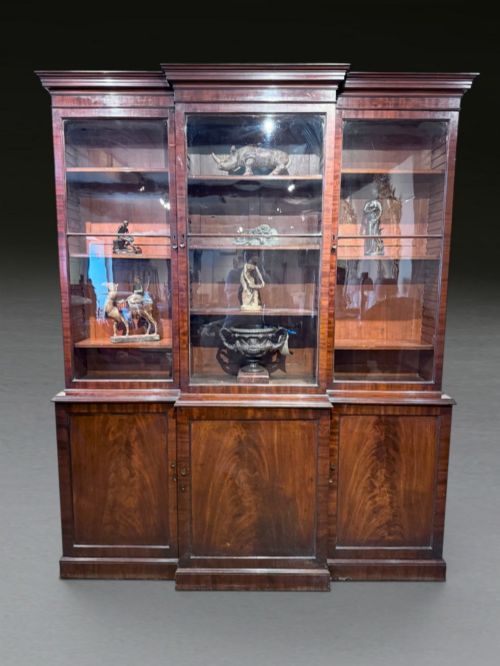
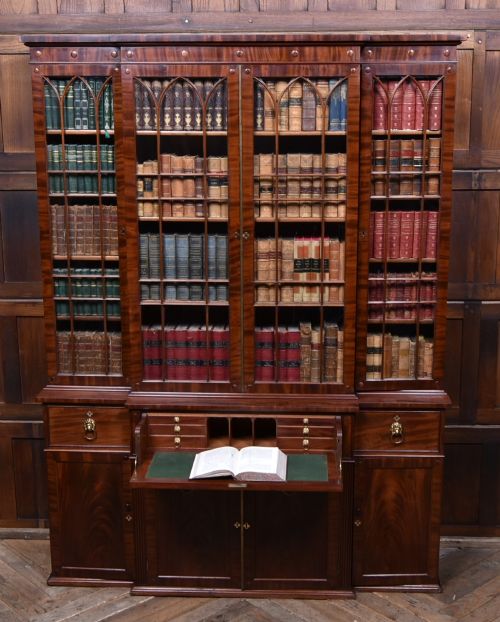
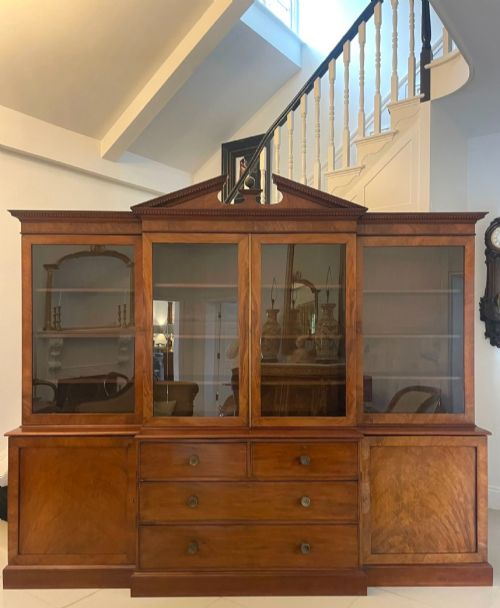
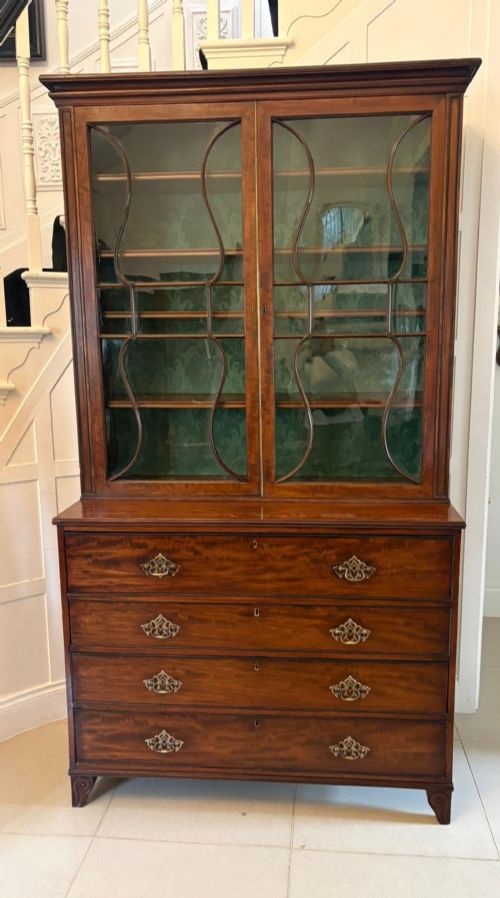
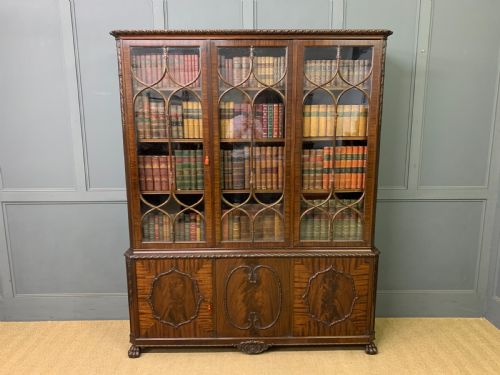
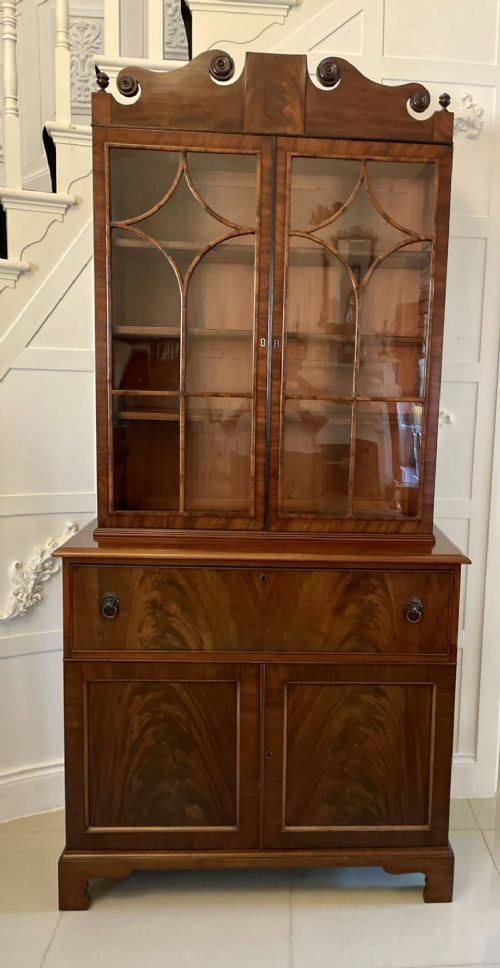
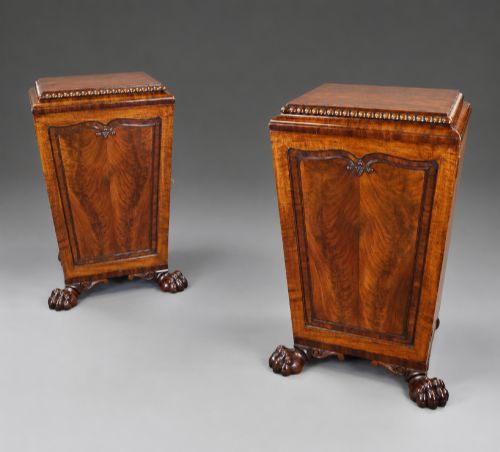
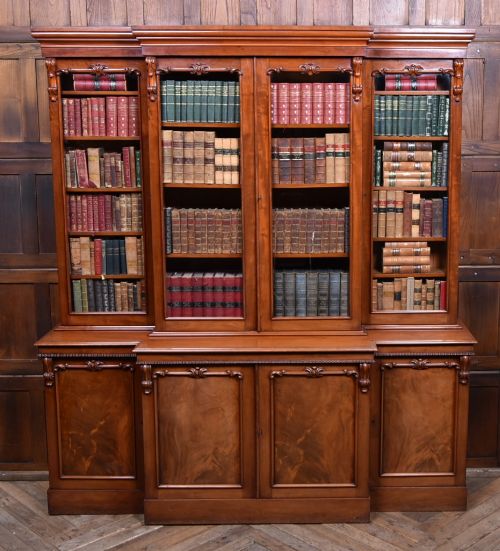
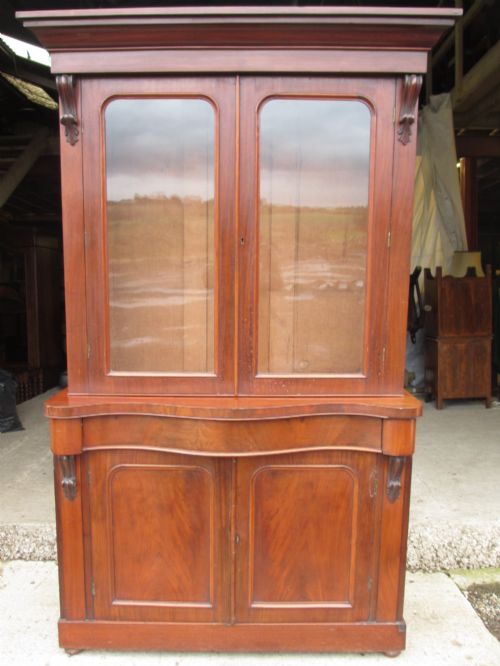
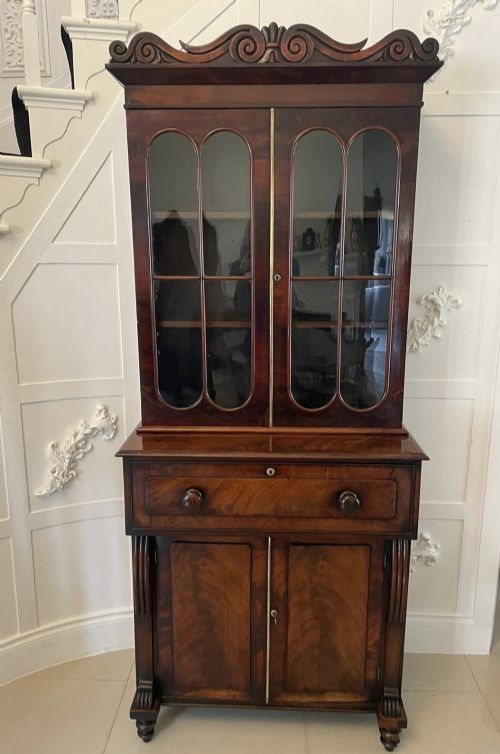
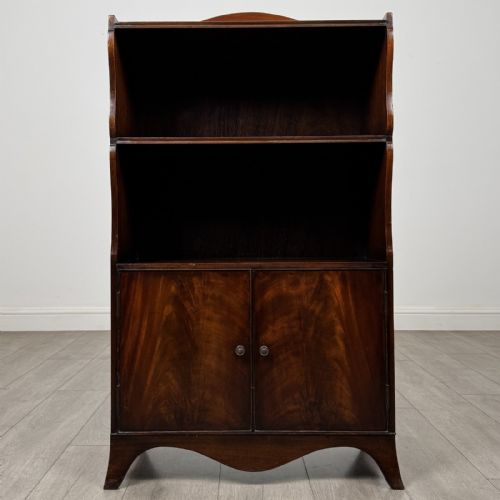
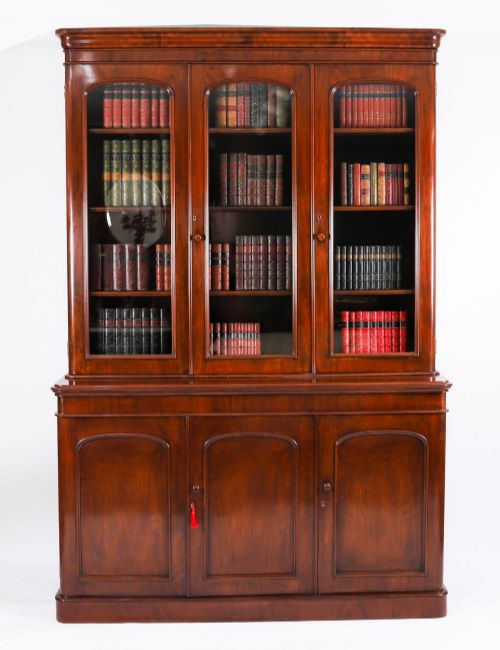
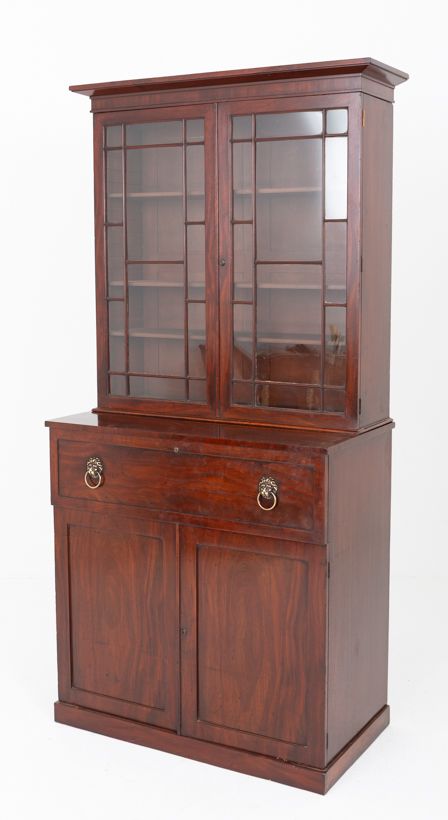
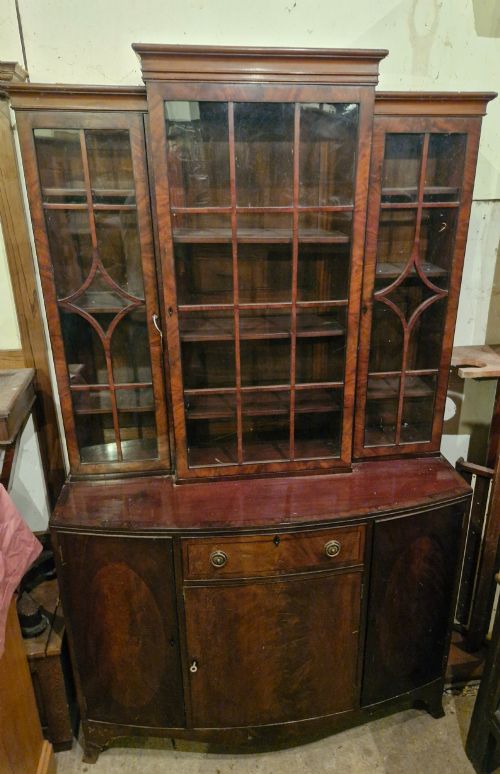
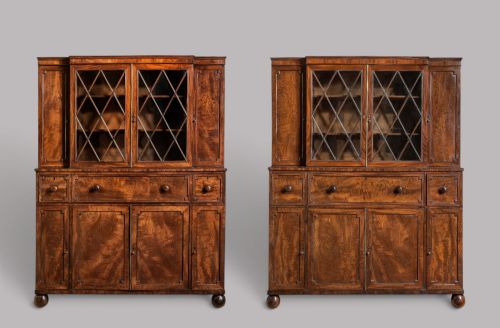
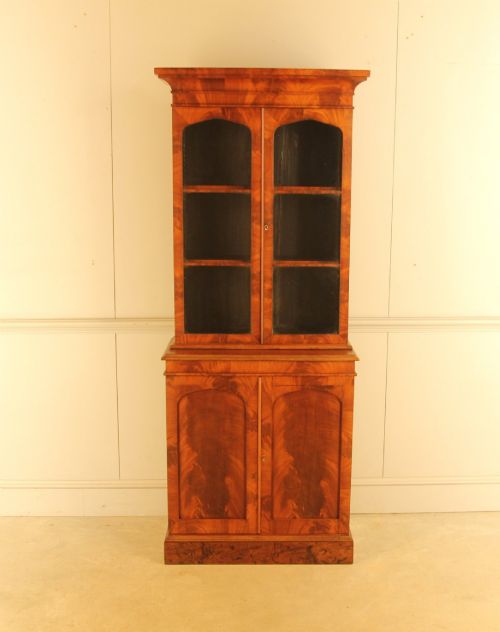
Flame Mahogany Display Cabinet
A flame mahogany display cabinet brings striking timber grain and refined glazing to a room, offering a functional home for cherished collections.
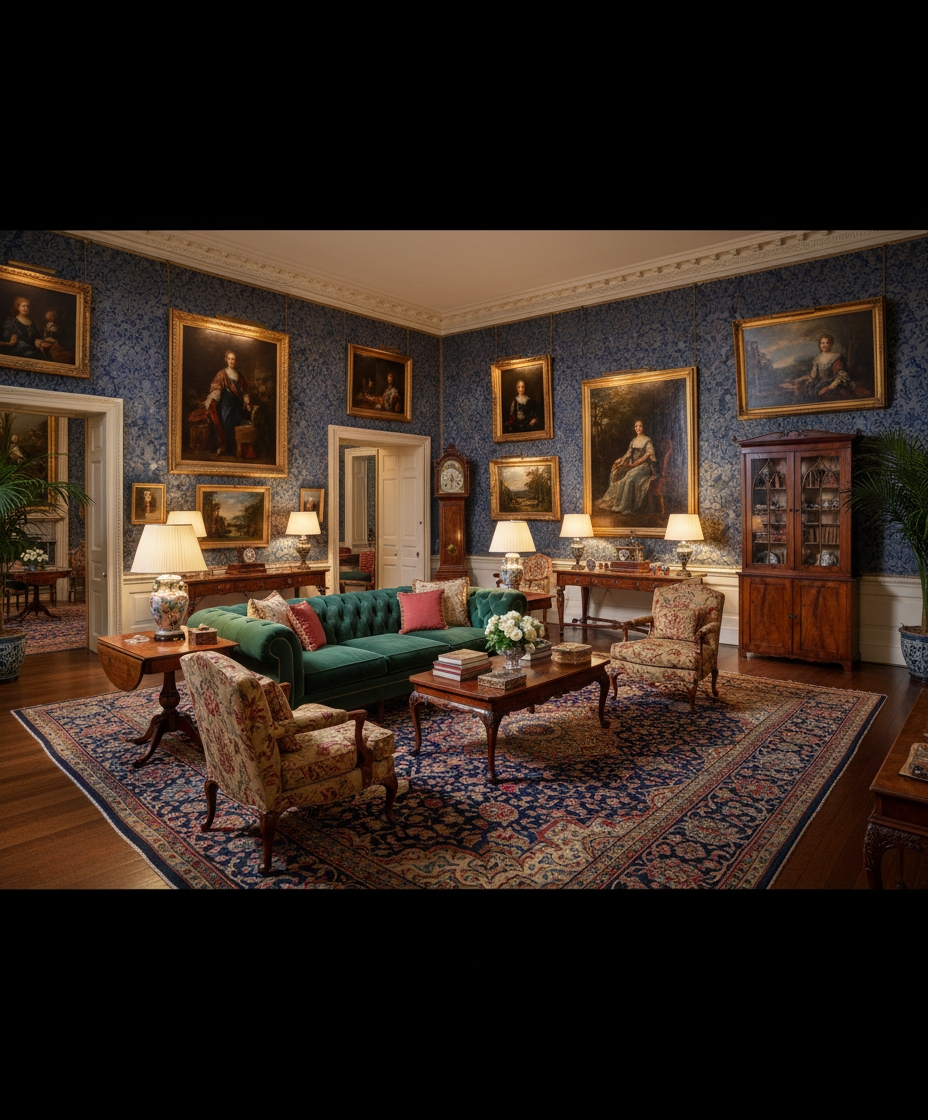
Flame Mahogany Display Cabinet
A flame mahogany display cabinet combines the rich figuring of select tropical timber with glazed doors designed to showcase books and objects. The pieces found here span the eighteenth, nineteenth, and early twentieth centuries, encompassing periods from Georgian and Regency through to Victorian and Edwardian revivals.
Buyers will encounter varied formats including tall breakfront bookcases, library cabinets, corner units, and secretaire bookcases featuring fitted writing drawers. These items served traditionally to protect and display domestic libraries and collections of porcelain.
The most prevalent examples on this page date from the nineteenth century, particularly the Victorian and Regency eras, alongside later revival pieces produced in the Georgian and Chippendale styles. Solid carcases meet pine and secondary timbers internally, fronted by decorative glazed panels.
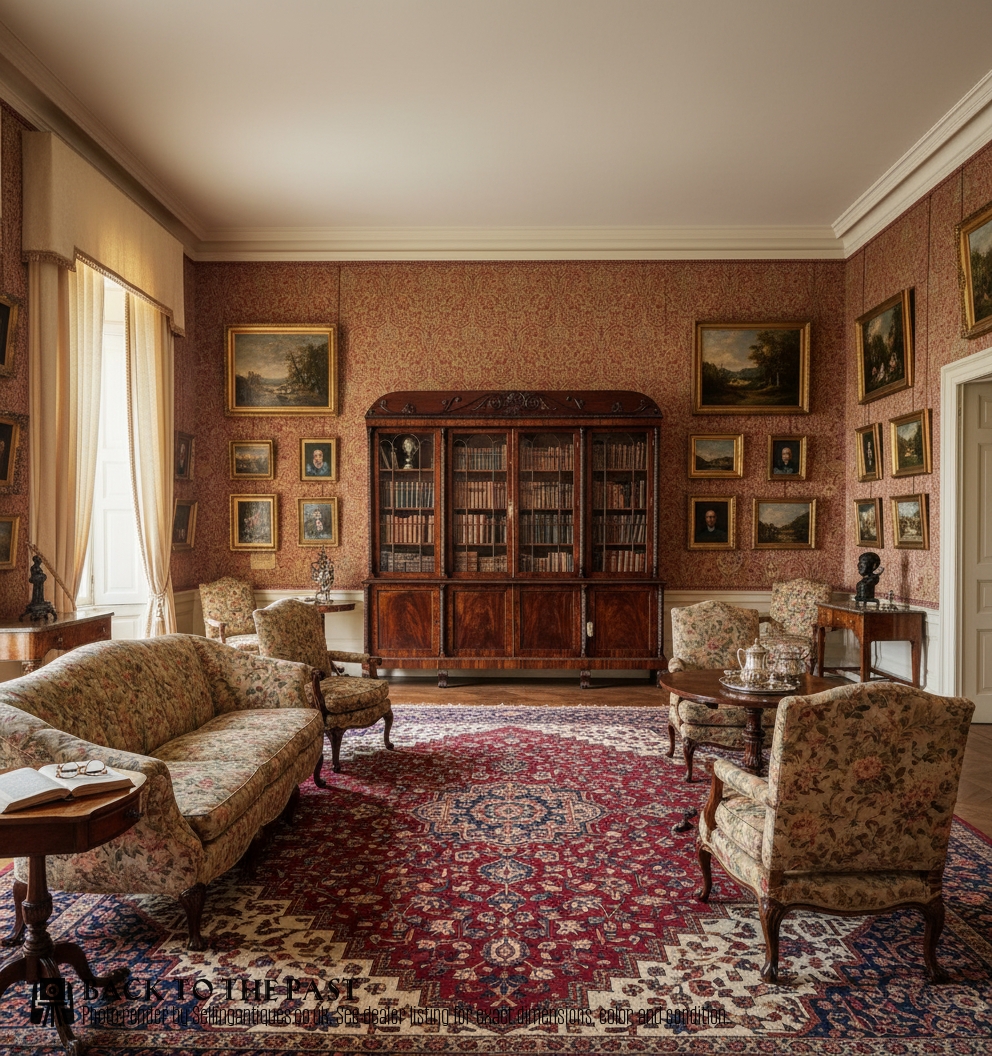
How they were made
Cabinet makers applied thin veneers of flame mahogany over sturdy secondary woods like pine and mahogany carcases, exploiting the dramatic feather-like grain patterns found where branches join the main trunk. Glazing bars in wood, brass fittings, and occasionally wire mesh or fabric linings completed the upper display sections.
Construction techniques rely on traditional dovetail joints for drawers and mortise and tenon framing for doors and carcases. Surfaces received hand-applied polish that enhanced the deep red-brown tones and natural chatoyancy of the flame veneer.
Flame Mahogany Display Cabinet Retail Price Guide 2026
Typical asking prices for flame mahogany display cabinet among the pieces listed under this phrase on Sellingantiques today, from the lower quarter to the upper quarter. They describe what is for sale here now, not the wider market.
Listings feature 18th century, Regency, and Victorian periods alongside Edwardian revival pieces.
What varies in quality
The distinction between standard production and exceptional craftsmanship rests in the selection and book-matching of the flame mahogany veneer across large expanses like doors and drawer fronts. Superior pieces exhibit symmetrical grain alignment and careful timber selection that draw the eye across the entire elevation.
Proportion, architectural detailing such as astragal glazing bars, and the finesse of carved mouldings or brass hardware separate standard utility furniture from pieces produced by notable workshops and cabinet makers.
Gillows·Wylie and Lochhead·T. Inglesant and Sons Leicester
The Flame Mahogany Display Cabinet Glossary
- Flame mahogany
- A wood veneer cut from the branch junctions of the mahogany tree, producing a distinct, flickering flame-like pattern. It is prized for its decorative visual movement.
- Breakfront
- A piece of furniture where the central section projects forward from the flanking wings. This architectural layout creates depth and shadow on large library bookcases.
- Astragal
- A moulding profile used on glazed doors to divide the glass into smaller panes. Fine astragal bars demand precise joinery.
- Secretaire
- A desk form incorporating a drop-front drawer that conceals small pigeonholes and writing surfaces. These hide a functional writing compartment within a bookcase format.
Flame Mahogany Display Cabinet: Frequently Asked Questions
How do I care for flame mahogany?
Keep the timber away from direct sunlight and sudden temperature shifts to prevent the thin veneer from drying or cracking over time. Regular dusting with a dry, soft cloth maintains the polished finish.
Avoid silicone-based sprays and excess moisture, applying a traditional beeswax sparingly only when the surface appears dry to the touch.
Are these cabinets modular for moving?
Most large library bookcases and breakfront cabinets divide horizontally into upper glazed sections and lower cupboard bases for transport. Secretaire drawers and internal shelves are typically removable.
Care must be taken with heavy glass doors and delicate cornice mouldings during transit, requiring professional handling for larger items.
How do I distinguish Regency from Victorian pieces?
Regency pieces often display restrained classical lines, brass inlay, and architectural proportions influenced by ancient Roman and Greek design. They typically date from the early nineteenth century.
Victorian cabinets tend to be heavier in scale, sometimes incorporating Gothic or exuberant revival influences with deeper mouldings and darker finishes.
Can I adjust the internal shelving?
Many period bookcases feature fixed wooden shelving integral to the original carcase construction, though later examples often introduce adjustable wooden peg systems. Altering fixed shelves is generally discouraged to preserve original fabric.
When shelves are adjustable, they rest on wooden bearers or brass pins within the interior side panels.