
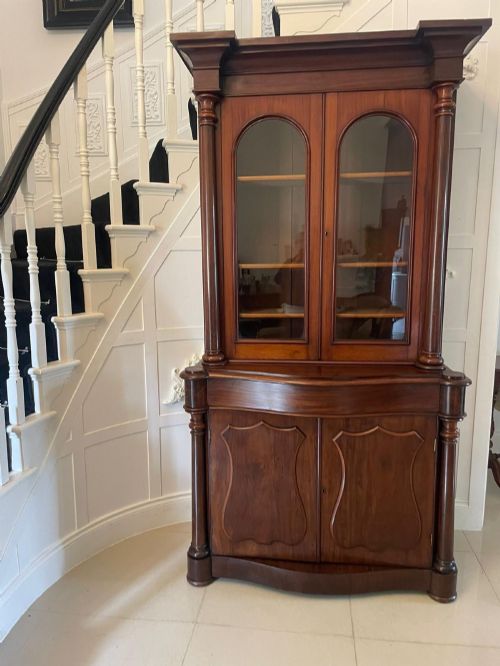
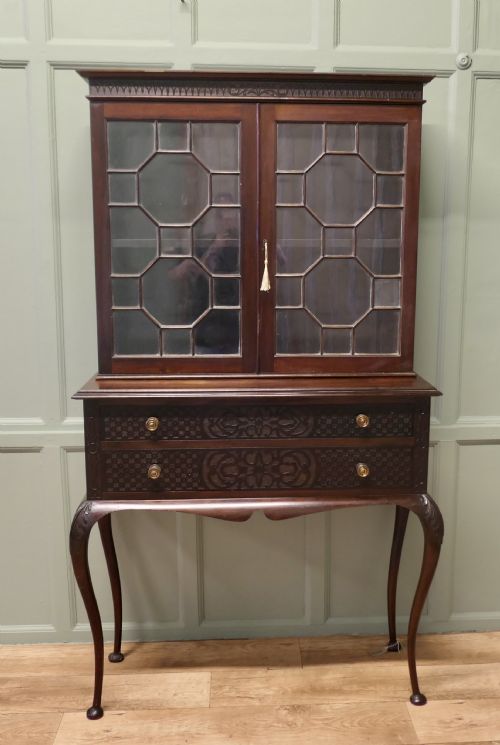
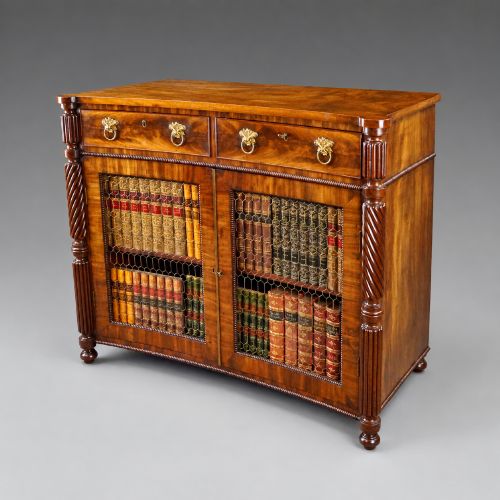
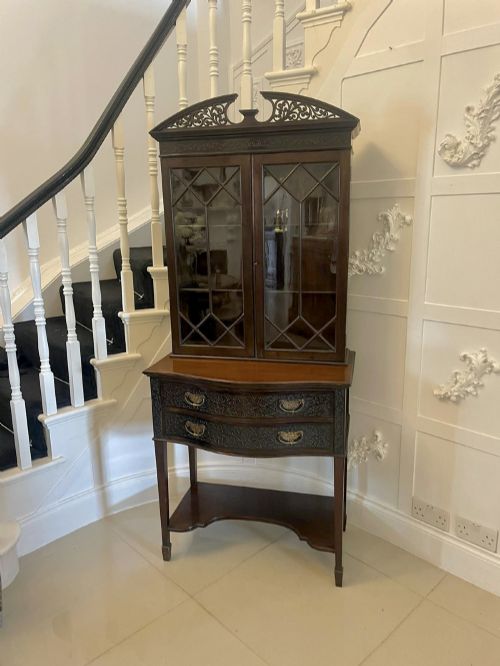
Mahogany Cabinet with Doors
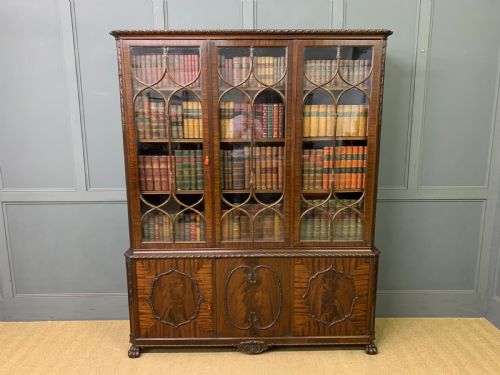
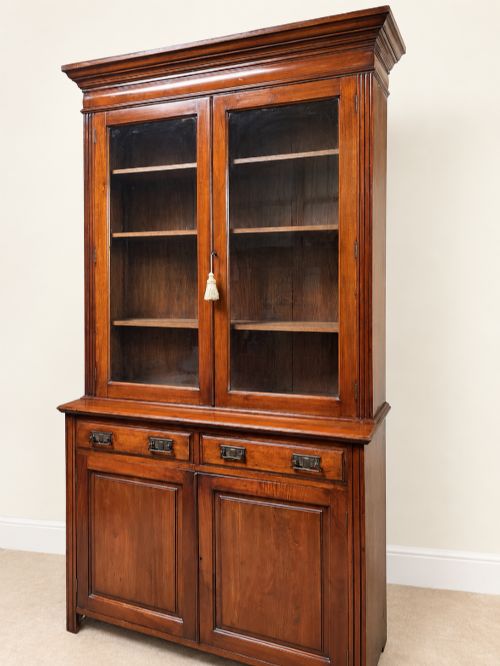
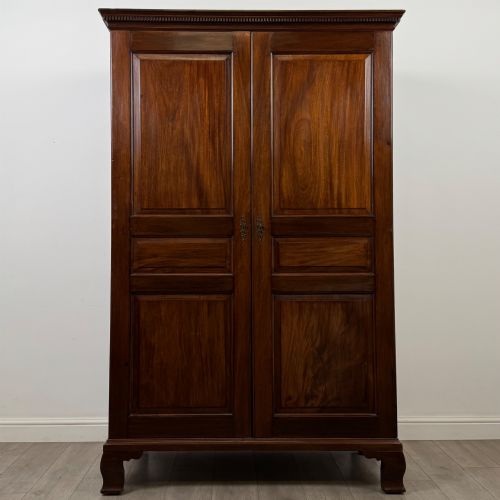
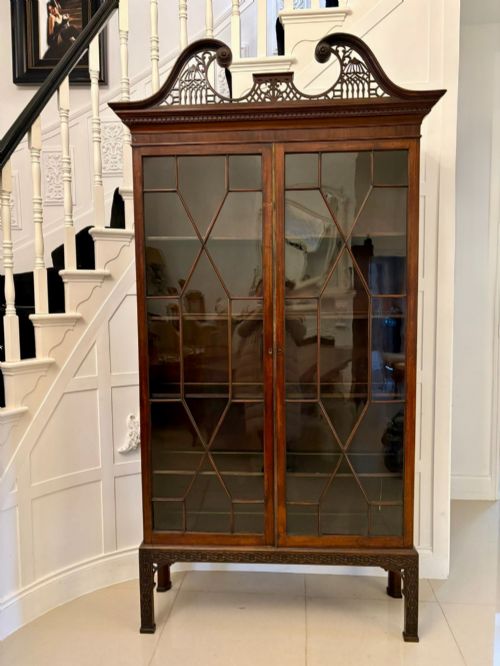
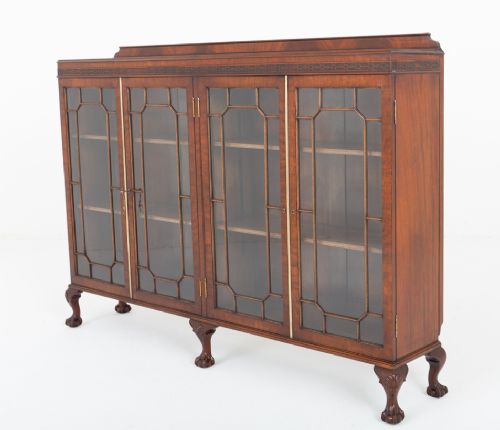
A mahogany cabinet with doors is a sturdy timber storage piece built to hold books, display valuables, or conceal household items behind timber or glass panels.
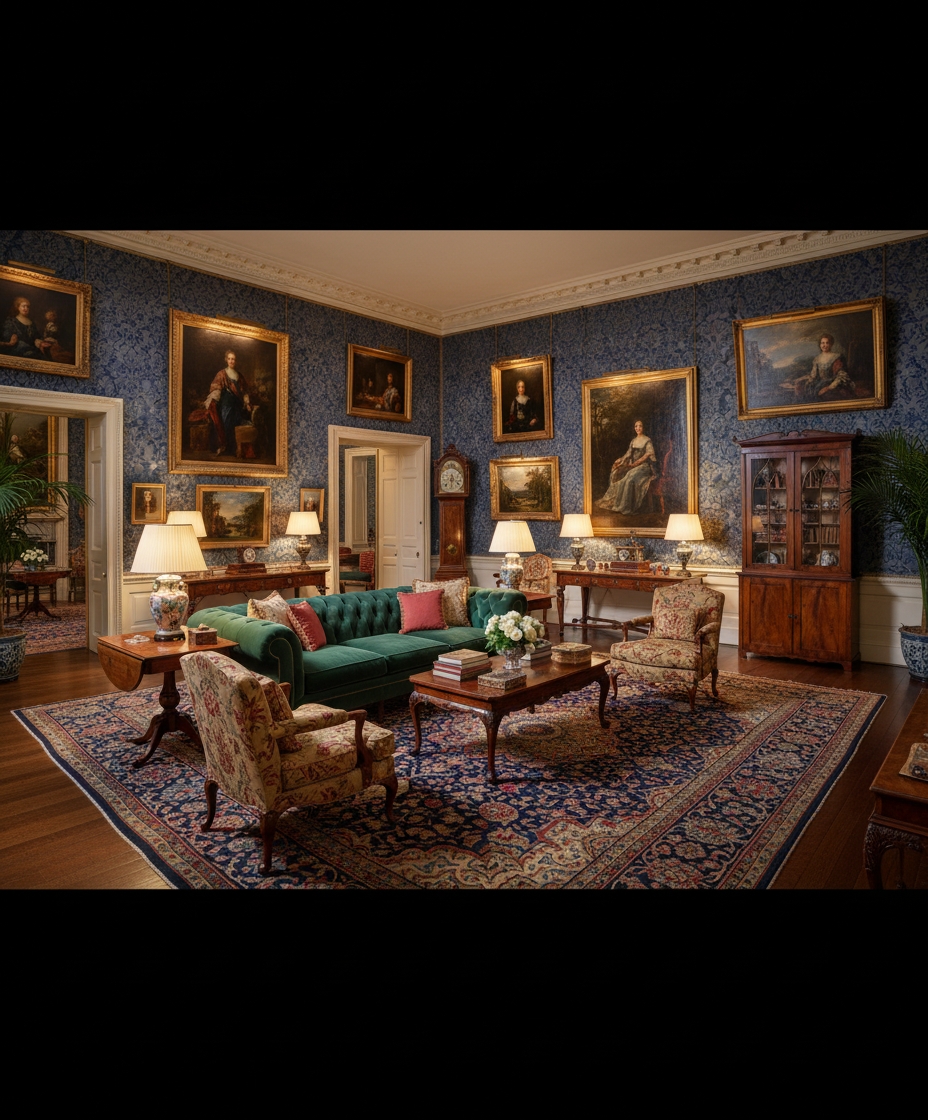
Mahogany Cabinet with Doors
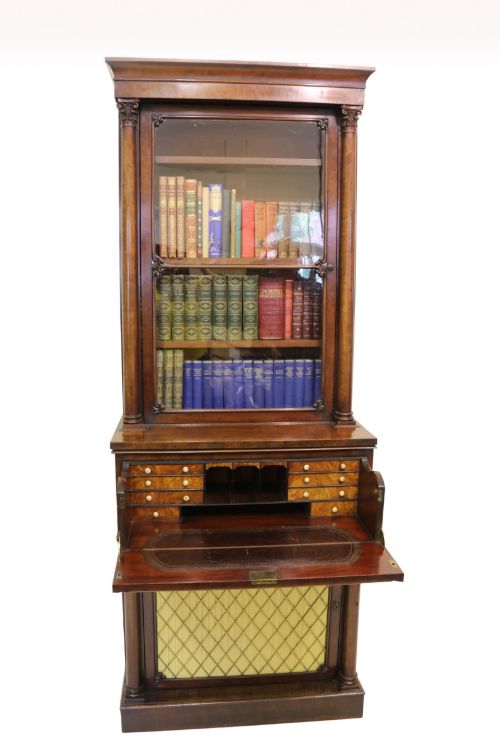
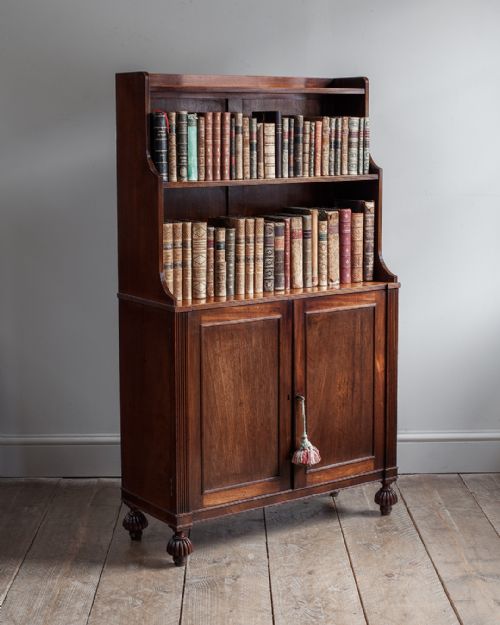
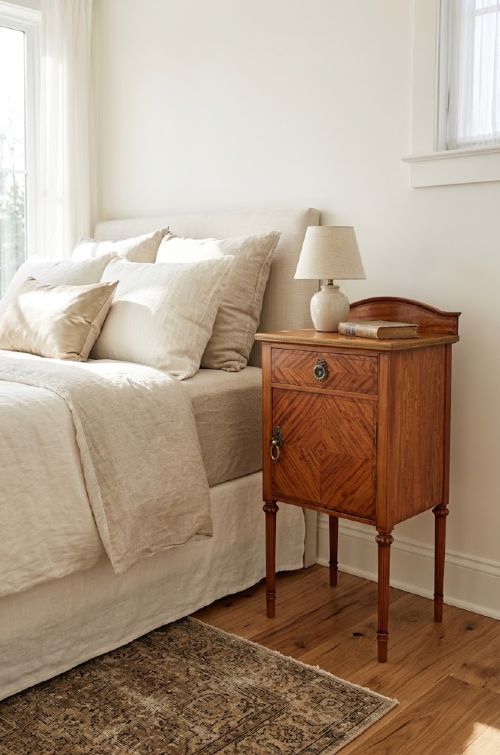
A mahogany cabinet with doors encompasses a diverse group of practical storage furniture originating from the Georgian, Regency, Victorian, and Edwardian periods. These pieces range from tall library bookcases and bureau bookcases to compact bedside cupboards and display cabinets.
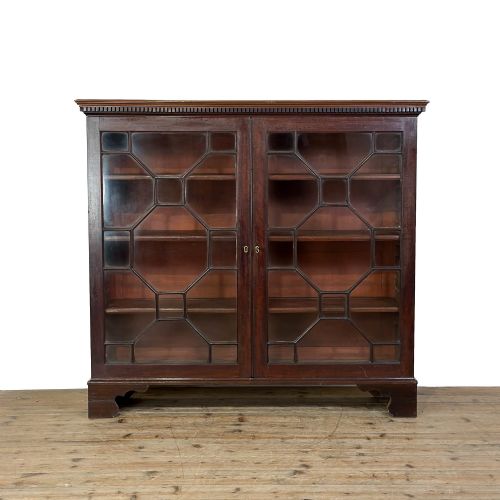
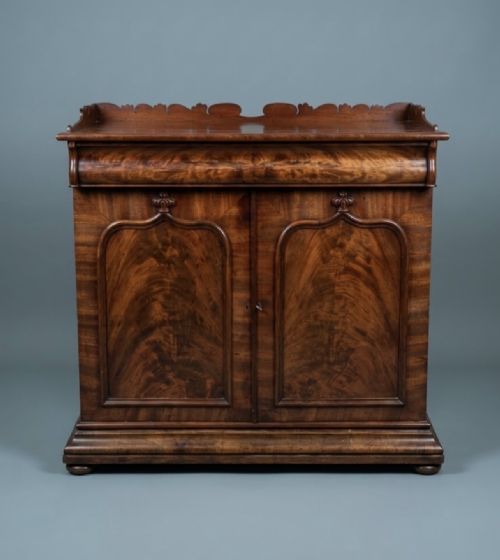
The versions most commonly met on this page are Victorian and Edwardian glazed bookcases and two-door cupboards. Many combine upper display sections with lower enclosed cupboards, often featuring adjustable shelves.
Makers utilised dense tropical timber alongside satinwood inlay, brass hardware, and glass to create functional furniture for domestic rooms. Regional variations and revival styles, such as Sheraton Revival and George III, appear frequently across the inventory.
How They Were Made
Cabinet makers constructed these pieces primarily from solid mahogany and figured mahogany veneers applied over secondary timbers. Surfaces were frequently enhanced with satinwood inlay, brass handles, grilles, or locks, alongside glass panels for display doors.
Internal structures incorporate adjustable wooden or glass shelves, fitted writing drawers in secretaire models, and panelled cupboard backs. Construction methods rely on traditional joinery techniques appropriate to the eighteenth, nineteenth, and early twentieth centuries.
Listings feature mahogany, satinwood, brass, glass, fabric, and marble across Georgian, Regency, Victorian, and Edwardian periods.
What Varies in Quality
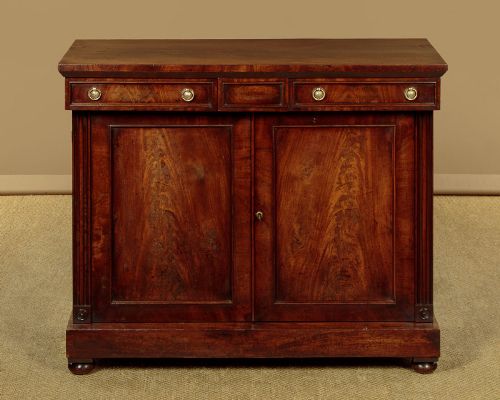
The visual appeal of the timber grain marks a primary distinction between standard examples and superior pieces. Figured mahogany, flame veneers, and fine satinwood inlay indicate greater workshop skill and cost at the time of manufacture.
Proportion, decorative carving, and the quality of secondary materials like brass grilles or astragal glazing bars elevate specific items. Structural integrity, original hardware, and surviving keys further separate ordinary utility items from finer cabinet work.
Tudor & Burrey·Robert Strahan
The Mahogany Cabinet with Doors Glossary
- Astragal glazed
- Glass doors divided into smaller panes by narrow wooden bars. This technique allows light into the cabinet while securing the interior.
- Secretaire
- A desk component featuring a drop-front drawer that conceals small pigeonholes and storage drawers. It combines writing functions with traditional bookcase storage.
- Flame mahogany
- A veneer cut from the fork of the mahogany tree to produce a distinctive flickering flame pattern. It appears on prominent door panels and drawer fronts.
- Satinwood inlay
- Contrasting pale timber inserted into the darker mahogany surface to form decorative lines or motifs. It is characteristic of Sheraton Revival and Edwardian pieces.
- Chiffonier
- A low sideboard or cabinet with enclosed shelves beneath. These pieces gained popularity during the Regency and Victorian eras for dining and living rooms.
Mahogany Cabinet with Doors: Frequently Asked Questions
What periods do these cabinets cover?
The pieces span from the eighteenth century through the Georgian, Regency, Victorian, and Edwardian eras up to the early twentieth century. Most examples date from the nineteenth century.
Design characteristics shift across these decades, moving from formal Georgian proportions to ornate Victorian carving and lighter Edwardian inlay work.
How were these cabinets used originally?
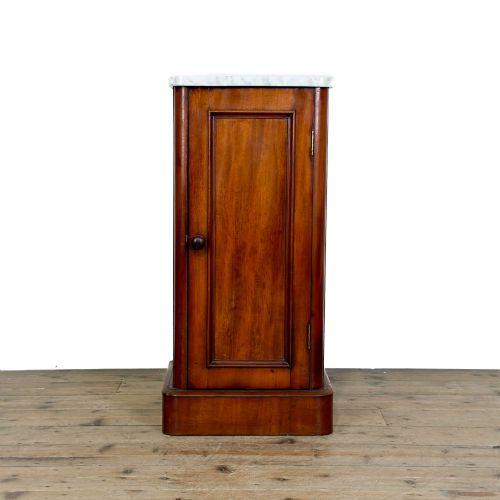
They served multiple domestic functions, including housing private libraries, displaying fine porcelain, and storing household linens or personal papers. Smaller versions functioned as bedside cupboards.
Many incorporated specialised interiors like secretaire drawers for writing or adjustable shelves for varying book sizes.
How do I care for mahogany furniture?
Keep timber pieces away from direct heat sources and strong sunlight to prevent the mahogany and its veneers from drying out or fading. Regular dusting with a soft, dry cloth preserves the polished finish.
Avoid commercial silicone sprays and excessive moisture, applying appropriate wax polish only when the wood appears dry.
How can I tell a Georgian piece from a Victorian one?
Georgian cabinets typically exhibit restrained classical proportions, architectural cornices, and understated bracket feet or plinths. The timber selection often relies on solid mahogany with clean structural lines.
Victorian and later examples frequently feature heavier carvings, figured veneers, glass doors with astragal bars, and sometimes factory-produced elements or revival styling.