

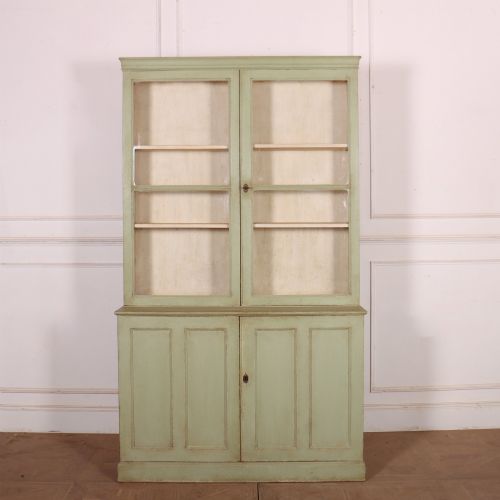
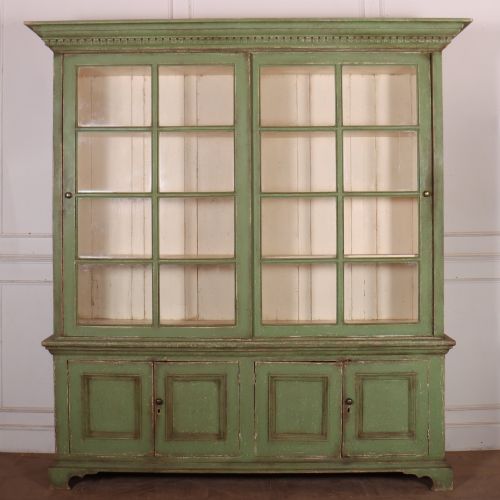
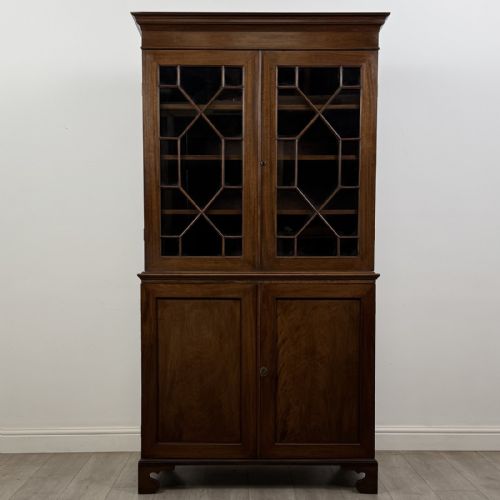
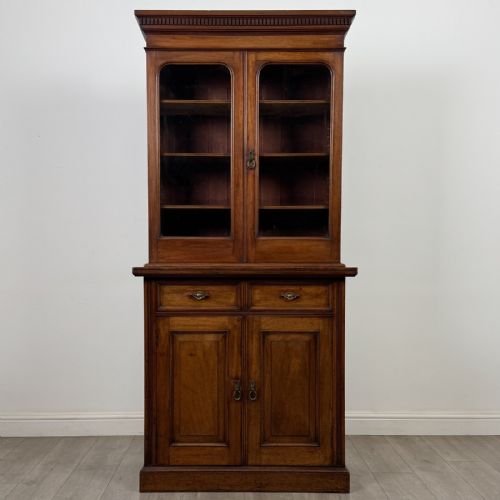
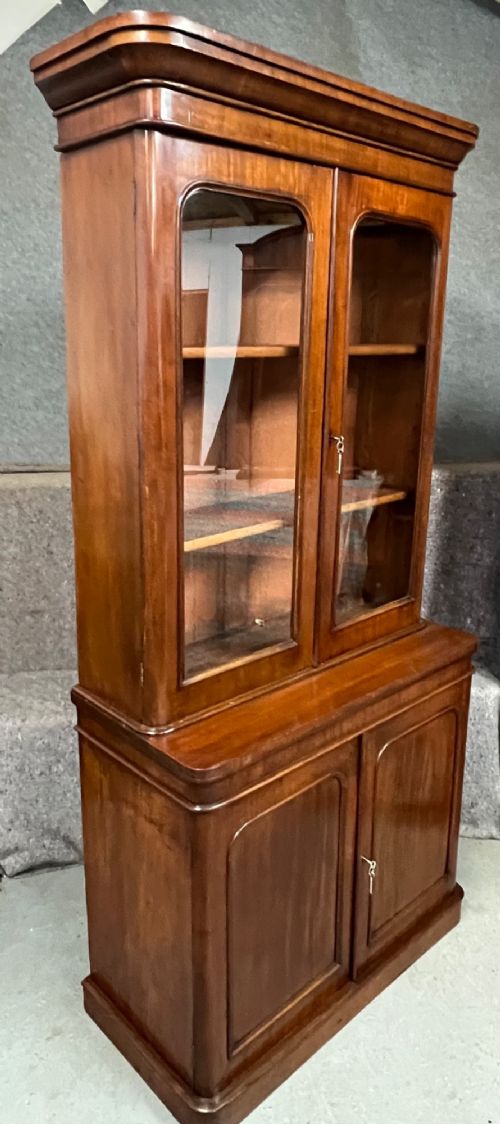
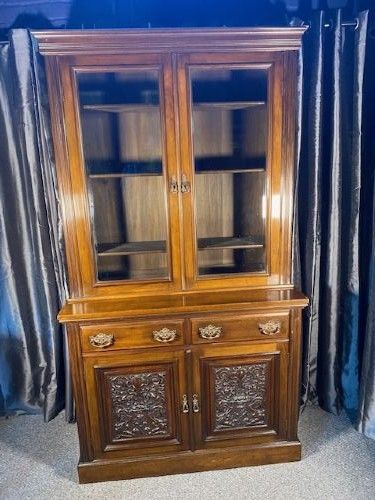
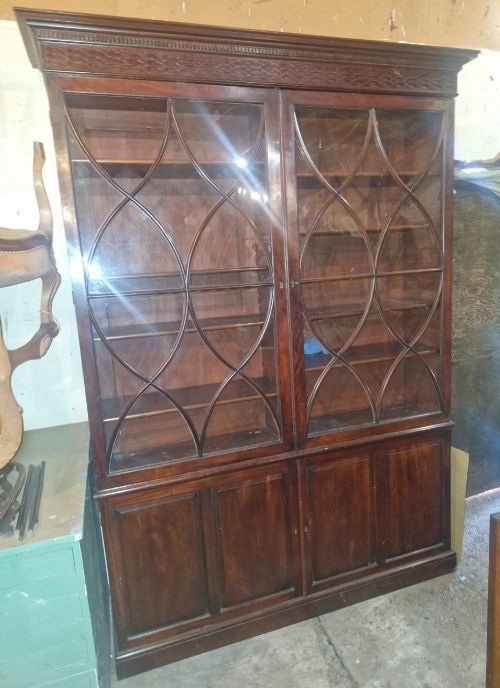
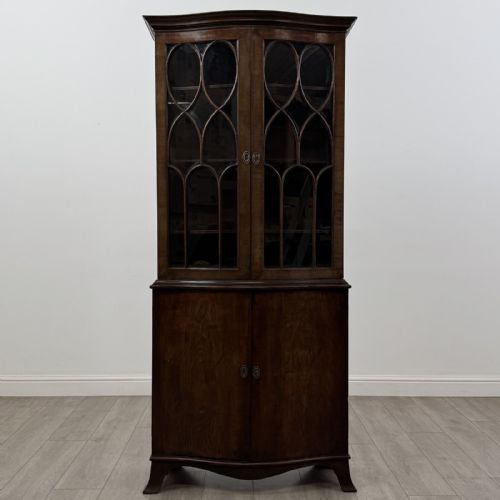
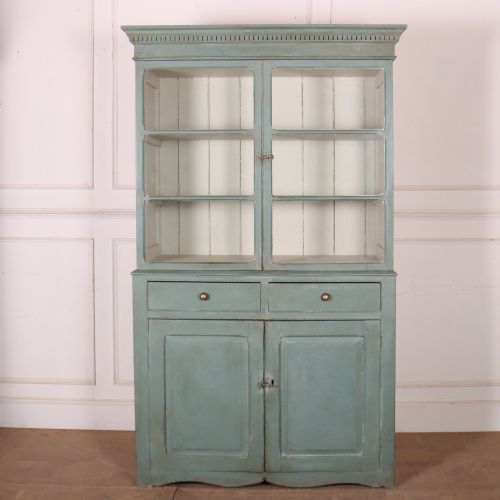
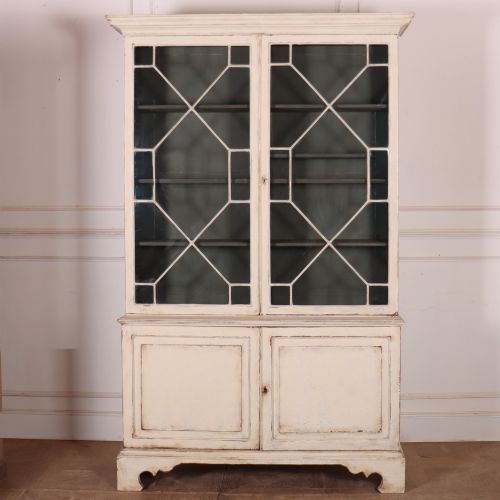
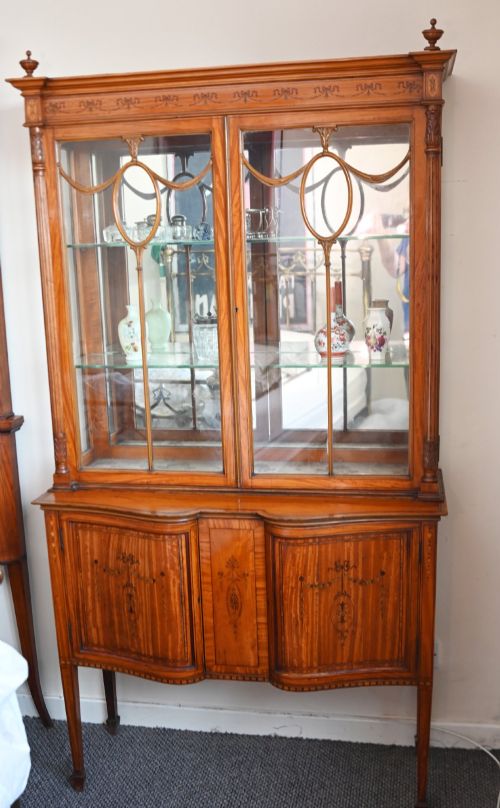
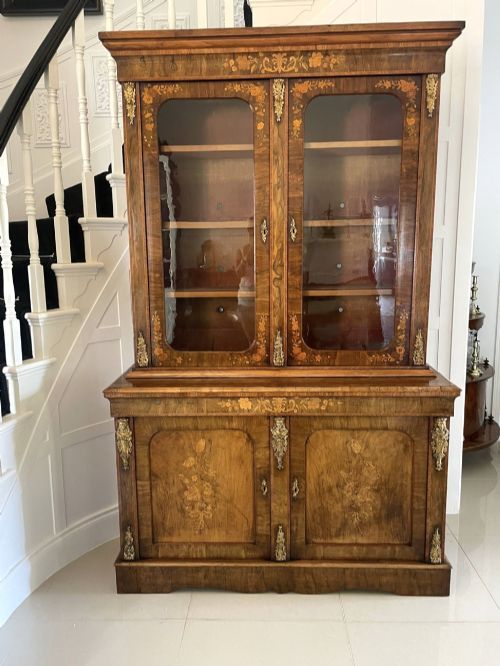
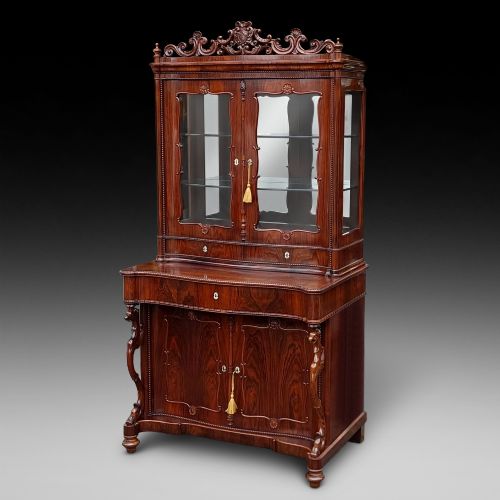
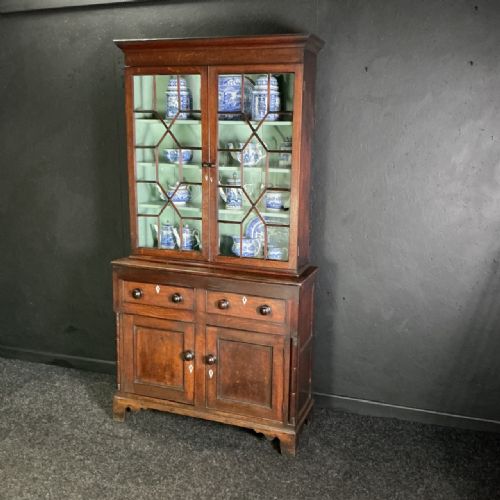
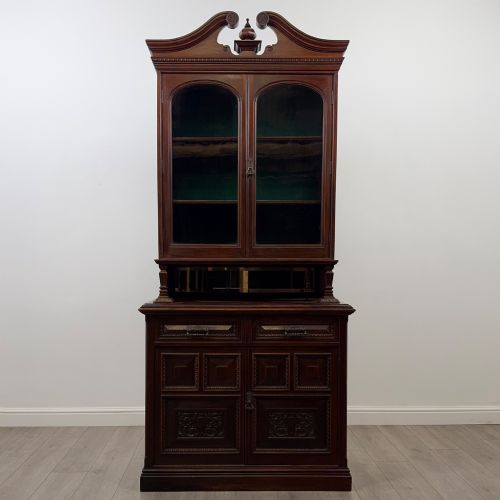
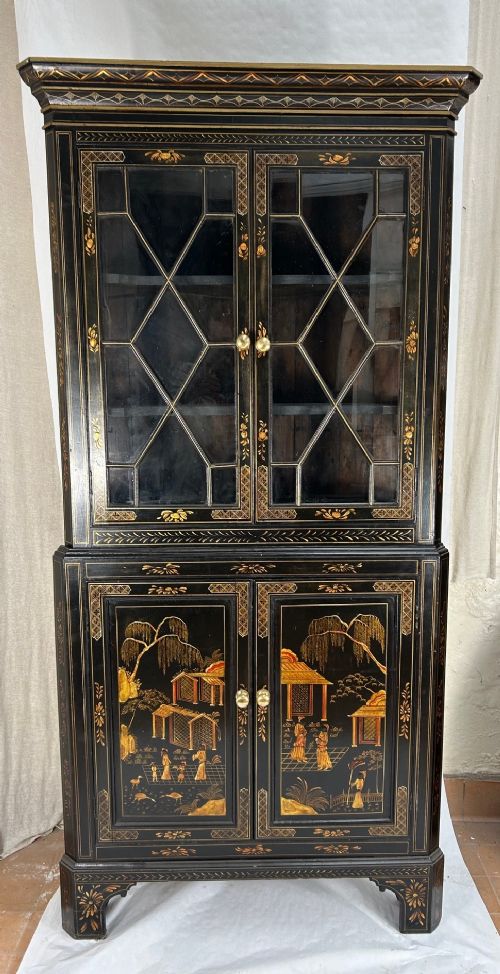
Two Tier Glazed Bookcase
A two tier glazed bookcase offers a practical home for a library, stacking a glass-fronted cabinet atop a solid base to keep volumes clean and ordered.
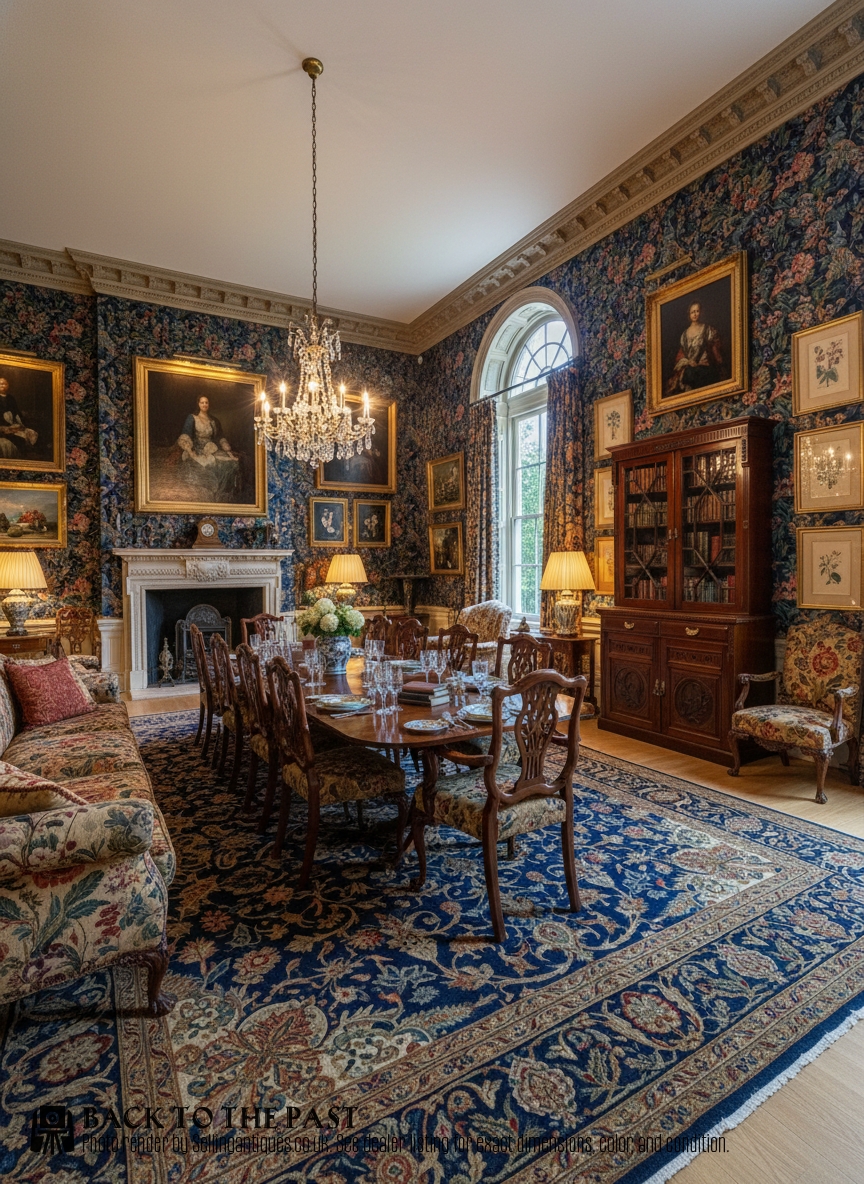
Two Tier Glazed Bookcase
A two tier glazed bookcase divides its storage between an upper section with glass panels for display and a lower cupboard or drawer base. This configuration comes in forms ranging from Georgian and Regency mahogany pieces to Victorian walnut and oak designs.
The pieces appearing on this page span the 18th century through the early 20th century, encompassing regional variations such as Welsh oak and French styles. Buyers most frequently encounter mahogany and pine versions from the Victorian period.
These pieces function primarily as working library furniture or display cabinets for collections. The upper tiers feature glazed doors that protect books from dust while maintaining visibility across the shelf contents.
How they were made
Makers constructed the primary carcases using hardwoods such as mahogany, oak, and rosewood, alongside pine for secondary timbers. Cabinet makers joined these sections using traditional housing joints and dovetails, mounting glazed doors on brass hinges.
Surface finishes include French polishing on fine cabinet timbers, wax and paint on pine examples, and occasional marquetry inlay or ormolu mounts on high-status Victorian pieces. Glass panels were hand-blown or cylinder-drawn into leaded or timber framing bars.
Two Tier Glazed Bookcase Retail Price Guide 2026
Typical asking prices for two tier glazed bookcase among the pieces listed under this phrase on Sellingantiques today, from the lower quarter to the upper quarter. They describe what is for sale here now, not the wider market.
Some school library cabinets spent decades guarding battered textbooks before finding a second life holding pottery.
What varies in quality
The choice of primary timber and veneer figure determines the visual weight of the piece, with figured walnut, burr timber, and richly grained mahogany sitting at the upper end of the scale. Construction details such as adjustable shelving mechanisms and original brass hardware further distinguish fine cabinetwork from utilitarian workshop output.
Proportion and proportion control dictate the elegance of the profile, separating standard regional joinery from pieces built by leading cabinet-making firms. The condition of the original glass panes and the crispness of carved or inlaid decoration reveal the original hand of the maker.
Howard & Sons·Holland & Sons
The Two Tier Glazed Bookcase Glossary
- Two tier
- A piece built in distinct upper and lower sections, typically a glazed cabinet resting upon a cupboard or chest base.
- Glazed
- Fitted with glass panels in the doors to display and protect the contents within.
- Secrétaire
- A desk unit incorporating a fall-front writing drawer integrated into the cabinet structure.
- Breakfront
- A cabinet front where the central section projects forward from the flanking wings.
- Vitrine
- A glass-sided display cabinet designed primarily for the exhibition of objets d'art rather than books.
Two Tier Glazed Bookcase: Frequently Asked Questions
How do I care for the glass?
Clean the glass panels using a soft cloth and a gentle, non-ammonia cleaning solution applied to the cloth rather than directly sprayed onto the wood.
Take care to prevent moisture from seeping into the timber framing or historic putty around the panes during routine maintenance.
Are the shelves adjustable?
Many examples feature adjustable shelving supported on traditional wooden lopers, brass studs, or ratcheted rack strips.
Check the interior configuration to confirm whether the height levels can be altered to suit various book sizes.
How do I distinguish Victorian from Georgian?
Georgian pieces generally exhibit lighter proportions, restrained classical stringing, and simpler bracket feet or plinths. Victorian versions tend to feature heavier cornices, darker mahogany or walnut timbers, and more robust plinth drawers.
Look at the backboards and internal construction methods to verify the period of manufacture.
Where should I place it?
Position the cabinet against an interior wall away from direct sunlight and heat sources to protect the polished wood finish and paper bindings.
Ensure the floor is level so the heavy two-tier carcase distributes its weight evenly without twisting the glazed doors.