
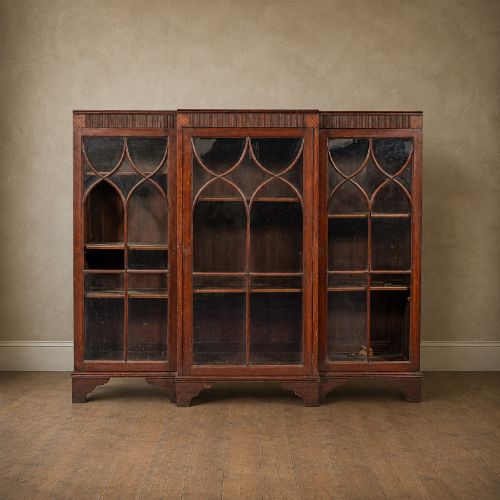
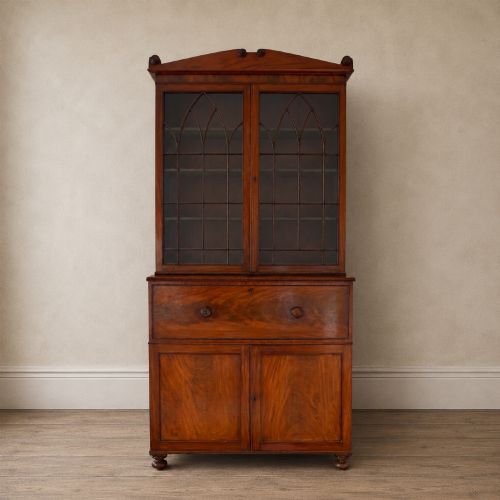
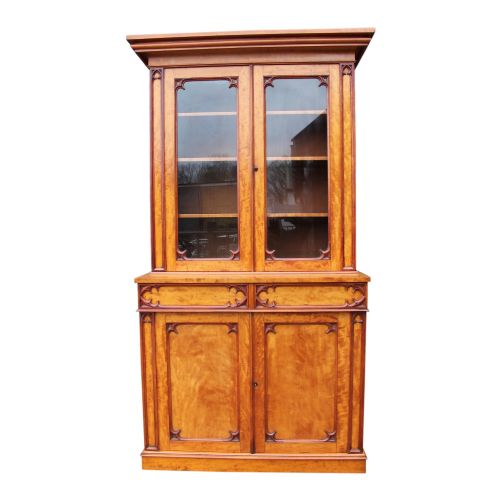
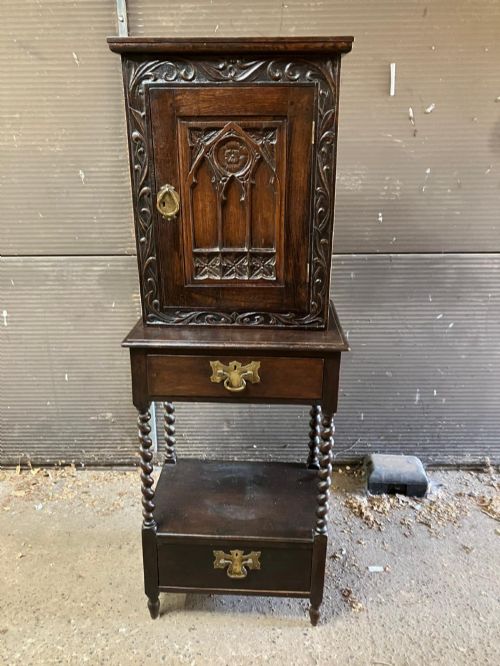
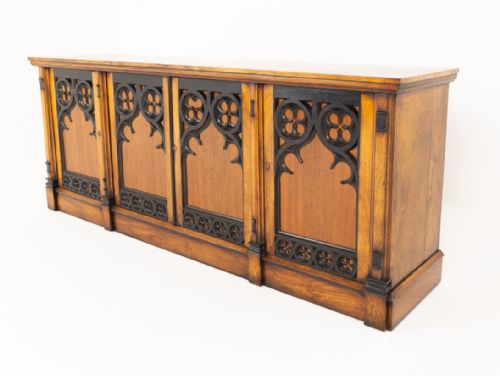


Gothic Tracery Cabinet
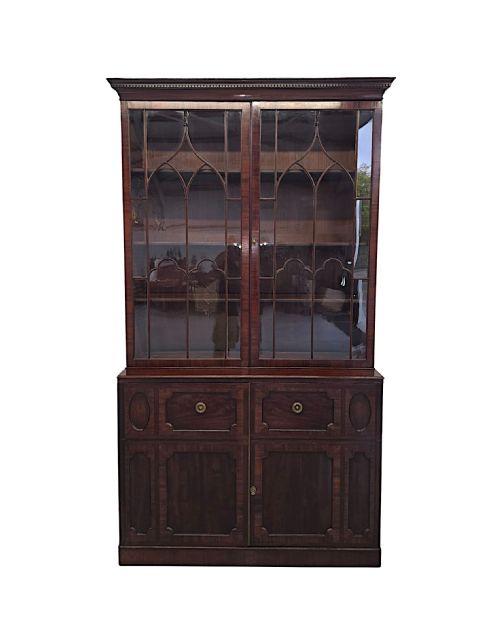
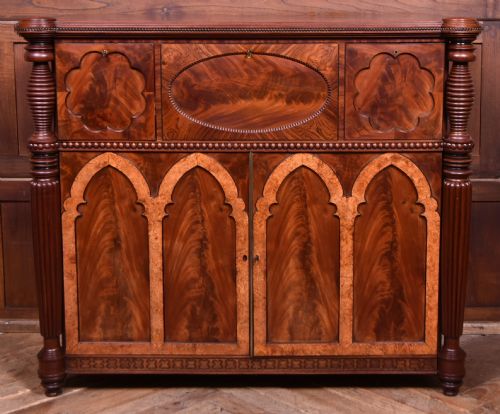
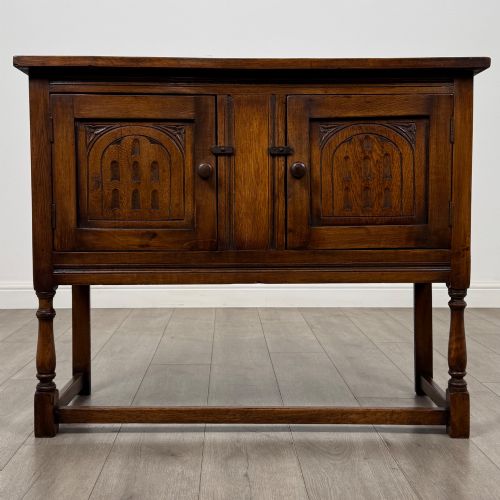
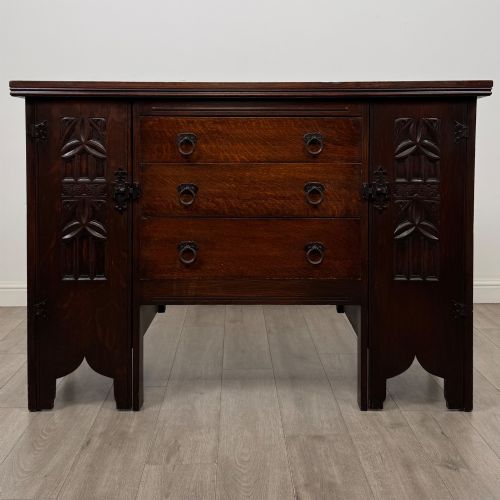
These gothic tracery cabinet pieces bring architectural sharpness and timber depth into a room, offering functional storage with distinctive pointed arch framing.
What these pieces are
A gothic tracery cabinet combines traditional cabinet-making with the vertical emphasis of ecclesiastical architecture, appearing across bookcase, display, secretaire, and cupboard forms. Buyers searching for a gothic tracery cabinet will find examples stretching from the Georgian and Regency periods through the Victorian era into Edwardian Sheraton Revival.
The materials span solid oak, mahogany, flame mahogany, burr walnut, and satinwood, frequently paired with glass doors and brass hardware. Most pieces lean into the Gothic Revival style, though individual items reflect Georgian, Regency, and 1900s craftsmanship.
How they were made
Workshops utilised dense timbers such as oak and mahogany alongside decorative veneers like flame mahogany, burr walnut, and satinwood. Construction involved substantial framing to support heavy glass panels and intricate carved woodwork.
Makers integrated brass fixtures and sometimes fabric linings behind glazed doors to showcase books or display items. Panels featured carved church-style tracery work requiring precise hand joinery.
Retail Price Guide 2026
Typical UK retail prices for gothic tracery cabinet, calculated from the Sellingantiques database of over a million retail prices indexed since 2003. This retail price guide relies exclusively on Sellingantiques data; no external sources or auction records are used, so the figures do not describe the wider market.
The site listings feature cabinets in oak, mahogany, flame mahogany, burr walnut, and satinwood across Victorian, Georgian, and Regency periods.
What varies in quality
The calibre of a piece rests on the crispness of the carved tracery work and the selection of timber veneers. Superior examples display figured grain and deeply cut architectural details rather than flat, machine-imitation mouldings.
Integration of specialised forms, such as secretaire drawers or matching pairs, elevates the standing of a piece. Finer cabinets demonstrate seamless timber matching across large doors and robust structural integrity.
Gillows
The Gothic Tracery Cabinet Glossary
- Tracery
- Openwork stonework or woodwork in the upper part of Gothic windows or panels, forming geometric patterns with pointed arches. This defines the primary decorative vocabulary of these cabinets.
- Secretaire
- A cabinet incorporating a pull-down writing drawer fitted with small compartments and pigeonholes. It combines a writing desk with enclosed storage.
- Flame mahogany
- Mahogany timber cut at an angle to the growth rings to produce a dramatic, flickering flame-like pattern. It was favoured for high-status cabinet doors during the Georgian and Victorian periods.
- Satinwood
- A durable, yellowish timber prized for its smooth sheen and used extensively in refined neoclassical and revival furniture. It provides a striking contrast to darker woods.
Frequently Asked Questions
What rooms suit a gothic tracery cabinet?
These cabinets work well in studies, libraries, or living spaces where timber warmth and architectural detail complement existing furniture. Their vertical proportions also suit transitional hallways or dining rooms.
Because many examples function as bookcases or display cabinets, they provide practical storage while serving as a strong focal point in a room.
How do I care for these timbers?
Keep wooden cabinets away from direct heat sources and strong sunlight to prevent the timber and delicate veneers from drying out or fading. Regular dusting with a soft, dry cloth maintains the finish without needing heavy polishes.
Occasional treatment with appropriate wax helps preserve moisture in older hardwoods like oak and mahogany.
Are these pieces strictly Victorian?
While the Gothic Revival style reached its peak during the Victorian era, the selection includes pieces from the Georgian, Regency, and Edwardian periods. Each era brought slightly different proportions and timber choices to the design.
Earlier pieces often feature solid carved oak, while later Victorian and Edwardian examples frequently utilise exotic veneers and glass panel combinations.
How do I distinguish the periods?
Georgian and Regency pieces tend to display restrained classical proportions combined with Gothic detailing, whereas Victorian items often embrace heavier, more exuberant ecclesiastical ornamentation. Edwardian interpretations can incorporate lighter revival styles like Sheraton elements.
Examining the secondary woods, hardware construction, and interior fittings helps clarify the era of manufacture.