
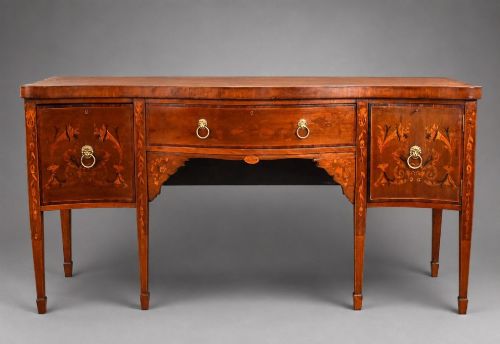
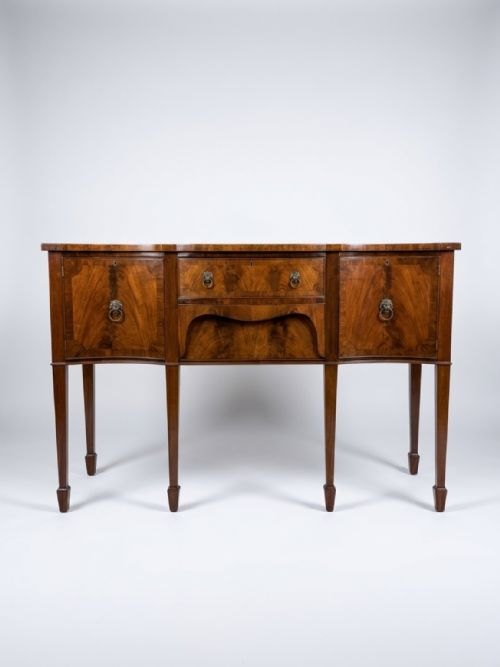
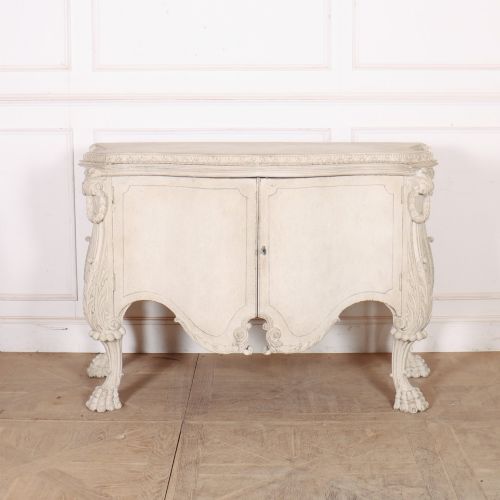
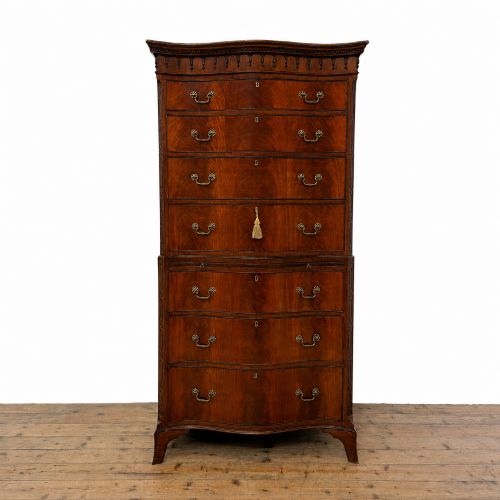
Serpentine Front Cabinet
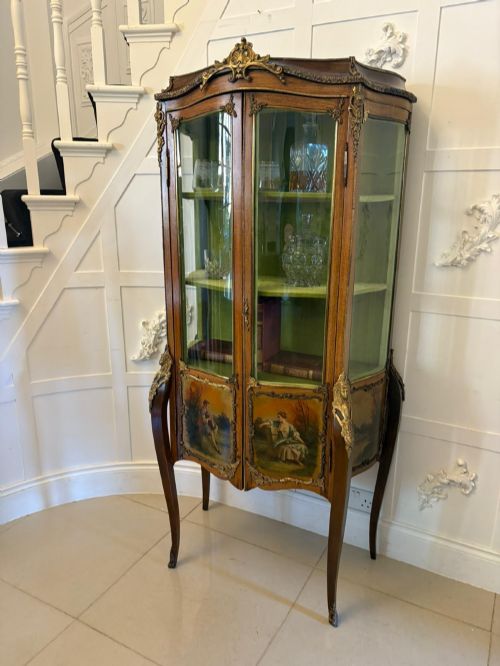
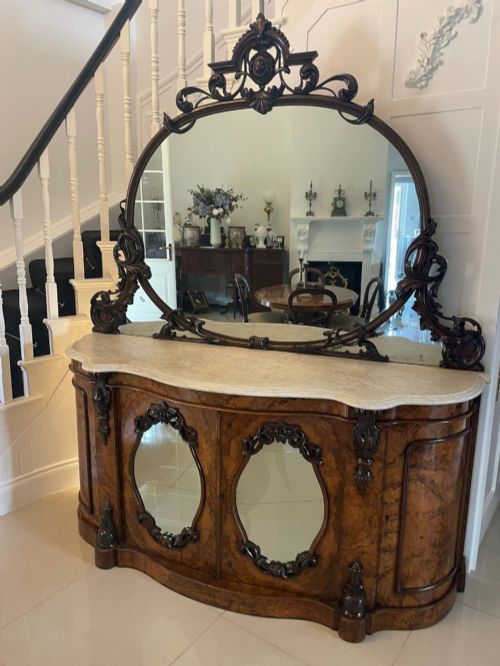
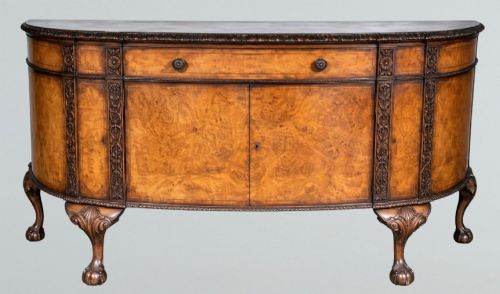
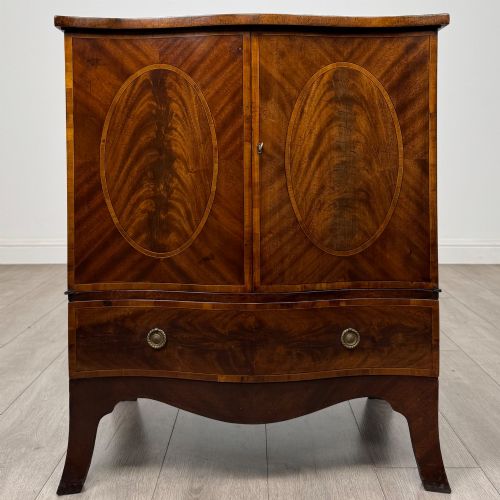
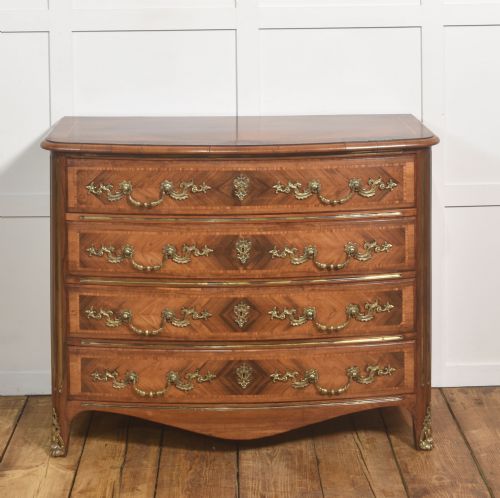
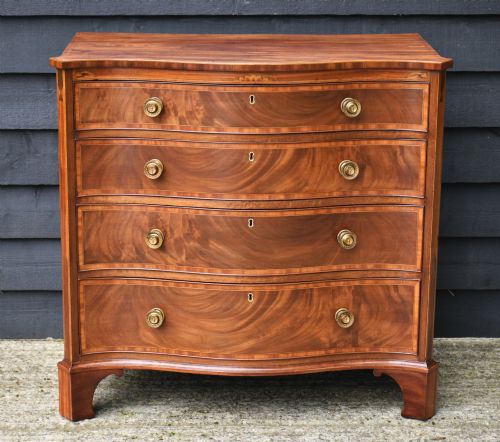
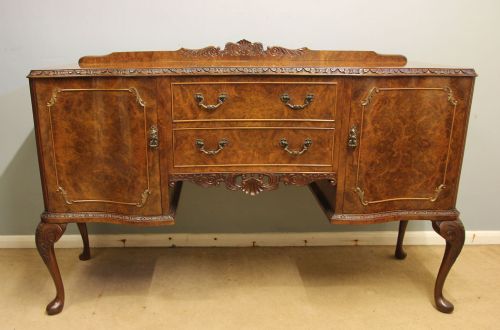
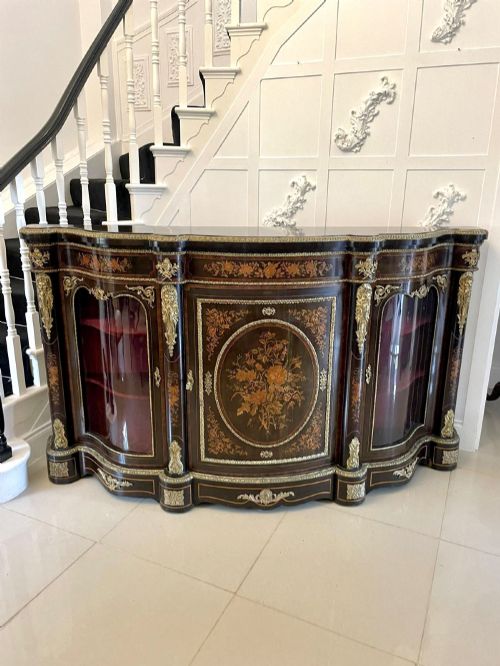
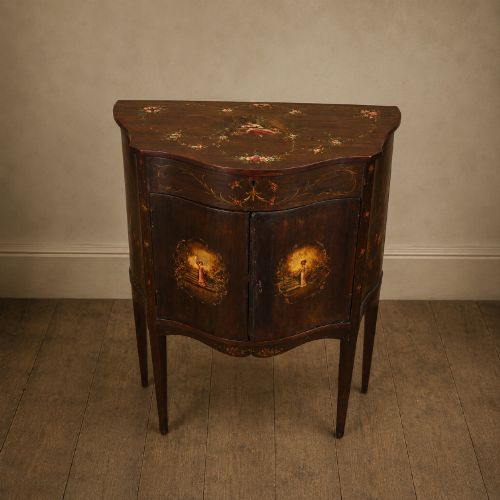
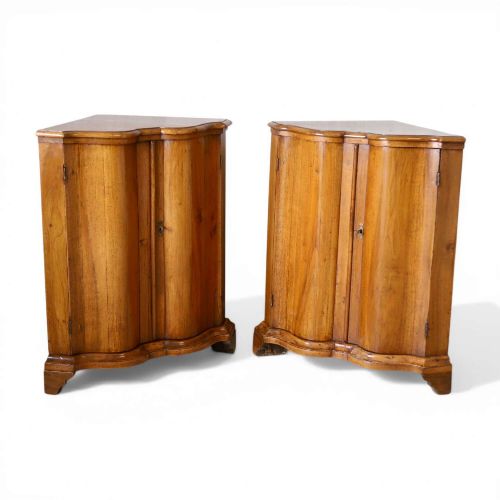
The serpentine front cabinet brings flowing, undulating lines into a room, offering elegant storage through its gracefully curved wooden silhouette.
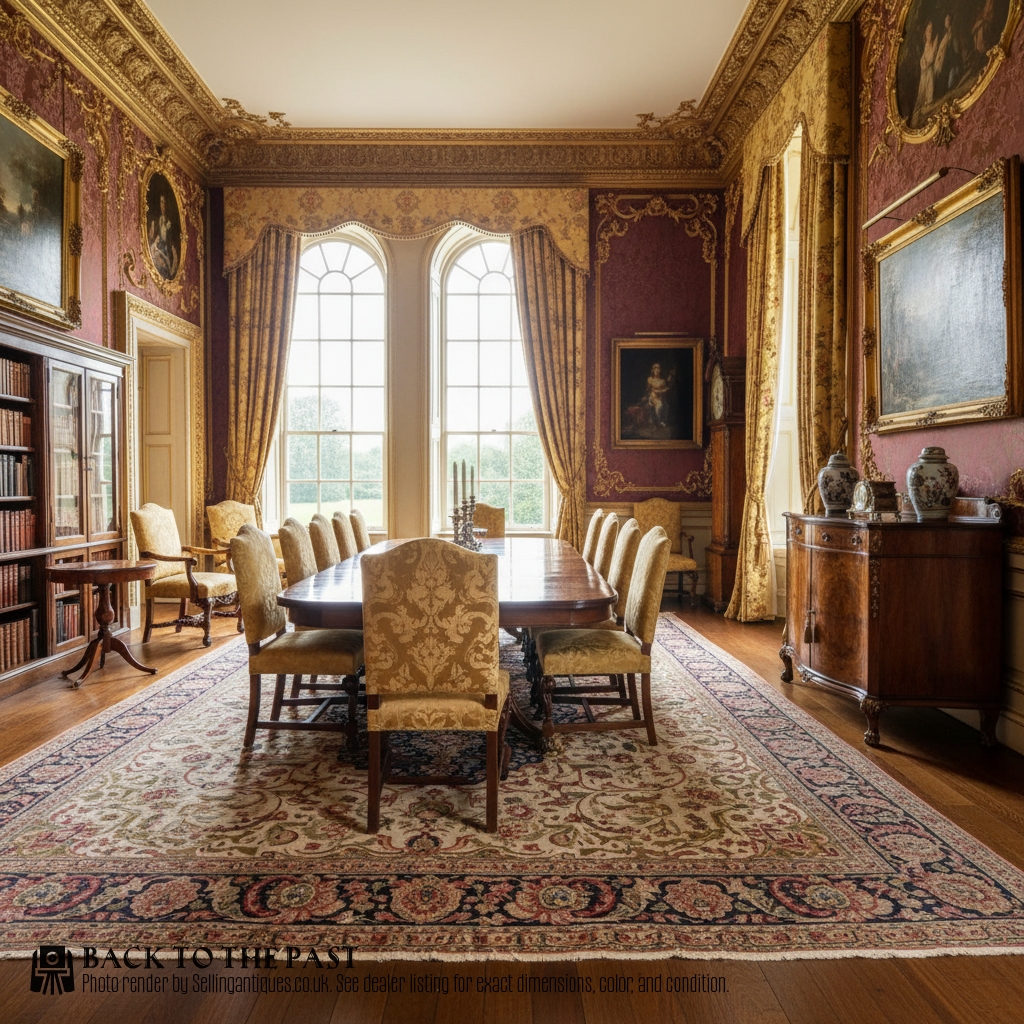
Serpentine Front Cabinet
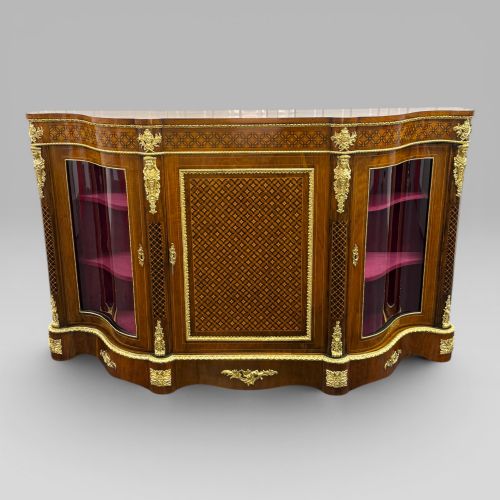
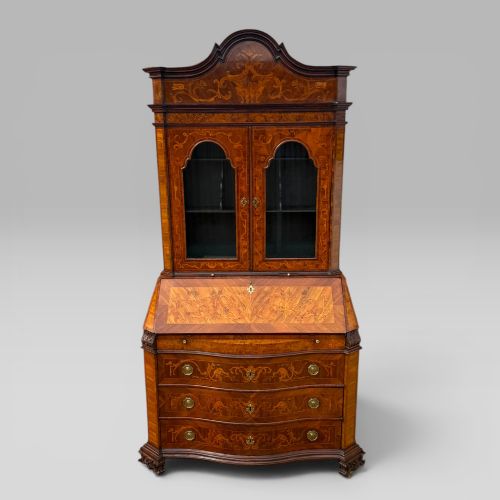
The pieces on this page span the eighteenth, nineteenth, and twentieth centuries, originating from English workshops as well as French and Italian makers. Credenzas, commodes, and bedside tables frequently appear alongside sideboards and cocktail cabinets, each displaying the characteristic undulating silhouette.
Georgian and Victorian iterations dominate the selection, often rendered in rich timbers with marquetry or ormolu mounts. Edwardian and later twentieth-century examples also feature prominently, demonstrating the enduring appeal of this sophisticated contour across multiple decades of cabinetmaking.
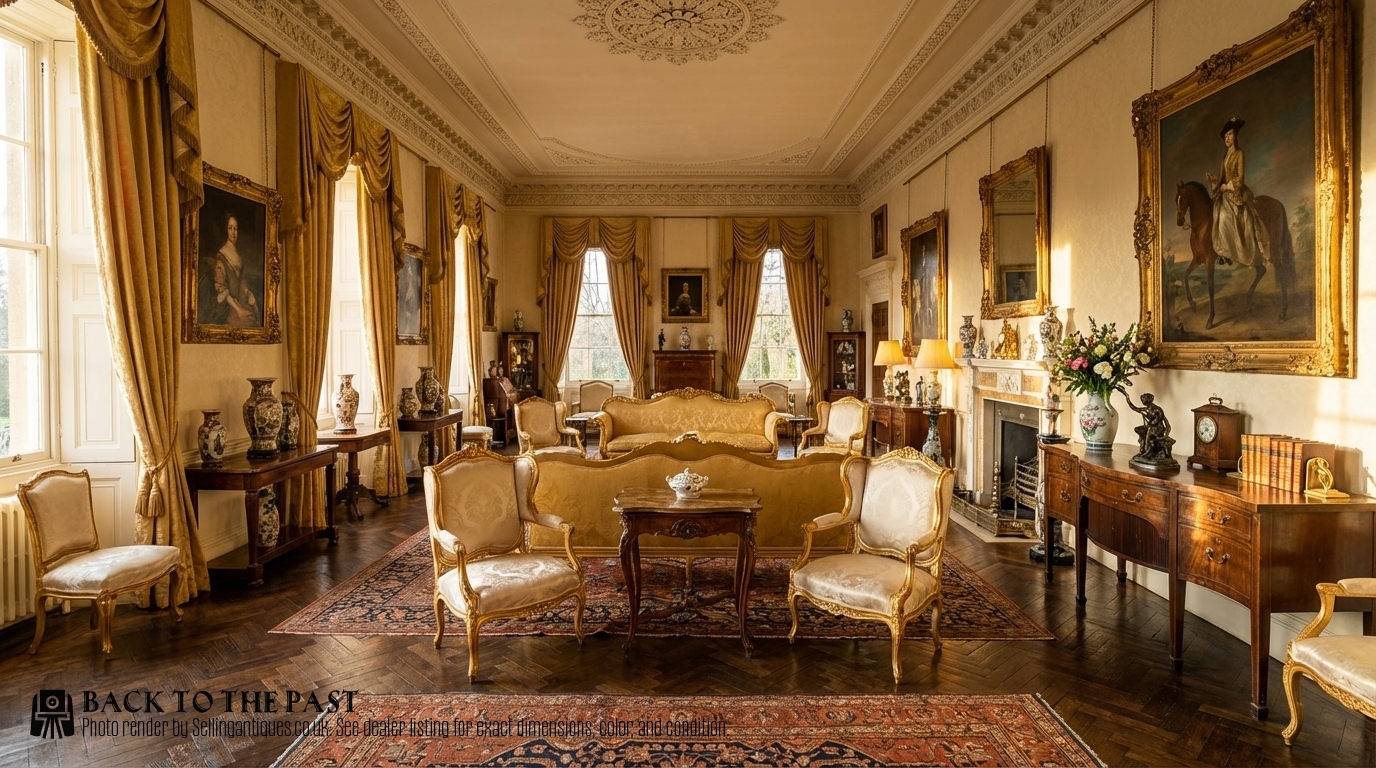
How they were made
Cabinetmakers constructed these undulating carcasses using dense foundational timbers such as mahogany, walnut, and rosewood. Skilled artisans applied veneers of burr walnut, kingwood, or tulipwood over these solid frames to achieve striking surface patterns.
Marquetry inlay and floral or geometric motifs frequently embellish the panels, accompanied by cast ormolu mounts and brass hardware. Marble tops appear on several continental commodes and side cabinets, adding weight and a smooth contrasting surface to the curved wooden structure.
Serpentine Front Cabinet Retail Price Guide 2026
Typical asking prices for serpentine front cabinet among the pieces listed under this phrase on Sellingantiques today, from the lower quarter to the upper quarter. They describe what is for sale here now, not the wider market.
Several serpentine front cabinets hide clever secretaire drawers and matching twelve-piece cutlery sets inside their undulating wooden depths.
What varies in quality
The precision of the curved joinery and the fluidity of the undulating line dictate the baseline excellence of a piece. Smooth execution of the convex and concave transitions requires immense skill from the woodworker, separating master craft from simpler production.
The choice and preservation of veneer figure, alongside the intricacy of marquetry details and the crispness of ormolu mounts, elevate certain examples above others. Original hardware, intact glass panels, and well-figured timber indicate superior workshop origin and careful preservation over the centuries.
Maison Gagneau·Krieger of Paris·Edwards and Roberts·Waring and Gillows
The Serpentine Front Cabinet Glossary
- Serpentine
- A curved architectural line featuring a convex centre curving outward between two concave ends curving inward. This configuration provides a dynamic, flowing movement across the front of a cabinet or chest.
- Marquetry
- Decorative veneer work arranged in intricate patterns or pictorial designs using various coloured woods, shells, or metals. Craftsmen cut these elements precisely to fit flush within the surface of the furniture.
- Ormolu
- Gilded bronze mounts and decorative trimmings applied to furniture during the eighteenth and nineteenth centuries. This technique adds metallic highlights and sculptural detail to the corners and frames of cabinets.
- Vitrine
- A glass-fronted display cabinet designed for showcasing porcelain, curiosities, or books. These pieces often feature glazed sides and mirrored backs to maximise light reflection around the displayed objects.
- Commode
- A low chest of drawers or cabinet originating in France, typically possessing a flat or marble top above multiple drawer tiers. They frequently display elaborate marquetry and curved serpentine profiles.
Serpentine Front Cabinet: Frequently Asked Questions
What is a serpentine front cabinet?
A serpentine front cabinet is a storage piece defined by its signature curved facade, featuring a prominent outward curve flanked by inward curves. This undulating shape softens the rigidity of traditional rectangular furniture.
Cabinetmakers utilised this silhouette across sideboards, commodes, display cabinets, and bedside tables to create visual depth and sophisticated movement within interior spaces.
How do I date a serpentine cabinet?
Dating relies on examining the timber species, construction methods, hardware styles, and decorative techniques like marquetry or ormolu mounts. Georgian pieces often show heavy mahogany construction, while Victorian examples frequently incorporate burr walnut and elaborate inlay.
Twentieth-century iterations, including Art Deco cocktail cabinets, utilise distinct veneers and modern finishes that distinguish them from earlier nineteenth-century French and English workshop productions.
Where were serpentine cabinets placed?
These cabinets served functional and decorative roles in principal rooms such as dining rooms, drawing rooms, and bedrooms. Sideboards and credenzas anchored dining spaces for serving food and storing tableware.
Smaller iterations like bedside tables, commodes, and display vitrines found places in parlours and bedrooms to hold personal items or showcase treasured ceramics and glassware.
How do I care for a wood cabinet?
Maintaining a antique wood cabinet involves keeping it away from direct sunlight and steady heat sources to prevent timber shrinkage and veneer cracking. Regular dusting with a soft, dry cloth preserves the polished surface.
Applying appropriate wax sparingly helps nourish woods like mahogany and walnut, maintaining their natural lustre without building up heavy chemical residues over time.