

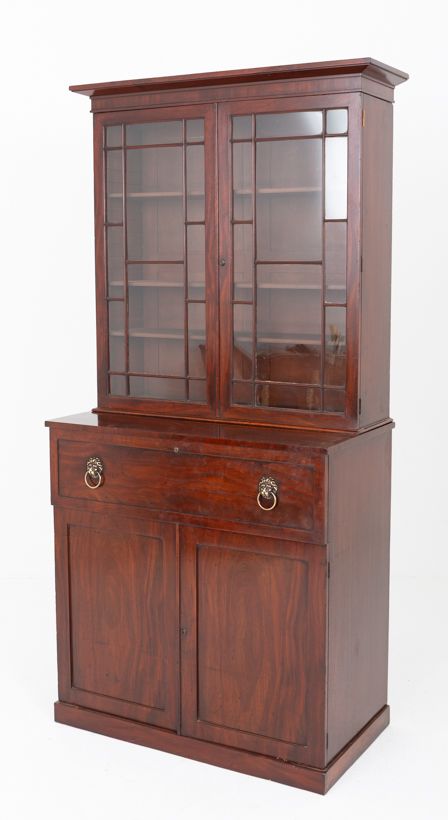
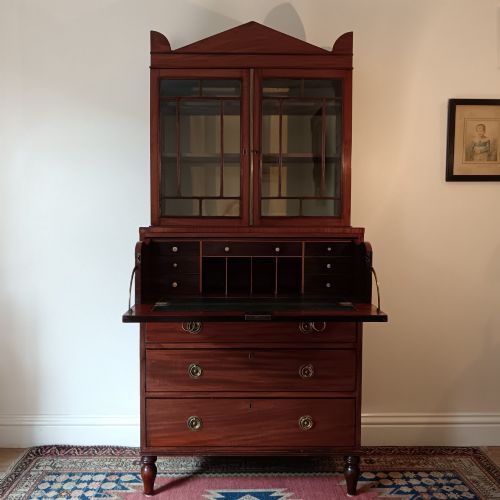
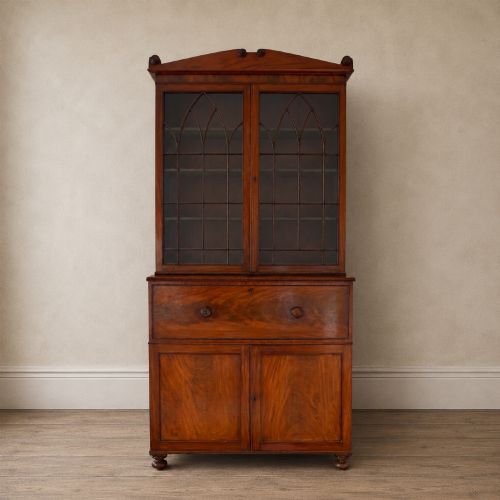
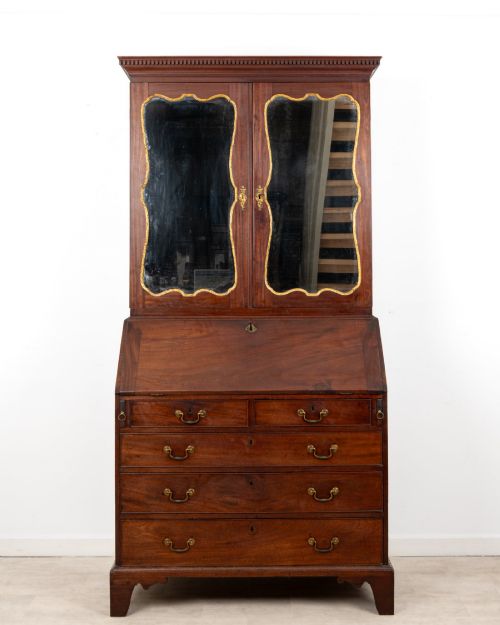


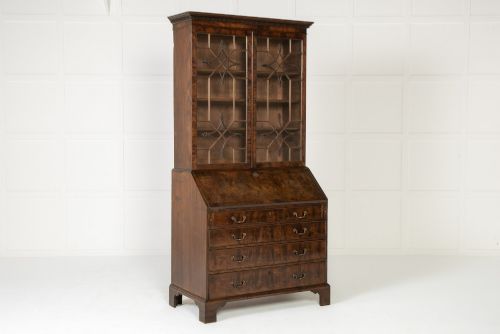
Dark Wood Bureau Bookcase
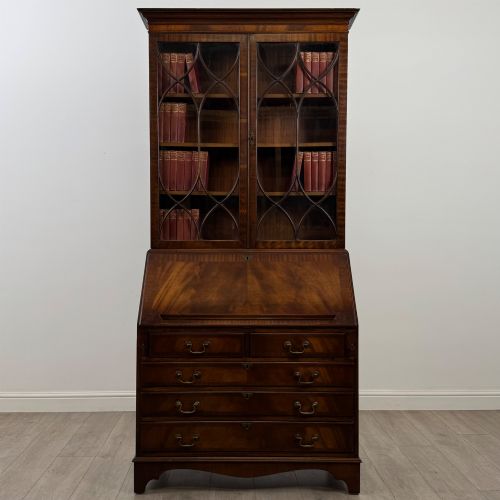
A dark wood bureau bookcase is a dual-purpose storage piece and writing desk that brings grand architectural presence and practical function to a study.
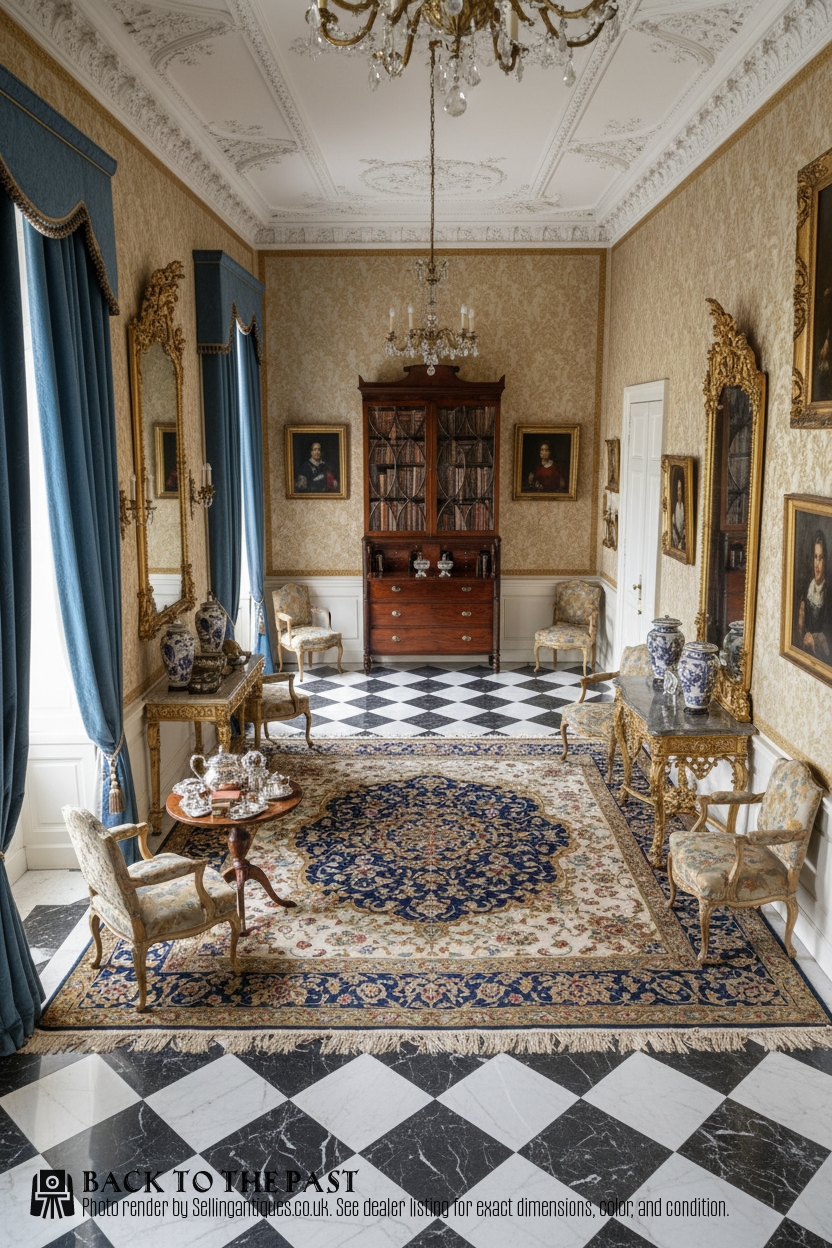
Dark Wood Bureau Bookcase
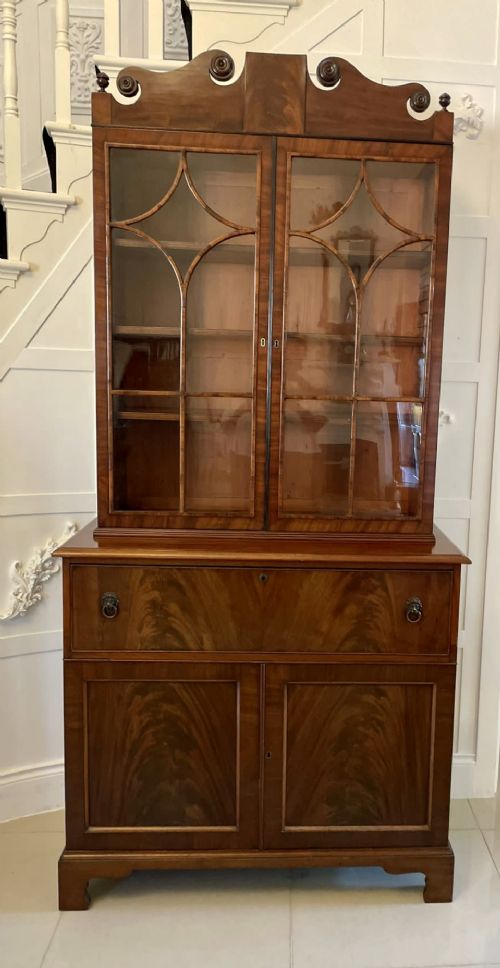
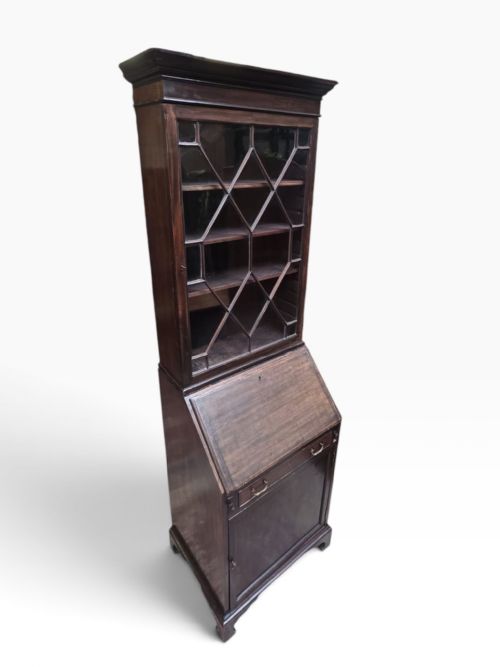
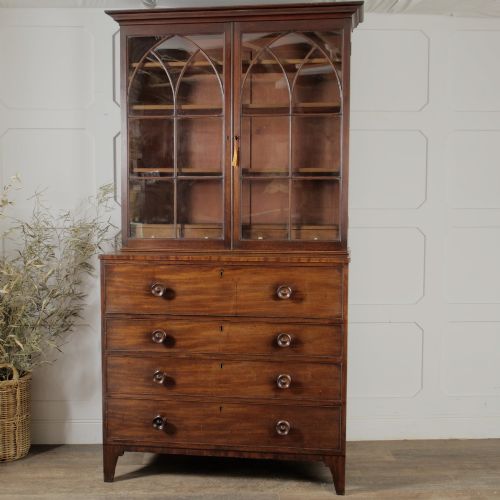
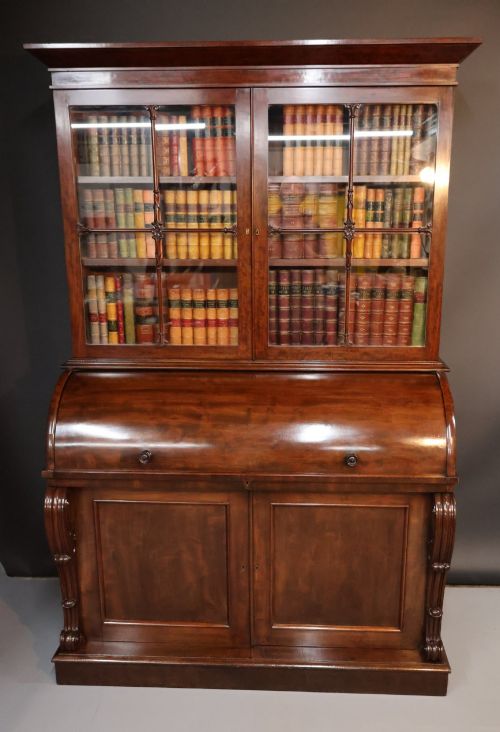
A dark wood bureau bookcase combines a lower writing section with an upper glazed or panelled cabinet for storing volumes. These pieces span the eighteenth and nineteenth centuries, taking forms from Georgian and Regency periods through to Edwardian revivals.
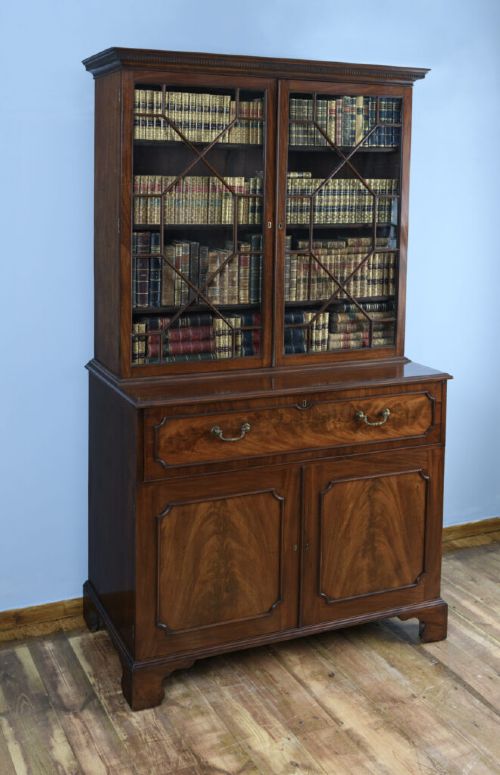
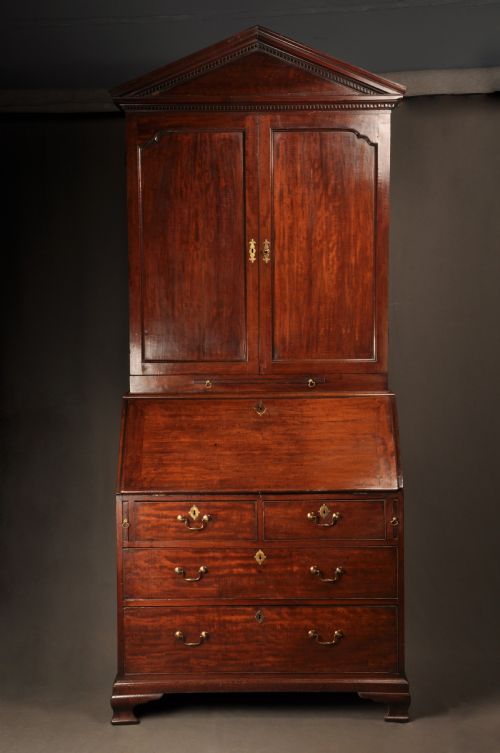
The version you are most likely to meet on this page is constructed from mahogany, often featuring a fall-front desk flap or a secretaire drawer that pulls out to reveal fitted interior pigeonholes and small drawers.
Proportions range from small provincial examples to grand scale breakfront library cabinets designed for country houses.
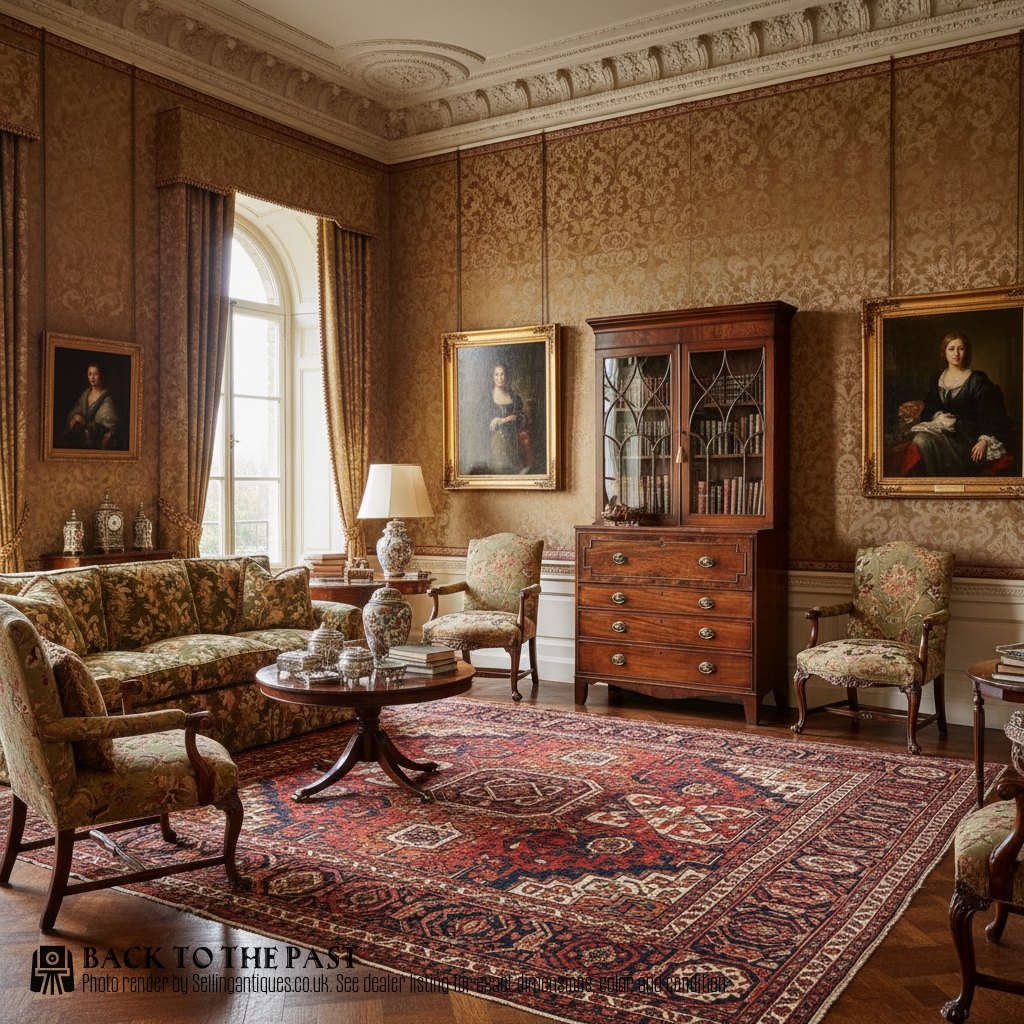
Materials and construction methods
Makers relied primarily on mahogany, including Cuban mahogany and figured varieties, occasionally turning to rosewood, walnut, oak, and satinwood for contrasting details. Timber selection prioritized rich grain patterns, which were hand-polished to a deep lustre.
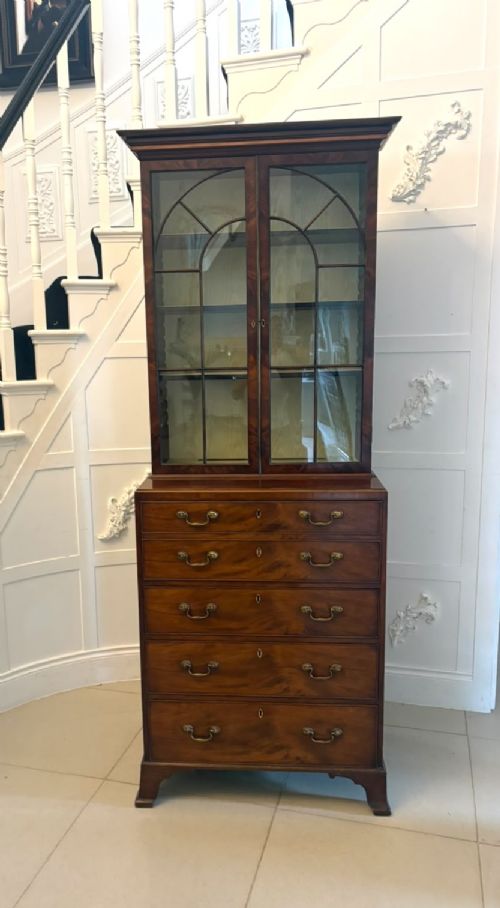
Glazing bars on the upper cabinet doors required precise carpentry to hold individual glass panes, while brass hardware such as drop handles and escutcheons secured drawers and drop-front desks.
Interior compartments incorporated secret drawers, pigeonholes, and fitted writing slopes constructed with traditional dovetail joints.
Dark Wood Bureau Bookcase Retail Price Guide 2026
Typical asking prices for dark wood bureau bookcase among the pieces listed under this phrase on Sellingantiques today, from the lower quarter to the upper quarter. They describe what is for sale here now, not the wider market.
Several pieces conceal tiny secret drawers behind decorative pigeonhole partitions, built to outsmart prying eyes.
Markers of distinction
Quality rests in the choice of timber and the handling of natural grain figures, particularly on large surfaces like fall-fronts and cabinet doors. Highly figured mahogany or rosewood elevates a piece significantly.
The refinement of the interior stationery compartments, including the complexity of concealed compartments and fine cockbeading around drawers, separates standard cabinet-making from exceptional workshop output.
Proportion and architectural detailing, such as astragal glazed doors and well-executed cornices, dictate the visual balance of the piece.
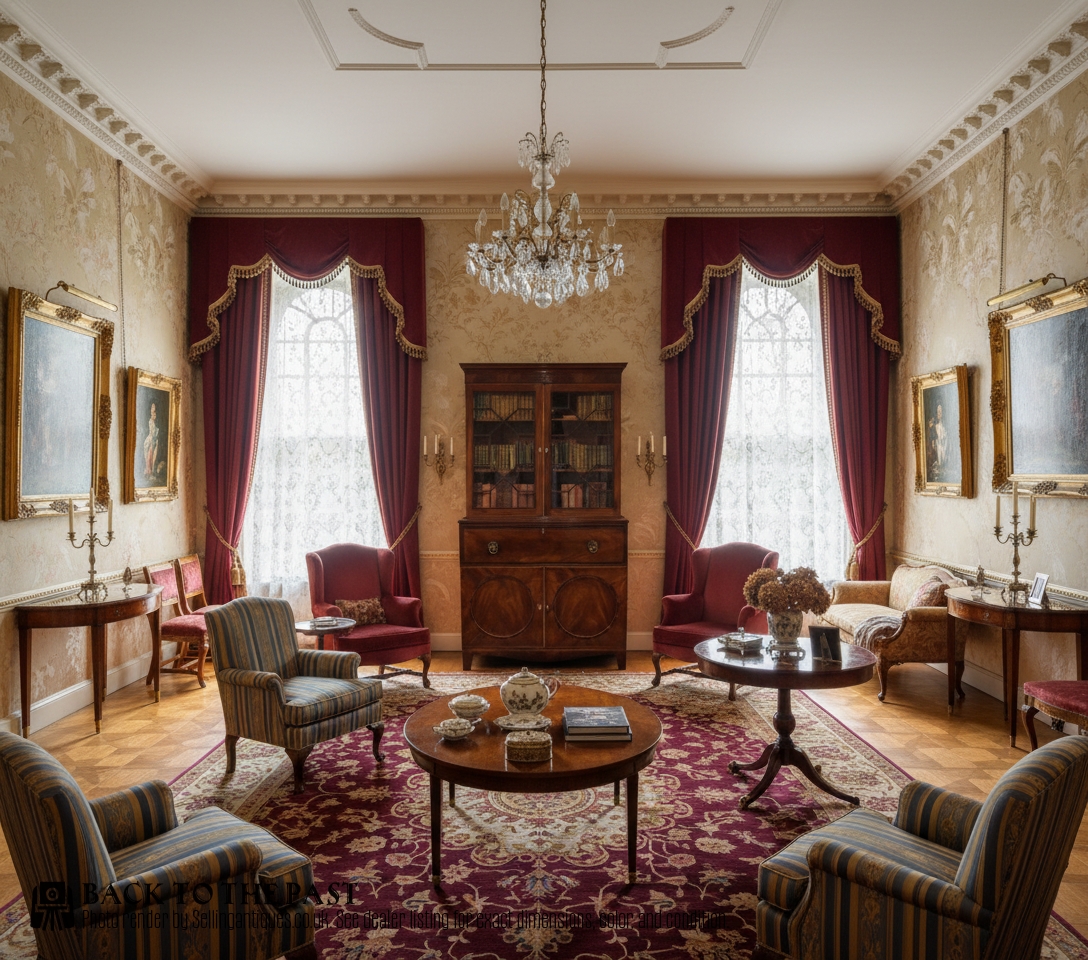
Gillows·George Oakley
The Dark Wood Bureau Bookcase Glossary
- Secretaire
- A cabinet or drawer featuring a drop-front or pull-out writing surface that conceals an internal arrangement of small drawers and pigeonholes. It allows a chest or bookcase to function as a desk.
- Astragal
- A moulding profile used on glass doors to divide individual panes of glass into geometric or arched patterns. It is typical of fine Georgian and Regency cabinet-making.
- Fall-front
- A hinged writing flap that drops from a vertical position to form a horizontal desk surface. It is the defining feature of traditional bureau forms.
- Breakfront
- A large cabinet design where the central section projects forward from the flanking outer sections. This architectural arrangement creates depth and shadow across the facade.
- Cuban mahogany
- A dense, dark timber harvested in the Caribbean, prized for its rich colour and exceptional grain stability. Cabinet-makers used it extensively during the eighteenth and early nineteenth centuries.
Dark Wood Bureau Bookcase: Frequently Asked Questions
How do I use a bureau bookcase today?
The drop-front or secretaire drawer provides a concealed workspace for a laptop or stationery while keeping everyday clutter out of sight.
The upper glazed shelves serve as an ideal display space for a book collection or glassware.
How do I date a mahogany bookcase?
Dating relies on architectural style, cabinet hardware, and timber characteristics, moving from eighteenth-century Georgian proportions to nineteenth-century Regency and William IV revival styles.
Examine the secondary woods inside the drawers and the construction of the glazing bars for period-specific joinery methods.
Are these pieces suitable for smaller rooms?
Many examples are built on a compact scale, offering vertical storage that maximises floor space without dominating a room.
Tall upper bookcases draw the eye upward, making them functional even in rooms with limited floor area.