
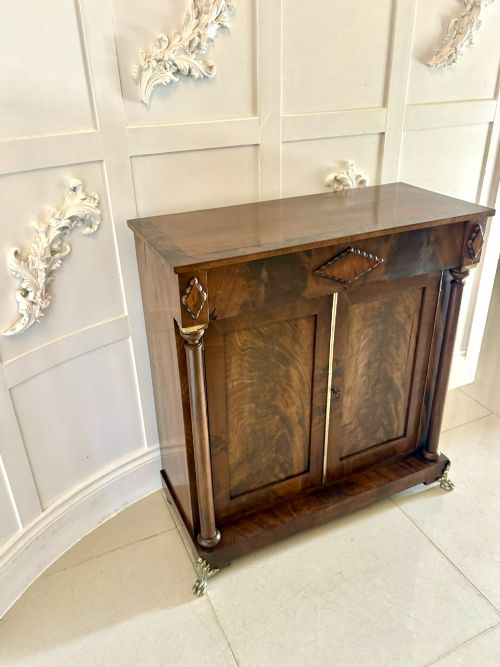
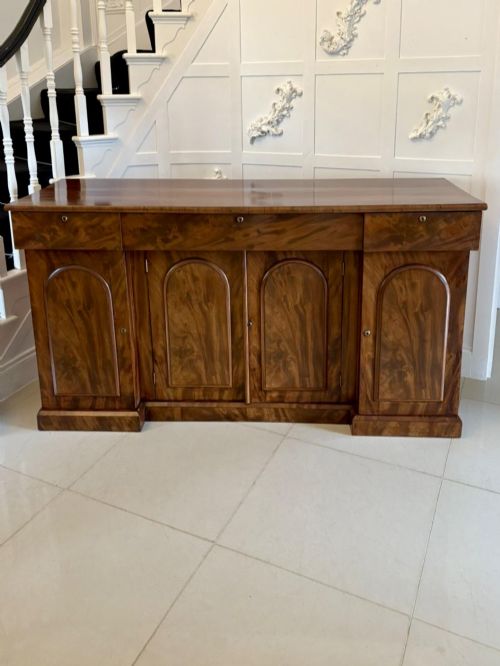
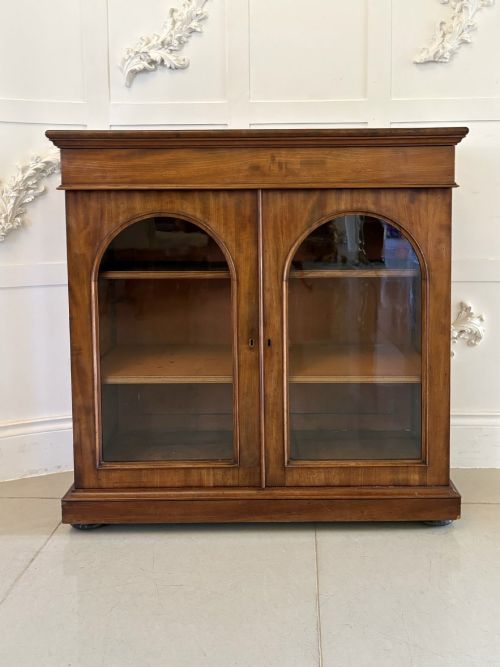
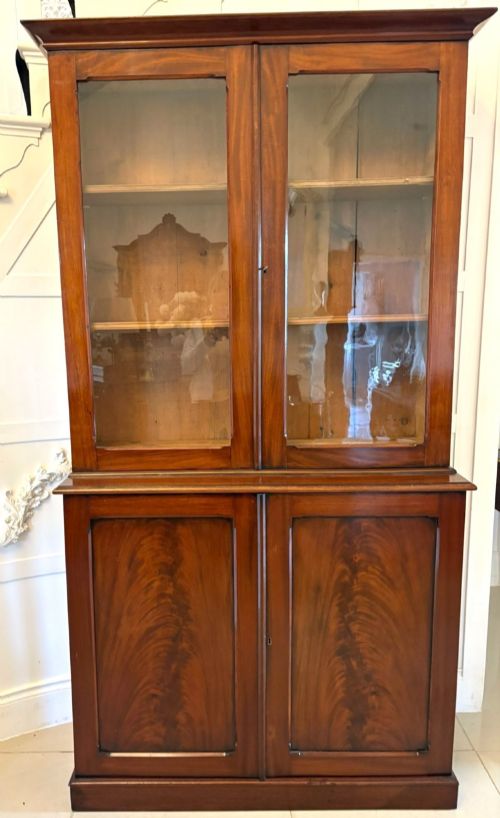
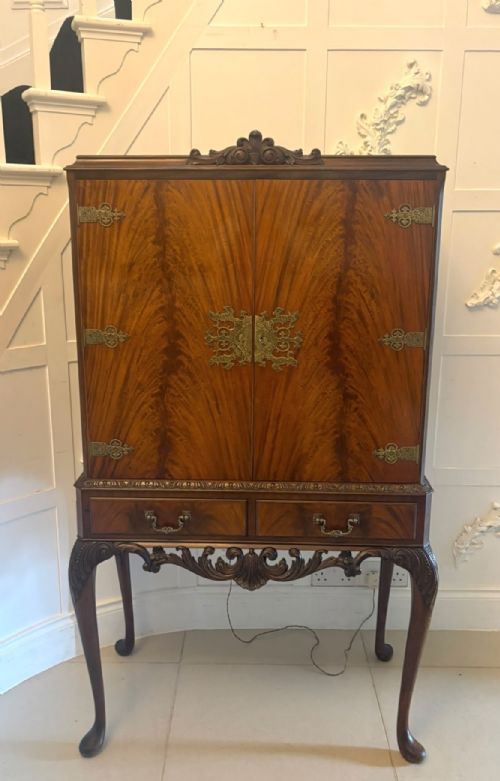
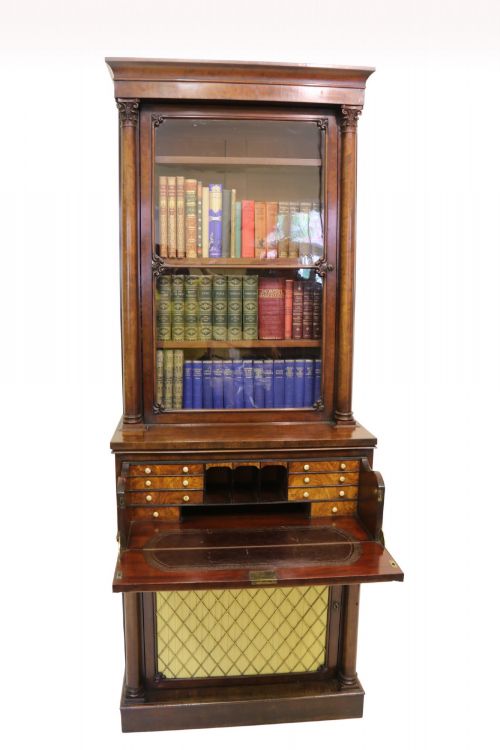
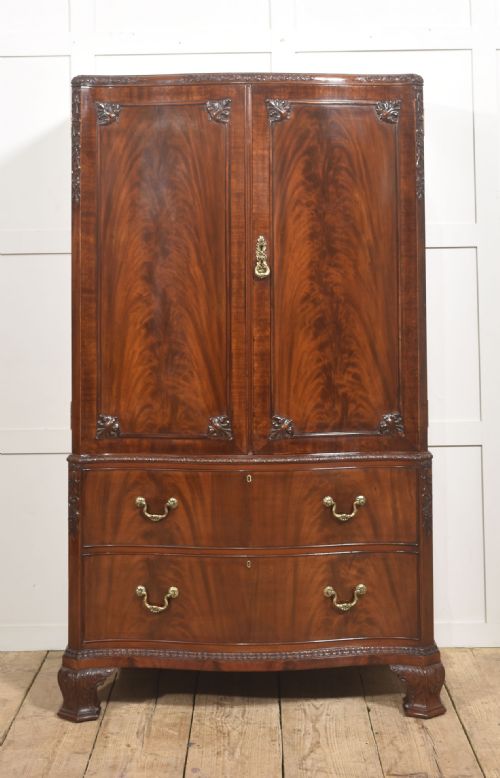

Figured Mahogany Cabinet
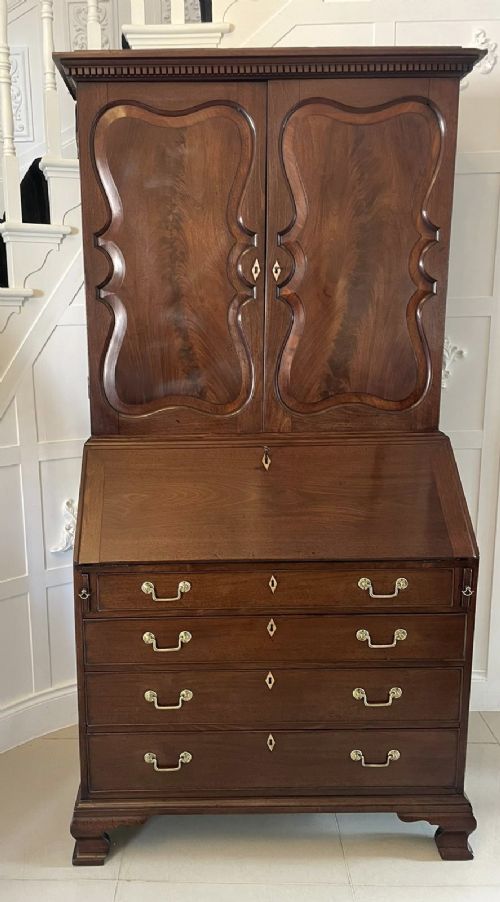
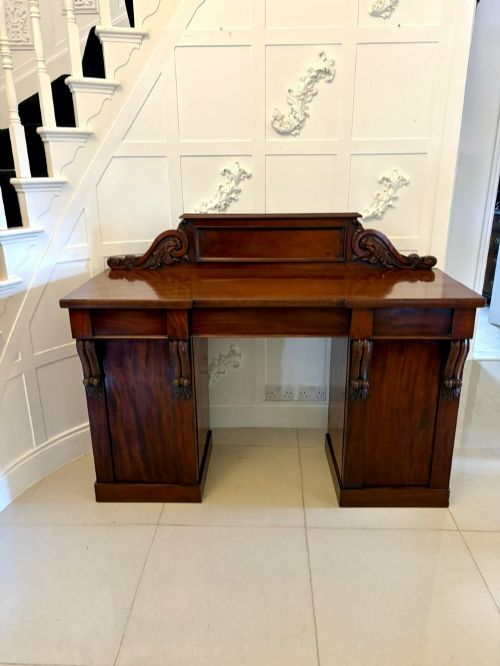
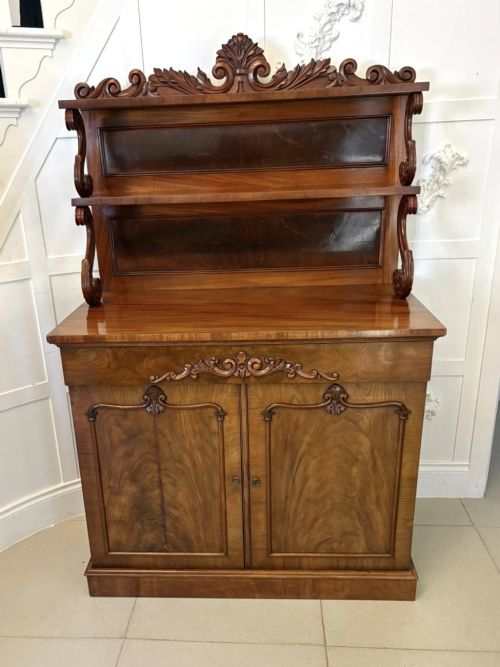
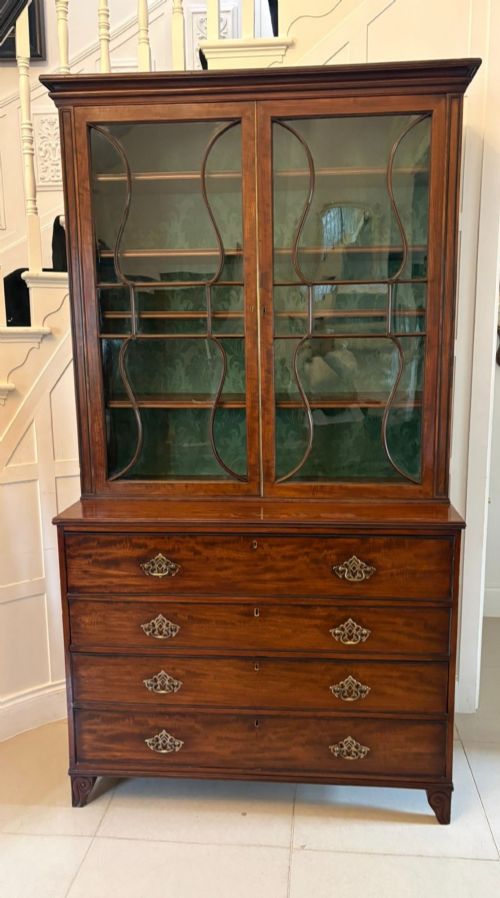
A figured mahogany cabinet brings distinctive natural grain patterns into a room through expertly cut timber.
Figured Mahogany Cabinet
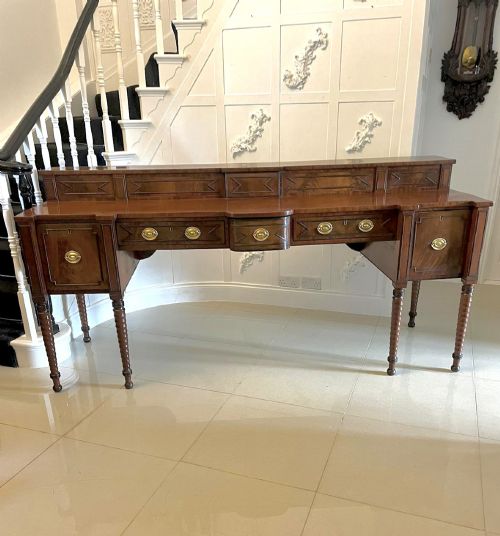
A figured mahogany cabinet encompasses a diverse group of storage furniture, ranging from tall library bookcases and breakfront sideboards to compact bedside cupboards and collectors chests.
The selections span multiple eras, with Georgian, Regency, William IV, and Victorian periods heavily represented alongside later Edwardian and Art Deco examples.
Buyers searching for this phrase encounter functional domestic pieces designed for display, storage, and writing, often incorporating glazed doors, secretaire drawers, or fitted interiors.
Materials and Construction
Cabinet makers utilised solid timber alongside flame and figured mahogany veneers, selecting pieces for their intense grain movement and rich natural warmth.
Structural elements frequently incorporated secondary woods, while brass handles, turned wooden knobs, and glazed panels completed the construction of the larger bookcases and sideboards.
Some nineteenth-century collectors cabinets arrived with hidden locking bars to keep nosy guests away from tiny specimen drawers.
Gradations of Excellence
The quality of a figured mahogany cabinet depends heavily on the intensity and symmetry of the timber grain selected by the maker.
Superior examples display careful timber matching across drawer fronts and doors, alongside refined proportions and well-executed period details such as carved mouldings or original turned hardware.
Gillows of Lancaster·Bowman Brothers·Holland & Sons·Wilkinson & Sons
The Figured Mahogany Cabinet Glossary
- Flame mahogany
- A veneer cut from the branch forks of the tree to produce a dramatic, flickering flame-like pattern. This cut was highly prized for principal display surfaces.
- Secretaire
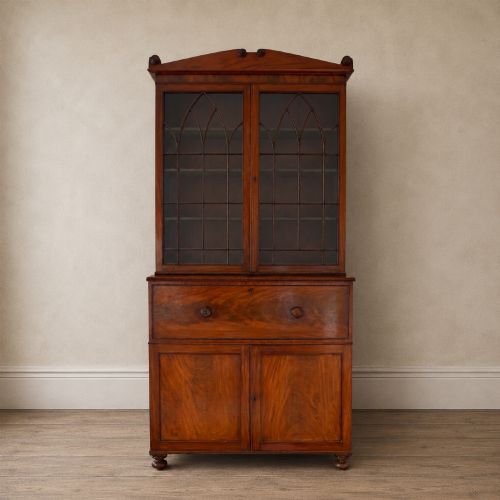
- A desk form featuring a pull-down writing drawer that conceals small pigeonholes and drawers. These compartments provided a hidden workspace within a bookcase or cabinet.
- Breakfront
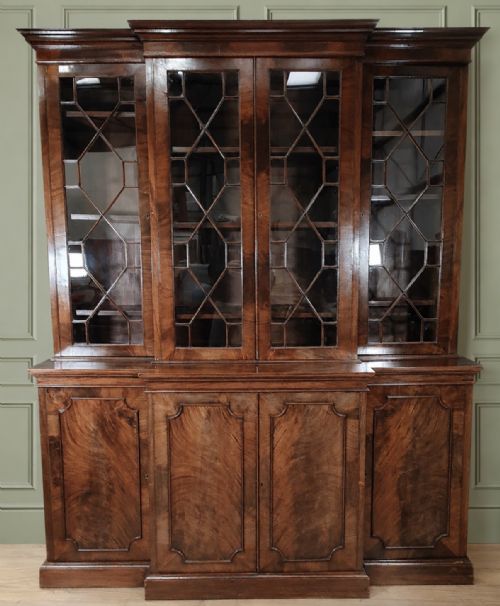
- A piece of furniture where the central section projects forward from the outer wings. This architectural layout added depth and visual rhythm to large bookcases and sideboards.
- Chiffonier
- A compact sideboard or low cabinet developed during the Regency and Victorian periods. They typically featured enclosed lower cupboards and sometimes a shelved superstructure above.
Figured Mahogany Cabinet: Frequently Asked Questions
How do I identify a Regency period cabinet?
Regency cabinets often display classical architectural influences, crisp linear veneers, and restrained brass mounts. They date from the early nineteenth century and rely on proportion rather than heavy carving.
Look for flame mahogany surfaces combined with bracket feet, pilasters, or glazed doors with geometric glazing bars. The interiors typically reflect practical storage needs of the period.
Where should I place a bedside cabinet?
Bedside cabinets suit smaller bedroom spaces where their figured timber doors or drawers add warmth and texture. They function well next to standard bed heights while providing enclosed storage.
Ensure the dimensions match your bedside clearance, particularly with Victorian or Edwardian pairs that were built for specific room proportions.
What is a Wellington chest?
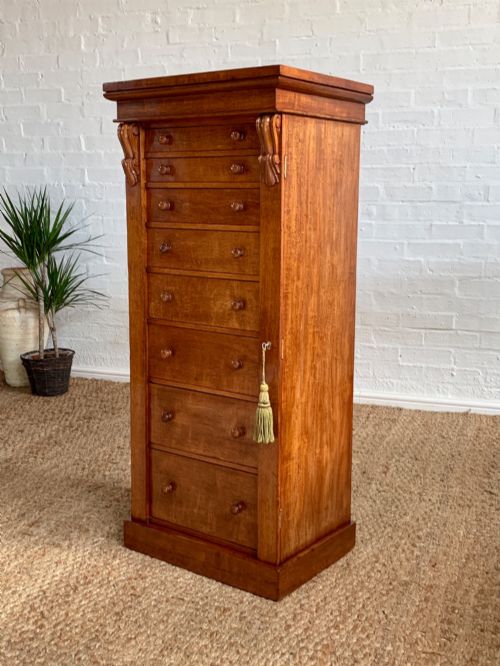
A Wellington chest is a tall, narrow set of drawers secured by a hinged locking side pilaster. This design originated in the nineteenth century for compact security.
They frequently appear in figured mahogany with multiple shallow drawers suitable for papers, linen, or collectors items, operated by a vertical locking bar.
How do I clean mahogany veneer?
Mahogany veneer requires gentle dusting with a soft, dry cloth to prevent abrasion. Avoid modern chemical sprays that can damage old polish.
Period surfaces benefit from occasional application of traditional beeswax to nourish the timber and maintain a soft, natural sheen across the grain.