



Locking Side Bar Chest
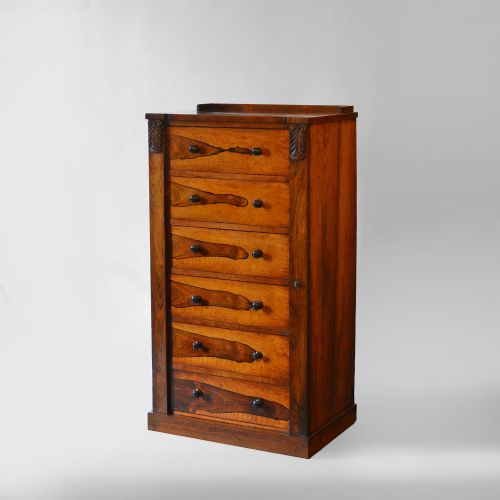
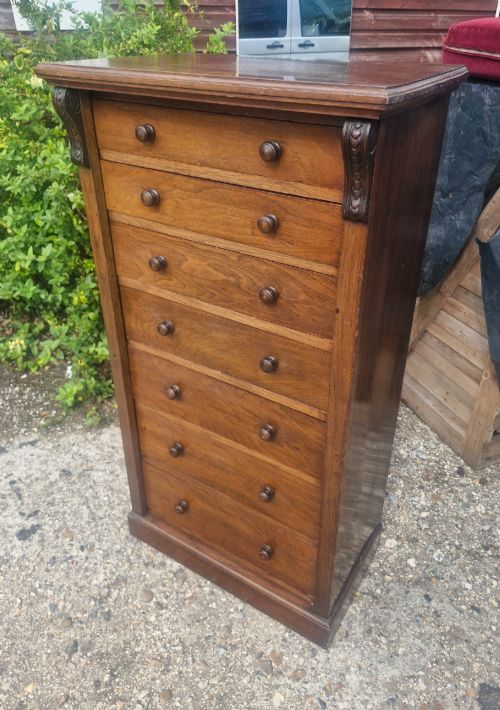
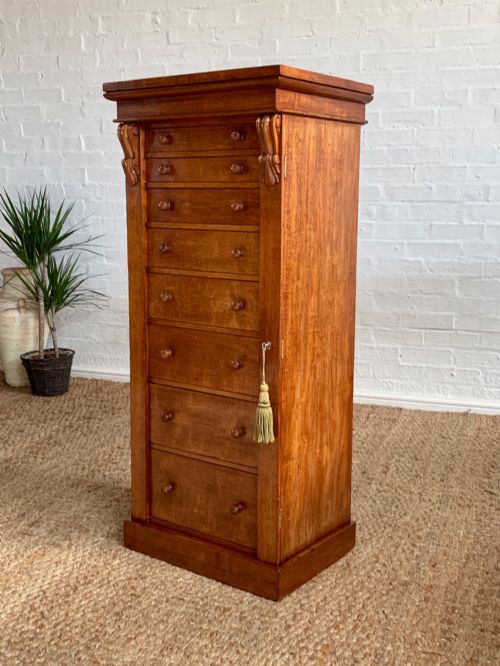
A locking side bar chest is a narrow, tall set of drawers secured by a hinged pilaster, and collectors seek these pieces for clever security and compact proportions.
Locking Side Bar Chest
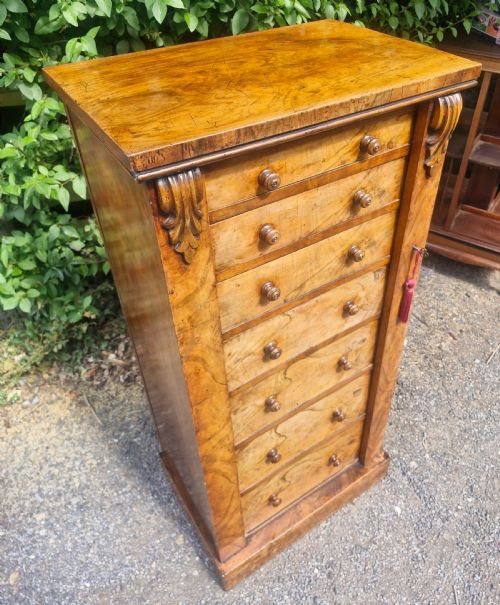
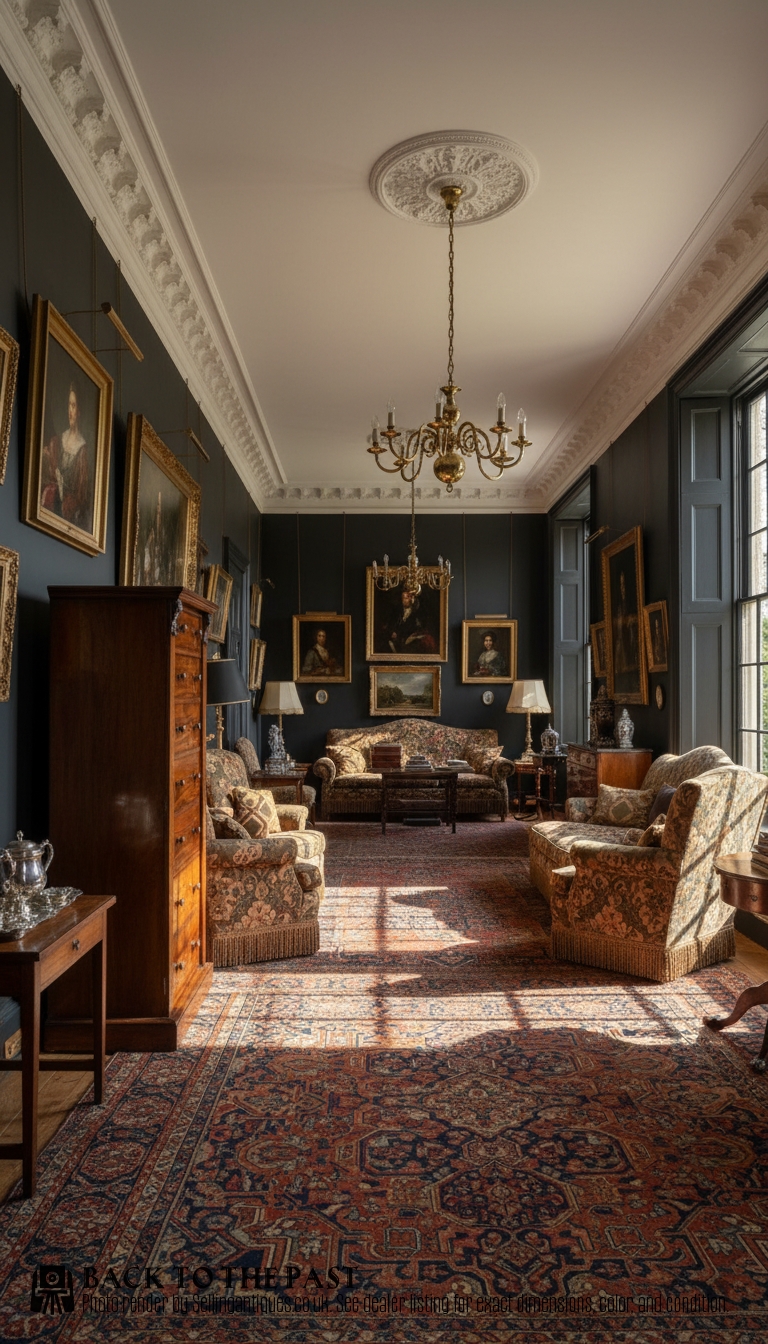
When buyers search for a locking side bar chest, they are looking at Wellington chests originating from the nineteenth century. These tall, narrow chests of drawers feature a distinct vertical locking bar on one side that fastens the entire bank of drawers when locked.
The version most commonly met on this page is the Victorian mahogany example, often standing tall with seven drawers. Pieces span the Victorian era, the Regency style, and around nineteen hundred, appearing in timbers such as mahogany, walnut, and pitch pine.
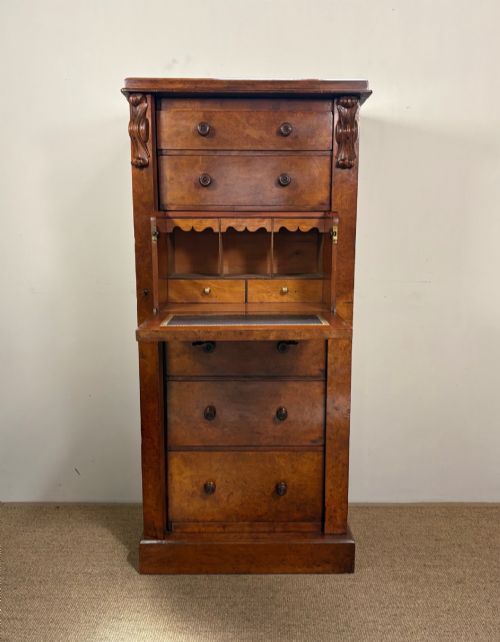
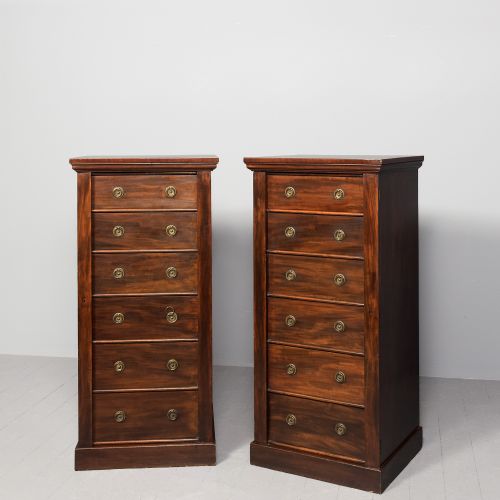
Forms include standard chests of drawers, miniature versions, secretaire variations incorporating a drop-front writing surface, and pairs. Origins trace through the nineteenth century, including specific decades like eighteen fifty, eighteen sixty, eighteen seventy, and nineteen hundred.
How they were made
Cabinet makers utilised dense timbers such as mahogany, figured mahogany, flame mahogany veneer, walnut, satinbirch, maple, and rosewood. Secondary woods included pitch pine, while brass hardware and leather inserts provided functional and decorative detail.
Construction relied on precise joinery to house the narrow drawers securely within the frame. The signature locking mechanism involved a hinged side bar secured by a key, engaging with the drawer edges to prevent opening.
Locking Side Bar Chest Retail Price Guide 2026
Typical asking prices for locking side bar chest among the pieces listed under this phrase on Sellingantiques today, from the lower quarter to the upper quarter. They describe what is for sale here now, not the wider market.
Listings feature pieces spanning the Victorian era and Regency style, utilising mahogany, walnut, pitch pine, satinbirch, maple, and rosewood.
What varies in quality
The refinement of the timber selection distinguishes pieces, with figured mahogany and flame mahogany veneer offering striking grain patterns compared to plainer surfaces. Marquetry inlay and cabinetwork complexity, such as secretaire fittings or maple and rosewood combinations, elevate the standard.
Proportion and the integrity of the original side bar mechanism dictate the overall calibre. Intact original turned knobs, sound structural joinery, and harmonious proportions separate standard utility examples from finer decorative works.
The Locking Side Bar Chest Glossary
- Secretaire
- A piece of furniture incorporating a writing drawer with a drop-front fitted interior. It combines desk functionality with standard drawer storage.
- Flame mahogany veneer
- A decorative wood veneer sliced from timber showing a distinctive flickering flame pattern. Cabinet makers applied this to drawer fronts for visual impact.
- Marquetry
- The art of applying pieces of veneer to a structure to form decorative patterns. This technique appears on nineteenth-century walnut pieces.
- Pitch pine
- A resinous softwood utilised for robust carcase construction in later nineteenth-century furniture. It offers durability and a distinct grain.
Locking Side Bar Chest: Frequently Asked Questions
What is a locking side bar chest?
A locking side bar chest is a tall, narrow set of drawers secured by a vertical locking flap on one side. This design locks all drawers at once with a single key.
Most examples date from the nineteenth century and use dense timbers like mahogany or walnut. They provide substantial storage in a minimal floor footprint.
How do you use a Wellington chest?
You unlock the side bar, swing it clear of the drawer edges, and open the drawers as needed. The mechanism secures the entire stack when the bar is returned and locked.
This system was originally designed to keep private papers and valuables secure. Today, they function well for clothing or collection storage in bedrooms or studies.
How do I date a nineteenth-century chest?
Dating relies on timber choice, construction methods, and stylistic details. Pieces from eighteen fifty often feature heavy mahogany veneers and robust proportions.
Later examples from nineteen hundred show changes in secondary woods like pitch pine. Hardware such as original turned knobs also helps anchor the period.
What is a secretaire chest?
A secretaire chest includes a specialised drawer that pulls out and folds down to reveal a writing surface and small compartments. It merges a desk with a standard chest.
These versatile pieces suit compact spaces where a full-sized desk is impractical. They maintain the locking side bar security of standard Wellington chests.
Where do I place a tall chest?
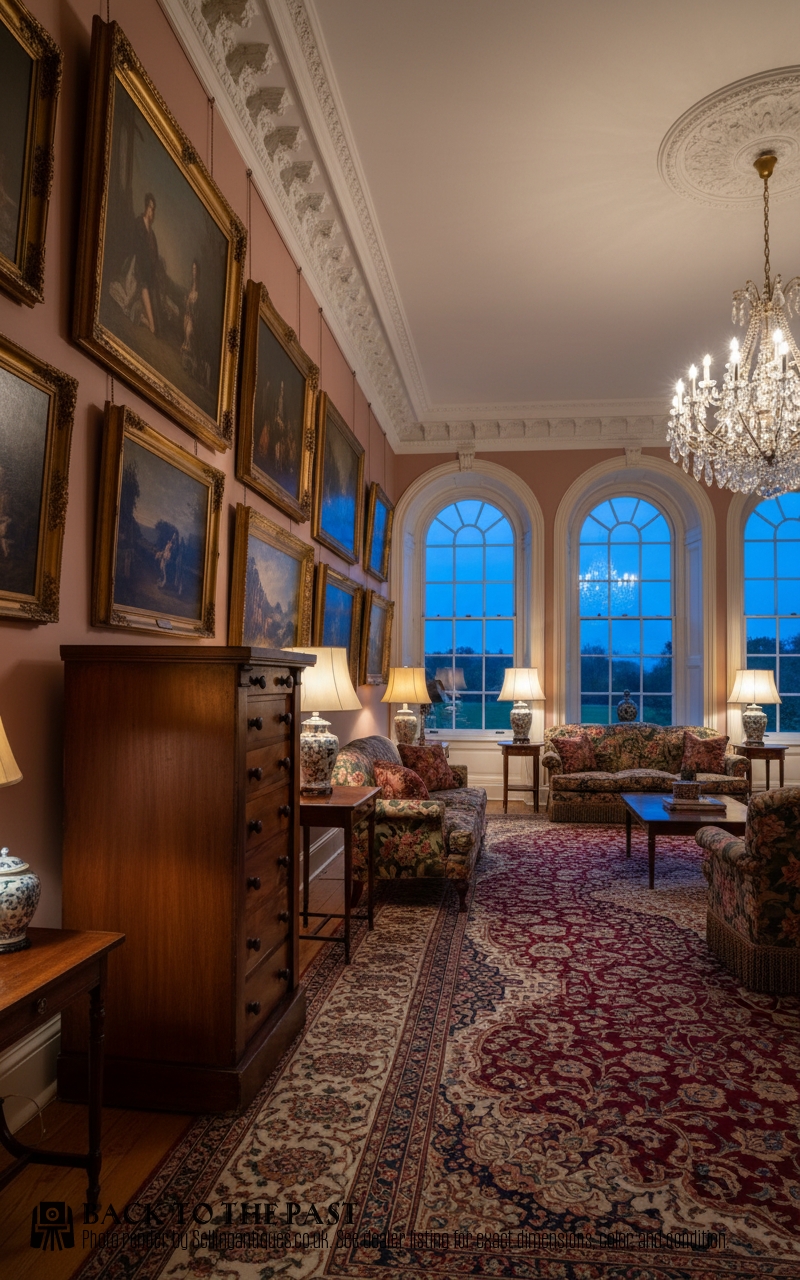
These chests suit narrow wall spaces or alcoves where wide furniture will not fit. Their vertical height maximises storage without consuming floor area.
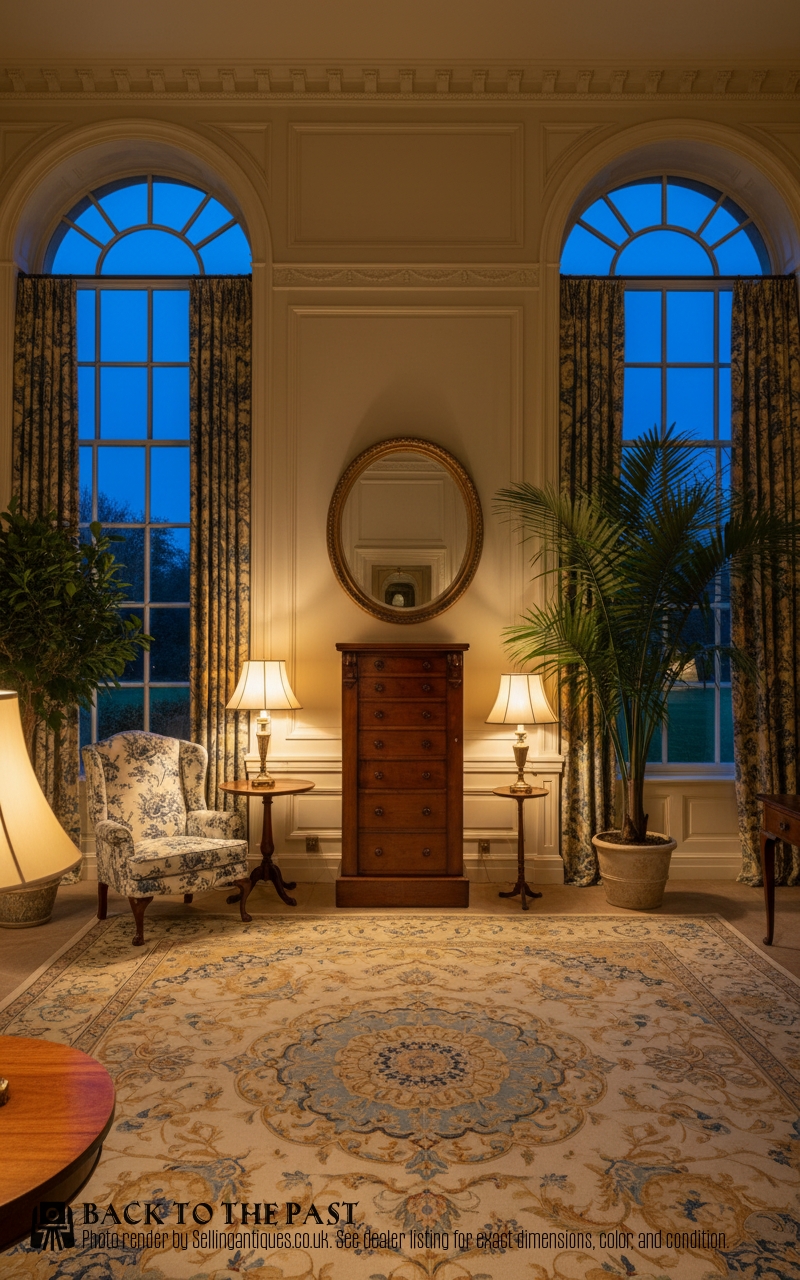
Ensure the side bar has adequate clearance to swing open fully when choosing a spot. They pair effectively with period and traditional interior schemes.