



Edwardian Wellington Chest
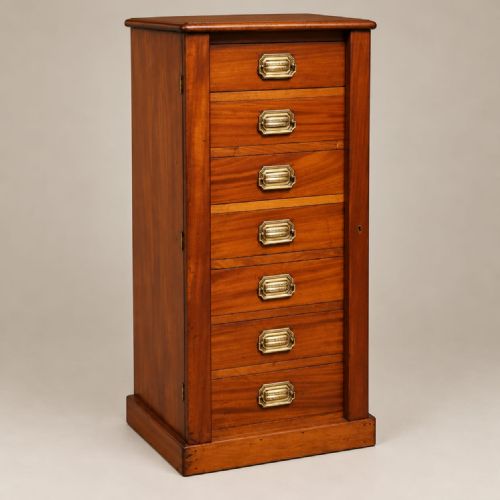
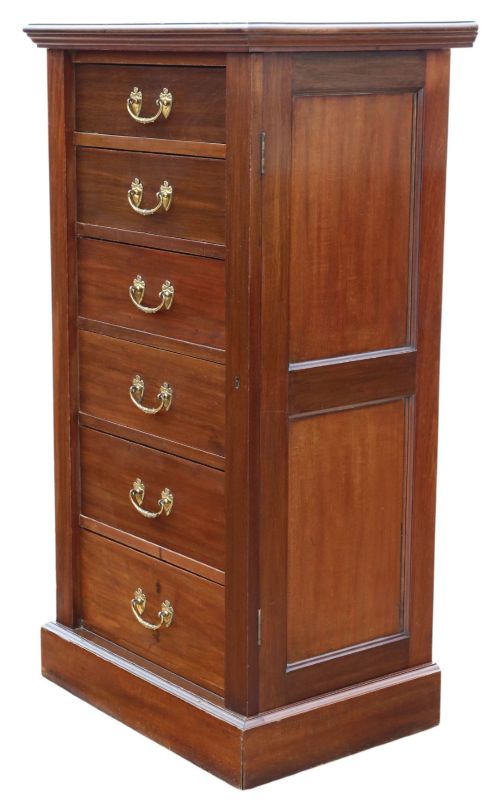
An Edwardian wellington chest is a tall, slender drawer unit offering secure storage through its signature locking side bar.

Edwardian Wellington Chest
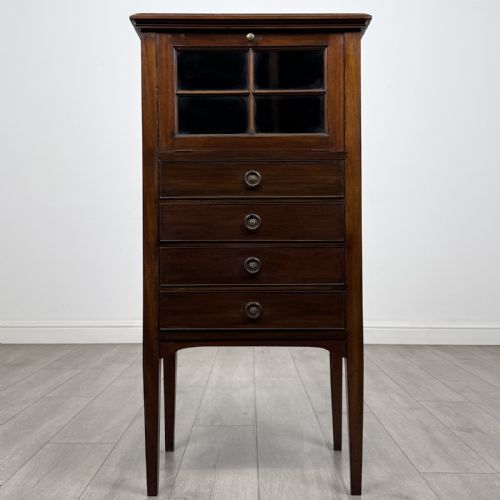
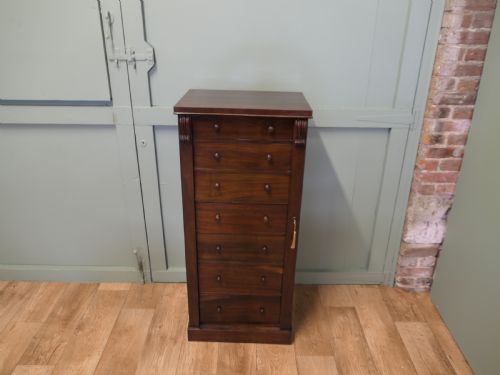
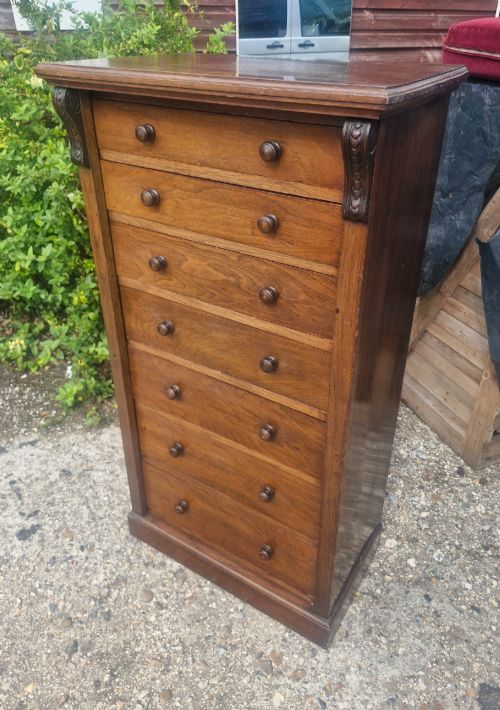
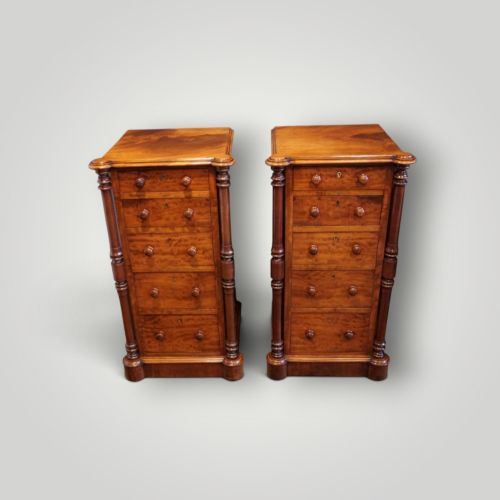
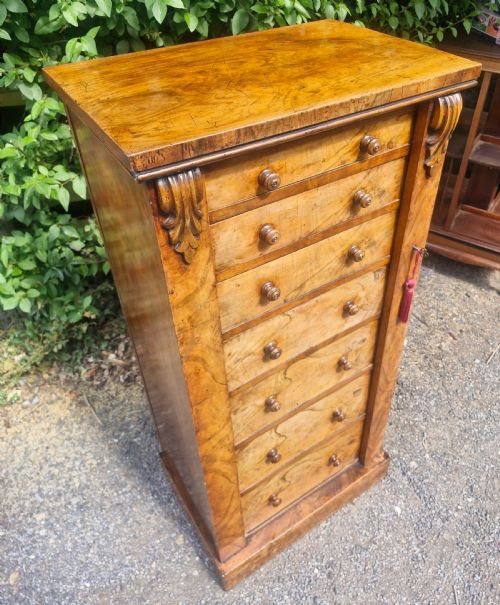
An Edwardian wellington chest stands tall and narrow, designed to maximise storage floor space while keeping papers or small valuables secure behind a locking pilaster.
You will most commonly encounter mahogany examples from this period, though oak, walnut, and satinwood versions also appear across the selection.
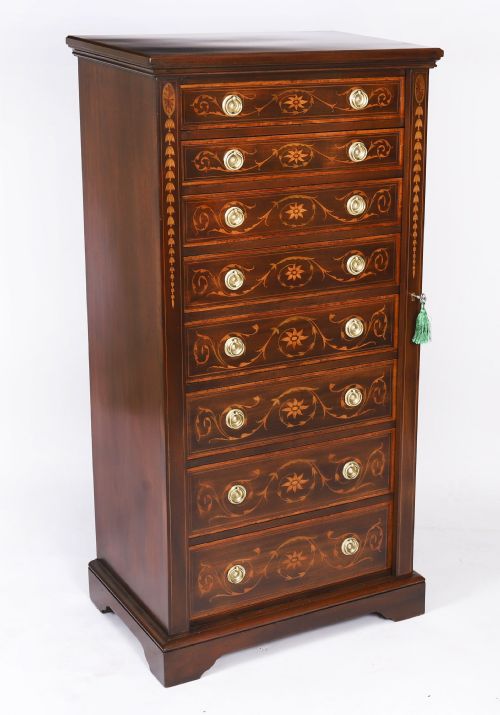
These pieces typically feature between six and seven drawers, sometimes incorporating a secretaire drawer with a drop-down writing surface.
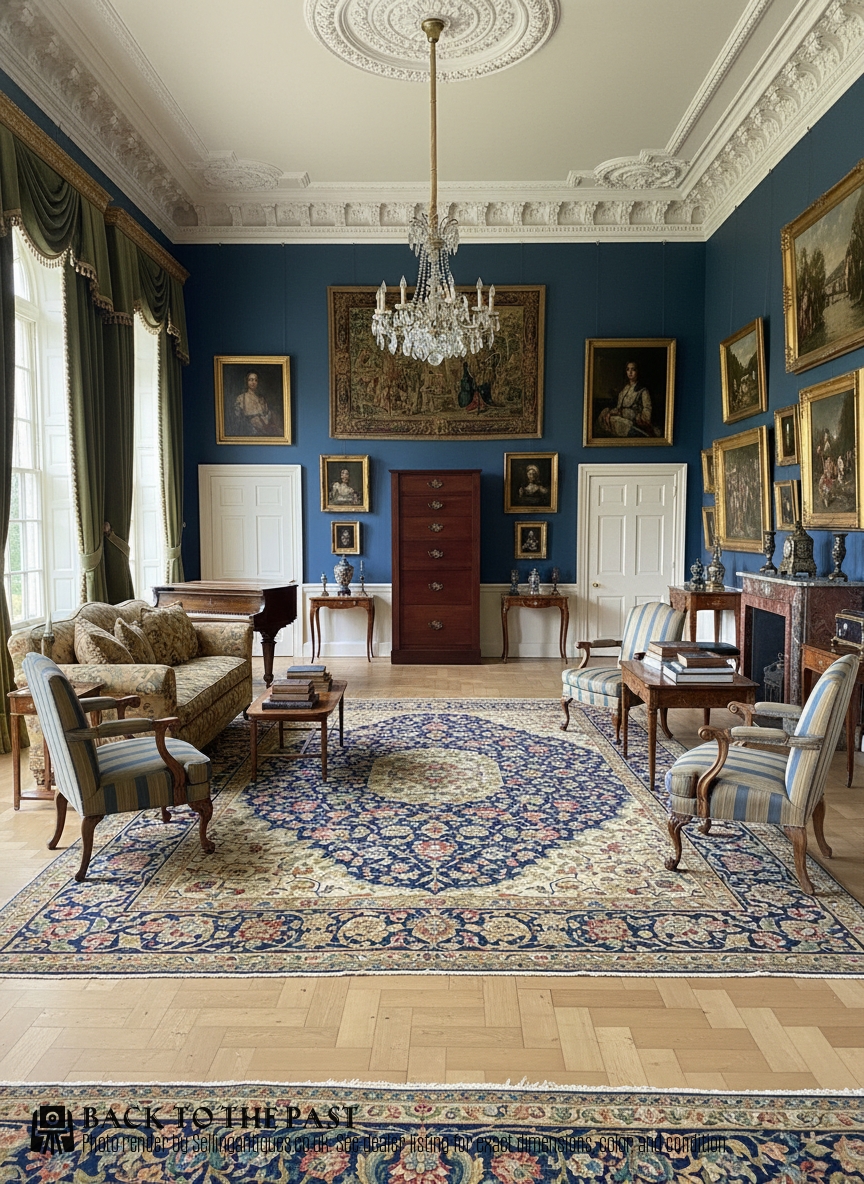
How they were made
Cabinet makers utilised dense timbers such as mahogany, walnut, and oak to construct the main carcase and drawer fronts, frequently selecting highly figured veneers for the exterior.
Brass hardware, including drop handles, escutcheons, and the characteristic locking mechanism bar, provides both function and contrast to the dark timber.
Inlaid decorative elements in satinwood and other contrasting woods add linear detail to the drawer fronts and top surfaces.
Edwardian Wellington Chest Retail Price Guide 2026
Typical asking prices for edwardian wellington chest among the pieces listed under this phrase on Sellingantiques today, from the lower quarter to the upper quarter. They describe what is for sale here now, not the wider market.
Listings feature mahogany, oak, walnut, satinwood, and pitch pine across Victorian and Edwardian periods.
What varies in quality
The choice of timber figure dictates much of the visual hierarchy, with heavily flamed mahogany or burr walnut marking the more ambitious pieces.
Subtlety of inlay work and the retention of original locking mechanisms with working keys separate standard production models from workshop-attributed items.

Warings Liverpool·J Shoolbred·Maple & Co·Gillows of Lancaster·Spillman & Co
The Edwardian Wellington Chest Glossary
- Wellington chest
- A tall, narrow chest of drawers secured by a hinged locking pilaster on one side that fastens over the drawer edges. This clever security feature reputedly gained its name from the Duke of Wellington.
- Pilaster
- A vertical architectural member projecting from the carcase side that swings or lifts away to unlock the drawers. On these chests, it is the locking bar.
- Secretaire
- A drawer fitted with a drop-front revealing a writing surface and small interior compartments. It conceals a compact bureau within the upper section of the chest.
- Figured timber
- Wood grain showing distinctive patterns such as flame, curl, or burr resulting from natural growth anomalies. Cabinet makers prized these boards for principal visible surfaces.
- Inlay
- Contrasting pieces of wood or shell fitted into depressions within a solid wood surface to form decorative motifs. It defines the Sheraton Revival style seen on many pieces.
Edwardian Wellington Chest: Frequently Asked Questions
Why does it have a locking side bar?
The hinged wooden pilaster secures all drawers simultaneously when locked in place with a key. This kept private papers and valuables safe in domestic or office settings.
Opening the bar requires unlocking it and swinging or lifting the piece clear of the drawer edges.
How do I use a wellington chest today?
These chests suit narrow spaces such as hallways, alcoves, or beside a bed where a standard wide chest will not fit. The deep vertical stack provides generous sorting capacity for clothing or stationery.
The locking mechanism remains practical for securing personal items out of sight.
Are they all Edwardian?
The search yields pieces spanning the Victorian era through to the early twentieth century, alongside earlier nineteenth-century examples. Makers continued producing the form well after the original Regency and Victorian periods.
Stylistic details like lighter mahogany tones and delicate string inlay help identify pieces made during the Edwardian years.
What is a secretaire wellington chest?
This variant replaces a standard top drawer with a fall-front desk compartment. Dropping the front reveals small pigeonholes and a leather or wood writing surface.
The side locking bar still secures the lower standard drawers beneath the desk section.