

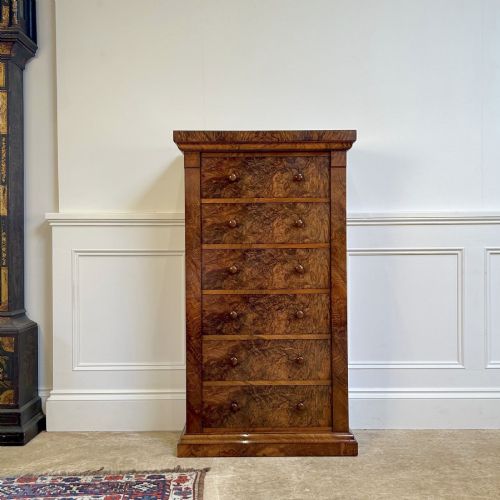
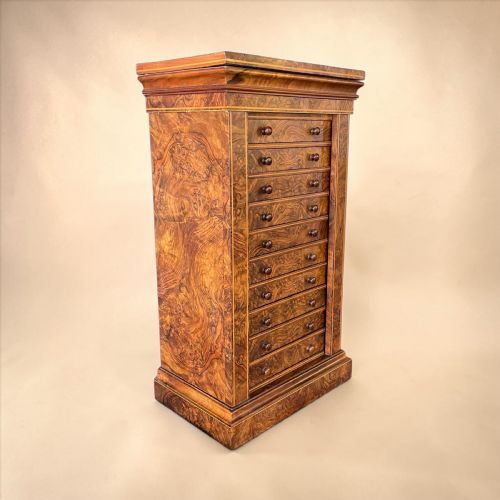
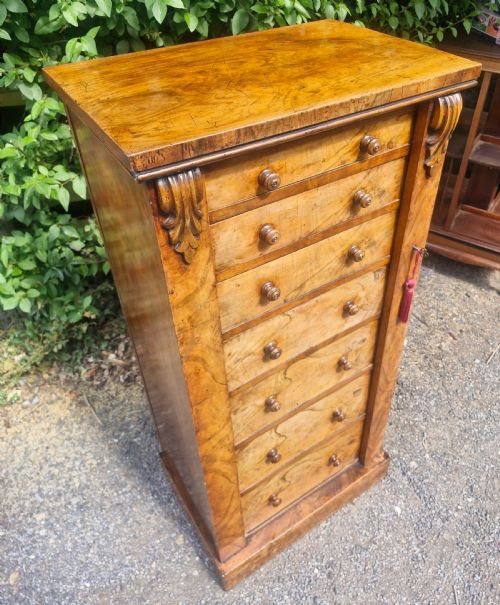
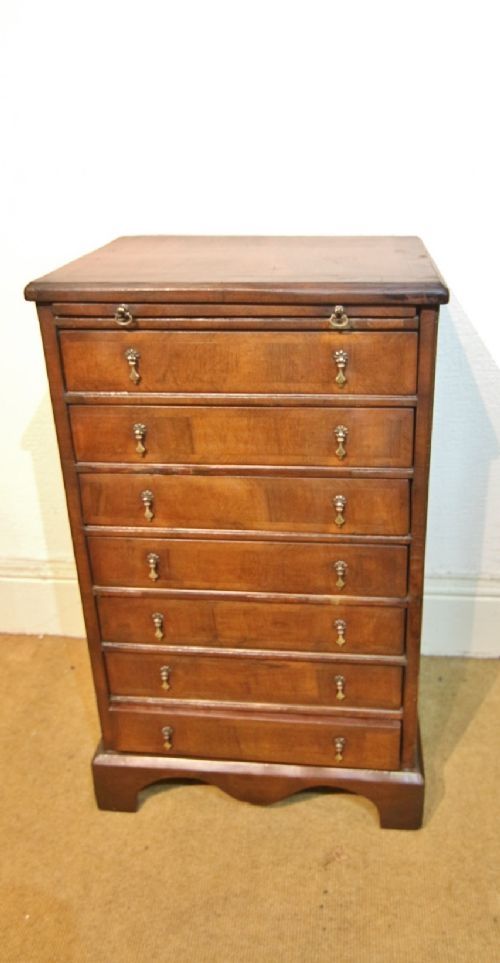


Walnut Wellington Chest
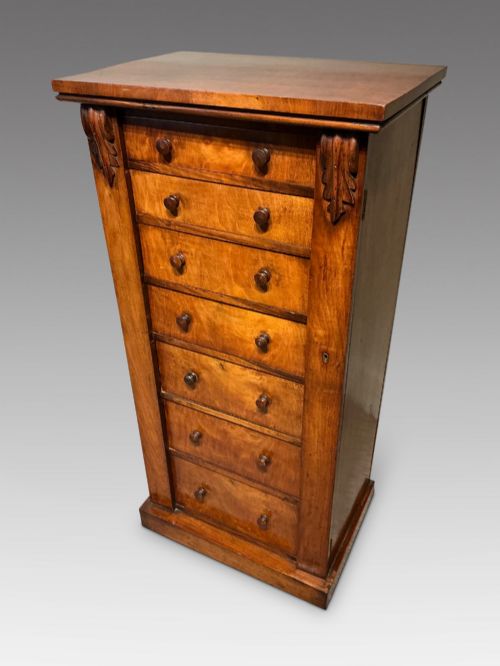
A walnut wellington chest is a tall, narrow set of drawers secured by a locking side stile, prized for holding papers or small collections in minimal floor space.
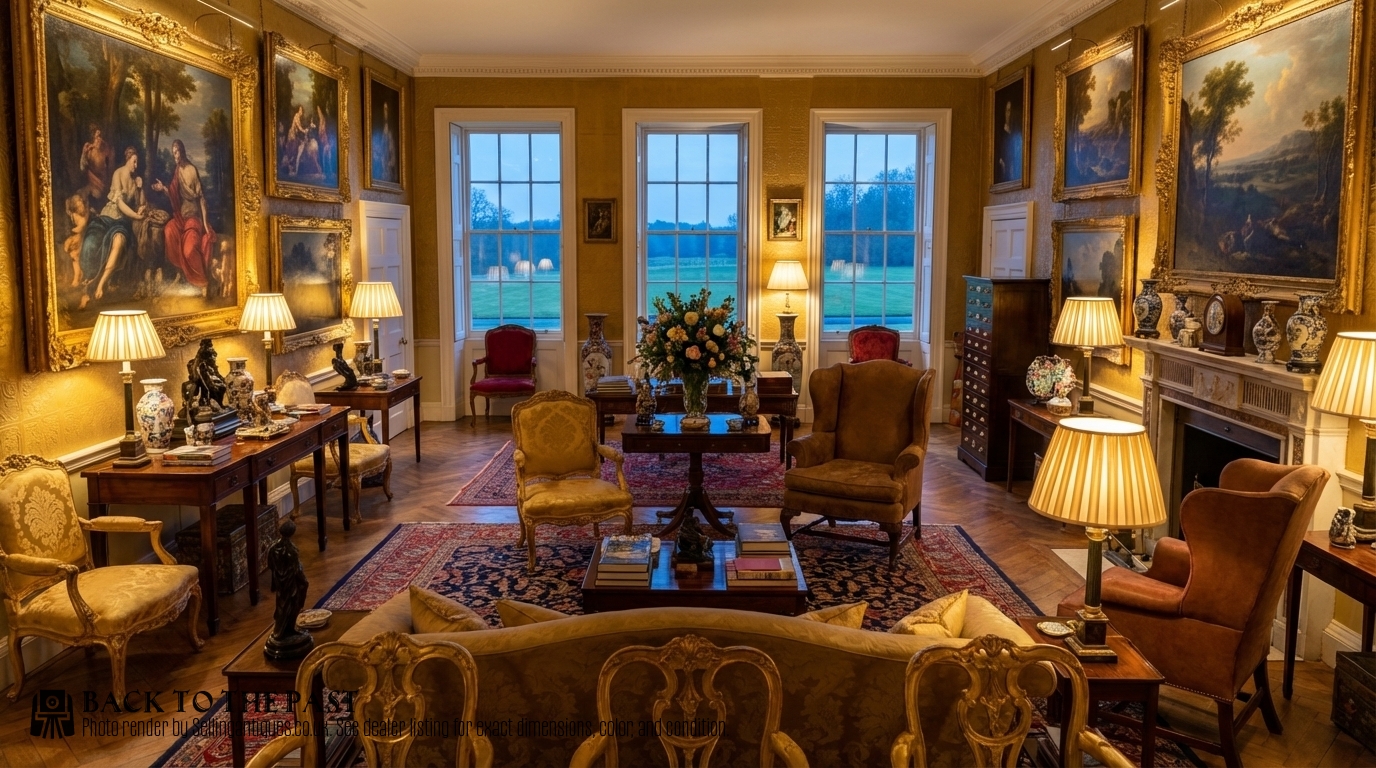
Walnut Wellington Chest
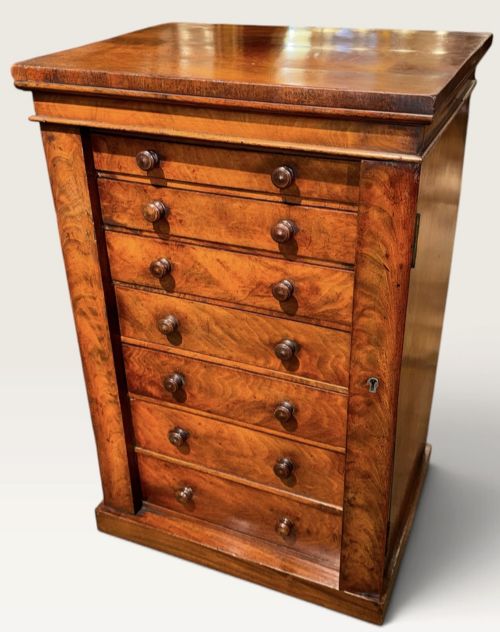
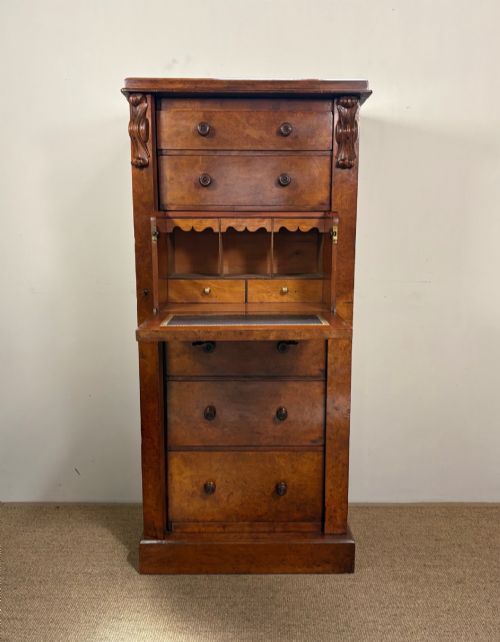
When you search for a walnut wellington chest, you encounter tall, narrow chests of drawers typically featuring seven or more stacked drawers locked in by a hinged vertical locking bar on one side. The pieces seen here date predominantly from the Victorian period and the nineteenth century, taking the form of standard tall chests, compact miniature examples, or secretaire variations fitted with a pull-out writing drawer.
Makers such as Gillows, Holland & Sons, and S. Mordan & Co appear in the records alongside unmarked pieces designed to serve similar domestic or study functions. Beside standard drawer configurations, variations include specimen collectors' cabinets, filing chests, and bedside companion cabinets constructed from the same timber vocabulary.
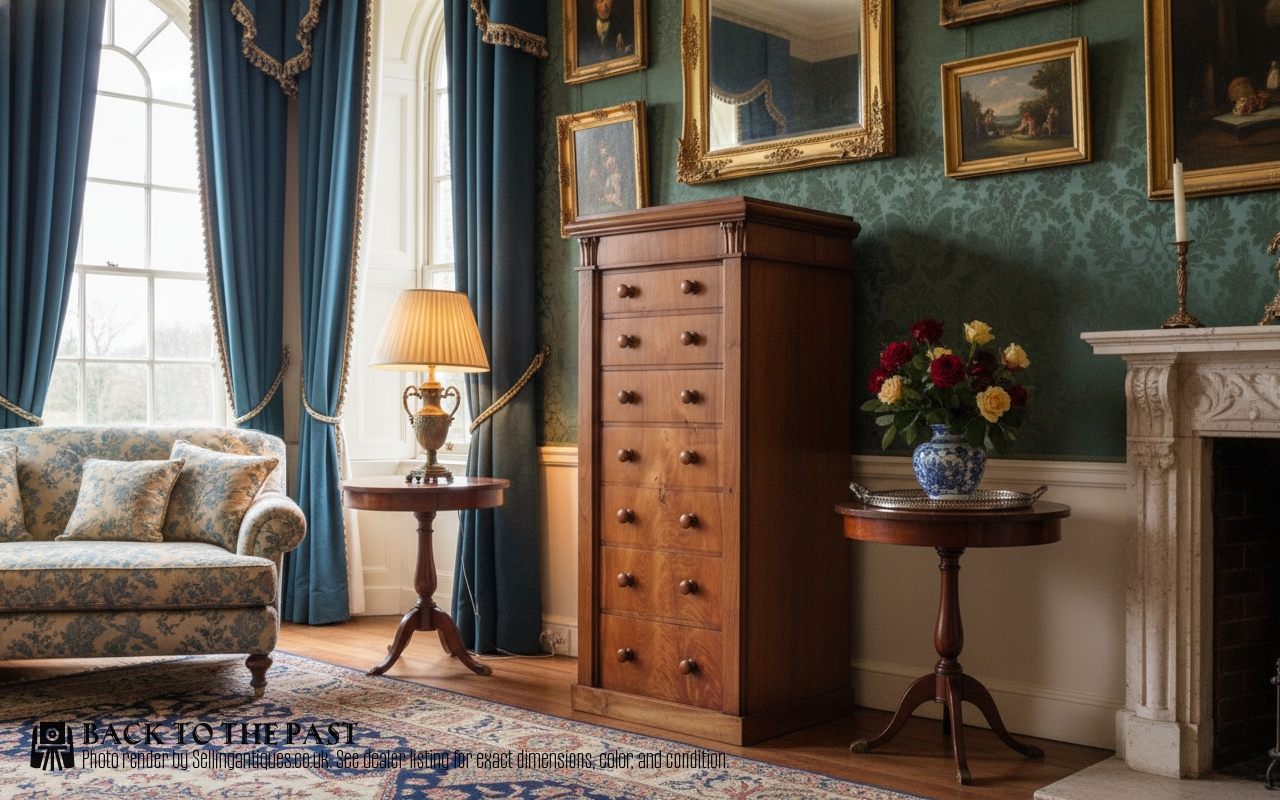
How they were made
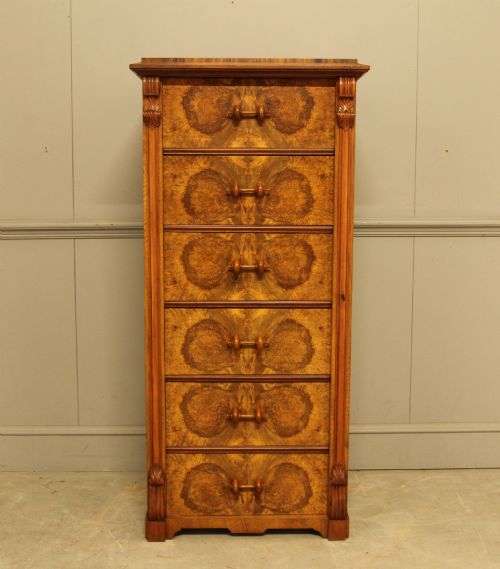
The primary construction relies on timber framing faced with walnut or burr walnut veneer, supported by secondary structural woods like oak and general timber. Highly figured grain patterns are laid across the drawer fronts to create symmetrical visual movement, often complemented by marquetry inlay or contrasting borders.
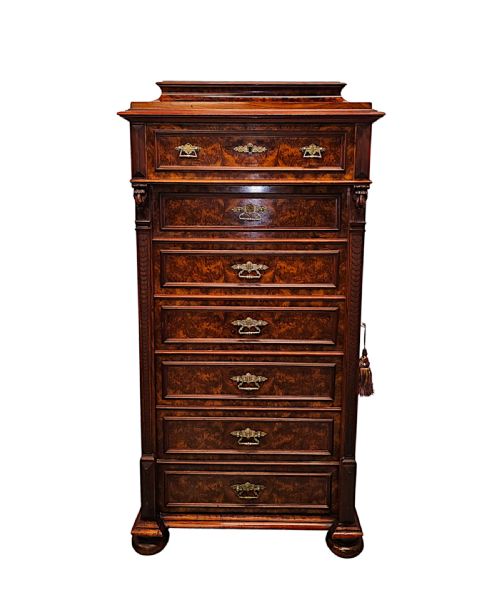
Hardware consists of brass handles, escutcheons, and locking mechanisms that secure the hinged side stile in place to protect the contents of every drawer simultaneously. Leather inserts appear inside pull-out secretaire drawers, while internal drawer linings utilise sound secondary timbers.
Walnut Wellington Chest Retail Price Guide 2026
Typical asking prices for walnut wellington chest among the pieces listed under this phrase on Sellingantiques today, from the lower quarter to the upper quarter. They describe what is for sale here now, not the wider market.
Some miniature versions stand barely taller than a bedside lamp, built to house tiny collections rather than wardrobe linen.
What varies in quality
The distinction between standard examples and the finest pieces rests upon the choice of burr walnut veneer and the symmetry of its grain matching across the drawer fronts. Workshops known for high production standards achieve tighter tolerances in the sliding side stile and smoother action in the internal drawer construction.
Additional refinement shows in the complexity of the interior fitted compartments, the presence of functioning locking mechanisms with original keys, and subtle details like marquetry inlay or carved corbels flanking the upper frame.
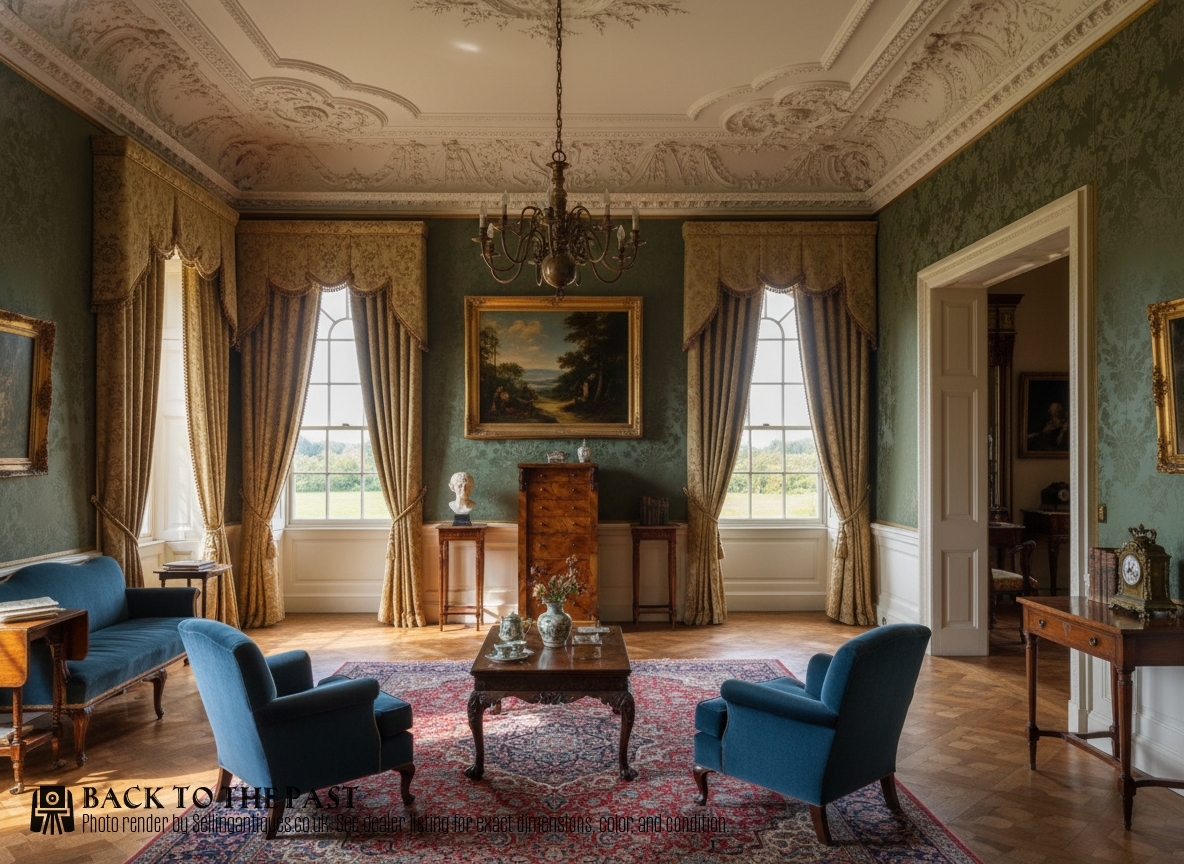
Gillows of Lancaster·Holland & Sons·S. Mordan & Co·S & H Jewells of London
The Walnut Wellington Chest Glossary
- Wellington chest
- A tall, narrow chest of drawers secured by a hinged locking stile on one side that fastens over the drawer edges. This design originated in the nineteenth century to store documents securely.
- Secretaire
- A desk form featuring a drop-front or pull-out drawer concealing small pigeonholes and writing surfaces. In these pieces, the writing drawer integrates seamlessly into the vertical stack.
- Burr walnut
- Timber taken from walnut tree growths that produces intricate, swirling grain patterns. Cabinetmakers prize this material for creating decorative veneered surfaces on fine furniture.
- Stile
- A vertical framing member of a door or panel. On these chests, the right or left stile swings open only when the unlocked top drawer is pulled slightly outward.
- Specimen chest
- A specialised cabinet containing numerous shallow drawers designed to hold natural history collections or small valuables. These share the tall, narrow proportions of the standard form.
Walnut Wellington Chest: Frequently Asked Questions
Why does a wellington chest have a locking side bar?
The hinged vertical side stile locks all the drawers simultaneously when the top drawer is pulled open slightly and a key turns the mechanism. This security feature kept confidential papers and personal items safe in nineteenth-century studies.
Today, this mechanism remains the defining characteristic of the form, allowing owners to secure numerous shallow drawers with a single turn of the key.
How do I use a secretaire version?
The middle section pulls forward and drops down on hinges to reveal a fitted interior with small compartments and a leather-lined writing surface. It provides a compact desk space that closes away completely when not in use.
When closed, the secretaire drawer looks identical to the other drawers in the stack, maintaining the clean vertical lines of the piece.
Where should I place one in a modern room?
Their tall, narrow footprint makes these chests ideal for narrow alcoves, hallways, or tight bedroom spaces where a wide chest of drawers would block passage. They provide generous vertical storage without demanding significant floor area.
Ensure you leave enough clearance beside the chest for the locking side bar to swing open fully when you need to access the drawers.
How do I tell Victorian examples apart from later ones?
Nineteenth-century pieces generally exhibit heavier use of rich burr walnut veneers, hand-cut dovetails on the drawer sides, and substantial brass locks stamped by period makers. Construction details tend to show heavier timber framing in the primary carcase.
Later Victorian and Edwardian variations often feature simpler internal construction, lighter hardware, and standardised drawer depths adapted for filing or general storage.