

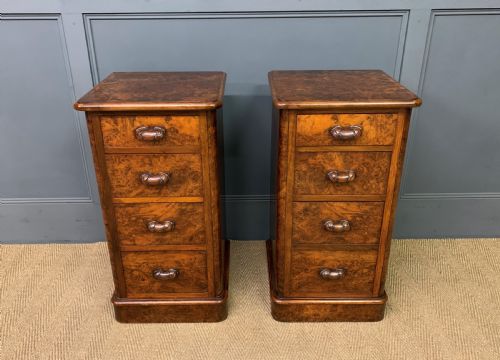
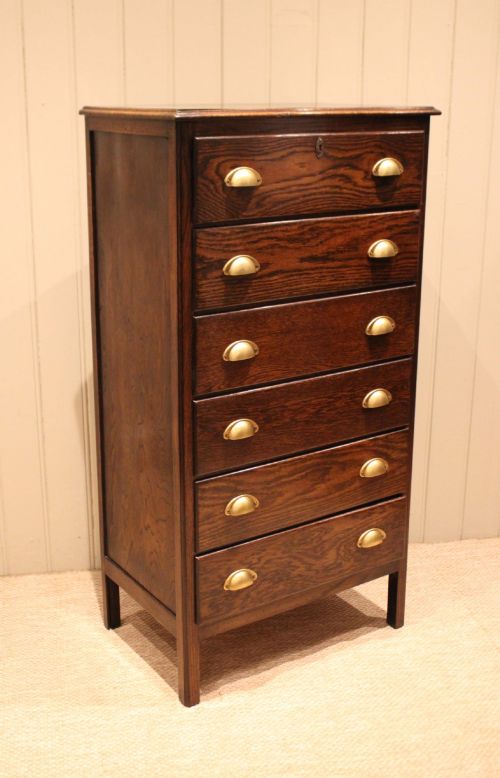
Tall Narrow Chest Drawers
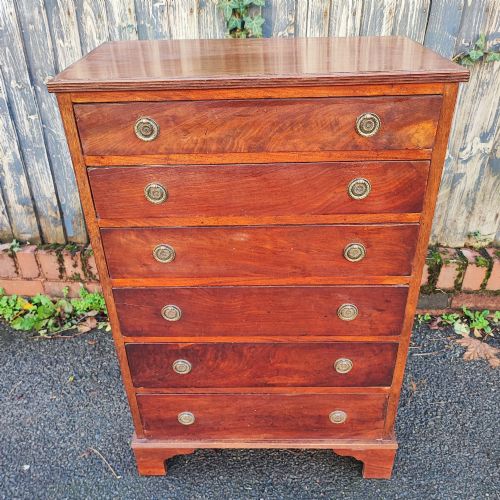
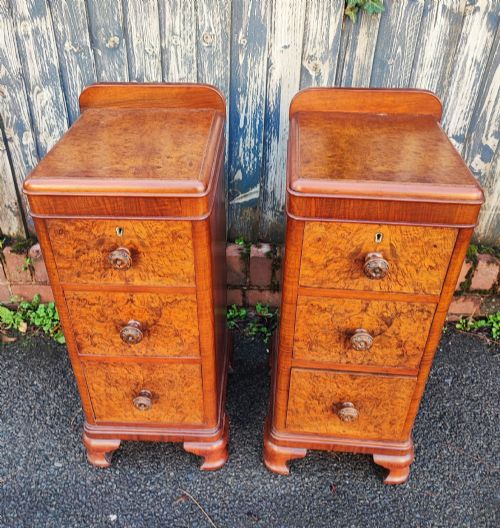
When searching for a tall narrow chest drawers, collectors find vertical storage solutions designed to maximise floor space while offering multiple tiers for clothing or papers.
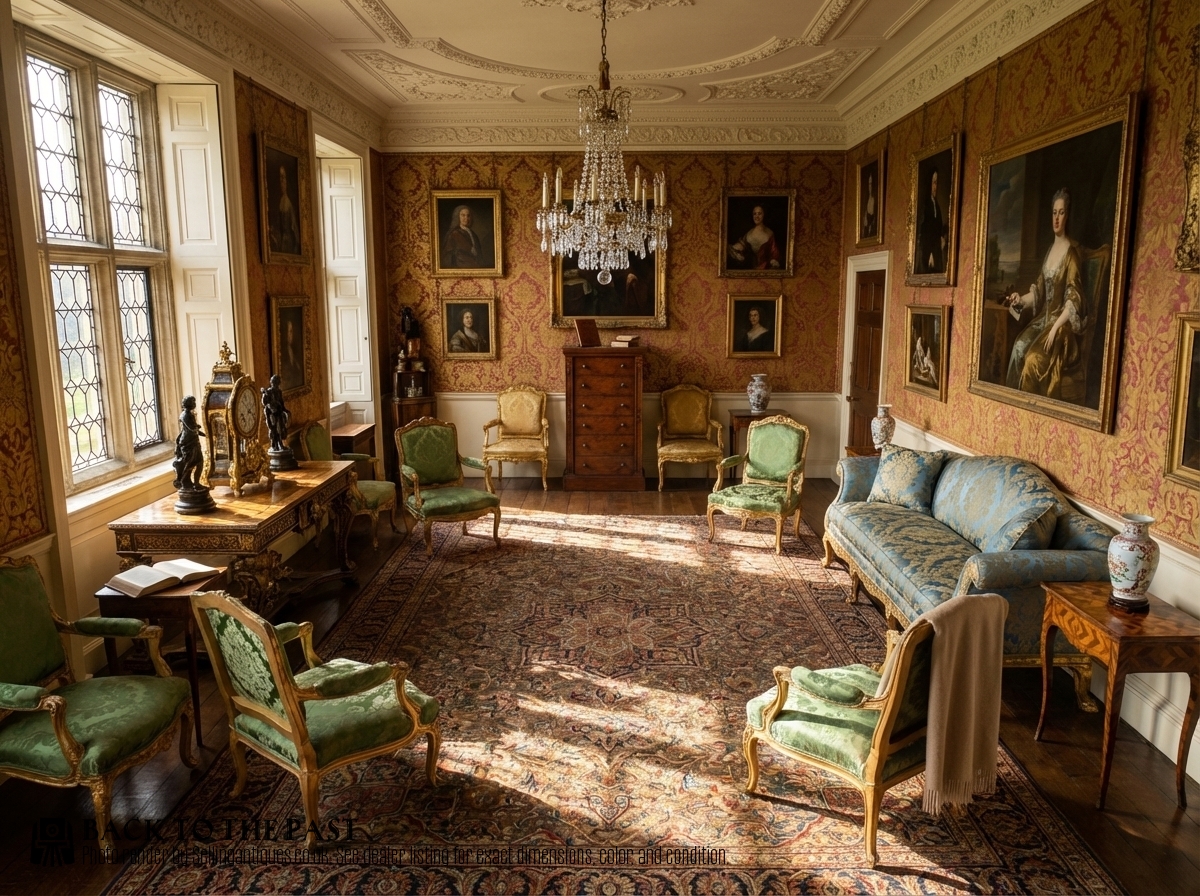
Tall Narrow Chest Drawers
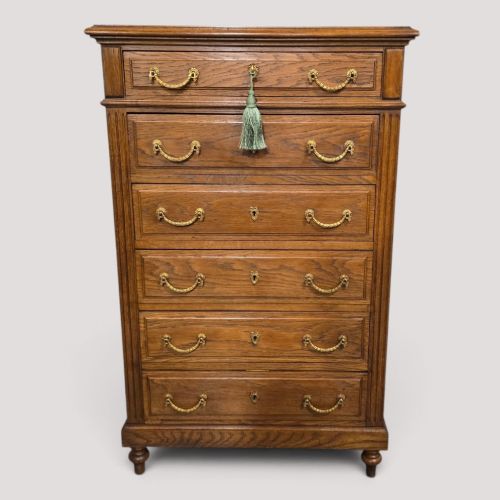
A tall narrow chest drawers brings vertical proportion to domestic interiors, offering substantial storage capacity without demanding excessive floor space.
The pieces appearing on this page span the Georgian, Victorian, Edwardian, and early twentieth-century periods, capturing shifts in domestic scale and cabinet-making ambition.
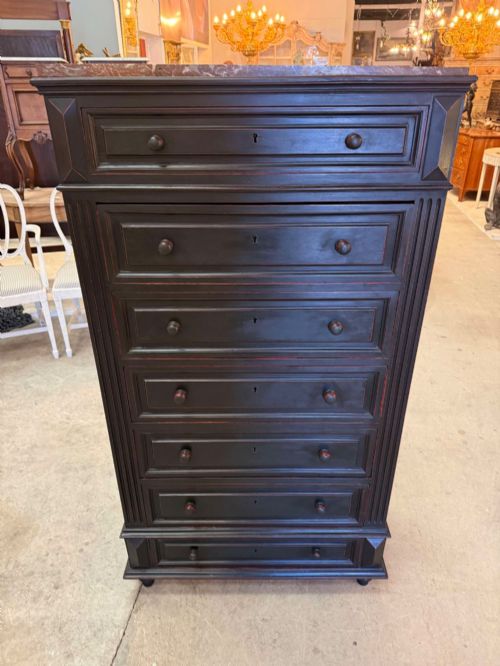
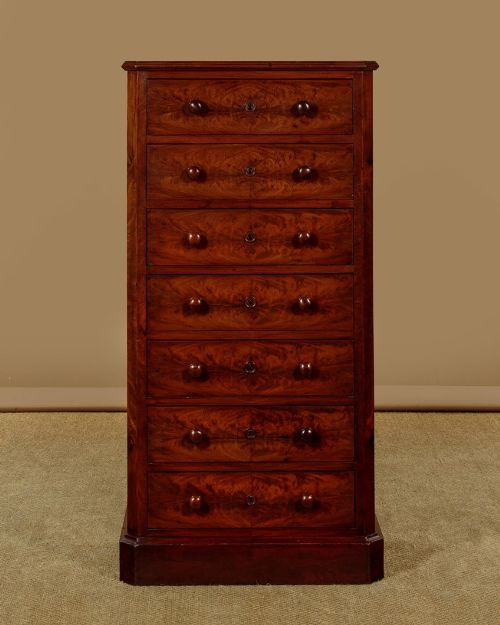
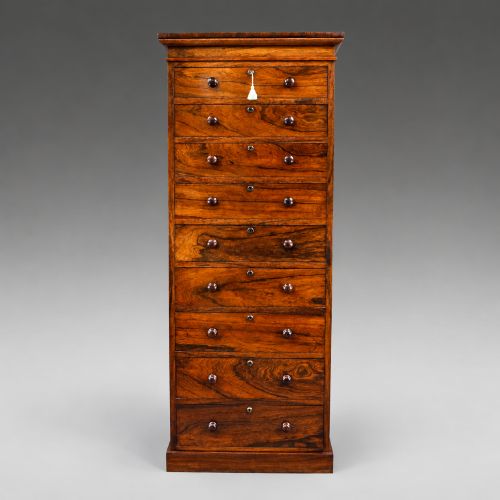
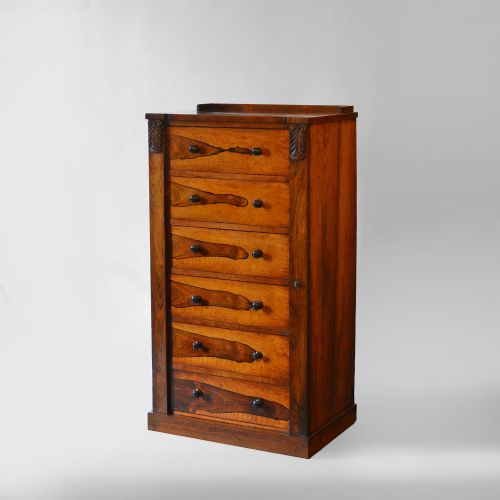
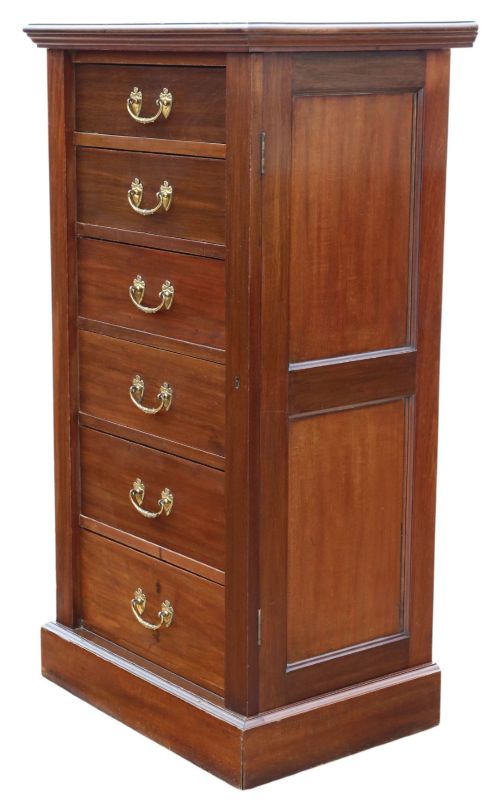
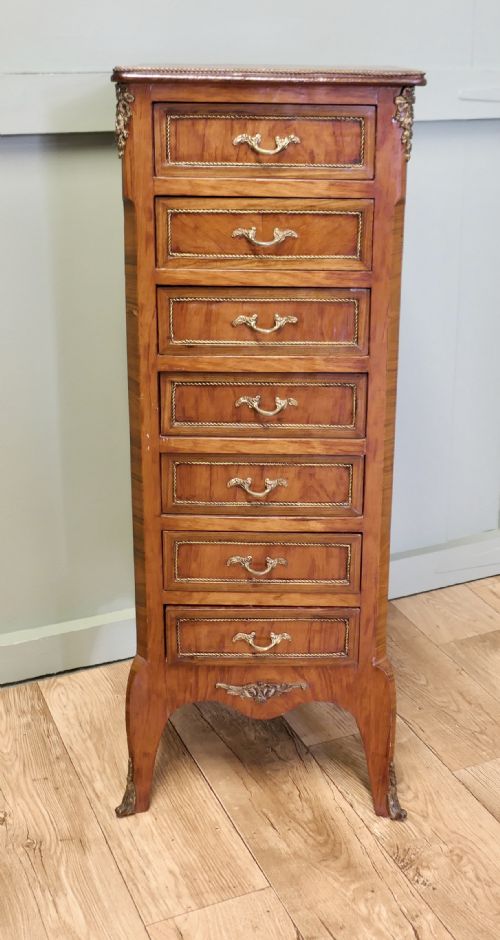
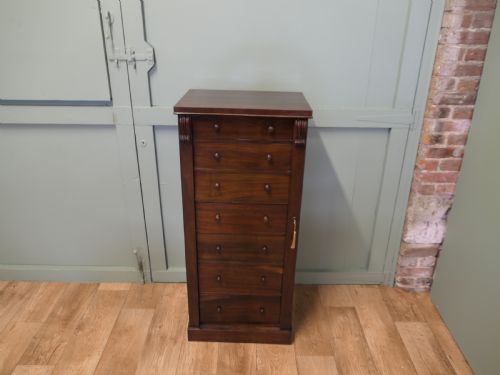
Visitors frequently encounter specific regional and continental forms here, including the English tallboy, the locking Wellington chest, and the French semainier.
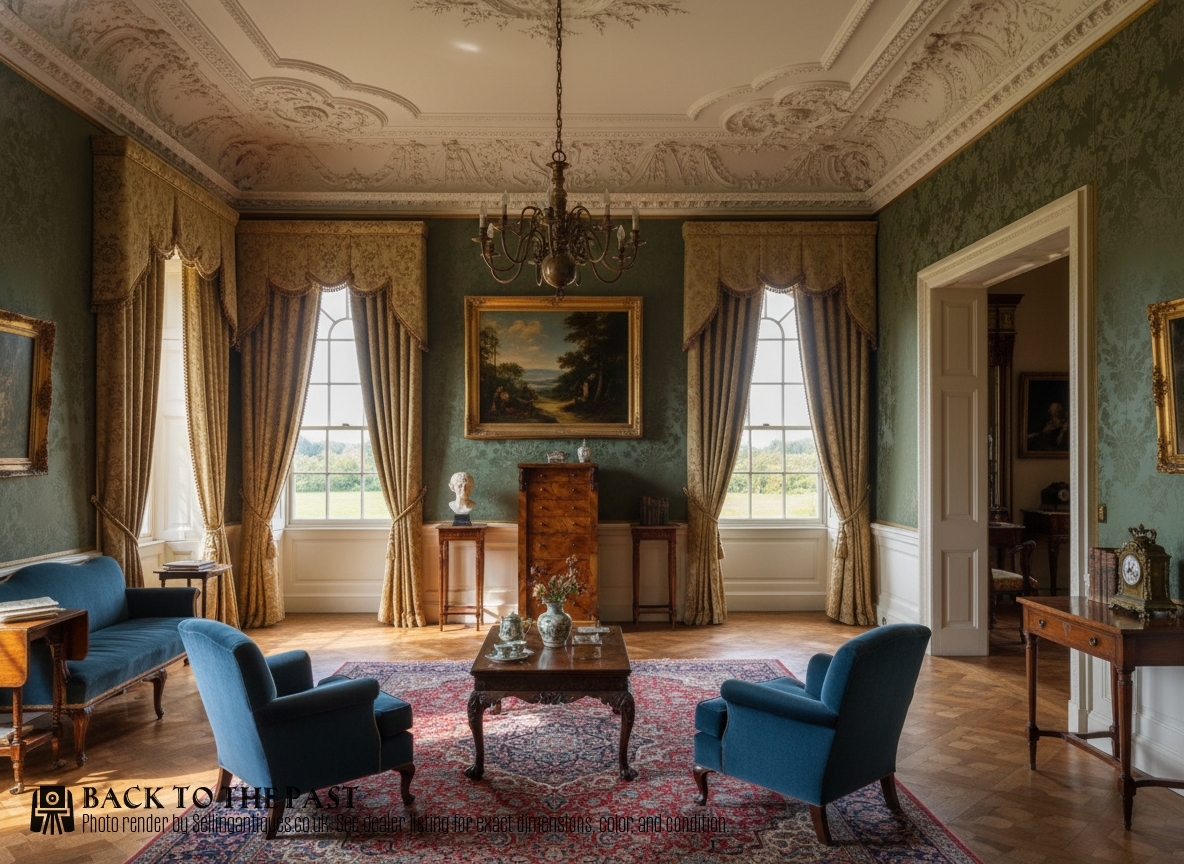
How They Were Made
Cabinet makers built these carcasses using dense hardwoods like mahogany, walnut, and rosewood, frequently incorporating secondary timbers such as oak and pine for drawer linings.
Veneers including flame mahogany, burr walnut, and amboyna were laid across primary surfaces to create dramatic grain patterns.
Drawer construction relied on hand-cut dovetails, while locking mechanisms on specialised forms like Wellington chests required fitted side stiles and brass lever locks.
Tall Narrow Chest Drawers Retail Price Guide 2026
Typical asking prices for tall narrow chest drawers among the pieces listed under this phrase on Sellingantiques today, from the lower quarter to the upper quarter. They describe what is for sale here now, not the wider market.
Some country pieces wear their working lives proudly under colourful scumble paint intended to mimic expensive exotic hardwoods.
What Varies in Quality
Proportion and visual balance dictate the success of a tall narrow chest drawers, distinguishing purpose-built pieces from clumsy alterations.
The choice of timber grain matching across drawer fronts reveals the maker's intent, separating standard production from high-status commissions.
Original hardware, working locking mechanisms with operational keys, and intact polished finishes preserve the structural and aesthetic integrity of the piece.
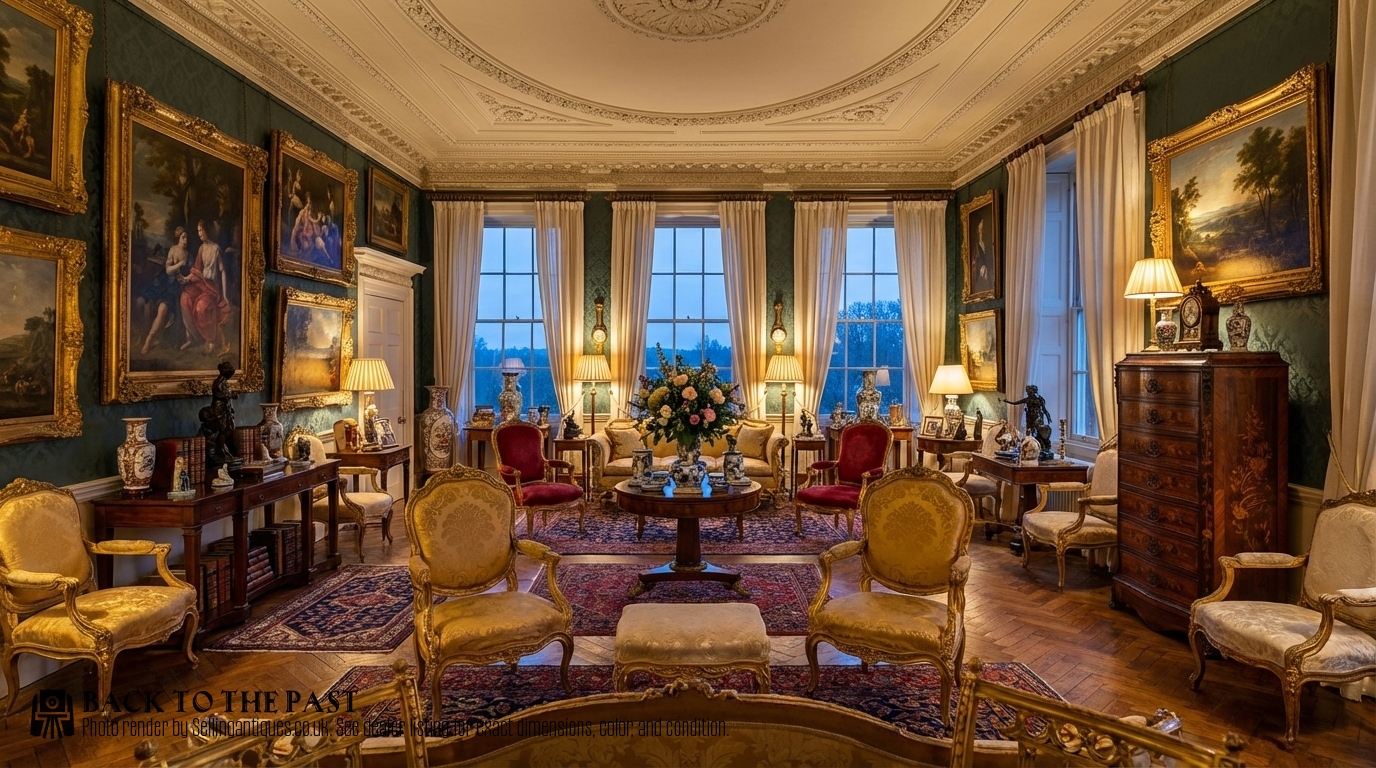
Maple & Co.·S & H Jewells
The Tall Narrow Chest Drawers Glossary
- Semainier
- A French tall narrow chest of seven drawers traditionally designed to hold a week's supply of linen. The word derives from semaine, meaning week.
- Tallboy
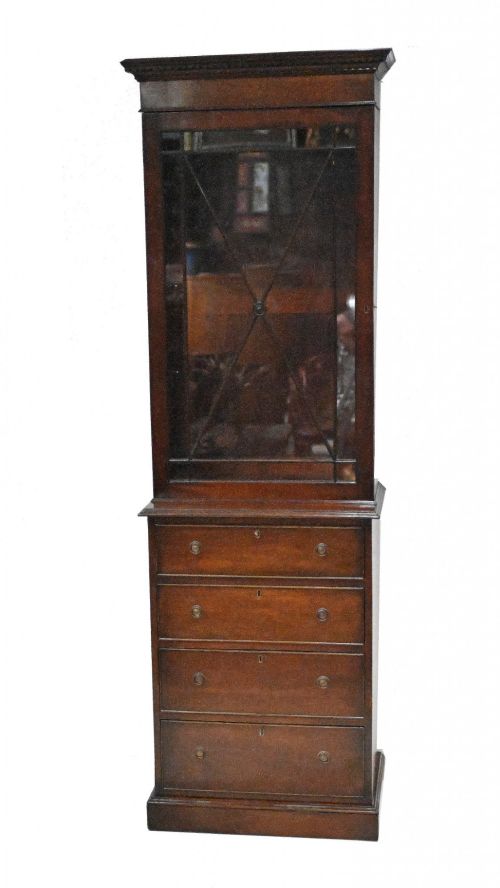
- A two-section piece comprising a chest of drawers stacked upon a further chest or base stand. Eighteenth and nineteenth-century examples often combine walnut or mahogany veneers.
- Dovetail
- A joint formed by interlocking wedge-shaped fingers used at the corners of drawers. Hand-cut variations indicate earlier craftsmanship before machine production.
- Scumble Paint
- A decorative surface finish applied to pine or secondary timbers to simulate the appearance of more expensive figured hardwoods. It appears on vernacular country pieces.
Tall Narrow Chest Drawers: Frequently Asked Questions
What is a Wellington chest?
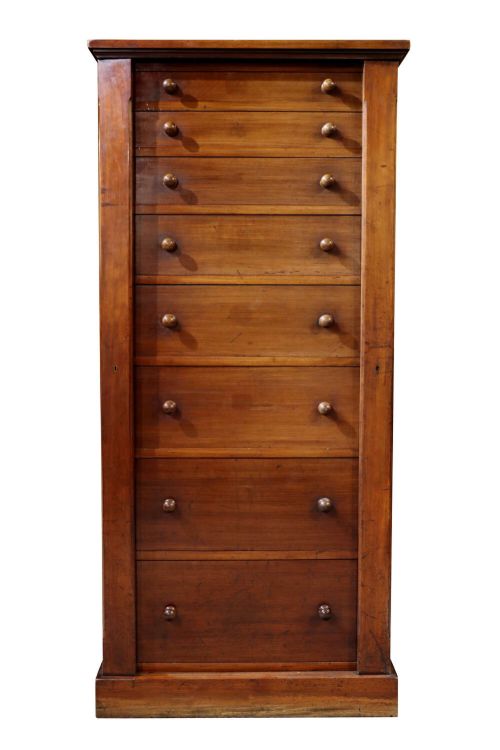
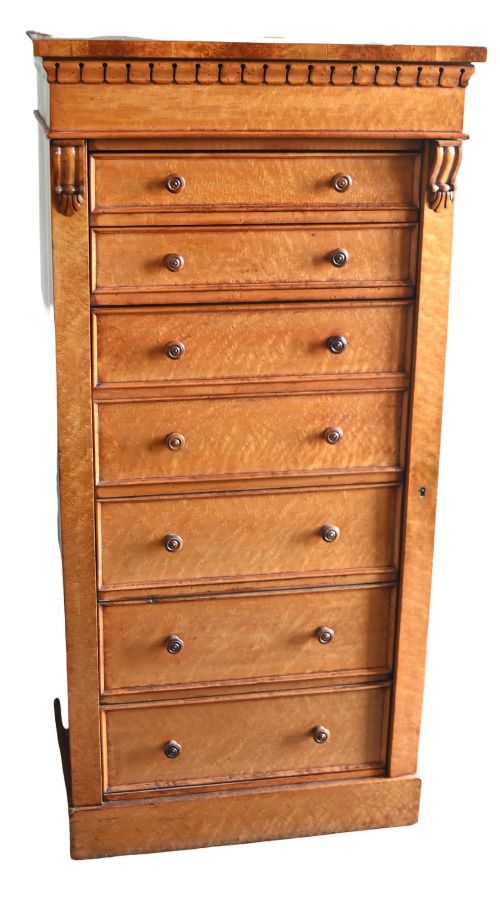
A Wellington chest is a tall, narrow set of drawers characterised by a locking side stile that secures the entire stack. This hinged flap fastens with a key to protect the contents.
Cabinet makers developed this form during the nineteenth century to provide secure storage for private papers or delicate garments within a compact footprint.
How do tallboys and semainiers differ?
A tallboy typically consists of two distinct vertical sections built as a stacked unit, often featuring six or more graduating drawers. A semainier is a single-carcase continental form traditionally constructed with seven drawers.
While both offer elevated storage, the semainier leans toward French styling and uniform drawer sizing, whereas the tallboy often incorporates proportions rooted in English Georgian and Victorian design.
Where should I place a narrow chest?
These compact pieces suit tight architectural spaces such as alcoves, hallways, and bedrooms where standard horizontal chests would obstruct movement. Their vertical reach provides storage capacity without dominating the room.
Ensure the location allows adequate clearance for opening drawers fully, particularly for designs featuring side-locking mechanisms or pull-out writing slides.
How do I identify a Victorian piece?
Victorian examples frequently utilise solid or veneered mahogany and walnut, displaying darker patination, turned wooden knobs, and hand-cut drawer dovetails. Cabinet work from this era often incorporates robust pine carcass linings and simple brass locks.
Examining the timber shrinkage, interior construction marks, and backboards helps distinguish mid-nineteenth-century work from later Edwardian or twentieth-century revivals.