

Antique Office Drawers
These antique office drawers provide practical workspace and storage, bringing period character and solid timber construction directly into a modern study.
Antique Office Drawers
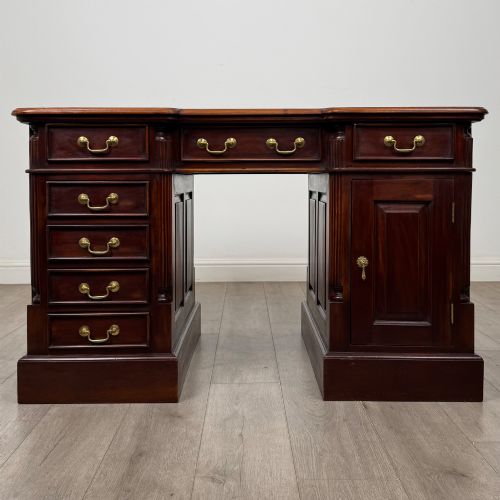
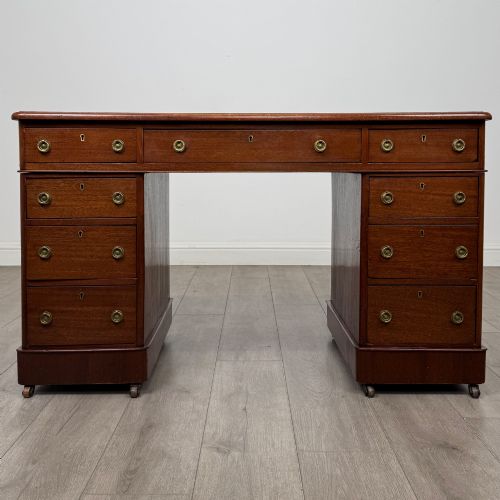
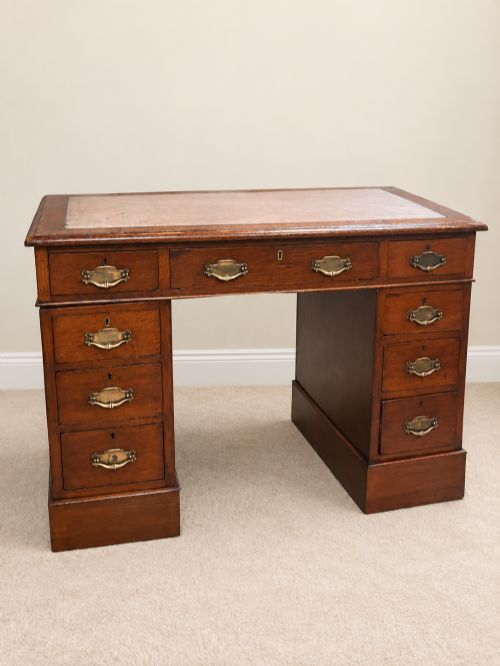
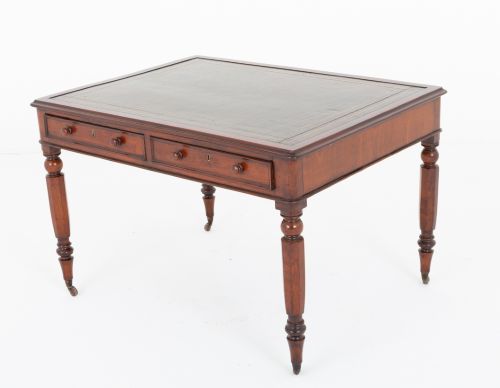
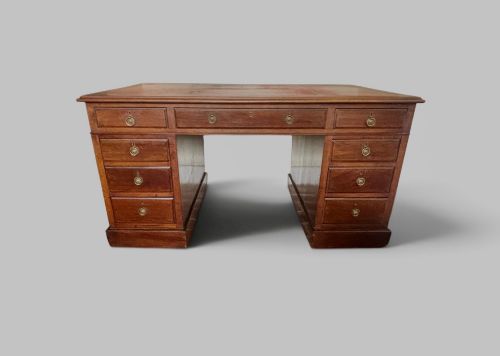
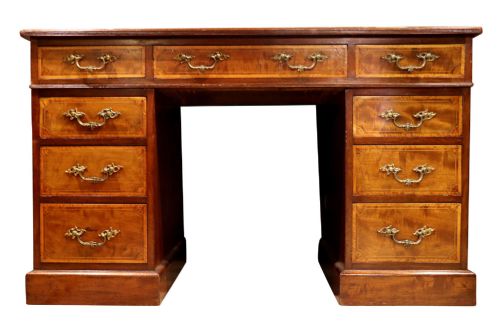
When searching for antique office drawers, buyers encounter a variety of practical workplace furniture designed for sorting, writing, and filing. Pedestal desks, kneehole desks, and writing tables form the core of what is available, featuring banks of integrated drawers for organisational needs.
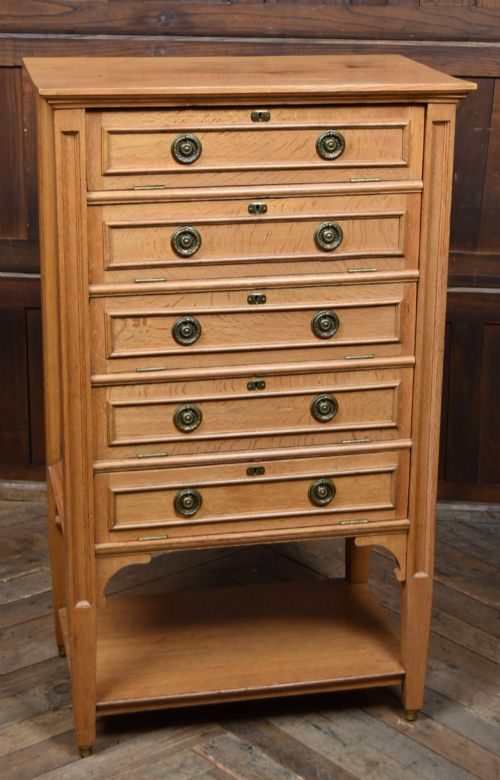
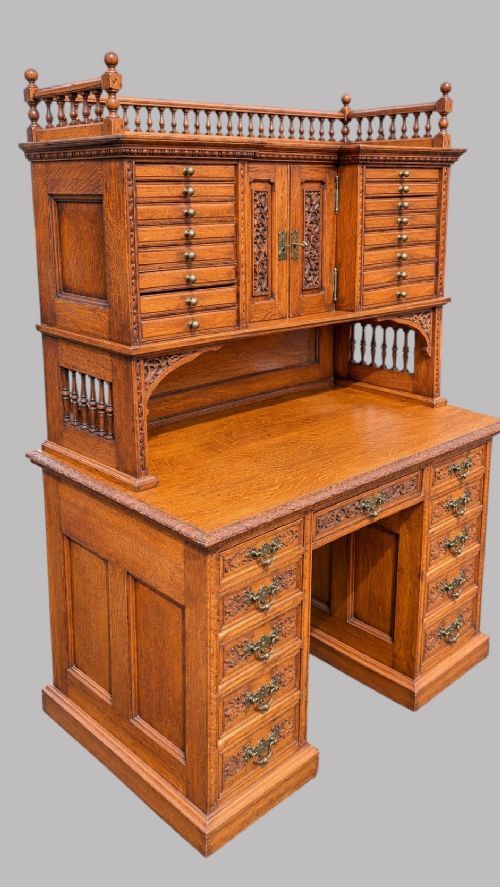
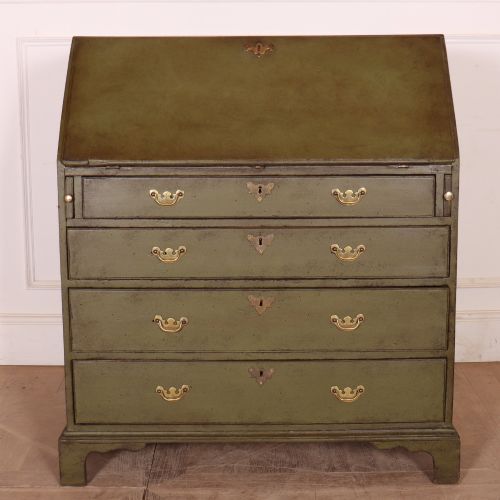
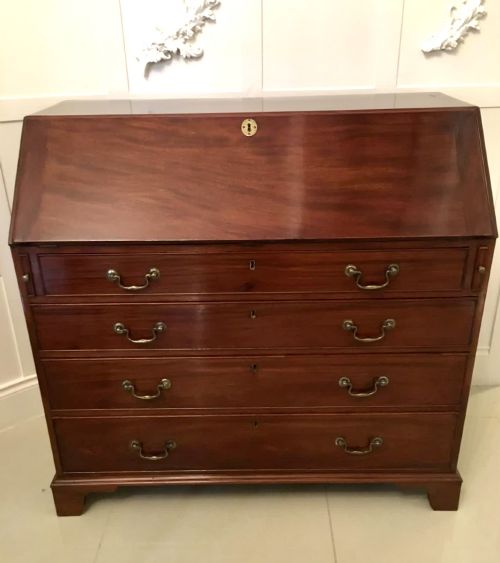
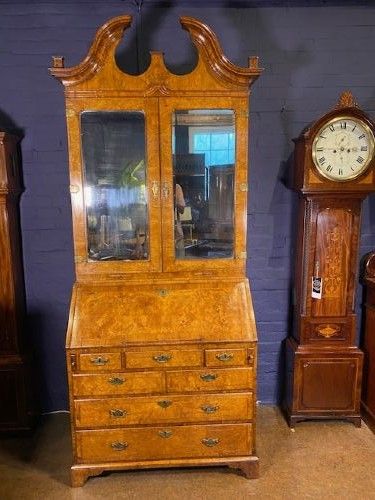
Beyond standard desks, the selection includes specialised filing cabinets, banks of drawers, and modular office chests. Edwardian and Victorian oak or mahogany pieces dominate the offerings, alongside earlier 18th century bureaux and campaign chests fitted with brass hardware.
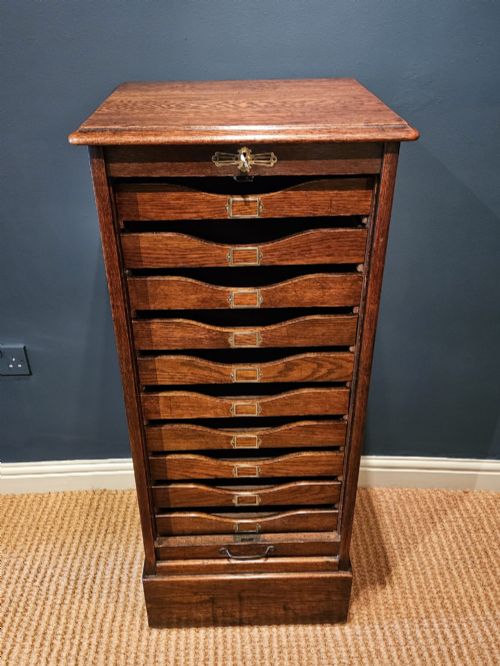
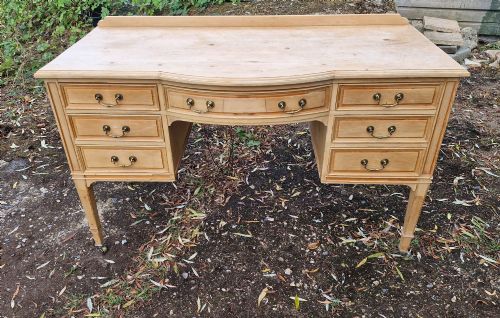
The functional forms span from simple pine writing tables to large partners desks and tambour front filing cabinets. Each type serves a distinct administrative purpose, originating from periods when office furniture relied on robust timber craftsmanship.
Materials and construction methods
Cabinet makers utilised dense hardwoods such as mahogany, oak, and walnut to construct heavy-duty frames and drawer carcasses. Secondary timbers like pine appear frequently in internal drawer linings and secondary panels.
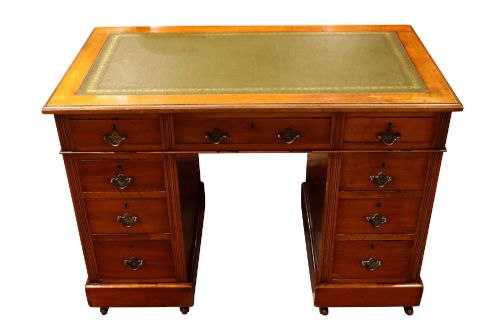
Surface treatments often incorporate inset leather writing surfaces framed by timber borders, complemented by cast brass handles and key escutcheons. Bureau and cabinet doors frequently employ panelled construction or rolling tambour shutters to secure contents.
Listings feature oak, mahogany, walnut, and pine across desks, filing cabinets, and multi-drawer banks.
Assessing build quality and refinement
Differentiation across these pieces lies in timber selection, such as figured burr walnut veneers or solid mahogany boards, paired with the precision of the drawer dovetails. Superior examples retain original brass hardware, fitted interior stationery compartments, and matching keys for the locks.
Proportion and scale dictate the tier of a piece, ranging from utility estate desks in plain pine and oak to large breakfront pedestal tables or inlaid creations bearing maker stamps. The depth of the faded patina on the wood surface indicates the care and age of the finish.
Edwards & Roberts·Hobbs & Co.
The Antique Office Drawers Glossary
- Pedestal desk
- A freestanding desk comprising two supporting stacks of drawers with a central recess for the user. These sturdy units provide substantial document storage beneath the main writing surface.
- Tambour front
- A sliding shutter formed of narrow vertical strips of wood glued to a canvas backing, used to enclose shelving or filing compartments on cabinets. This flexible mechanism conceals paperwork smoothly within the desk profile.
- Kneehole desk
- A compact desk featuring a central recessed space for the legs, flanked by single or multiple banks of drawers. They suit smaller study spaces while maintaining ample drawer capacity.
- Davenport
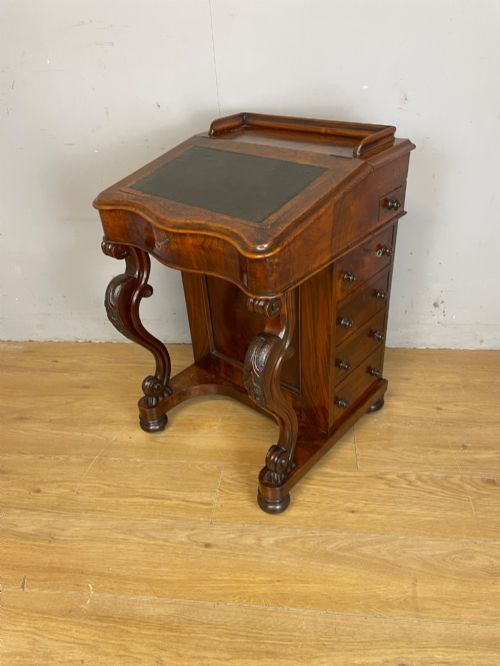
- A small sloping-top desk with a hinged writing surface that lifts to reveal stationery storage, supported by a pedestal of drawers accessed from the side. Victorian iterations often incorporate decorative wood veneers and gallery rails.
- Campaign chest
- A modular chest of drawers split into sections with recessed brass pull handles and corner brackets, originally built for military officers on the move. The dismantled parts transport easily between locations.
Antique Office Drawers: Frequently Asked Questions
How do I care for leather desk tops?
Maintain inset leather writing surfaces by dusting gently with a dry cloth and occasionally applying a specialist leather balm to prevent cracking.
Avoid placing hot cups or excessive moisture directly onto the leather to preserve the original dye and tooling.
Are these drawers suitable for daily work?
Solid timber construction and traditional dovetail joints make these pieces robust enough for everyday administrative tasks and modern writing duties.
Interior drawer dimensions vary compared to modern filing systems, so check internal clearances if housing specific folders.
How do I distinguish Victorian from Edwardian desks?
Victorian office furniture generally employs heavier timbers, darker finishes, and richer grains like mahogany and walnut with pronounced mouldings.
Edwardian pieces often display lighter oak construction, simpler lines, or Arts and Crafts influences reflecting changing interior tastes.
Can pedestal desks be placed freestanding?
Many pedestal desks feature finished backs, allowing them to sit in the middle of a room rather than pushed against a wall.
Freestanding partners desks offer drawers and kneeholes on both sides, designed for two people to work opposite each other.