
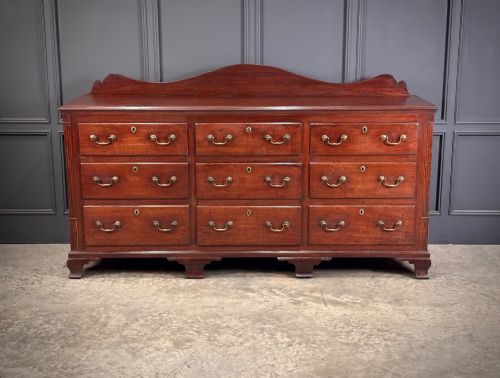
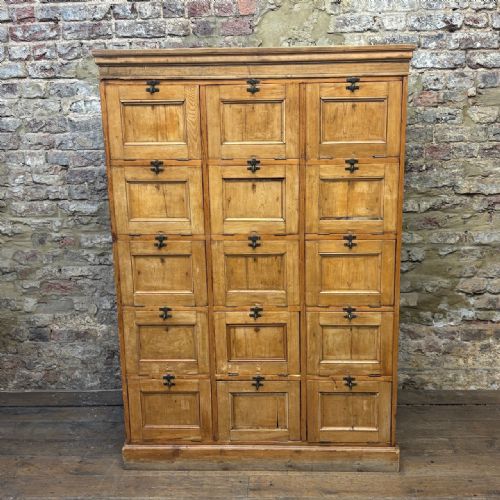
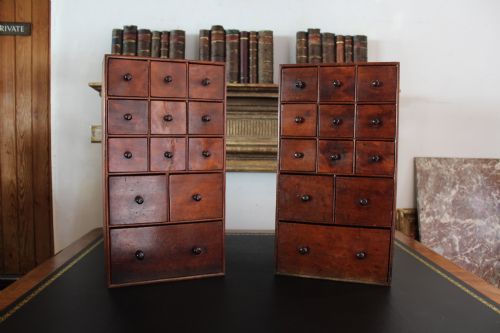
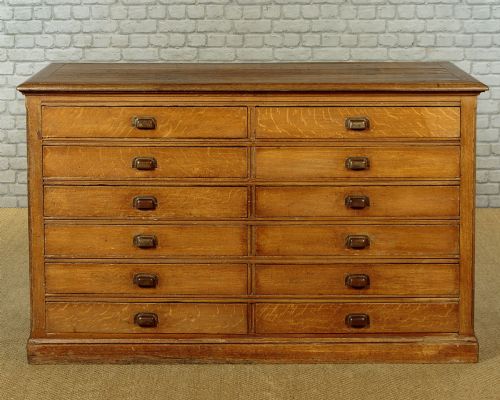
Vintage Apothecary Drawers
Vintage apothecary drawers offer utilitarian storage with multi-drawer banks built for pharmacies, shops, and surgeries.
Vintage Apothecary Drawers
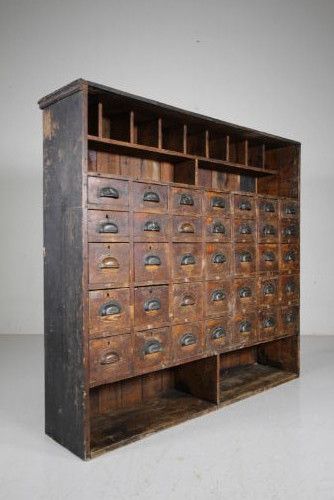
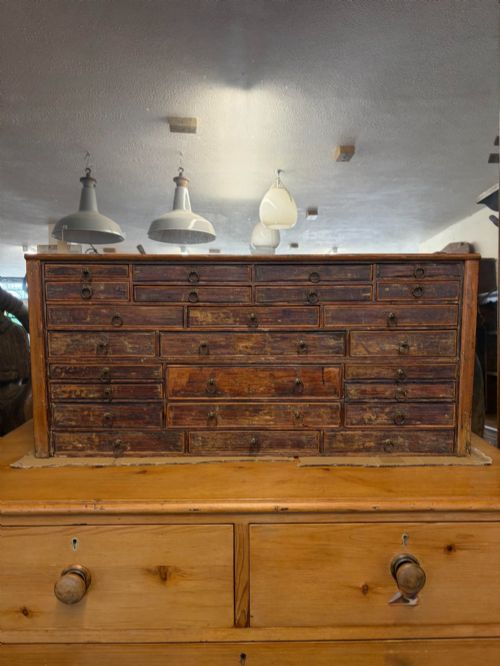
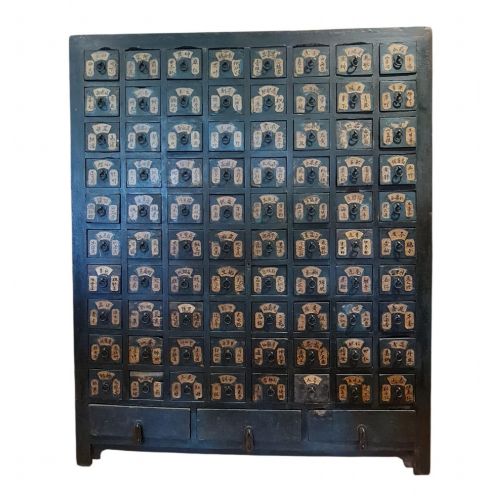
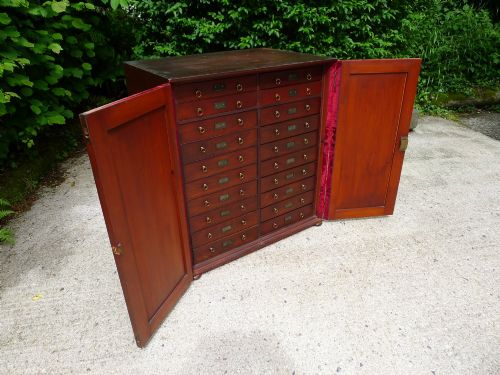
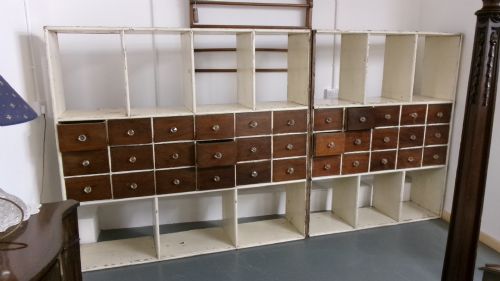
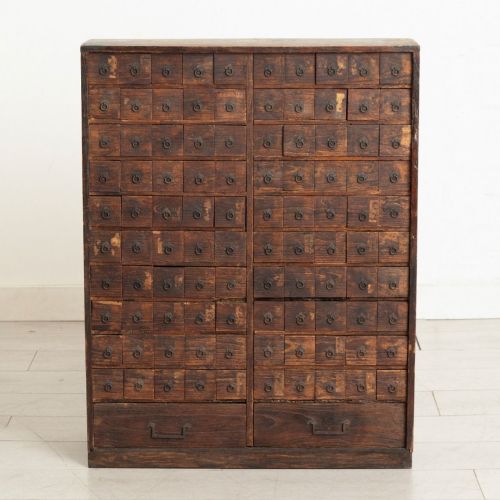
Vintage apothecary drawers comprise multi-drawer banks, chemist shop fittings, spice chests, and collectors' cabinets spanning the eighteenth century through to the 1930s. Buyers encounter numerous banks of drawers originating from nineteenth-century contexts, alongside Edwardian seed chests and Chinese medicine cabinets.
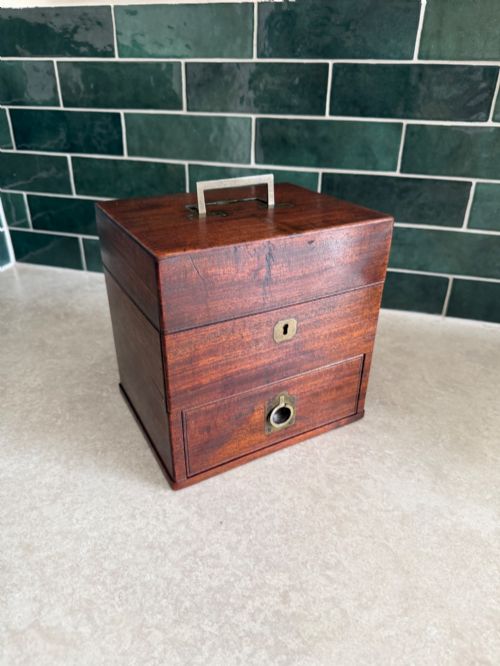
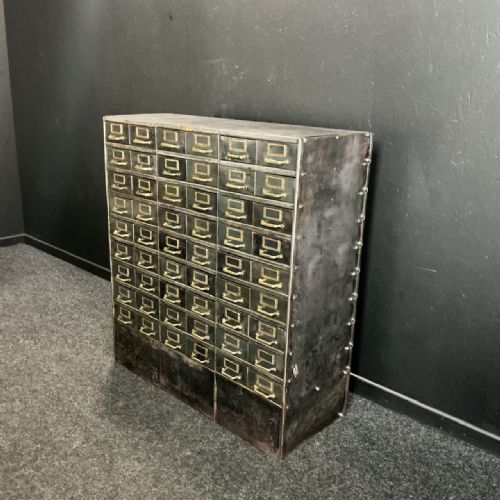
Forms range from compact wall-hanging spice boxes and travelling cases with bottles to large industrial banks holding up to eighty drawers. These pieces served practical storage functions in pharmacies, homes, and retail settings.
Origins stretch across English, Chinese, Japanese, and Hungarian workshops, taking industrial, Victorian, Georgian, and Edwardian styles. The selection relies heavily on nineteenth-century utility and shop display furniture.
Materials and construction
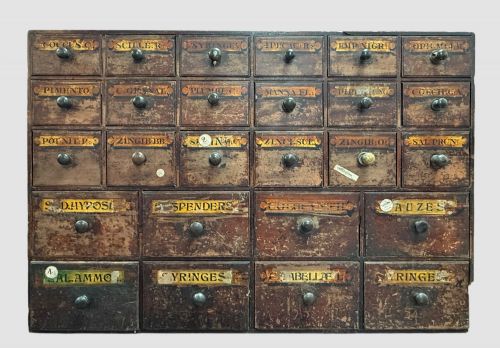
Cabinetmakers utilised hardwoods such as mahogany, walnut, oak, elm, teak, and fruitwood alongside softwoods like deal and pine. Many examples incorporate brass for drawer pulls and label holders, alongside iron hardware and glass elements.
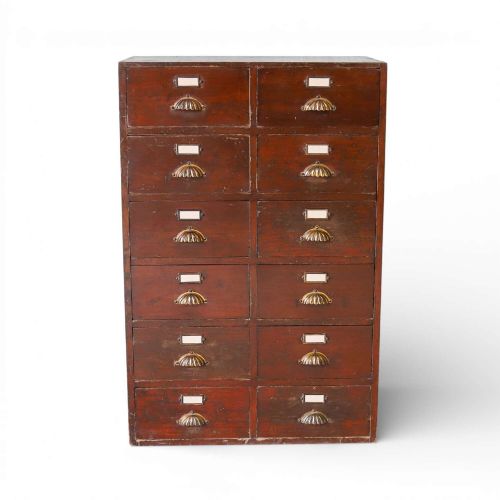
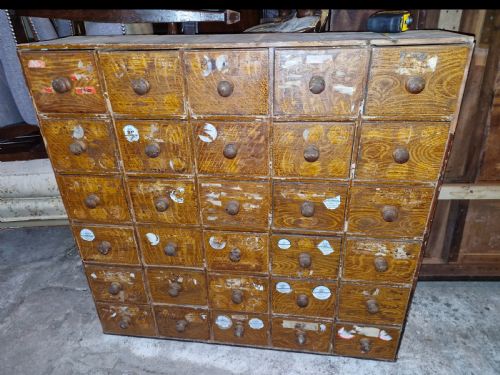
Construction methods focus on durability for commercial use, employing solid timber frames, multiple small drawers, and painted or polished finishes. Surviving pieces often retain original paint layers, shell pulls, and brass label holders.
Storage forms span medical apothecary chests, chemist shop fittings, haberdashery cabinets, seed chests, spice boxes, and collectors' cabinets.
Determining quality
Quality rests on the integrity of the original hardware, such as brass shell pulls and label holders, and whether the paint or polished finish remains intact. Larger banks with numerous drawers demonstrate higher complexity in original joinery.
Provenance influences standing, with shop fittings and marked pieces from known makers or specific geographic origins holding distinct interest. The completeness of internal components, including bottles or multiple matching drawers, elevates the piece.
Luxmore's of Ilfracombe·D Napier & Sons
The Vintage Apothecary Drawers Glossary
- Bank of Drawers
- A multi-drawer storage unit designed for commercial or institutional use. These tall or wide banks provide numerous small compartments.
- Chemist Shop Fitting
- Furniture built specifically for nineteenth-century pharmacies and dispensaries. These units often span entire walls and feature dozens of narrow drawers.
- Spice Chest
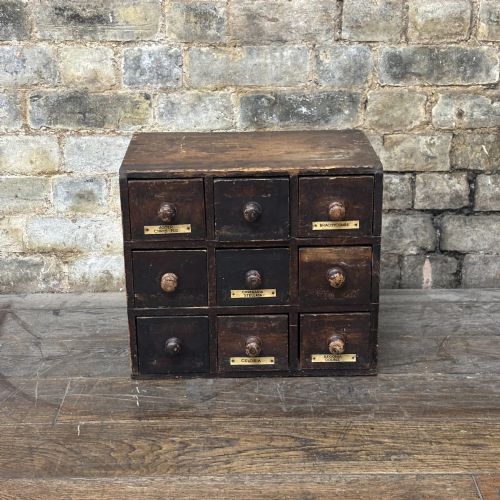
- A small wooden chest used originally for storing culinary spices in domestic kitchens. They frequently feature multiple miniature drawers within a compact frame.
- Collectors Cabinet
- A specialised cabinet housing specimens, microscope slides, or small objects. They contain shallow drawers designed to protect delicate items.
- Shell Pull
- A pressed metal handle shaped like an inverted scallop shell, commonly found on nineteenth-century apothecary furniture. They frequently incorporate integrated label holders.
Vintage Apothecary Drawers: Frequently Asked Questions
What were apothecary drawers used for?
These multi-drawer units stored medicinal herbs, powders, and pills in nineteenth-century pharmacies and dispensaries. They kept large quantities of dry ingredients sorted and accessible for compounding.
Smaller versions functioned as spice chests in domestic kitchens or travel cases for physicians carrying remedies on visits.
How do I date a bank of drawers?
Dating relies on timber choice, construction methods, and hardware styles found across the piece. Nineteenth-century examples often utilise pine, mahogany, or oak with hand-cut dovetails and brass shell pulls.
Later pieces from the 1900s to 1930s adopt industrial iron elements, machine-cut joints, or specific styles like Edwardian and Art Deco.
Are these cabinets suitable for modern homes?
The numerous small drawers provide practical storage for stationery, craft supplies, jewellery, and small household items. Their narrow profile allows them to fit easily into hallways, kitchens, and studies.
Placing them in modern spaces introduces distinct texture through aged timber, brass hardware, and painted shop finishes.
What is the difference between a shop fitting and a spice cabinet?
Shop fittings are large commercial banks of drawers built for nineteenth-century chemists, haberdashers, and florists. They often contain dozens of drawers and structural cornices.
Spice cabinets are much smaller domestic boxes, frequently designed for wall hanging or countertop use with fewer drawers.