







Antique Entomology Cabinet
An antique entomology cabinet holds delicate natural history collections in closely fitted drawers designed to protect specimens over generations.
Antique Entomology Cabinet
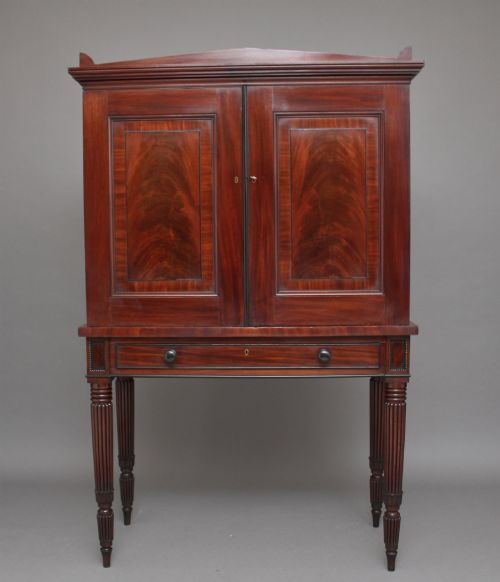
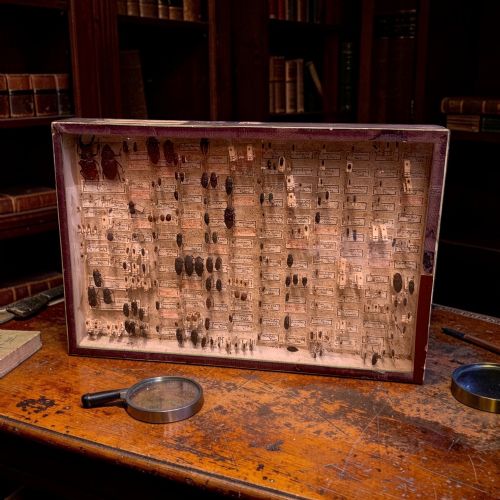
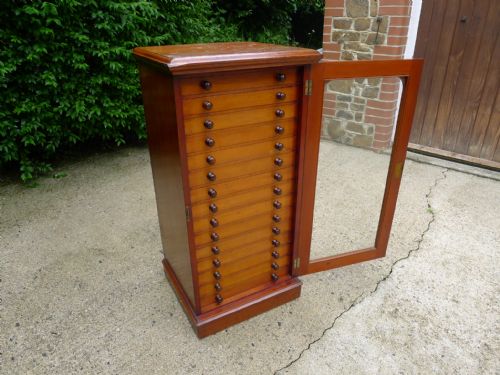
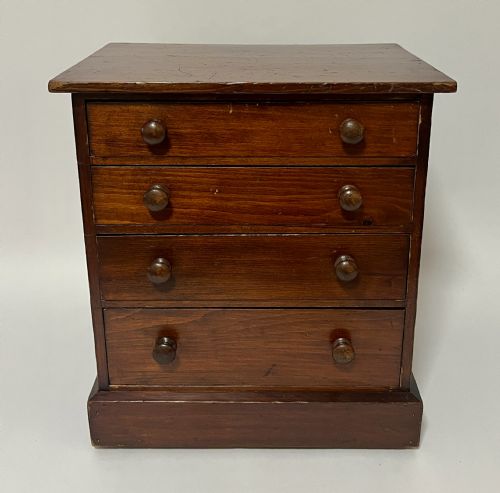
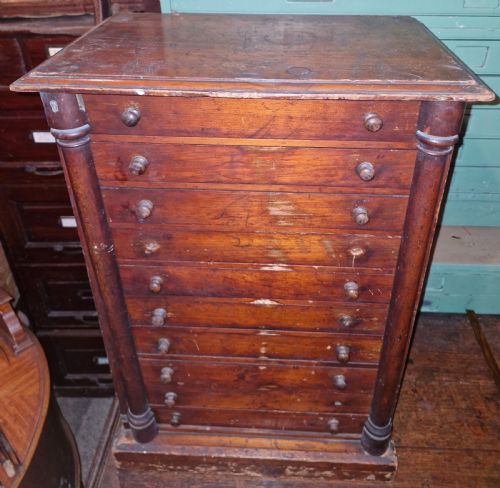
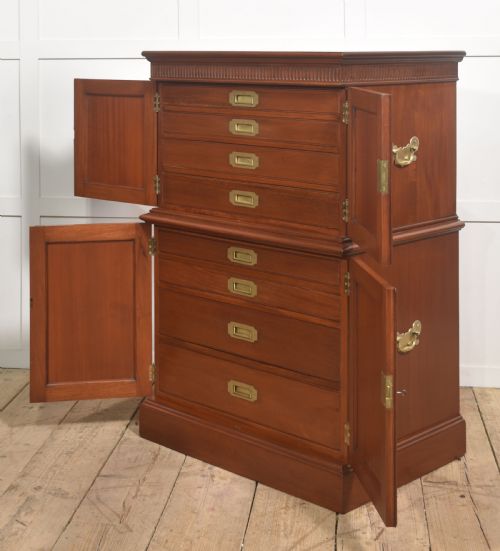
An antique entomology cabinet is primarily encountered as a multi-drawer chest built to house insect collections, butterfly specimens, or microscopic slides. The forms vary from compact five-drawer bedside units to monumental forty-drawer upright cases designed for serious study.
Most examples date from the Victorian and Edwardian eras, spanning the nineteenth and early twentieth centuries, though Georgian specimens appear in oak and Cuban mahogany. Collectors frequently meet chests executed in solid mahogany, walnut, or stained pine, often fitted with glazed doors or locking mechanisms.
Materials and construction
Cabinet makers utilised dense hardwoods such as mahogany, oak, and walnut, alongside secondary timbers like deal and pine for internal carcases and drawer linings. Glass featured heavily in panelled doors to permit viewing while keeping dust away from fragile contents.
Brass hardware, including recessed drop handles, escutcheons, and locking plates, provided functional durability. Drawers required exact tolerances to slide smoothly without disturbing delicate contents inside.
Antique Entomology Cabinet Retail Price Guide 2026
Typical asking prices for entomology cabinet among the pieces listed under this phrase on Sellingantiques today, from the lower quarter to the upper quarter. They describe what is for sale here now, not the wider market.
Some specimens housed meticulous Victorian beetle collections rather than colourful butterflies.
Judging quality and craftsmanship
Quality rests upon the precision of the drawer construction and the selection of timber, such as figured burr walnut or fine Cuban mahogany. Master makers employed tight joinery and matching grain patterns across multiple tiers of drawers.
The scale of the piece and the presence of signed maker labels or notable provenance elevate the standing of a cabinet. Lesser examples rely on plain stained deal or pine with simpler joinery.
Watkins And Doncaster·Brady Of Edmonton·Charles William Schofield
The Antique Entomology Cabinet Glossary
- Collectors cabinet
- A multi-drawer case built specifically to store and organise natural history specimens or small objects. These pieces feature shallow drawers to prevent damage to fragile contents.
- Deal
- A term historically applied to softwood timbers such as pine or fir. It served as a common material for secondary framing and simpler cabinets.
- Standish
- A term used to describe matching pairs of cabinets or desk accessories. In this context, it refers to balanced companion chests.
- Burr walnut
- Timber taken from the warted excrescences of a walnut tree, showing intricate swirling grain patterns. Cabinet makers prized it for decorative veneering on principal surfaces.
Antique Entomology Cabinet: Frequently Asked Questions
What were these cabinets originally used for?
Naturalists and private collectors utilised these multi-drawer chests to organise, classify, and preserve scientific specimens including butterflies, beetles, and botanical items.
The shallow drawers kept specimens flat and protected them from light and dust degradation during study.
How do I care for an antique cabinet?
Keep the wood conditioned with appropriate traditional waxes and avoid placing the case in direct sunlight or near heat sources.
Maintaining stable room humidity prevents the timbers and internal drawer runners from warping or sticking.
Can these cabinets hold modern items?
The shallow drawers suit the storage of jewellery, stationery, small collections, and flat ephemera rather than bulky household goods.
Many owners repurpose them as stylish organizational chests in studies or living spaces.
How do I identify the period of a cabinet?
Examine the secondary woods, handle hardware, and construction methods used inside the drawer carcases.
Victorian and Edwardian pieces often display machine-sawn elements and specific timber choices that contrast with earlier Georgian examples.