





Dark Wood Specimen Chest
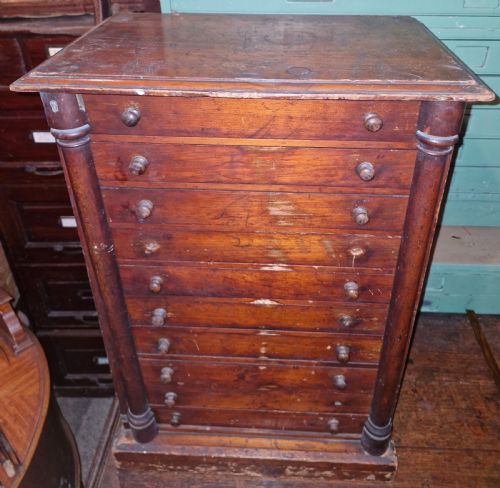
A dark wood specimen chest organises the curious fragments of natural history and precision engineering into a compact architectural form.
Dark Wood Specimen Chest
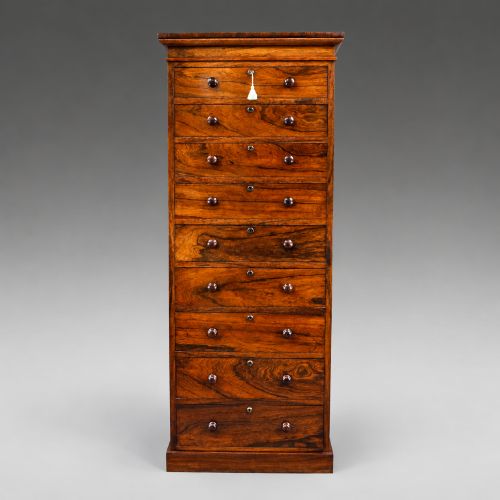
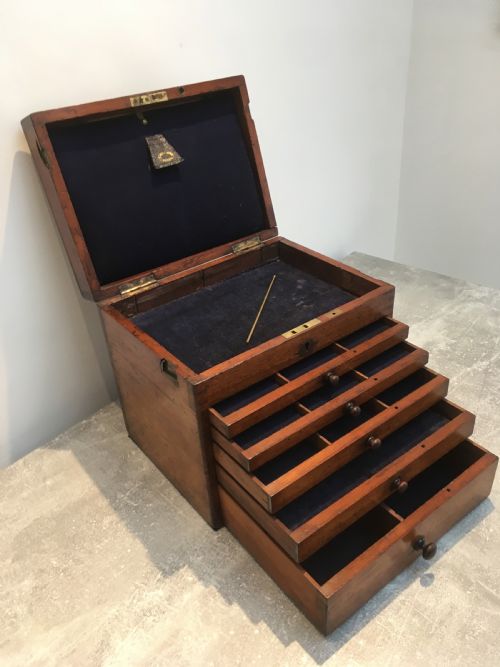
A dark wood specimen chest is a multicipital bank of shallow drawers designed to house everything from microscope slides and botanical samples to watch parts and apothecary jars. These pieces span the Georgian, Regency, Victorian, and Edwardian eras, emerging in forms such as collector cabinets, Wellington chests, and apothecary sets.
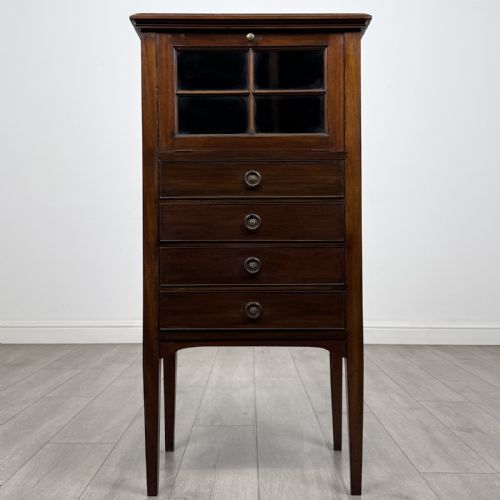
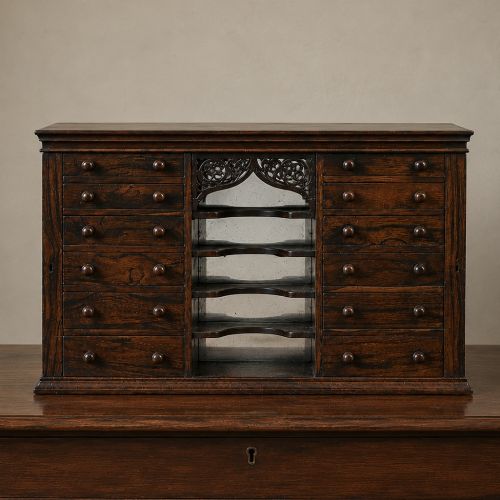
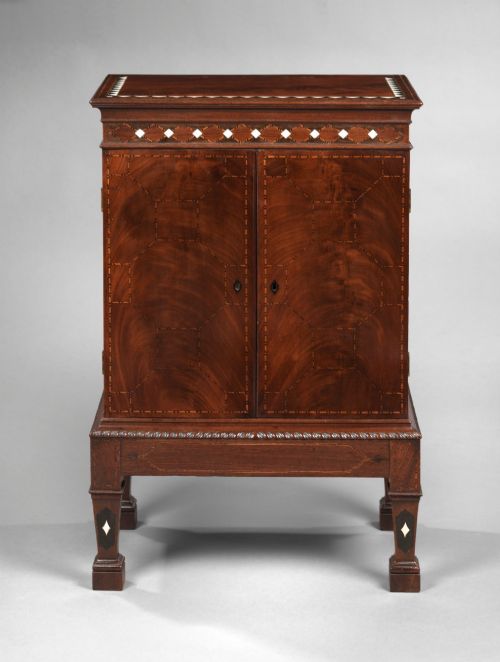
The version most frequently encountered on this page is the mahogany collector cabinet, typically fitted with numerous small drawers secured by locking stiles or glazed doors. Alongside these traditional entomological and botanical cabinets, the selection includes instrument cases, florist seed chests, and miniature chests of drawers.
Originating as utilitarian furniture for scientists, apothecaries, and specialists, these chests now serve as desktop storage or focal points for interior display. Their dense timbers and rhythmic banks of small handles reflect an era when systematic cataloguing governed domestic and professional life.
Materials and construction
Mahogany, rosewood, walnut, teak, and stained deal form the primary carcass structures, frequently paired with secondary pine internals and backed with close-boarded timber. Timber selection prioritised stability to prevent warping across the multiple narrow drawers required for fragile contents.
Brass drop handles, escutcheons, and flush campaign-style fittings provide the functional hardware, often complemented by glass doors and mirror glass panels. Drawers rely on precise hand-cut dovetails and runner systems that permit smooth operation despite heavy loads of mineral or botanical specimens.
Dark Wood Specimen Chest Retail Price Guide 2026
Typical asking prices for dark wood specimen chest among the pieces listed under this phrase on Sellingantiques today, from the lower quarter to the upper quarter. They describe what is for sale here now, not the wider market.
One surviving instrument case once travelled to the surgery of a Victorian dentist, while another preserved the seeds of an Edwardian florist.
Qualities that separate the standard from the exceptional
The distinction between a standard workshop piece and an exceptional cabinet lies in the integrity of the drawer construction and the density of the timber used. Superior examples maintain exact tolerances across dozens of shallow drawers, ensuring each slide glides effortlessly without binding against the carcass frame.
Makers' signatures, specialised internal fittings such as numbered bone pulls or glass-topped lids, and sophisticated locking mechanisms elevate the standing of a piece. The refinement of the brass drop handles and the unblemished matching of mahogany veneers indicate an ambitious commission rather than a utilitarian output.
BRADY OF EDMONTON·CHARLES WILLIAM SCHOFIELD
The Dark Wood Specimen Chest Glossary
- Wellington chest
- A tall, narrow chest of drawers secured by a hinged vertical locking stile on one side that fastens with a key. This mechanism prevents all drawers from opening simultaneously, safeguarding the contents.
- Collector cabinet
- A specialised piece of furniture containing numerous shallow drawers built to store natural history specimens, coins, or geological samples. They frequently feature glazed doors or enclosed locking panels to protect delicate items from dust.
- Apothecary chest
- A set of drawers or a cabinet originally utilised by chemists and pharmacists to store powders, dried herbs, and medical instruments. They often feature numerous small compartments labelled for specific ingredients.
- Stile
- The vertical outer member of a door frame or carcass front that provides structural rigidity. In multi-drawer cabinets, the stile frequently serves as the locking bar that secures the drawer banks.
- Escutcheon
- A protective plate surrounding a keyhole, usually fashioned from brass to match the drawer handles. It prevents the surrounding timber from wearing away during repeated use of the key.
Dark Wood Specimen Chest: Frequently Asked Questions
What were dark wood specimen chests originally used for?
These chests served scientists, physicians, naturalists, and tradesmen for organising delicate items such as microscope slides, botanical samples, watch components, and dental instruments.
The shallow drawers kept fragile specimens flat and separated, while secure locks protected valuable or hazardous contents from unauthorised access.
How do I care for a mahogany specimen chest?
Keep the timber away from direct sunlight and strong heat sources to prevent the dense mahogany or rosewood from drying and splitting.
Apply a traditional wax polish occasionally to nourish the grain, and avoid placing heavy objects on top of the cabinet to protect the delicate internal runners.
How can I tell a Victorian specimen chest from a Georgian one?
Georgian cabinets often display crisp architectural mouldings and classical proportions associated with styles like Chippendale, utilising dense Cuban mahogany.
Victorian iterations tend toward heavier locking stiles, such as Wellington mechanisms, and occasionally incorporate industrial brass fixtures or glass doors for display.
Can I use a specimen chest for modern storage?
The numerous shallow drawers make these chests exceptionally suited for organising jewellery, stationery, art supplies, or small collectables.
Their compact footprints allow them to sit comfortably on tabletops or sideboards while concealing considerable storage capacity behind uniform drawer fronts.