



Desktop Storage Drawers
Desktop storage drawers are practical wooden or metal units designed to organise small items, bringing period craftsmanship directly to your work surface.

Desktop Storage Drawers
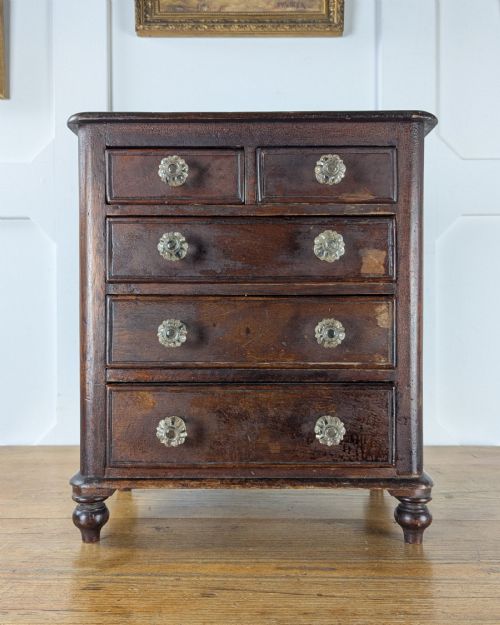
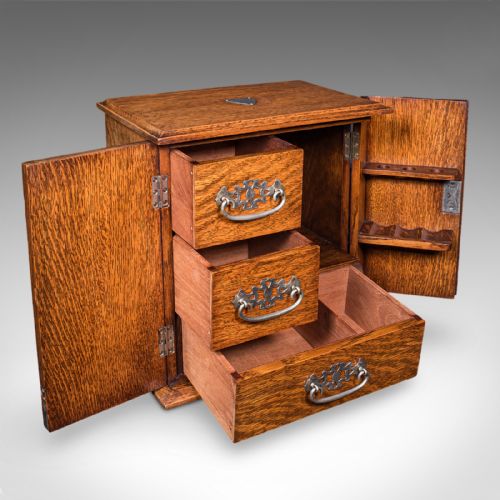
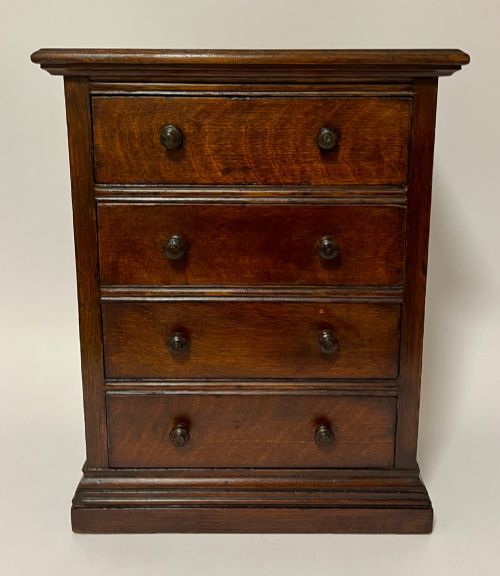
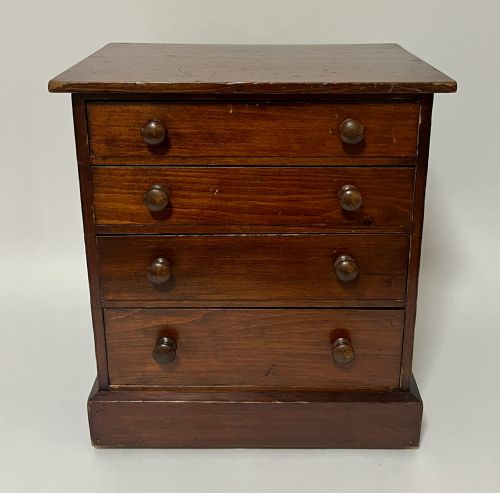
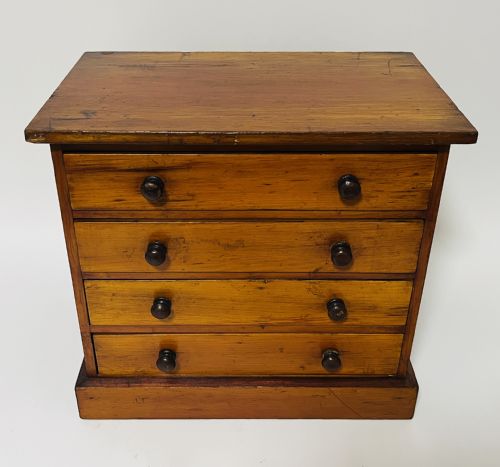
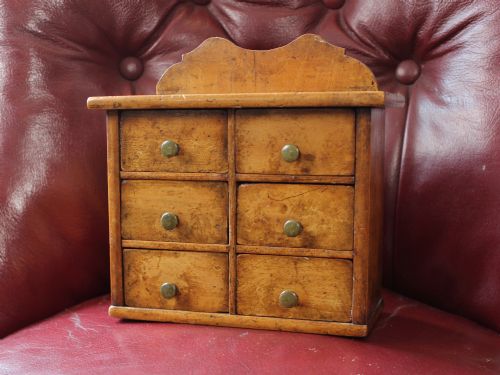
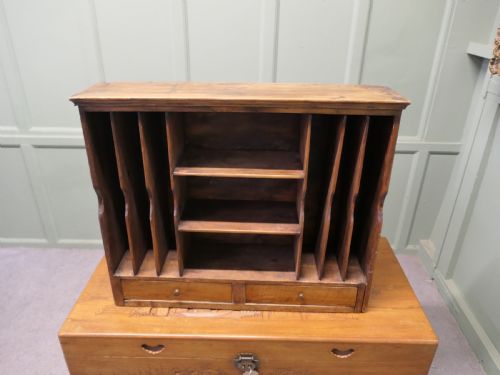
The most common items found on this page are small mahogany and oak chests, alongside pine spice cabinets and walnut collectors cases. Buyers encounter both utilitarian office filing shelves and decorative miniature chests of drawers.
Origins range from English workshops to French and Dutch makers, encompassing Georgian revivals and Victorian country pieces. Each format reflects the specific sorting and storage needs of its original era.
Materials and Construction
Cabinet makers utilised hardwoods such as mahogany, oak, walnut, and elm alongside softwoods like pine, fruitwood, and beech. Timber selection depended on whether the piece served as a fine display item or a utilitarian workspace container.
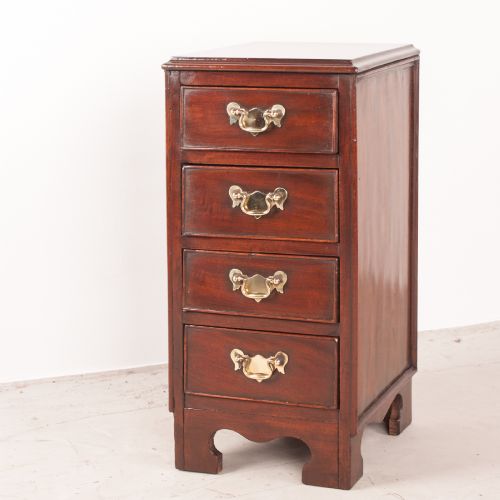
Construction techniques involve dovetail joints for drawer boxes and turned feet, brass drop handles, and inlaid details. Many cabinets incorporate metal hardware and iron fittings to secure drawers and doors.
Listings feature woods such as mahogany, oak, walnut, pine, elm, and fruitwood spanning the Victorian period to the 1940s.
Assessing Quality
Quality rests in the choice of timber and the precision of the joinery, particularly in the cutting of drawer dovetails and the grain matching on figured walnut or satinwood surfaces. Superior examples display thoughtful proportions and careful timber selection.
Original hardware, such as brass drop handles and working locks with keys, elevates a piece above those altered or repaired with later replacements. The finish and patina of the wood indicate how well the item has aged and been maintained.
D Napier and Sons·Amberg
The Desktop Storage Drawers Glossary
- Apprentice piece
- A small item of furniture made by a trainee craftsman to demonstrate skill to a guild. These often resemble miniature chests of drawers.
- Specimen cabinet
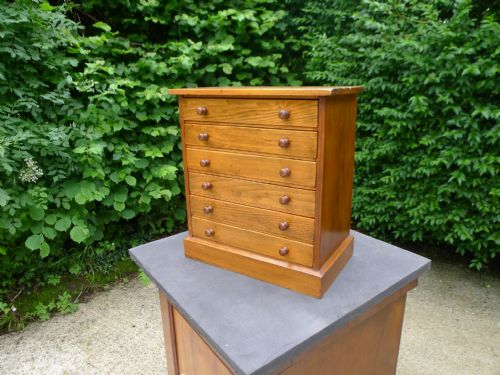
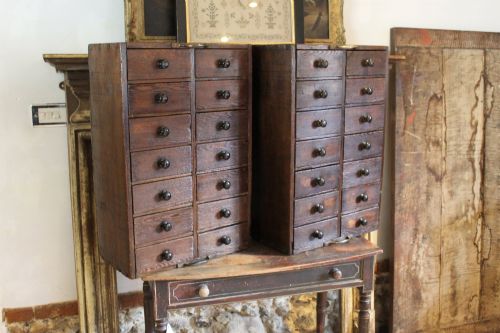
- A small cabinet with multiple shallow drawers designed for storing natural history samples, coins, or trinkets. Collectors prized these for keeping delicate items organised.
- Dovetail joint
- A traditional interlocking woodworking joint used in drawer construction. This joint provides high tensile strength without relying on metal fasteners.
- Humidor
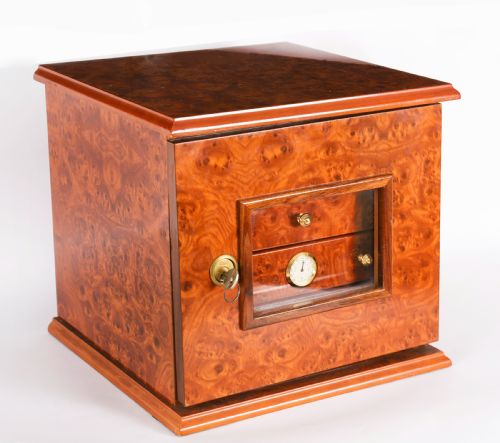
- A specialised cabinet or case designed to store cigars at a regulated humidity. These often feature fitted cedar interiors and secure locks.
- Patina
- The surface sheen and colour developed by wood and metal over decades of handling and exposure to light. A desirable patina signals genuine age.
Desktop Storage Drawers: Frequently Asked Questions
What were desktop storage drawers originally used for?
These small cabinets served professional, domestic, and scientific purposes, holding everything from spices and medical supplies to legal documents and collectors specimens.
Craftsmen and merchants also used miniature versions as salesman samples or apprentice pieces to showcase technical skill.
How do I date a set of desktop drawers?
Dating relies on observing timber choices, construction methods, and hardware styles across periods like the Georgian, Victorian, and Edwardian eras. Dovetail cuts, backboard construction, and secondary woods offer key clues.
Stylistic markers such as bracket feet, turned feet, and brass drop handles further help narrow the decade of manufacture.
Are these drawers suitable for modern office use?
Many compact chests, filing drawers, and index cabinets adapt readily to modern desks for sorting stationery, paper, and small accessories.
Their solid construction ensures they handle daily use while adding period character to a workspace.