




Coin Collector Cabinet
A coin collector cabinet houses small treasures in compact rows of shallow drawers designed to protect precious metal and history.
Coin Collector Cabinet
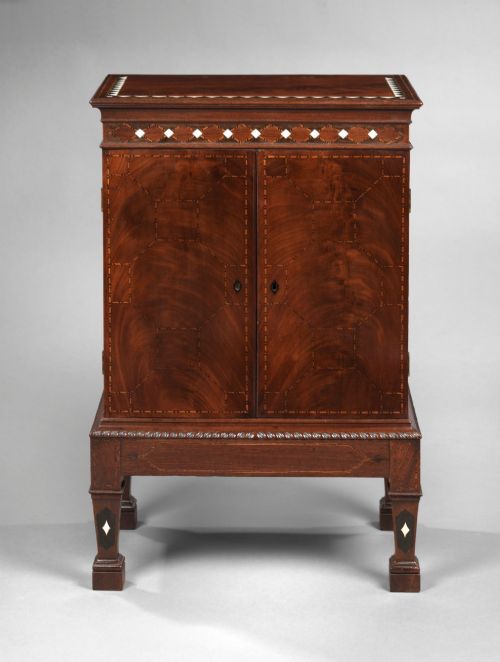
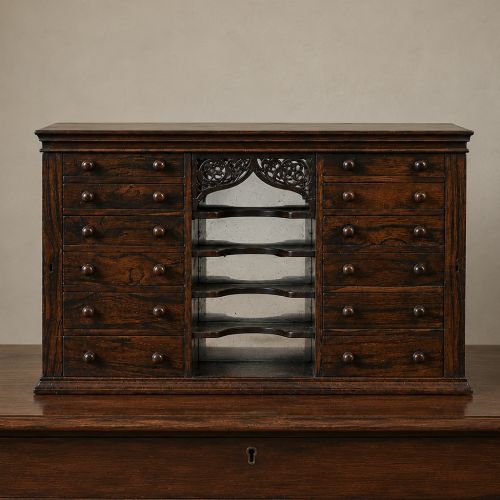
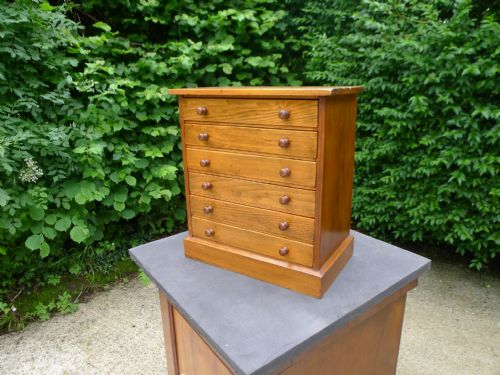
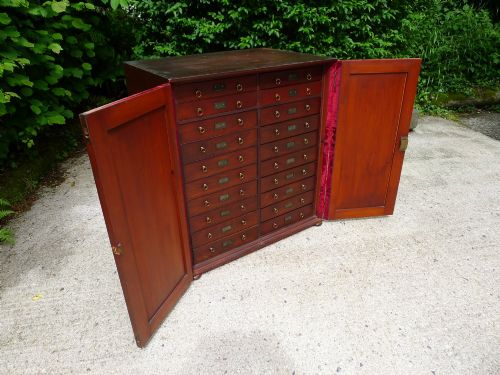
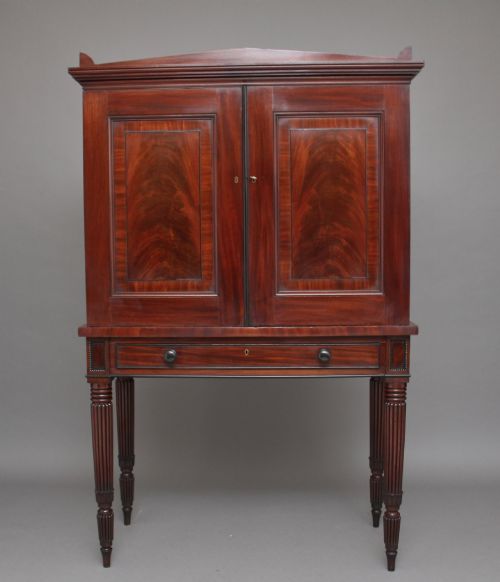
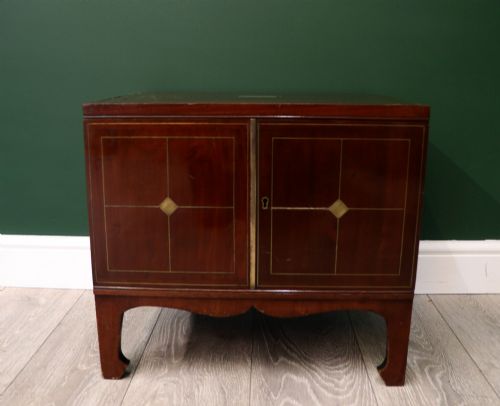
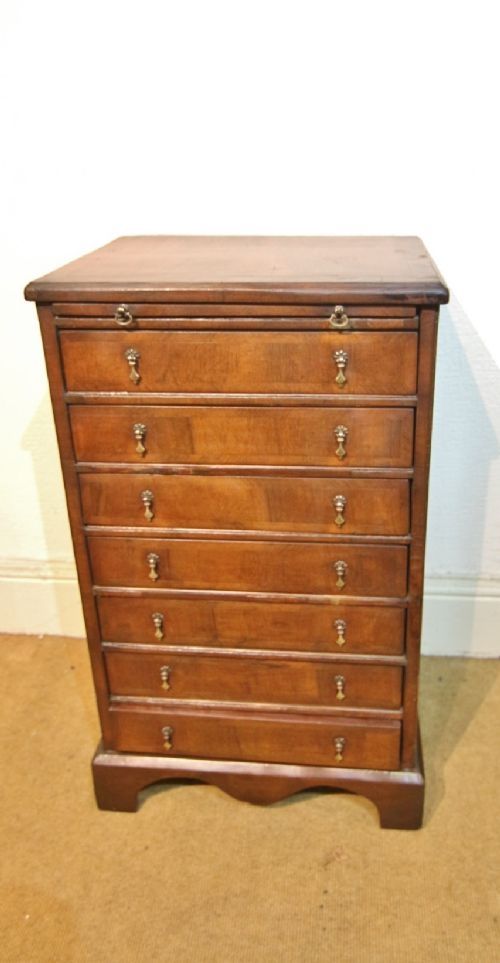
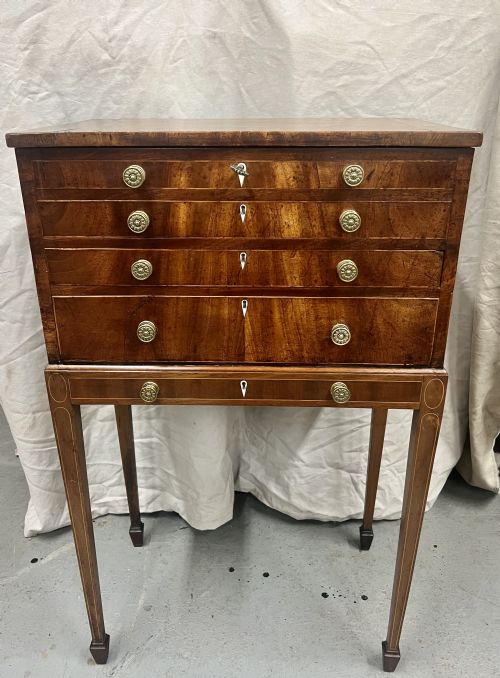
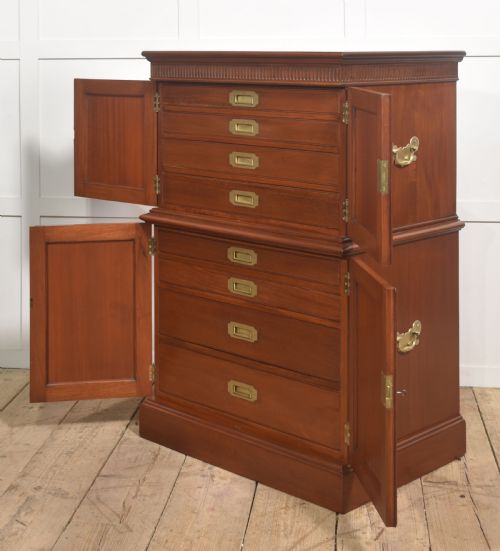
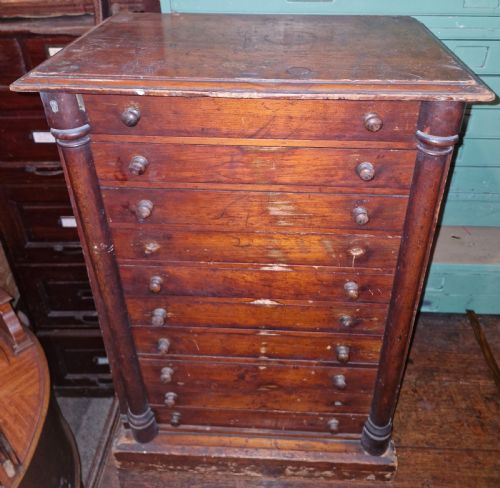
A coin collector cabinet is a specialised piece of furniture built with numerous shallow drawers to store numismatic collections safely. These pieces appear across Victorian, Georgian, and Regency periods, taking the form of tabletop chests, larger standing cabinets, and Wellington chests.
Most examples found on this page are constructed from dense timbers like mahogany and walnut, housing banks of internal drawers designed to hold individual specimens flat. The design prioritises security and organisation, often incorporating locking doors or folding panel fronts to keep contents secure.
Materials and construction
Cabinet makers utilised durable hardwoods, predominantly solid and figured mahogany, oak, and walnut, to build these heavy storage units. Drawers feature precise joinery, often lined with baize, velvet, or fine leather to cushion delicate metal objects against abrasion.
Exterior hardware typically includes brass drop handles, recessed campaign-style fittings, and functional locking mechanisms with matching keys. Secondary woods like pine and deal appear on internal framing and drawer bases, reflecting traditional workshop practices of the period.
Listings feature woods including mahogany, walnut, oak, satin birch, amboyna, ebony, pine, and deal across Victorian and Georgian periods.
Factors of quality
The standard of a coin collector cabinet rests upon the density of the timber, the precision of the drawer fit, and the scale of the piece. Cabinets featuring dozens of uniform drawers require meticulous carpentry to ensure every slide operates smoothly within the housing.
Named workshops and makers elevate the standing of a piece, as do documented provenances connecting the furniture to historical naturalists or numismatists. Elaborate exterior styling, such as amboyna veneers, mirrored doors, or campaign brass inlays, also distinguishes finer examples from utilitarian ones.
Brady of Edmonton·Charles William Schofield
The Coin Collector Cabinet Glossary
- Wellington chest
- A tall, slender chest of drawers featuring a locking sidestile that secures all drawers simultaneously when closed. This form provides high security for dense banks of small compartments.
- Specimen cabinet
- A piece of furniture designed for housing natural history items or small artefacts in shallow drawers. These share identical internal layouts with numismatic storage units.
- Standish
- A portable writing or collecting stand incorporating small drawers and compartments. These items occasionally appear alongside multi-drawer tabletop units.
- Baize
- A coarse woolen material used to line the interior floors of collector drawers. It prevents metal items from sliding and scratching during handling.
- Campaign style
- Furniture constructed with recessed brass hardware and reinforced corners for portability during travel. This aesthetic appears on sturdy mahogany storage chests.
Coin Collector Cabinet: Frequently Asked Questions
What were coin collector cabinets used for?
These cabinets served to organise, protect, and display valuable private collections of currency, tokens, and medals. The shallow drawer depth prevented items from stacking on top of one another.
The layout allowed collectors to pull out individual trays to examine details without handling the metal directly, keeping oils from skin away from sensitive surfaces.
How do I care for the wood?
Keep the timber away from direct heat sources and fluctuating humidity to prevent the dense mahogany or walnut from splitting. Occasional light waxing maintains the polished surface.
Check the internal lining materials periodically to ensure dust does not accumulate inside the narrow drawer compartments where coins rest.
Can these hold modern items?
The shallow drawer dimensions suit flat items such as stamps, jewellery, pocket watches, and geological samples alongside traditional numismatic pieces. Many interiors feature adjustable space or removable trays.
Verify the internal clearance height of individual drawers before storing thicker medals or graded coin slabs, as older units were built for slimmer historical currency.
How are Victorian and Georgian cabinets told apart?
Georgian cabinets often display simpler, heavier structural proportions in oak or Cuban mahogany, sometimes resting on separate table stands. Victorian examples frequently utilise elaborate figured veneers and larger multi-drawer formats.
Drawer construction details, such as hand-cut dovetails and secondary wood choices, provide further clues to the manufacturing decade.